Cirkit Designer Logo
Cirkit Designer
Your all-in-one circuit design IDE
Home / 
Component Documentation

How to Use RCBO AVDT32ML C25 30mA: Examples, Pinouts, and Specs
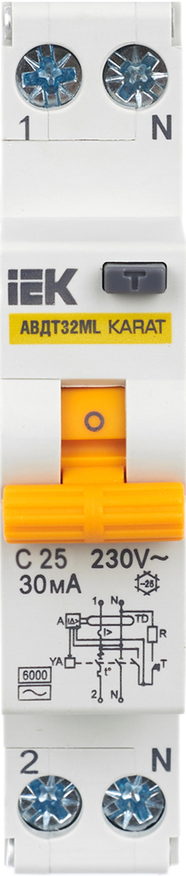

Image of RCBO AVDT32ML C25 30mA
Cirkit Designer LogoDesign with RCBO AVDT32ML C25 30mA in Cirkit Designer

Introduction

The RCBO AVDT32ML C25 30mA is a Residual Current Circuit Breaker with Overcurrent protection (RCBO) manufactured by IEK. This device combines the functionality of a Residual Current Device (RCD) and a Miniature Circuit Breaker (MCB) into a single unit. It is designed to protect electrical circuits from overcurrent (overload and short circuit) and to safeguard users from electric shock caused by earth faults.

This RCBO is rated for 25A and has a residual current sensitivity of 30mA, making it suitable for residential, commercial, and light industrial applications. It ensures both circuit protection and personal safety in one compact device.

Explore Projects Built with RCBO AVDT32ML C25 30mA
Use Cirkit Designer to design, explore, and prototype these projects online. Some projects support real-time simulation. Click "Open Project" to start designing instantly!
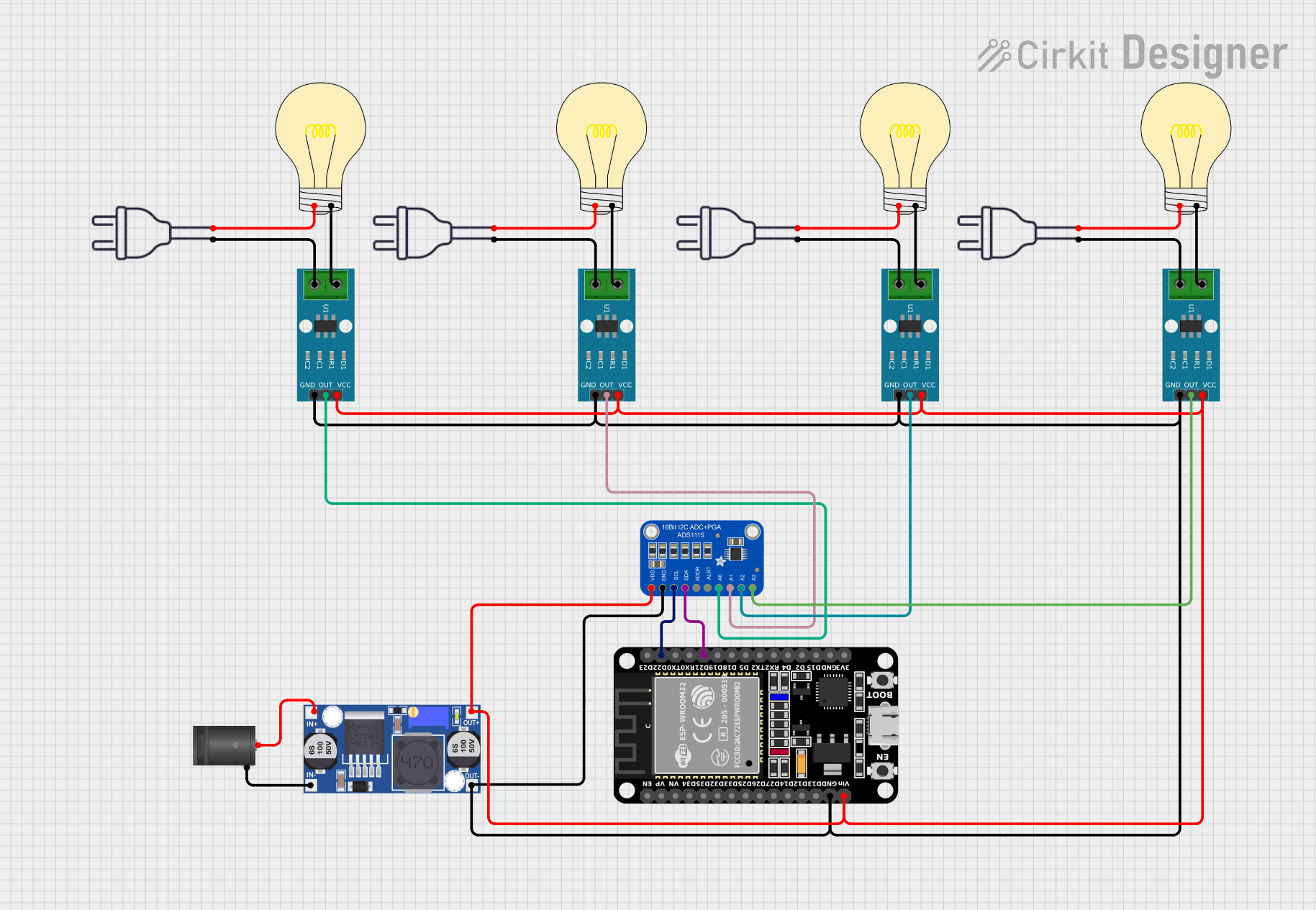
ESP32-Controlled Smart Lighting System with Power Monitoring
Image of Energy Monitoring System: A project utilizing RCBO AVDT32ML C25 30mA in a practical application
This circuit appears to be a multi-channel current monitoring system using several ACS712 current sensors to measure the current through different loads, likely bulbs connected to a 220V power source. The current readings from the sensors are digitized by an Adafruit ADS1115 16-bit ADC, which interfaces with an ESP32 microcontroller via I2C communication for further processing or telemetry. A buck converter is used to step down the voltage to power the ESP32 and the sensors, and the system is powered through a 2.1mm DC barrel jack, indicating it is designed for external power supply.
Cirkit Designer LogoOpen Project in Cirkit Designer
ESP32-Based Smart Energy Monitoring and Control System
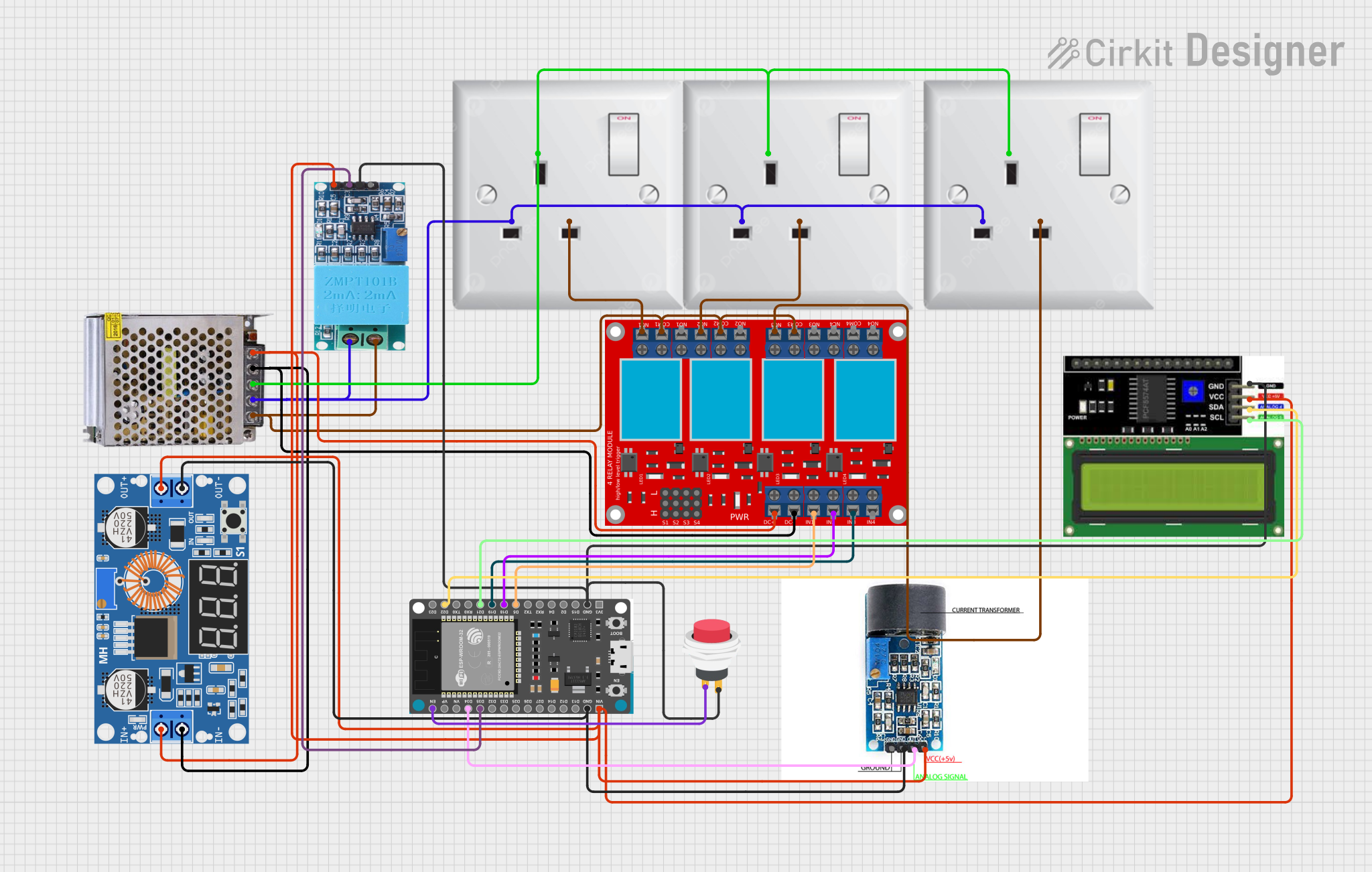
Image of SMART SOCKET: A project utilizing RCBO AVDT32ML C25 30mA in a practical application
This circuit is designed to monitor AC voltage and current using ZMPT101B and ZMCT103C sensors, respectively, with an ESP32 microcontroller processing the sensor outputs. The XL4015 step-down module regulates the power supply to provide a stable voltage to the sensors, the ESP32, and an LCD I2C display. The ESP32 controls a 4-channel relay module for switching AC loads, and the system's operation can be interacted with via the LCD display and a push switch.
Cirkit Designer LogoOpen Project in Cirkit Designer
ESP32C3 Smart Home Energy Monitor with Wi-Fi Control and LED Indicators
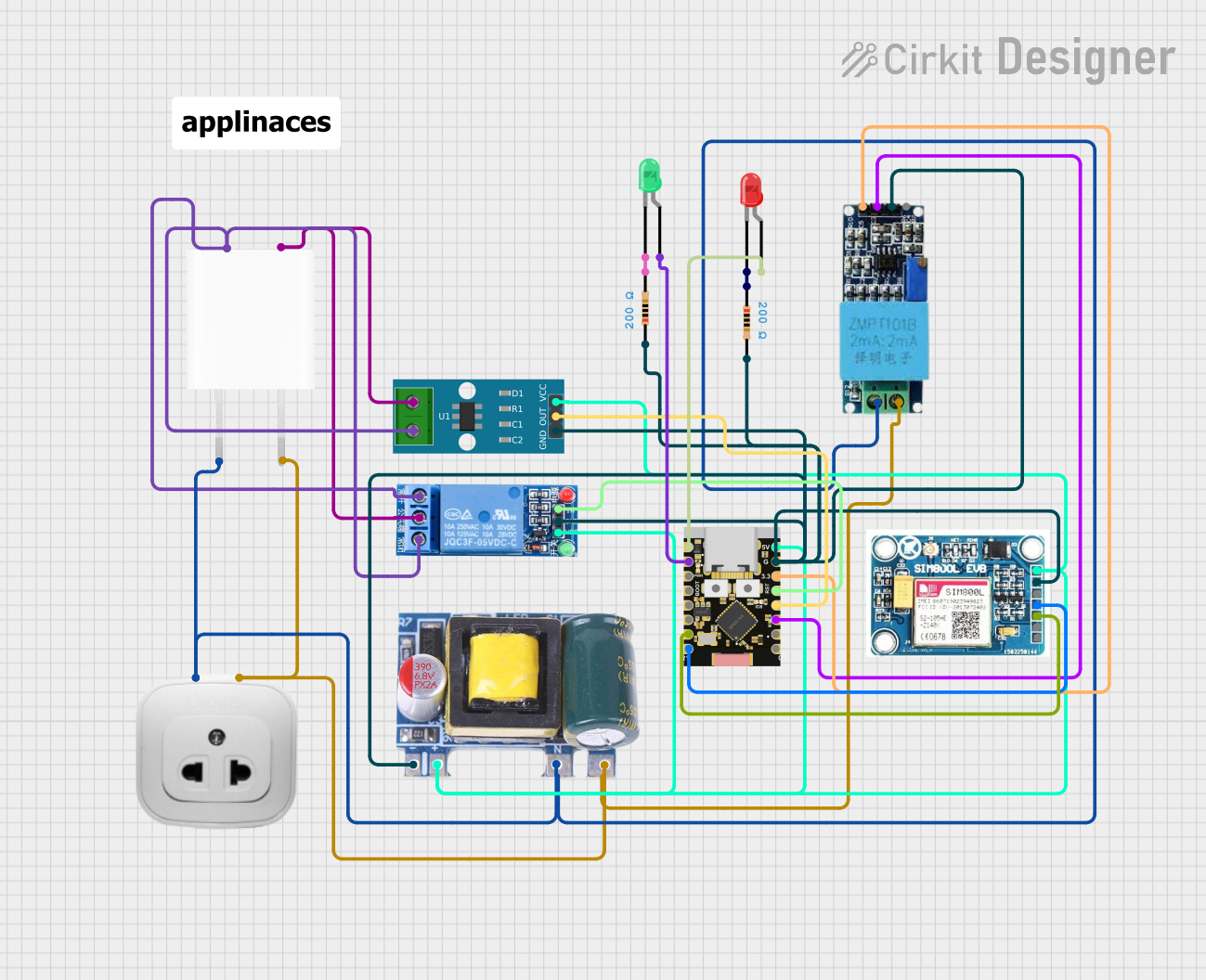
Image of EXTENSION: A project utilizing RCBO AVDT32ML C25 30mA in a practical application
This circuit uses an ESP32C3 microcontroller to monitor power consumption via ACS712 current and voltage sensors, control appliances through a relay, and indicate WiFi connection status with green and red LEDs. The relay can be controlled via a web interface, and the red LED indicates WiFi disconnection while the green LED indicates a successful connection.
Cirkit Designer LogoOpen Project in Cirkit Designer
ESP32C3-Based Smart AC Light Controller with Voltage Sensing
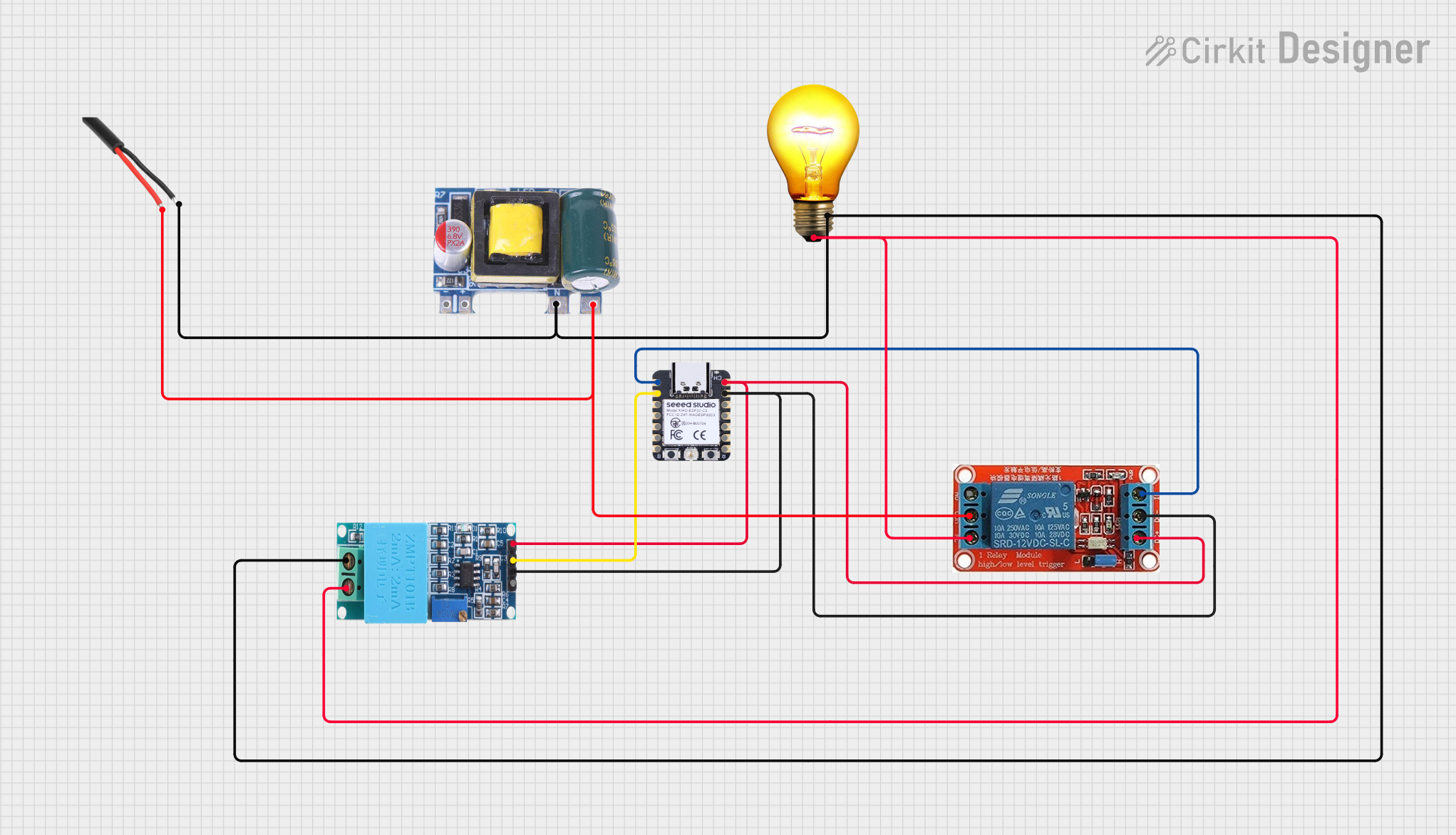
Image of plugins: A project utilizing RCBO AVDT32ML C25 30mA in a practical application
This circuit appears to be a smart AC power control system. The XIAO ESP32C3 microcontroller is used to monitor AC voltage through the ZMPT101B module and to control a 12v Relay, which in turn switches an AC Bulb on or off. The Mini AC-DC module provides the 5V power required by the microcontroller and the relay, while the AC Wire provides the AC power to the system.
Cirkit Designer LogoOpen Project in Cirkit Designer

Explore Projects Built with RCBO AVDT32ML C25 30mA

Use Cirkit Designer to design, explore, and prototype these projects online. Some projects support real-time simulation. Click "Open Project" to start designing instantly!
Image of Energy Monitoring System: A project utilizing RCBO AVDT32ML C25 30mA in a practical application
ESP32-Controlled Smart Lighting System with Power Monitoring
This circuit appears to be a multi-channel current monitoring system using several ACS712 current sensors to measure the current through different loads, likely bulbs connected to a 220V power source. The current readings from the sensors are digitized by an Adafruit ADS1115 16-bit ADC, which interfaces with an ESP32 microcontroller via I2C communication for further processing or telemetry. A buck converter is used to step down the voltage to power the ESP32 and the sensors, and the system is powered through a 2.1mm DC barrel jack, indicating it is designed for external power supply.
Cirkit Designer LogoOpen Project in Cirkit Designer
Image of SMART SOCKET: A project utilizing RCBO AVDT32ML C25 30mA in a practical application
ESP32-Based Smart Energy Monitoring and Control System
This circuit is designed to monitor AC voltage and current using ZMPT101B and ZMCT103C sensors, respectively, with an ESP32 microcontroller processing the sensor outputs. The XL4015 step-down module regulates the power supply to provide a stable voltage to the sensors, the ESP32, and an LCD I2C display. The ESP32 controls a 4-channel relay module for switching AC loads, and the system's operation can be interacted with via the LCD display and a push switch.
Cirkit Designer LogoOpen Project in Cirkit Designer
Image of EXTENSION: A project utilizing RCBO AVDT32ML C25 30mA in a practical application
ESP32C3 Smart Home Energy Monitor with Wi-Fi Control and LED Indicators
This circuit uses an ESP32C3 microcontroller to monitor power consumption via ACS712 current and voltage sensors, control appliances through a relay, and indicate WiFi connection status with green and red LEDs. The relay can be controlled via a web interface, and the red LED indicates WiFi disconnection while the green LED indicates a successful connection.
Cirkit Designer LogoOpen Project in Cirkit Designer
Image of plugins: A project utilizing RCBO AVDT32ML C25 30mA in a practical application
ESP32C3-Based Smart AC Light Controller with Voltage Sensing
This circuit appears to be a smart AC power control system. The XIAO ESP32C3 microcontroller is used to monitor AC voltage through the ZMPT101B module and to control a 12v Relay, which in turn switches an AC Bulb on or off. The Mini AC-DC module provides the 5V power required by the microcontroller and the relay, while the AC Wire provides the AC power to the system.
Cirkit Designer LogoOpen Project in Cirkit Designer

Common Applications

  • Protection of residential and commercial electrical circuits.
  • Safeguarding against electric shock due to earth leakage.
  • Preventing damage to appliances and wiring caused by overcurrent.
  • Use in distribution boards for lighting and power circuits.

Technical Specifications

Key Technical Details

Parameter Value
Manufacturer IEK
Manufacturer Part ID MVD12-1-025-C-030
Rated Current (In) 25A
Residual Current Sensitivity 30mA
Rated Voltage (Un) 230/240V AC
Frequency 50/60 Hz
Breaking Capacity 6kA
Tripping Curve Type C
Number of Poles 1P+N
Mounting DIN Rail (35mm)
Operating Temperature Range -25°C to +40°C
Degree of Protection IP20

Pin Configuration and Descriptions

The RCBO has a simple terminal configuration for connection to the electrical circuit. Below is the pin description:

Terminal Description
L (Line) Connect to the live input supply.
N (Neutral) Connect to the neutral input supply.
Load L Connect to the live output load.
Load N Connect to the neutral output load.

Usage Instructions

How to Use the RCBO in a Circuit

  1. Mounting: Install the RCBO on a standard 35mm DIN rail in the distribution board.
  2. Wiring:
    • Connect the Line (L) and Neutral (N) terminals to the incoming power supply.
    • Connect the Load L and Load N terminals to the outgoing circuit or load.
    • Ensure all connections are secure and properly tightened.
  3. Testing:
    • After installation, press the Test Button (T) on the RCBO to verify its functionality. The RCBO should trip immediately, indicating proper operation.
  4. Resetting:
    • If the RCBO trips due to a fault, identify and resolve the issue before resetting the device by flipping the switch back to the "ON" position.

Important Considerations and Best Practices

  • Ensure the RCBO's rated current (25A) matches the circuit's requirements.
  • Do not exceed the device's breaking capacity of 6kA.
  • Regularly test the RCBO using the test button to ensure it remains functional.
  • Avoid installing the RCBO in environments with excessive moisture or dust unless additional protection is provided.
  • Ensure proper grounding of the electrical system for optimal safety.

Troubleshooting and FAQs

Common Issues and Solutions

Issue Possible Cause Solution
RCBO does not trip during testing. Faulty device or improper wiring. Verify wiring and replace the RCBO if necessary.
RCBO trips frequently. Earth leakage or overcurrent in circuit. Inspect the circuit for faults or overloads.
RCBO cannot be reset. Persistent fault in the circuit. Identify and resolve the fault before resetting.
Test button does not work. Internal fault in the RCBO. Replace the RCBO.

FAQs

  1. Can this RCBO be used for three-phase systems?

    • No, this RCBO is designed for single-phase systems (1P+N) only.
  2. How often should I test the RCBO?

    • It is recommended to test the RCBO at least once a month using the test button.
  3. What does the 30mA sensitivity mean?

    • The RCBO will trip if it detects a residual current (earth leakage) of 30mA or higher, providing protection against electric shock.
  4. Can I use this RCBO for outdoor installations?

    • The RCBO has an IP20 rating, which means it is not suitable for outdoor use unless installed in a weatherproof enclosure.
  5. What is the purpose of the Type C tripping curve?

    • The Type C tripping curve ensures the RCBO can handle moderate inrush currents (e.g., from motors or fluorescent lighting) without nuisance tripping.

This documentation provides all the necessary details to understand, install, and troubleshoot the RCBO AVDT32ML C25 30mA. Always follow local electrical codes and safety standards when working with electrical components.