
How to Use zmct: Examples, Pinouts, and Specs
 Design with zmct in Cirkit Designer
Introduction
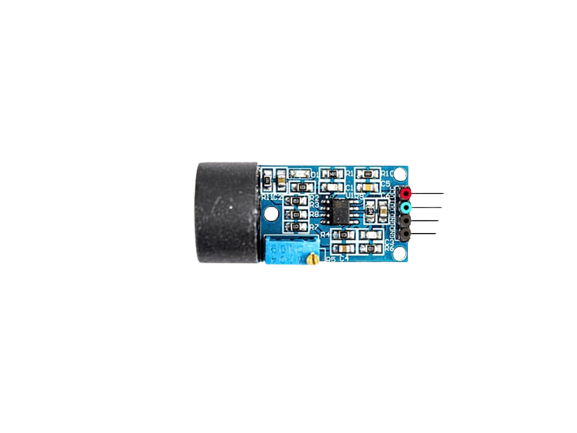
The ZMCT is a current sensor module designed to measure both AC and DC currents using a Hall effect sensor. It provides an isolated output, ensuring safety and reliability in applications where electrical isolation is critical. The ZMCT is compact, efficient, and widely used in various current measurement and monitoring systems.
Explore Projects Built with zmct
 Open Project in Cirkit Designer
 Open Project in Cirkit Designer
 Open Project in Cirkit Designer
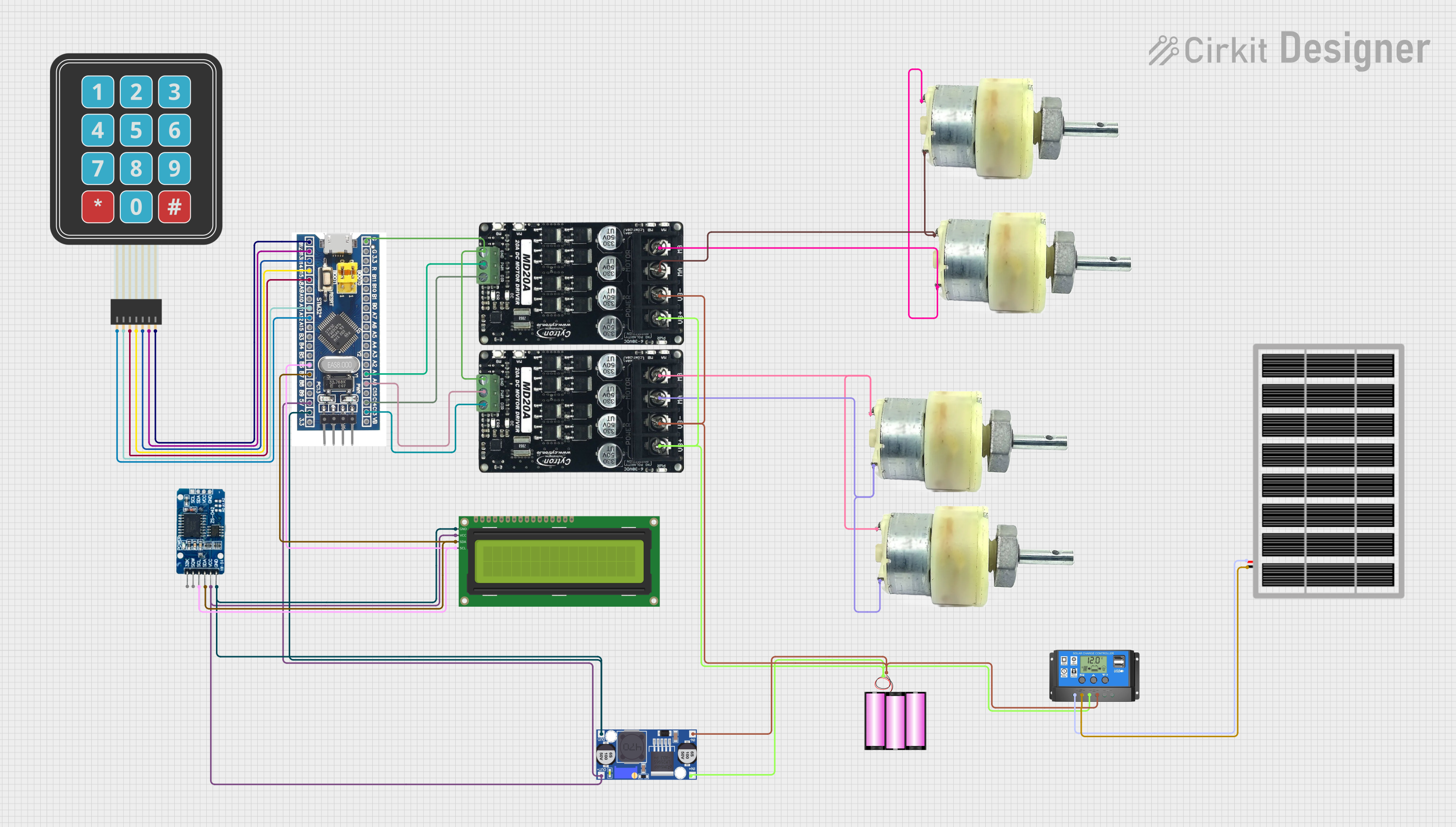 Open Project in Cirkit Designer
Explore Projects Built with zmct
Open Project in Cirkit DesignerOpen Project in Cirkit DesignerOpen Project in Cirkit DesignerOpen Project in Cirkit DesignerCommon Applications and Use Cases
- Power monitoring and energy management systems
- Overcurrent protection in electrical circuits
- Industrial automation and control systems
- Battery management systems (BMS)
- Smart home devices and IoT applications
Technical Specifications
Below are the key technical details of the ZMCT current sensor module:
| Parameter | Value |
|---|---|
| Measurement Type | AC and DC current |
| Input Current Range | 0A to 5A (typical) |
| Output Voltage Range | 0V to 5V (proportional to input) |
| Supply Voltage | 5V DC |
| Isolation Voltage | Up to 2kV |
| Accuracy | ±1% (typical) |
| Operating Temperature | -40°C to +85°C |
| Dimensions | Compact module (varies by model) |
Pin Configuration and Descriptions
The ZMCT module typically has the following pinout:
| Pin | Name | Description |
|---|---|---|
| 1 | VCC | Power supply input (5V DC) |
| 2 | GND | Ground connection |
| 3 | OUT | Analog output voltage proportional to the measured current |
| 4 | NC (optional) | Not connected (may vary depending on the specific ZMCT model) |
Usage Instructions
How to Use the ZMCT in a Circuit
- Power the Module: Connect the
VCCpin to a 5V DC power supply and theGNDpin to the ground of your circuit. - Connect the Load: Pass the wire carrying the current to be measured through the sensor's core (the hole in the module).
- Read the Output: The
OUTpin provides an analog voltage proportional to the current passing through the sensor. This output can be read using an ADC (Analog-to-Digital Converter) on a microcontroller, such as an Arduino.
Important Considerations and Best Practices
- Calibration: The ZMCT module may require calibration to ensure accurate current measurements. Use a known current source to determine the relationship between the output voltage and the input current.
- Isolation: Ensure proper electrical isolation between the high-current side and the low-voltage side of the circuit.
- Filtering: Add a capacitor (e.g., 0.1µF) across the output to filter noise and stabilize the signal.
- Current Range: Do not exceed the specified current range of the module to avoid damage or inaccurate readings.
Example: Using the ZMCT with an Arduino UNO
Below is an example of how to interface the ZMCT with an Arduino UNO to measure current:
// ZMCT Current Sensor Example with Arduino UNO
// This code reads the analog output of the ZMCT sensor and calculates the current.

const int sensorPin = A0;  // Connect ZMCT OUT pin to Arduino analog pin A0
const float sensitivity = 0.185; // Sensitivity in V/A (example value, check your module's datasheet)
const float vRef = 5.0;    // Reference voltage of Arduino (5V for most boards)
const int adcResolution = 1024; // ADC resolution (10-bit for Arduino UNO)

void setup() {
  Serial.begin(9600); // Initialize serial communication for debugging
}

void loop() {
  int sensorValue = analogRead(sensorPin); // Read the analog value from the sensor
  float voltage = (sensorValue * vRef) / adcResolution; // Convert ADC value to voltage
  float current = voltage / sensitivity; // Calculate current based on sensor sensitivity

  // Print the measured current to the Serial Monitor
  Serial.print("Current: ");
  Serial.print(current);
  Serial.println(" A");

  delay(1000); // Wait for 1 second before the next reading
}
Notes:
- Replace the
sensitivityvalue with the actual sensitivity of your ZMCT module (refer to the datasheet). - Ensure proper wiring and connections to avoid inaccurate readings or damage to the module.
Troubleshooting and FAQs
Common Issues and Solutions
No Output Signal:
- Cause: Incorrect wiring or no current passing through the sensor.
- Solution: Verify the connections and ensure the wire carrying the current passes through the sensor's core.
Inaccurate Readings:
- Cause: Calibration not performed or incorrect sensitivity value used.
- Solution: Calibrate the sensor using a known current source and update the sensitivity value in your code.
Noisy Output:
- Cause: Electrical noise or insufficient filtering.
- Solution: Add a capacitor (e.g., 0.1µF) across the output to filter noise.
Overheating:
- Cause: Current exceeding the module's rated range.
- Solution: Ensure the current passing through the sensor is within the specified range.
FAQs
Q1: Can the ZMCT measure both AC and DC currents?
A1: Yes, the ZMCT is capable of measuring both AC and DC currents.
Q2: What is the maximum current the ZMCT can measure?
A2: The maximum current depends on the specific model, but it is typically up to 5A. Refer to the datasheet for exact details.
Q3: Is the ZMCT output linear?
A3: Yes, the output voltage is linearly proportional to the input current within the specified range.
Q4: Can I use the ZMCT with a 3.3V microcontroller?
A4: Yes, but ensure the output voltage does not exceed the ADC input range of your microcontroller. You may need a voltage divider or level shifter.
By following this documentation, you can effectively integrate the ZMCT current sensor module into your projects for accurate and reliable current measurement.