The AdaGator Top White is a modular component designed for use with Adafruit's AdaGator line of educational electronics. It serves as a protective and aesthetic top layer that seamlessly integrates with other AdaGator components. This top piece is particularly useful in projects where a clean and finished look is desired, and it helps shield underlying circuitry from environmental factors.
Explore Projects Built with AdaGator Top White
Use Cirkit Designer to design, explore, and prototype these projects online. Some projects support real-time simulation. Click "Open Project" to start designing instantly!
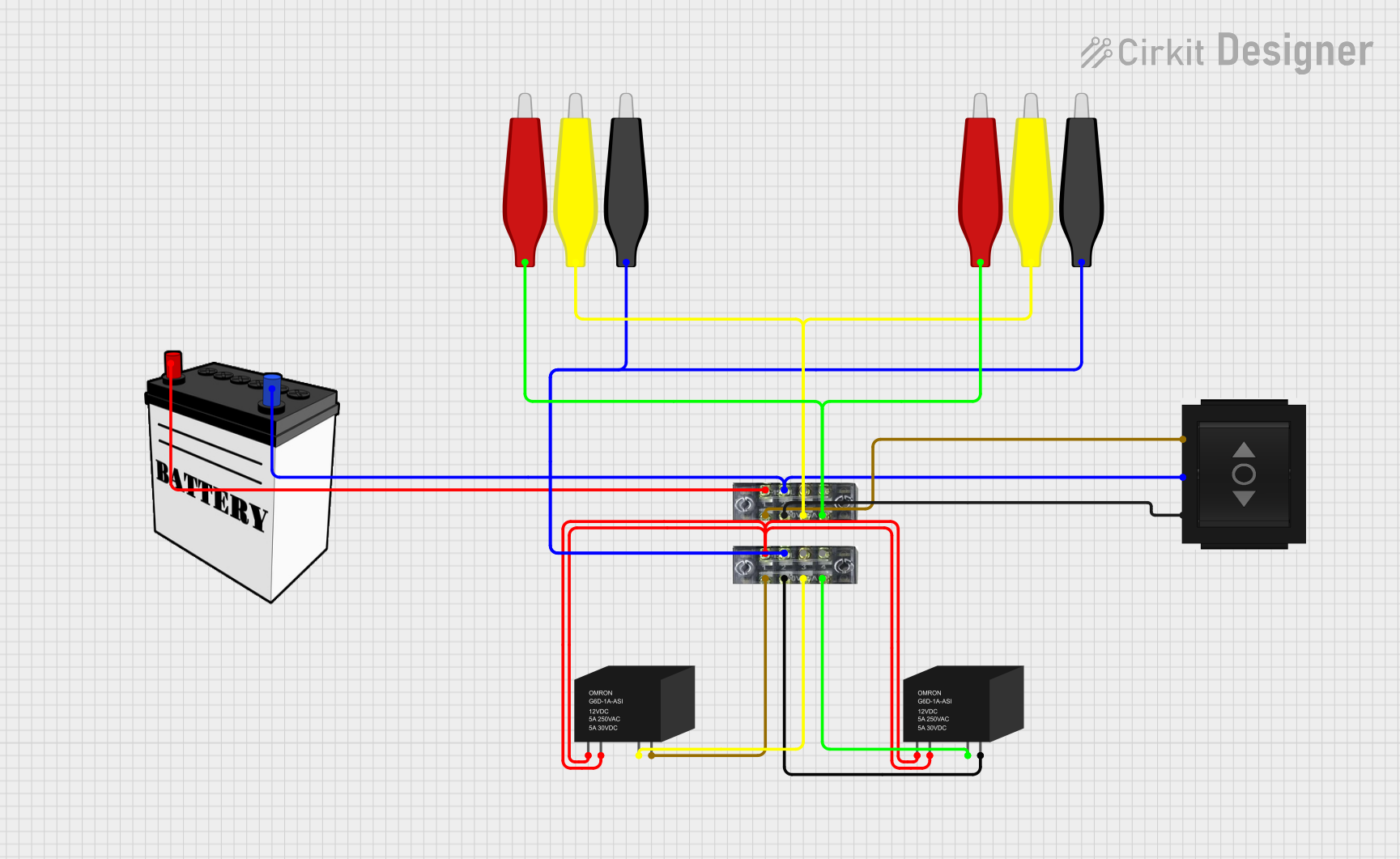
This circuit involves a 12V battery powering a relay system controlled by a directional switch. The relays are connected through terminal blocks and are used to switch between different outputs, indicated by the AdaGator Top components.
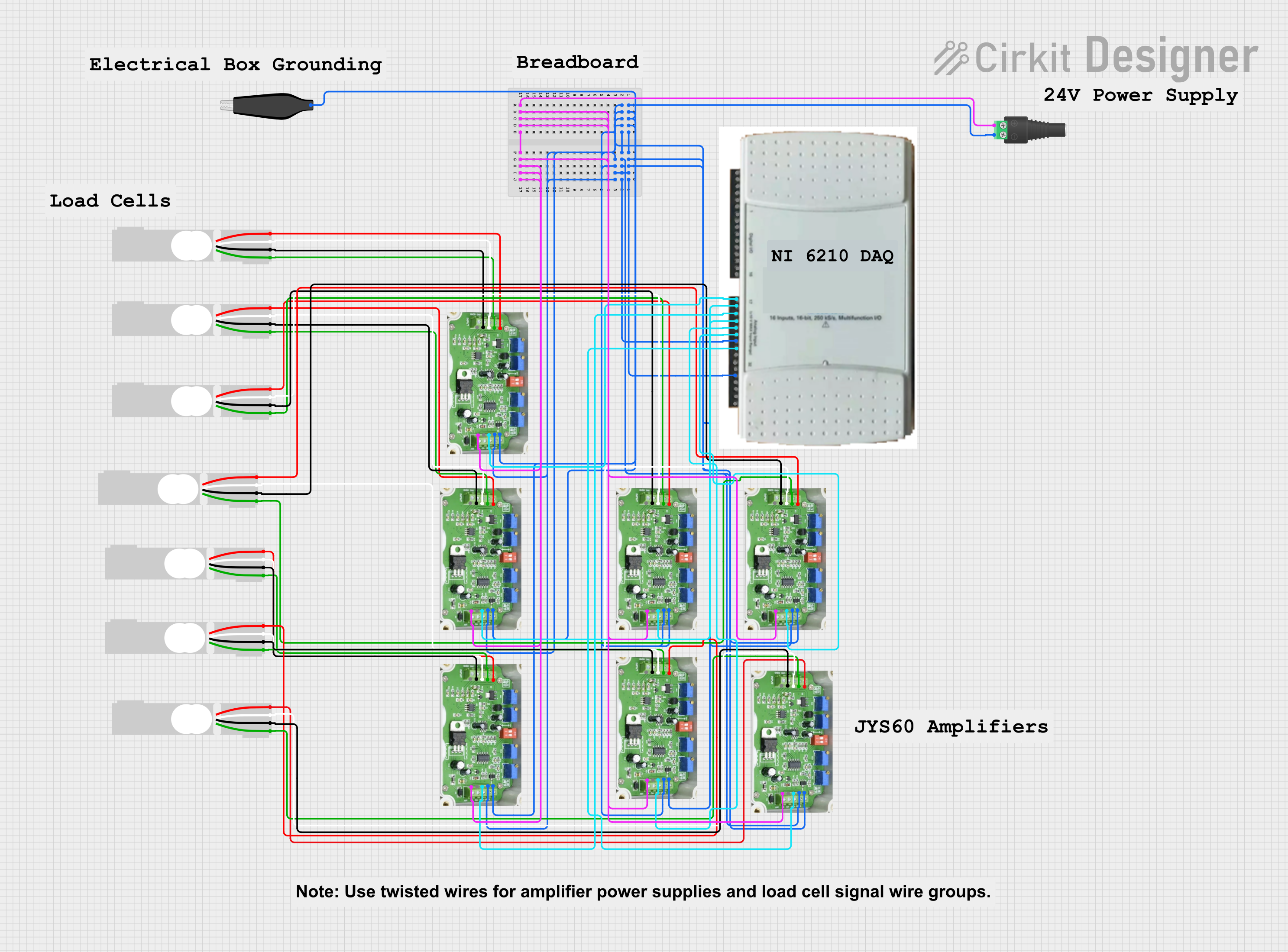
This is a multi-channel load cell measurement system with several JYS60 amplifiers connected to load cells for weight or force sensing. The amplified signals are directed to a DAQ system for data capture, and power is supplied through a barrel jack. Grounding is achieved via an AdaGator Side Black component.
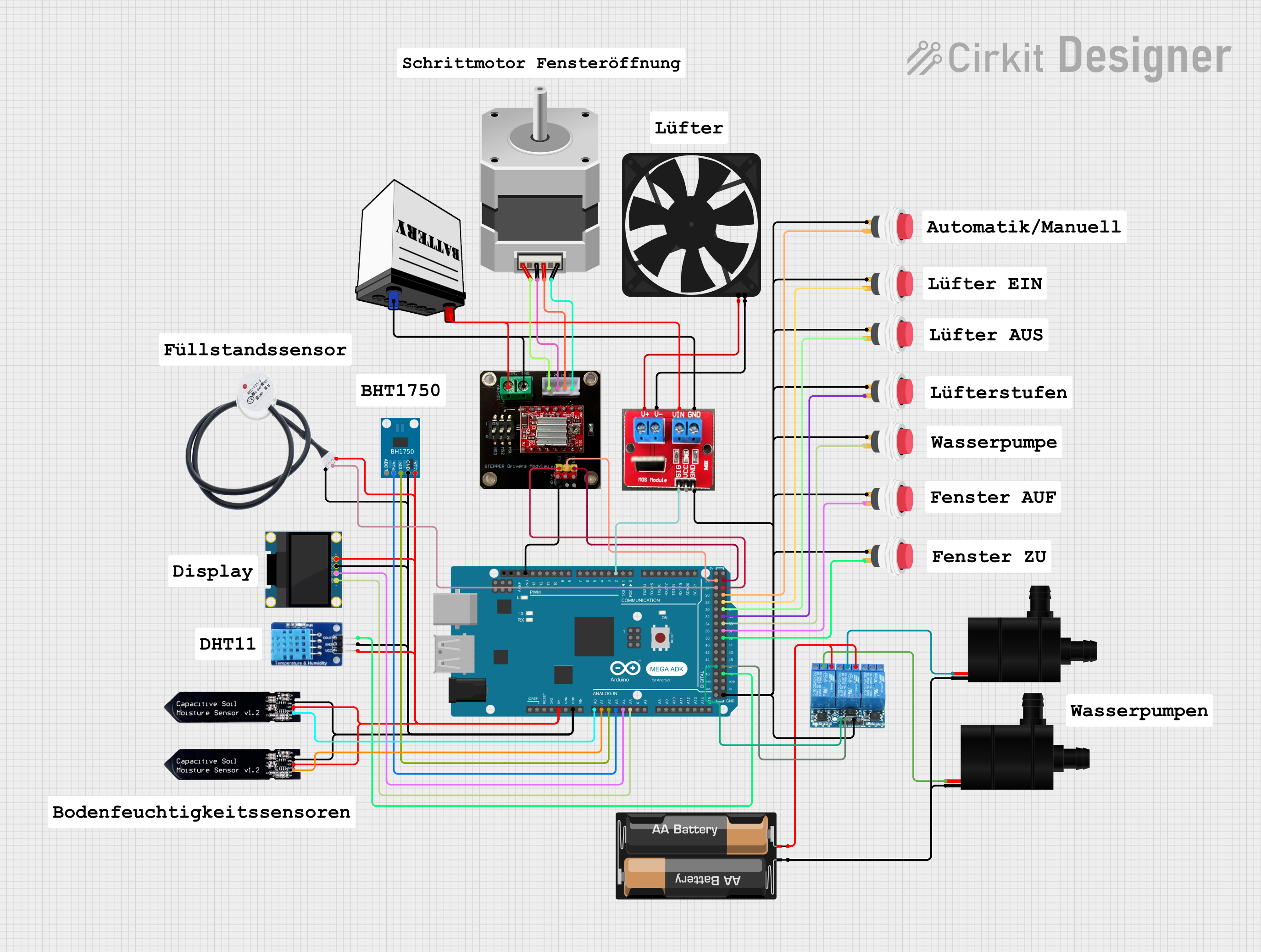
This circuit features an Arduino Mega ADK as the central microcontroller, interfacing with a variety of sensors and actuators. It includes a BH1750 light sensor and a DHT11 temperature and humidity sensor for environmental monitoring, both interfacing via I2C. The system controls a stepper motor via an A4988 driver, two water pumps through a 3-channel relay, and a fan using an IRF520 PWM module, with several push switches to trigger inputs. An OLED display provides a user interface, and soil moisture levels are monitored with two soil sensors. A non-contact water level sensor is also included for liquid level detection.
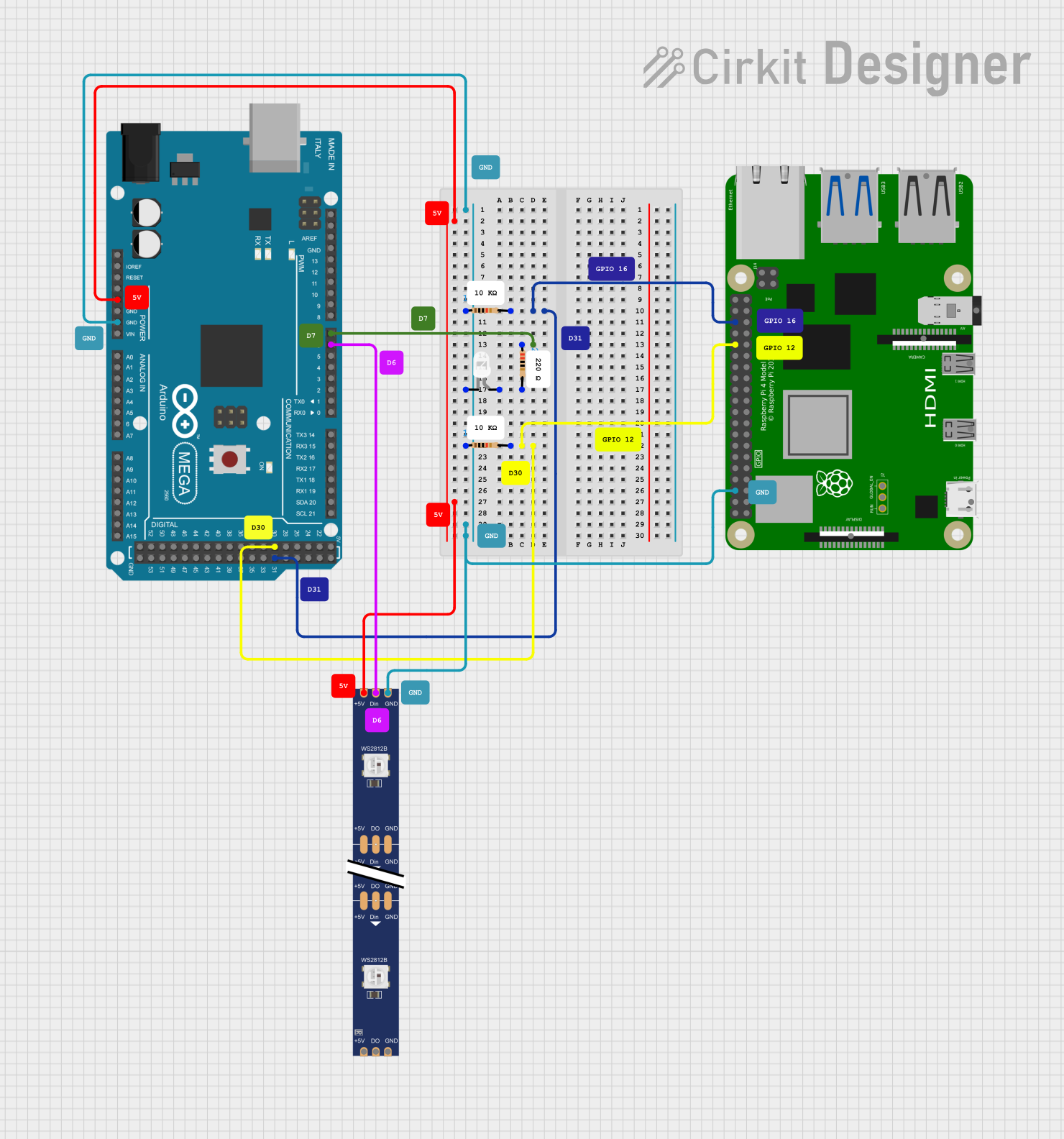
This circuit features an Arduino Mega 2560 microcontroller programmed to control a WS2812 RGB LED strip and a white LED, indicating status or providing user feedback. The Arduino and the LED strip are powered by a common 5V supply, and the circuit includes interfacing with a Raspberry Pi 4B for potential communication or coordination between the two boards.
Educational kits for learning electronics and programming
DIY electronics projects requiring a polished appearance
Prototyping platforms where components need to be frequently accessed and protected
Technical Specifications
The AdaGator Top White is primarily a mechanical component, and as such, it does not have electrical specifications like voltage or current ratings. However, its physical and mechanical specifications are crucial for proper integration with the AdaGator system.
Physical Characteristics
Attribute
Specification
Color
White
Material
High-quality plastic
Compatibility
AdaGator components
Dimensions
(To be provided)
Mounting Mechanism
Snap-fit connectors
Pin Configuration and Descriptions
As a non-electrical component, the AdaGator Top White does not have a pin configuration. Instead, it features mechanical connectors that align with corresponding AdaGator components.
Usage Instructions
Integration with AdaGator System
Preparation: Ensure all underlying AdaGator components are correctly assembled and secured.
Alignment: Position the AdaGator Top White over the assembled components, aligning the snap-fit connectors with the base component's receptacles.
Attachment: Gently press down on the AdaGator Top White until the snap-fit connectors engage and the top piece is firmly attached to the base components.
Best Practices
Before attaching the AdaGator Top White, verify that all components it will cover are functioning correctly.
Avoid applying excessive force when attaching or detaching the top piece to prevent damage to the snap-fit connectors.
When removing the top piece, carefully disengage the connectors to maintain the integrity of the AdaGator system.
Troubleshooting and FAQs
Common Issues
Q: The AdaGator Top White does not fit securely onto the base components. What should I do?
A: Ensure that all components are correctly aligned and that no wires or other obstructions are preventing a secure fit. Check for any damage to the snap-fit connectors.
Q: Can the AdaGator Top White be customized or painted?
A: While the top piece is designed to be used as-is, it can be customized with appropriate materials. However, any modifications may affect the fit and warranty.
Q: Is the AdaGator Top White resistant to heat and electrical interference?
A: The top piece is made from high-quality plastic designed to withstand typical project environments. However, it is not rated for extreme temperatures or electrical shielding.
For additional support, please refer to the Adafruit forums or contact customer service.
Please note that the AdaGator Top White is a non-electrical component, and as such, it does not require an electrical schematic or Arduino code for operation. This documentation provides guidance on the mechanical integration of the component within the AdaGator system.


 Open Project in Cirkit Designer