
How to Use Pololu 12V 4.5A DC-DC Step-Down Voltage Regulator: Examples, Pinouts, and Specs
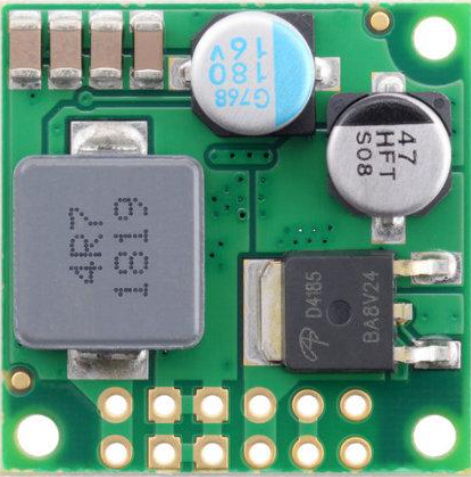
 Design with Pololu 12V 4.5A DC-DC Step-Down Voltage Regulator in Cirkit Designer
Introduction
The Pololu 12V 4.5A DC-DC Step-Down Voltage Regulator is a compact and efficient device designed to convert a higher DC input voltage into a stable, lower DC output voltage. With a maximum output current of 4.5A, this regulator is ideal for powering a wide range of electronic devices, including microcontrollers, sensors, motors, and other low-voltage components. Its high efficiency and small form factor make it suitable for applications where space and power efficiency are critical.
Explore Projects Built with Pololu 12V 4.5A DC-DC Step-Down Voltage Regulator
 Open Project in Cirkit Designer
 Open Project in Cirkit Designer
 Open Project in Cirkit Designer
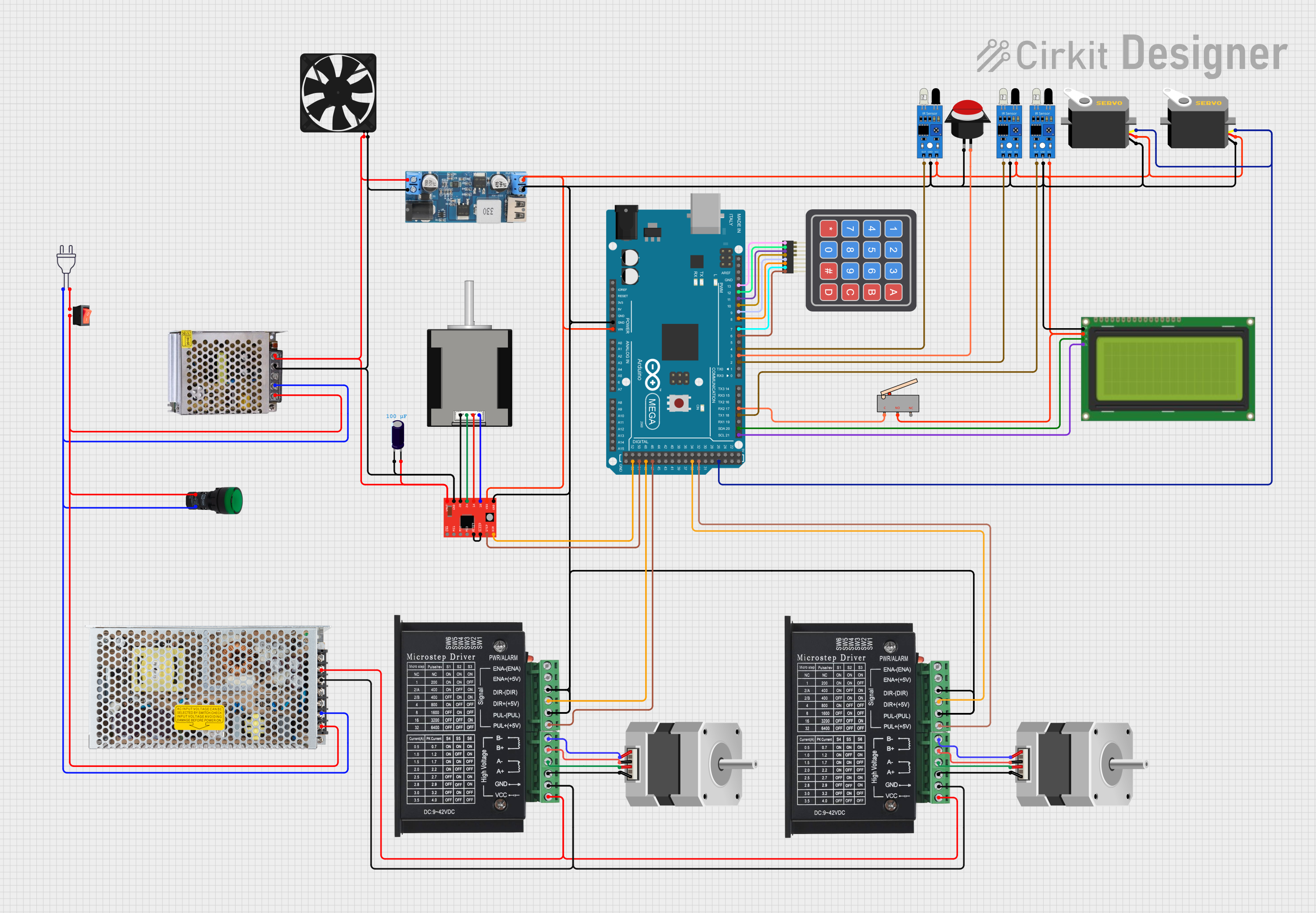 Open Project in Cirkit Designer
Explore Projects Built with Pololu 12V 4.5A DC-DC Step-Down Voltage Regulator
Open Project in Cirkit DesignerOpen Project in Cirkit DesignerOpen Project in Cirkit DesignerOpen Project in Cirkit DesignerCommon Applications and Use Cases
- Powering microcontrollers (e.g., Arduino, Raspberry Pi) from higher voltage sources.
- Supplying stable voltage to sensors, actuators, and communication modules.
- Battery-powered systems requiring efficient voltage conversion.
- Robotics and automation projects.
- Industrial and automotive electronics.
Technical Specifications
The following table outlines the key technical details of the Pololu 12V 4.5A DC-DC Step-Down Voltage Regulator:
| Parameter | Value |
|---|---|
| Manufacturer | Pololu |
| Part Number | 12V 4.5A DC-DC Step-Down Voltage Regulator |
| Input Voltage Range | 13.5V to 38V |
| Output Voltage | 12V (fixed) |
| Maximum Output Current | 4.5A |
| Efficiency | Up to 95% (depending on input voltage and load) |
| Switching Frequency | ~400 kHz |
| Operating Temperature | -40°C to +85°C |
| Dimensions | 25.4 mm × 25.4 mm × 12.7 mm |
| Weight | 6.5 g |
| Protection Features | Over-current, over-temperature, and short-circuit protection |
Pin Configuration and Descriptions
The Pololu 12V 4.5A DC-DC Step-Down Voltage Regulator has three main pins for input and output connections:
| Pin Name | Description |
|---|---|
| VIN | Input voltage pin. Connect to the positive terminal of the input power source. |
| GND | Ground pin. Connect to the negative terminal of the input power source. |
| VOUT | Output voltage pin. Provides a regulated 12V DC output. |
Usage Instructions
How to Use the Component in a Circuit
Connect the Input Voltage:
- Connect the VIN pin to the positive terminal of your DC power source (13.5V to 38V).
- Connect the GND pin to the negative terminal of your DC power source.
Connect the Output Voltage:
- Connect the VOUT pin to the positive terminal of the load (e.g., microcontroller, motor).
- Connect the GND pin to the ground of the load.
Verify Connections:
- Double-check all connections to ensure proper polarity and secure wiring.
Power On:
- Turn on the input power source. The regulator will provide a stable 12V output to the connected load.
Important Considerations and Best Practices
- Input Voltage Range: Ensure the input voltage is within the specified range (13.5V to 38V). Exceeding this range may damage the regulator.
- Heat Dissipation: At high loads, the regulator may generate heat. Use proper ventilation or a heatsink if necessary.
- Current Limitations: Do not exceed the maximum output current of 4.5A to avoid triggering over-current protection.
- Wiring: Use appropriately rated wires to handle the input and output currents safely.
- Polarity: Ensure correct polarity for all connections to prevent damage to the regulator and connected devices.
Example: Using with an Arduino UNO
The Pololu 12V 4.5A DC-DC Step-Down Voltage Regulator can be used to power an Arduino UNO from a 24V DC power source. Below is an example wiring diagram and Arduino code to blink an LED:
Wiring Diagram
- Connect the VIN pin of the regulator to the positive terminal of the 24V power source.
- Connect the GND pin of the regulator to the negative terminal of the 24V power source.
- Connect the VOUT pin of the regulator to the VIN pin of the Arduino UNO.
- Connect the GND pin of the regulator to the GND pin of the Arduino UNO.
Arduino Code
// This code blinks an LED connected to pin 13 of the Arduino UNO.
// Ensure the regulator provides a stable 12V to the Arduino's VIN pin.

void setup() {
  pinMode(13, OUTPUT); // Set pin 13 as an output pin
}

void loop() {
  digitalWrite(13, HIGH); // Turn the LED on
  delay(1000);            // Wait for 1 second
  digitalWrite(13, LOW);  // Turn the LED off
  delay(1000);            // Wait for 1 second
}
Troubleshooting and FAQs
Common Issues Users Might Face
No Output Voltage:
- Cause: Incorrect input voltage or loose connections.
- Solution: Verify that the input voltage is within the specified range (13.5V to 38V) and check all connections.
Overheating:
- Cause: High load current or insufficient ventilation.
- Solution: Reduce the load current or improve heat dissipation using a heatsink or fan.
Output Voltage Drops Under Load:
- Cause: Exceeding the maximum output current of 4.5A.
- Solution: Ensure the load current does not exceed 4.5A. Use a higher-capacity regulator if needed.
Regulator Shuts Down:
- Cause: Over-current or over-temperature protection triggered.
- Solution: Reduce the load or improve cooling to prevent thermal shutdown.
Solutions and Tips for Troubleshooting
- Use a multimeter to measure input and output voltages to verify proper operation.
- Check for short circuits or incorrect wiring that may cause the regulator to malfunction.
- If the regulator is not functioning as expected, disconnect all loads and test it with a minimal load to isolate the issue.
By following these guidelines and best practices, you can effectively use the Pololu 12V 4.5A DC-DC Step-Down Voltage Regulator in your projects.