
How to Use codecell c3 light: Examples, Pinouts, and Specs
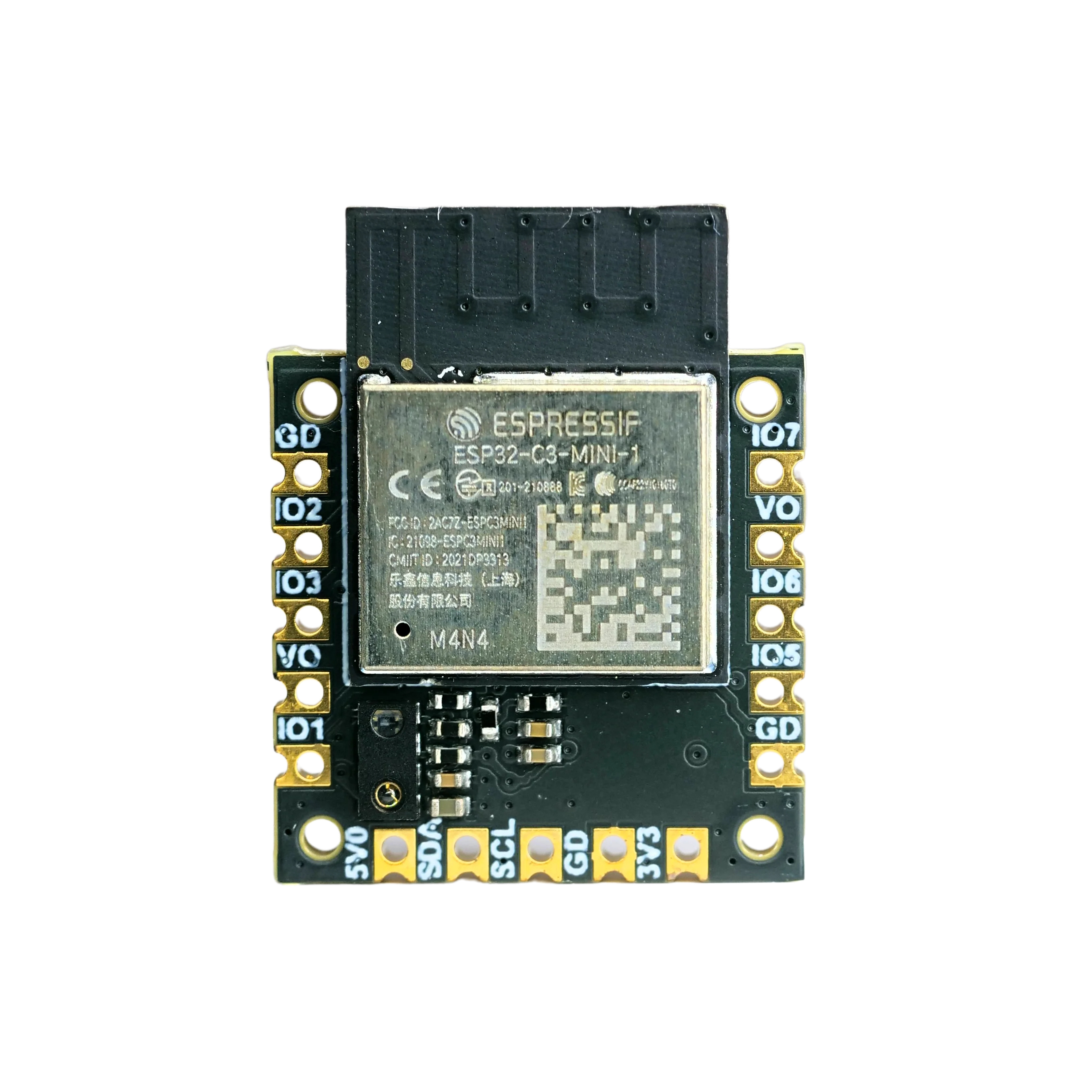
 Design with codecell c3 light in Cirkit Designer
Introduction
The CodeCell C3 Light, manufactured by Microbots.io, is a compact and versatile microcontroller module designed for IoT (Internet of Things) applications. It is based on the ESP32-C3 chip, which features a RISC-V single-core processor, integrated Wi-Fi, and Bluetooth Low Energy (BLE) capabilities. The module is optimized for low-power applications and is ideal for projects requiring wireless connectivity, such as smart home devices, wearables, and environmental monitoring systems.
Common applications and use cases include:
- IoT devices with Wi-Fi and BLE connectivity
- Low-power sensor nodes
- Home automation systems
- Wearable technology
- Prototyping and educational projects
Explore Projects Built with codecell c3 light
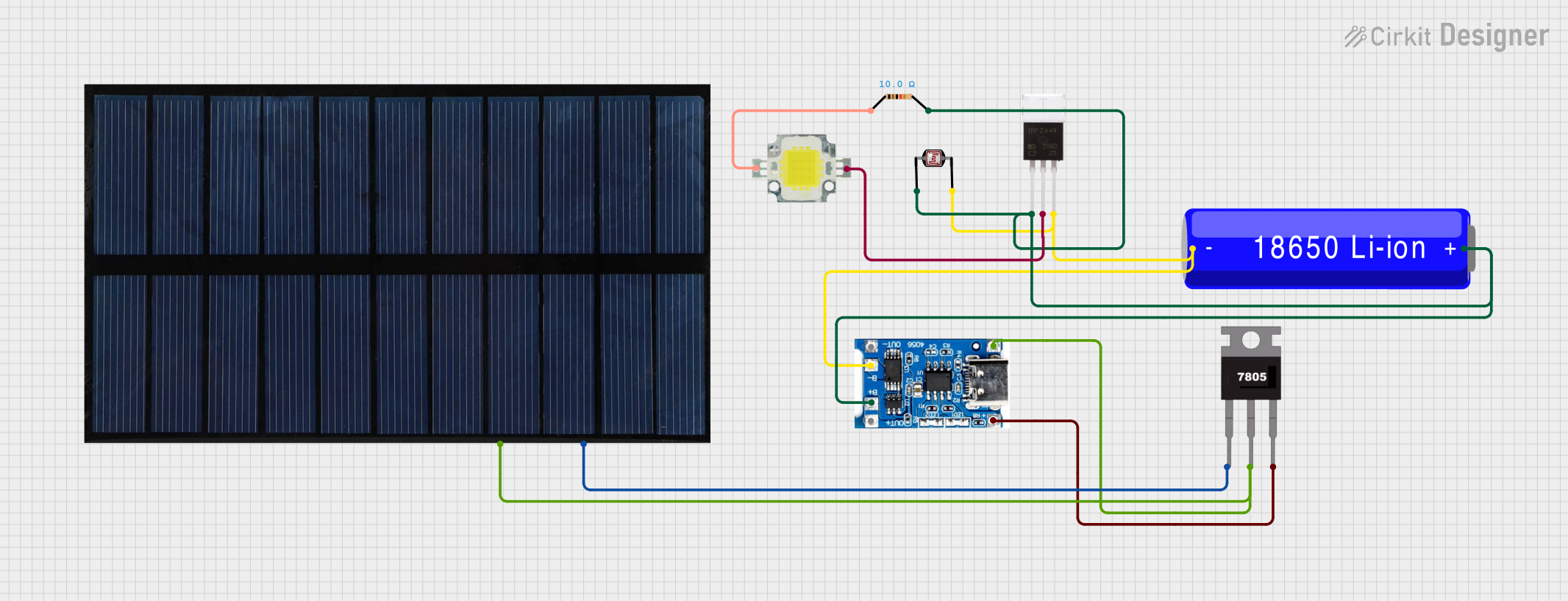 Open Project in Cirkit Designer
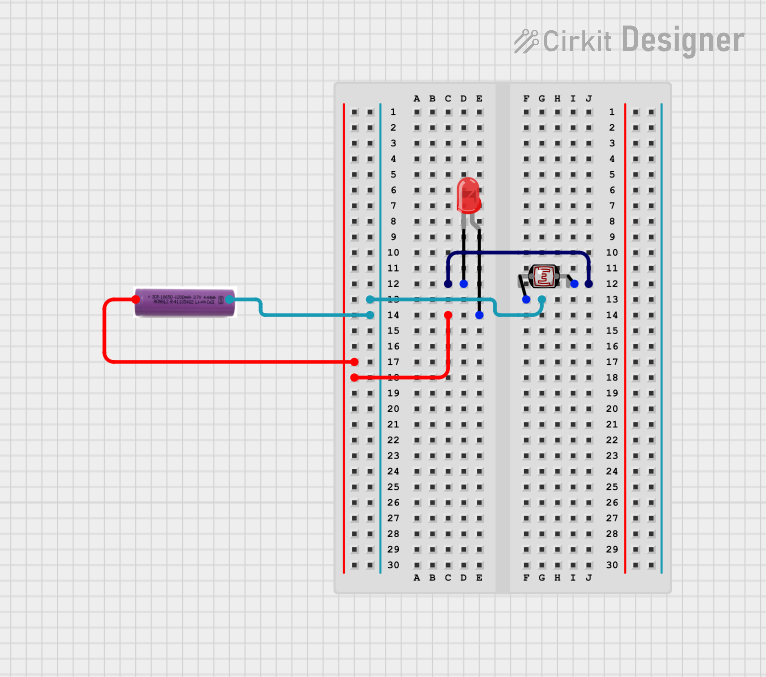 Open Project in Cirkit Designer
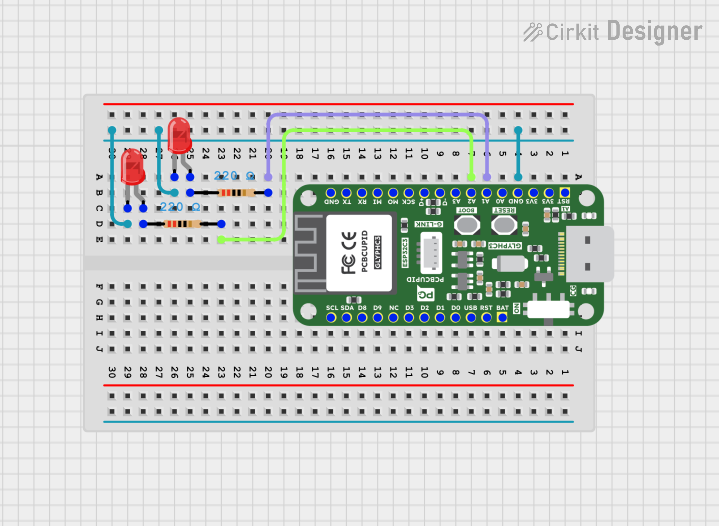 Open Project in Cirkit Designer
 Open Project in Cirkit Designer
Explore Projects Built with codecell c3 light
Open Project in Cirkit DesignerOpen Project in Cirkit DesignerOpen Project in Cirkit DesignerOpen Project in Cirkit DesignerTechnical Specifications
The following are the key technical details of the CodeCell C3 Light:
| Specification | Details |
|---|---|
| Microcontroller | ESP32-C3 (RISC-V single-core processor) |
| Clock Speed | Up to 160 MHz |
| Flash Memory | 4 MB (onboard) |
| RAM | 400 KB SRAM |
| Wireless Connectivity | Wi-Fi 802.11 b/g/n (2.4 GHz), Bluetooth 5.0 Low Energy (BLE) |
| Operating Voltage | 3.3V |
| Input Voltage Range | 5V (via USB-C) |
| GPIO Pins | 11 (including ADC, PWM, I2C, SPI, UART) |
| Power Consumption | Ultra-low power mode: ~10 µA |
| Dimensions | 25 mm x 18 mm |
| USB Interface | USB-C for programming and power |
| Manufacturer | Microbots.io |
Pin Configuration and Descriptions
The CodeCell C3 Light has a total of 11 GPIO pins, which can be configured for various functions. Below is the pinout description:
| Pin | Name | Function | Description |
|---|---|---|---|
| 1 | GND | Ground | Connect to ground of the circuit. |
| 2 | 3V3 | Power | Provides 3.3V output. |
| 3 | GPIO0 | Digital I/O, ADC, PWM | General-purpose I/O pin with multiple functions. |
| 4 | GPIO1 | Digital I/O, ADC, PWM | General-purpose I/O pin with multiple functions. |
| 5 | GPIO2 | Digital I/O, ADC, PWM | General-purpose I/O pin with multiple functions. |
| 6 | GPIO3 | Digital I/O, UART RX | UART receive pin or general-purpose I/O. |
| 7 | GPIO4 | Digital I/O, UART TX | UART transmit pin or general-purpose I/O. |
| 8 | GPIO5 | Digital I/O, I2C SDA | I2C data line or general-purpose I/O. |
| 9 | GPIO6 | Digital I/O, I2C SCL | I2C clock line or general-purpose I/O. |
| 10 | GPIO7 | Digital I/O, SPI MOSI | SPI data out or general-purpose I/O. |
| 11 | GPIO8 | Digital I/O, SPI MISO | SPI data in or general-purpose I/O. |
Usage Instructions
How to Use the CodeCell C3 Light in a Circuit
Powering the Module:
- Use a USB-C cable to power the module with 5V. The onboard voltage regulator will step it down to 3.3V.
- Alternatively, you can power the module directly via the 3V3 pin with a regulated 3.3V supply.
Programming the Module:
- The CodeCell C3 Light is compatible with the Arduino IDE, PlatformIO, and ESP-IDF.
- Install the necessary ESP32-C3 board support package in your development environment.
- Connect the module to your computer via USB-C and select the appropriate COM port.
Connecting Peripherals:
- Use the GPIO pins to connect sensors, actuators, or other peripherals. Refer to the pin configuration table for specific pin functions.
Example Circuit:
- Connect an LED to GPIO2 with a 220-ohm resistor in series.
- Use the following code to blink the LED.
Example Code for Arduino IDE
// Example: Blink an LED connected to GPIO2 on the CodeCell C3 Light

#define LED_PIN 2  // Define the GPIO pin where the LED is connected

void setup() {
  pinMode(LED_PIN, OUTPUT);  // Set the LED pin as an output
}

void loop() {
  digitalWrite(LED_PIN, HIGH);  // Turn the LED on
  delay(1000);                  // Wait for 1 second
  digitalWrite(LED_PIN, LOW);   // Turn the LED off
  delay(1000);                  // Wait for 1 second
}
Important Considerations and Best Practices
- Voltage Levels: Ensure that all connected peripherals operate at 3.3V logic levels to avoid damaging the module.
- Power Supply: Use a stable power source to prevent unexpected resets or malfunctions.
- GPIO Usage: Avoid using GPIO0 for peripherals unless necessary, as it is used for boot mode selection during programming.
- Firmware Updates: Regularly update the firmware to benefit from the latest features and bug fixes.
Troubleshooting and FAQs
Common Issues and Solutions
The module is not detected by the computer:
- Ensure the USB-C cable is data-capable (not just for charging).
- Check that the correct drivers for the ESP32-C3 are installed on your computer.
The module does not power on:
- Verify the power supply voltage and connections.
- Ensure the USB port or external power source is functioning correctly.
Unable to upload code:
- Check that the correct COM port is selected in the Arduino IDE or other development environment.
- Press and hold the BOOT button on the module while uploading the code.
Wi-Fi or BLE connectivity issues:
- Ensure the module is within range of the Wi-Fi router or BLE device.
- Verify that the correct SSID and password are used in the code.
FAQs
Q: Can I use the CodeCell C3 Light with a 5V sensor?
A: No, the GPIO pins operate at 3.3V logic levels. Use a level shifter to interface with 5V sensors.
Q: What is the maximum current the 3V3 pin can supply?
A: The 3V3 pin can supply up to 500 mA, depending on the input power source.
Q: Is the module compatible with MicroPython?
A: Yes, the CodeCell C3 Light supports MicroPython. You can flash the MicroPython firmware to the module and use it for development.
Q: How do I reset the module?
A: Press the RESET button on the module to perform a hardware reset.
By following this documentation, you can effectively integrate the CodeCell C3 Light into your projects and troubleshoot common issues.