
How to Use Grove GSR sensor - electrical resistance of the skin: Examples, Pinouts, and Specs
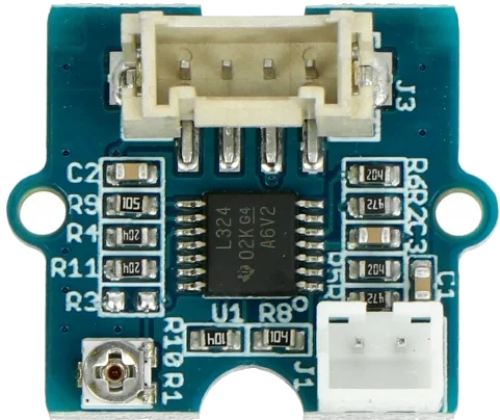
 Design with Grove GSR sensor - electrical resistance of the skin in Cirkit Designer
Introduction
The Grove GSR Sensor (Manufacturer Part ID: SEN01400P) by Seeed is a compact and reliable sensor designed to measure the electrical resistance of the skin. This measurement, known as Galvanic Skin Response (GSR), is commonly used to assess emotional arousal or stress levels by detecting changes in sweat gland activity. The sensor is ideal for applications in biofeedback, stress monitoring, and human-computer interaction systems.
Explore Projects Built with Grove GSR sensor - electrical resistance of the skin
 Open Project in Cirkit Designer
 Open Project in Cirkit Designer
 Open Project in Cirkit Designer
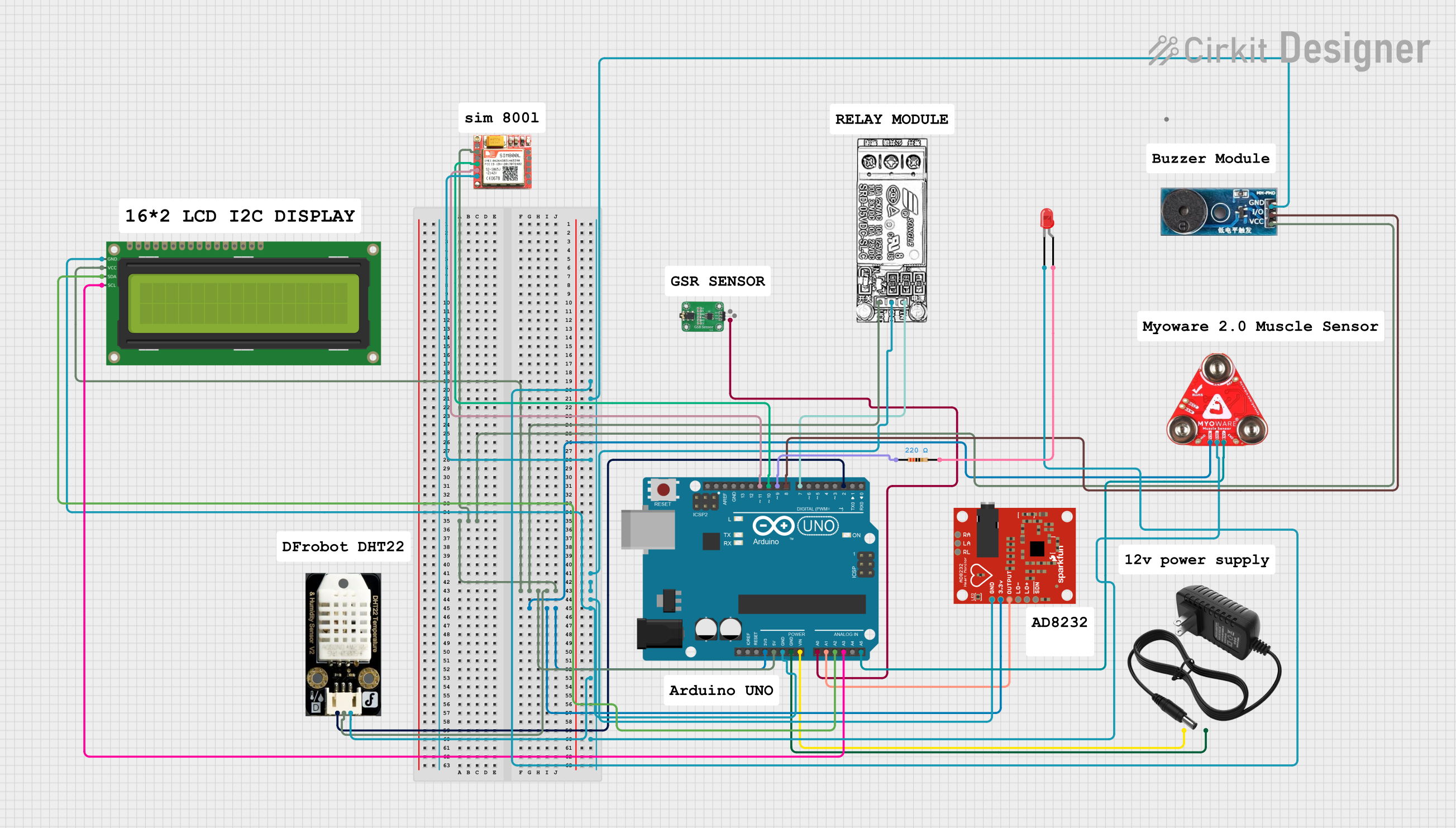 Open Project in Cirkit Designer
Explore Projects Built with Grove GSR sensor - electrical resistance of the skin
Open Project in Cirkit DesignerOpen Project in Cirkit DesignerOpen Project in Cirkit DesignerOpen Project in Cirkit DesignerCommon Applications and Use Cases
- Stress level monitoring
- Biofeedback systems
- Emotional state detection
- Research in psychology and human behavior
- Wearable health devices
Technical Specifications
The following table outlines the key technical details of the Grove GSR Sensor:
| Parameter | Value |
|---|---|
| Operating Voltage | 3.3V to 5V |
| Output Signal | Analog voltage |
| Measurement Range | 0 to 1023 (10-bit ADC output) |
| Connector Type | Grove 4-pin interface |
| Dimensions | 20mm x 20mm |
| Weight | 9g |
| Operating Temperature | 0°C to 50°C |
Pin Configuration and Descriptions
The Grove GSR Sensor uses a standard Grove 4-pin interface. The pin configuration is as follows:
| Pin | Name | Description |
|---|---|---|
| 1 | VCC | Power supply input (3.3V to 5V) |
| 2 | GND | Ground connection |
| 3 | NC | Not connected |
| 4 | SIG | Analog signal output proportional to skin resistance |
Usage Instructions
How to Use the Component in a Circuit
Connect the Sensor:
- Use a Grove Base Shield or Grove-compatible interface to connect the sensor to your microcontroller.
- Connect the VCC pin to the 3.3V or 5V power supply of your microcontroller.
- Connect the GND pin to the ground of your microcontroller.
- Connect the SIG pin to an analog input pin on your microcontroller (e.g., A0 on an Arduino UNO).
Attach the Electrodes:
- Place the included electrodes on two fingers of one hand. Ensure the skin is clean and dry for accurate readings.
Read the Output:
- The sensor outputs an analog voltage signal proportional to the skin's electrical resistance. This signal can be read using the analog input of your microcontroller.
Important Considerations and Best Practices
- Placement of Electrodes: For consistent results, place the electrodes on the same fingers each time (e.g., index and middle fingers).
- Skin Preparation: Clean the skin with alcohol wipes to remove oils or dirt that may affect readings.
- Avoid Noise: Ensure the sensor is not exposed to electrical noise or interference from nearby components.
- Calibration: The sensor's output may vary between individuals. Perform calibration to map the raw analog values to meaningful stress levels or resistance values.
Example Code for Arduino UNO
Below is an example Arduino sketch to read data from the Grove GSR Sensor and display it on the Serial Monitor:
// Grove GSR Sensor Example Code
// Connect the SIG pin of the sensor to A0 on the Arduino UNO

const int GSR_PIN = A0; // Analog pin connected to the sensor's SIG pin

void setup() {
  Serial.begin(9600); // Initialize serial communication at 9600 baud
  Serial.println("Grove GSR Sensor Test");
}

void loop() {
  int sensorValue = analogRead(GSR_PIN); // Read the analog value from the sensor
  Serial.print("GSR Sensor Value: ");
  Serial.println(sensorValue); // Print the value to the Serial Monitor

  delay(500); // Wait for 500ms before the next reading
}
Notes:
- The
sensorValuewill range from 0 to 1023, corresponding to the skin's electrical resistance. - You can map these values to stress levels or other metrics based on your application.
Troubleshooting and FAQs
Common Issues and Solutions
No Output or Constant Value:
- Cause: Loose connections or incorrect wiring.
- Solution: Verify that the sensor is properly connected to the microcontroller and that the electrodes are securely attached to the skin.
Fluctuating or Noisy Readings:
- Cause: Electrical interference or poor skin contact.
- Solution: Ensure the sensor is placed away from sources of electrical noise. Clean the skin and ensure the electrodes are firmly attached.
Inconsistent Results Between Users:
- Cause: Variations in skin properties between individuals.
- Solution: Perform calibration for each user to account for individual differences.
Low Sensitivity:
- Cause: Dry skin or improper electrode placement.
- Solution: Moisten the skin slightly or reposition the electrodes for better contact.
FAQs
Q: Can the sensor be used with microcontrollers other than Arduino?
A: Yes, the Grove GSR Sensor can be used with any microcontroller that supports analog input, such as Raspberry Pi (with an ADC module) or ESP32.
Q: How do I interpret the sensor's output?
A: The sensor outputs an analog voltage proportional to the skin's electrical resistance. Higher resistance typically indicates lower sweat gland activity, while lower resistance indicates higher activity.
Q: Is the sensor safe for prolonged use?
A: Yes, the sensor is safe for prolonged use. However, ensure the electrodes are cleaned regularly to maintain hygiene.
Q: Can the sensor be used on other parts of the body?
A: While the sensor is typically used on fingers, it can be used on other areas of the body with proper placement and calibration.
This concludes the documentation for the Grove GSR Sensor. For further assistance, refer to the official Seeed documentation or support resources.