
How to Use AC 3 Phase Source: Examples, Pinouts, and Specs

 Design with AC 3 Phase Source in Cirkit Designer
Introduction
The AC 3 Phase Source is a power source that provides alternating current (AC) in three distinct phases. Unlike single-phase power, which delivers power through a single alternating voltage, a three-phase source delivers power through three alternating voltages that are 120 degrees out of phase with each other. This configuration ensures a constant power transfer, making it highly efficient for industrial and commercial applications.
Explore Projects Built with AC 3 Phase Source
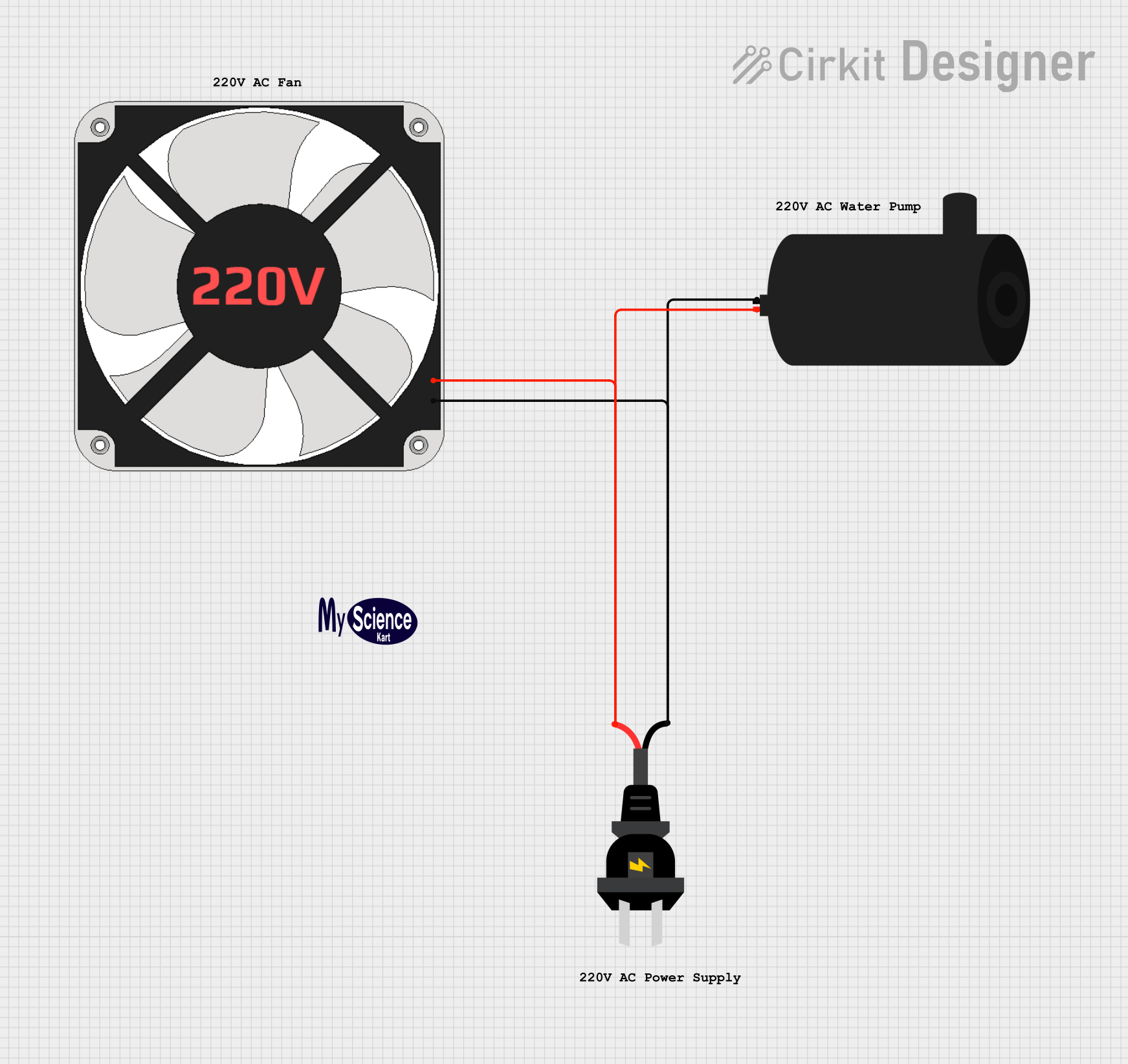 Open Project in Cirkit Designer
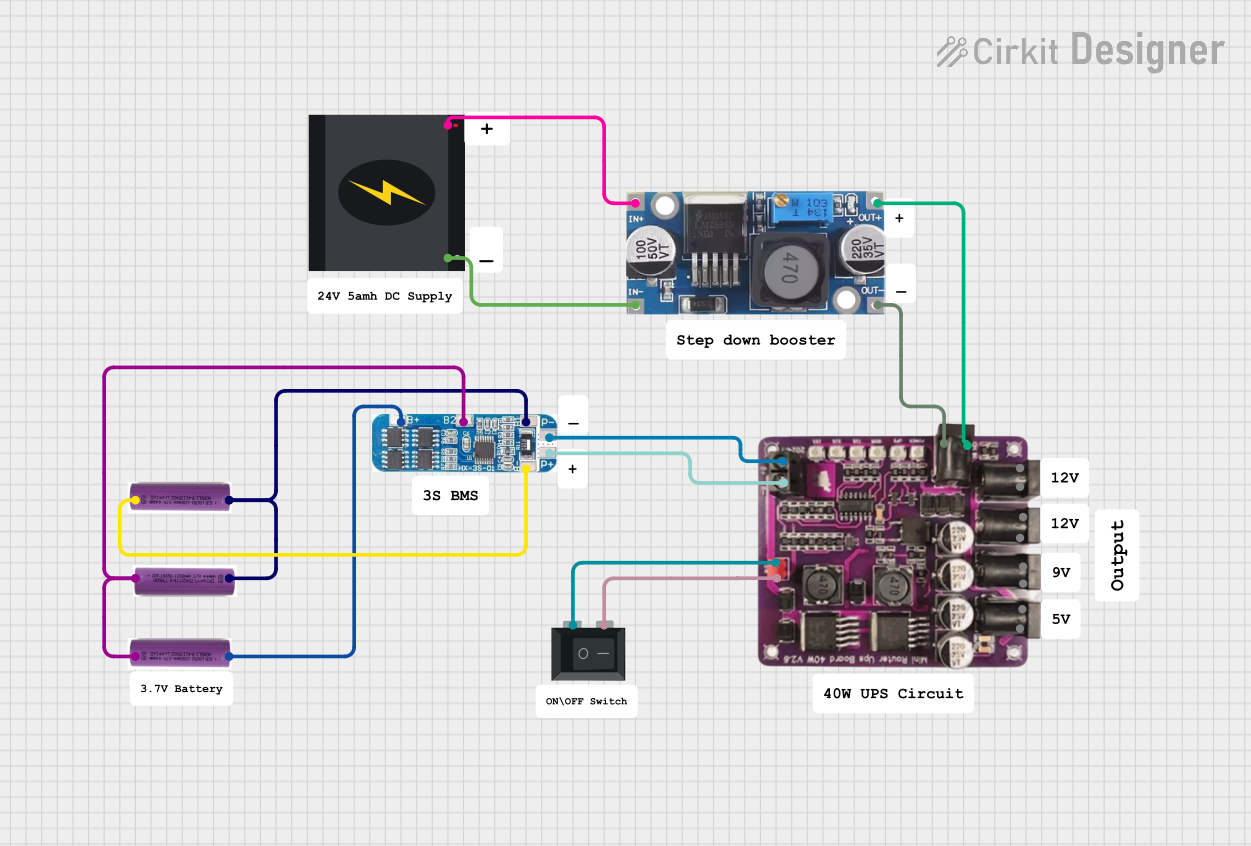 Open Project in Cirkit Designer
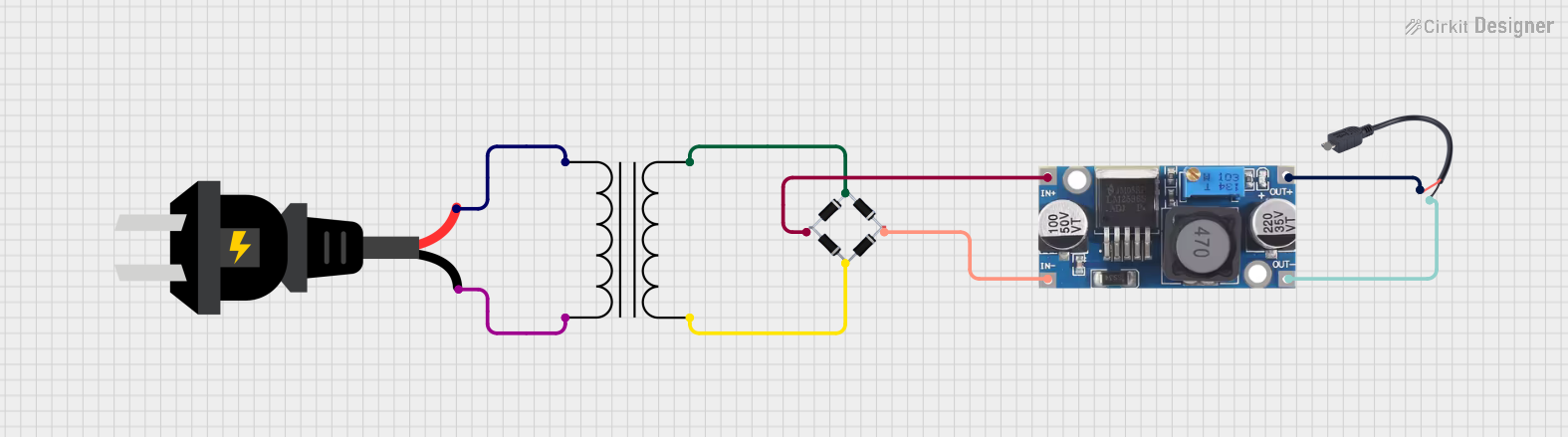 Open Project in Cirkit Designer
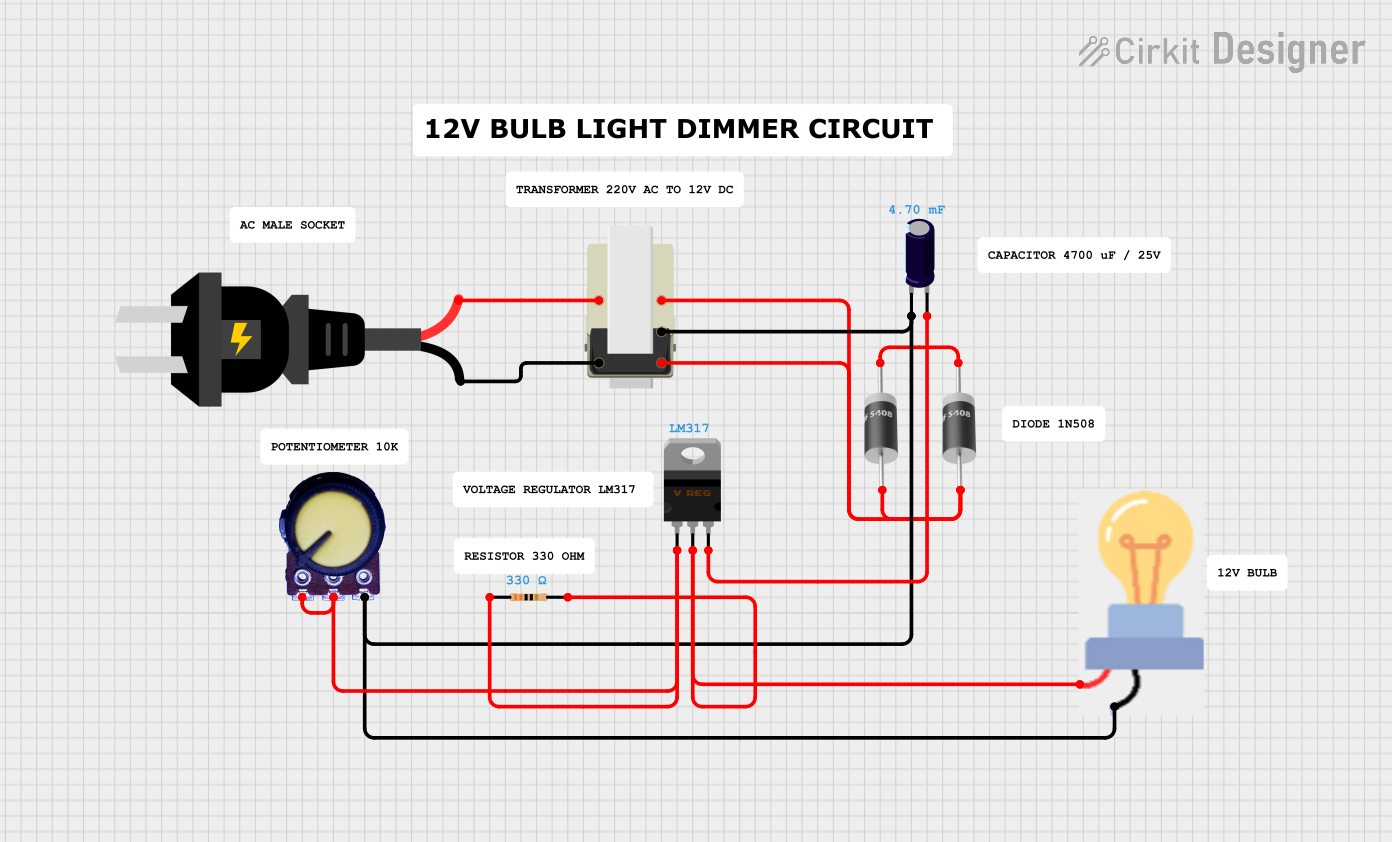 Open Project in Cirkit Designer
Explore Projects Built with AC 3 Phase Source
Open Project in Cirkit DesignerOpen Project in Cirkit DesignerOpen Project in Cirkit DesignerOpen Project in Cirkit DesignerCommon Applications and Use Cases
- Industrial Motors and Drives: Used to power three-phase motors for machinery and equipment.
- Power Distribution: Commonly used in power grids for efficient energy transmission.
- HVAC Systems: Powers large heating, ventilation, and air conditioning systems.
- Renewable Energy Systems: Integrated into wind turbines and solar inverters.
- Data Centers: Supplies power to high-capacity servers and cooling systems.
Technical Specifications
The following table outlines the key technical specifications of a standard AC 3 Phase Source:
| Parameter | Specification |
|---|---|
| Voltage Range | 208V, 400V, 480V (common standards) |
| Frequency | 50 Hz or 60 Hz |
| Phase Angle Difference | 120° between each phase |
| Power Rating | Varies (commonly 1 kW to 1 MW) |
| Output Waveform | Sinusoidal |
| Efficiency | Typically >90% |
Pin Configuration and Descriptions
The AC 3 Phase Source typically has three output terminals (phases) and one neutral terminal. The table below describes the connections:
| Pin | Label | Description |
|---|---|---|
| 1 | L1 | Phase 1 output |
| 2 | L2 | Phase 2 output |
| 3 | L3 | Phase 3 output |
| 4 | N | Neutral (optional, depending on system configuration) |
Usage Instructions
How to Use the Component in a Circuit
- Connection to Load: Connect the three-phase output terminals (L1, L2, L3) to the corresponding input terminals of the load (e.g., a three-phase motor or transformer).
- Neutral Connection: If the load requires a neutral connection, connect the neutral terminal (N) to the load's neutral input.
- Grounding: Ensure proper grounding of the system to prevent electrical hazards.
- Voltage and Frequency Matching: Verify that the voltage and frequency of the AC 3 Phase Source match the requirements of the connected load.
- Circuit Protection: Use appropriate circuit breakers or fuses to protect the system from overcurrent or short circuits.
Important Considerations and Best Practices
- Load Balancing: Ensure that the load is evenly distributed across all three phases to prevent overloading a single phase.
- Startup Precautions: Gradually power up the system to avoid inrush currents that could damage the load.
- Harmonics: Use filters if the load generates significant harmonic distortion to maintain power quality.
- Safety: Always follow electrical safety standards and use insulated tools when working with high-voltage systems.
Example: Connecting to an Arduino UNO
While an AC 3 Phase Source cannot be directly connected to an Arduino UNO due to its high voltage, you can use sensors like a voltage or current transformer to monitor the source. Below is an example code snippet for reading voltage data using a sensor:
// Example code for reading voltage data from a sensor connected to an Arduino UNO
// Note: Ensure proper isolation between the high-voltage AC source and the Arduino

const int sensorPin = A0; // Analog pin connected to the voltage sensor
float voltage = 0.0;

void setup() {
  Serial.begin(9600); // Initialize serial communication
}

void loop() {
  int sensorValue = analogRead(sensorPin); // Read the sensor value
  voltage = (sensorValue * 5.0) / 1023.0; // Convert to voltage (assuming 5V reference)

  // Print the voltage value to the Serial Monitor
  Serial.print("Voltage: ");
  Serial.print(voltage);
  Serial.println(" V");

  delay(1000); // Wait for 1 second before the next reading
}
Troubleshooting and FAQs
Common Issues Users Might Face
Unbalanced Load: One phase carries more load than the others, causing overheating or inefficiency.
- Solution: Redistribute the load evenly across all three phases.
Voltage Fluctuations: The output voltage is unstable or outside the expected range.
- Solution: Check the input power source and ensure proper grounding. Use voltage stabilizers if necessary.
Overheating: The source or connected load overheats during operation.
- Solution: Verify that the load does not exceed the power rating of the source. Ensure adequate ventilation.
Harmonic Distortion: The waveform is distorted, affecting the performance of connected equipment.
- Solution: Install harmonic filters or use equipment designed to handle distorted waveforms.
FAQs
Q: Can I use an AC 3 Phase Source for single-phase equipment?
A: Yes, you can use one phase and the neutral terminal to power single-phase equipment, but ensure the voltage matches the equipment's requirements.
Q: What happens if one phase fails?
A: This is called a "single phasing" condition, which can damage three-phase motors. Use phase failure protection devices to prevent this.
Q: How do I measure the power output of an AC 3 Phase Source?
A: Use a three-phase power meter to measure voltage, current, and power factor for accurate power calculations.
Q: Is it safe to work with an AC 3 Phase Source?
A: Only qualified personnel should handle high-voltage systems. Always follow safety protocols and use appropriate protective equipment.