
How to Use ssd1306 128x32: Examples, Pinouts, and Specs
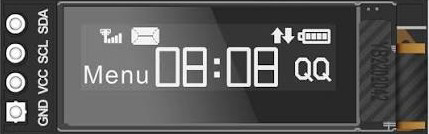
 Design with ssd1306 128x32 in Cirkit Designer
Introduction
The SSD1306 128x32 is a monochrome OLED display driver manufactured by DSD Tech. It supports a resolution of 128x32 pixels, making it ideal for compact displays in embedded systems. This component is widely used for displaying text, graphics, and simple animations in applications requiring low power consumption and high contrast. Its small form factor and I2C/SPI communication interfaces make it a popular choice for microcontroller-based projects.
Explore Projects Built with ssd1306 128x32
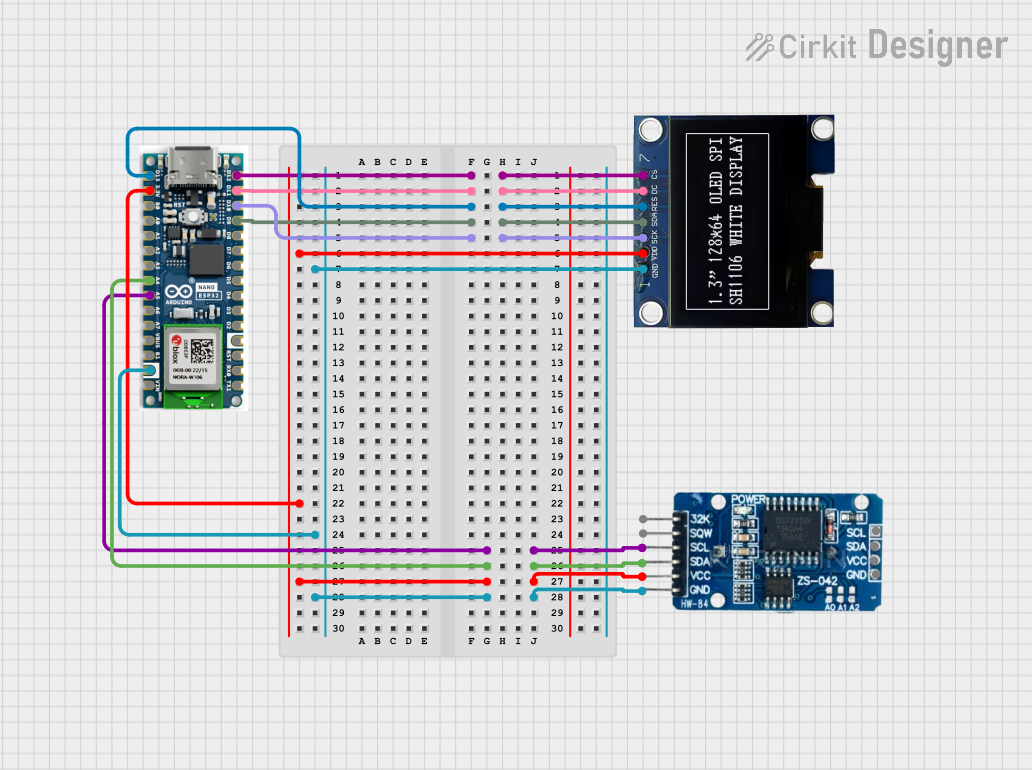 Open Project in Cirkit Designer
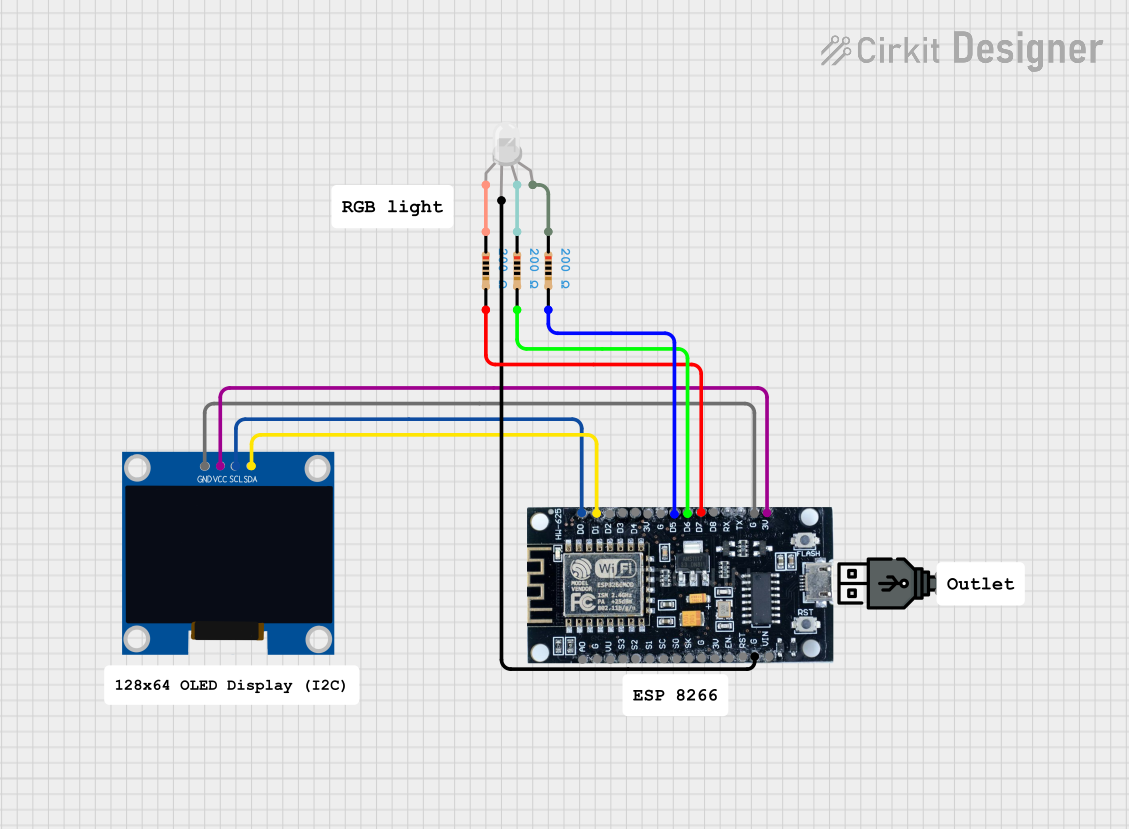 Open Project in Cirkit Designer
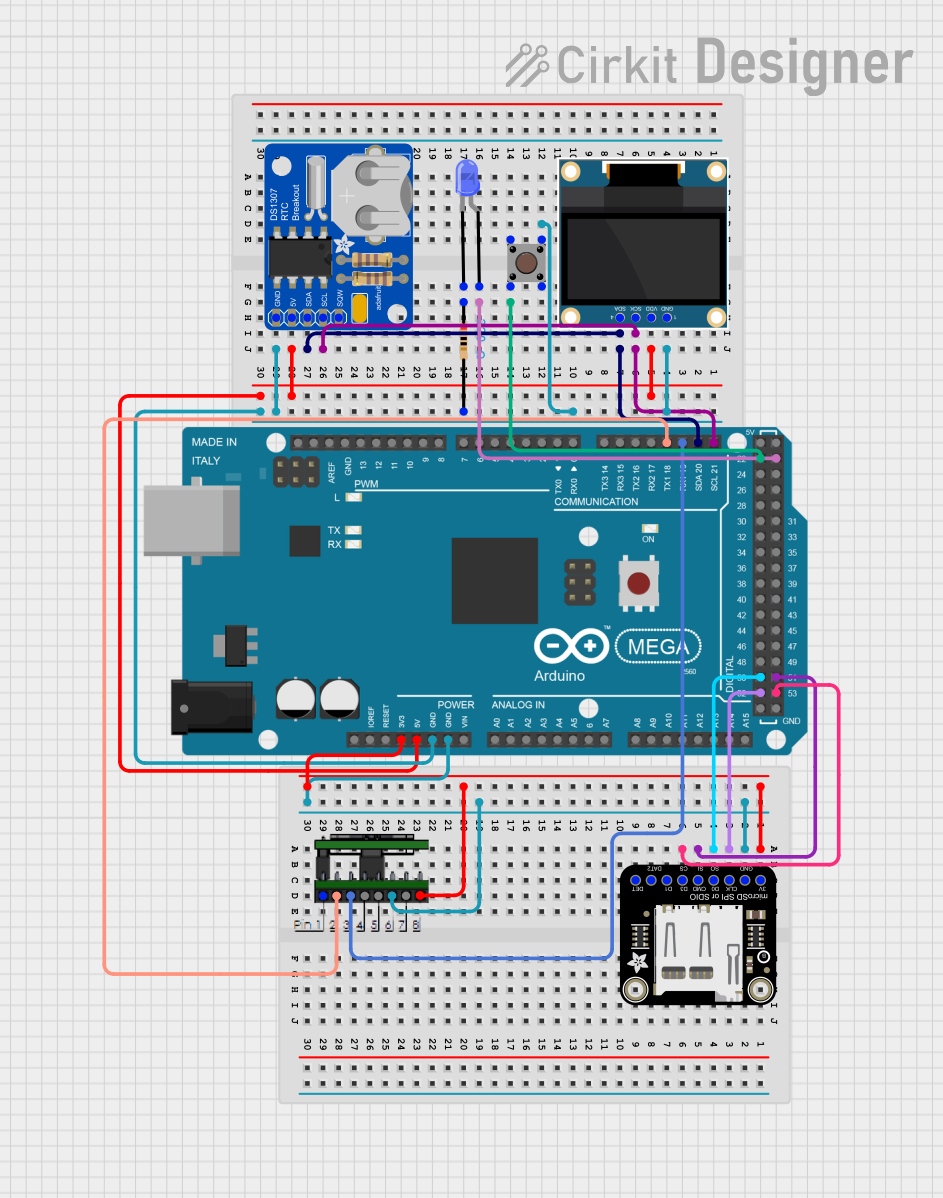 Open Project in Cirkit Designer
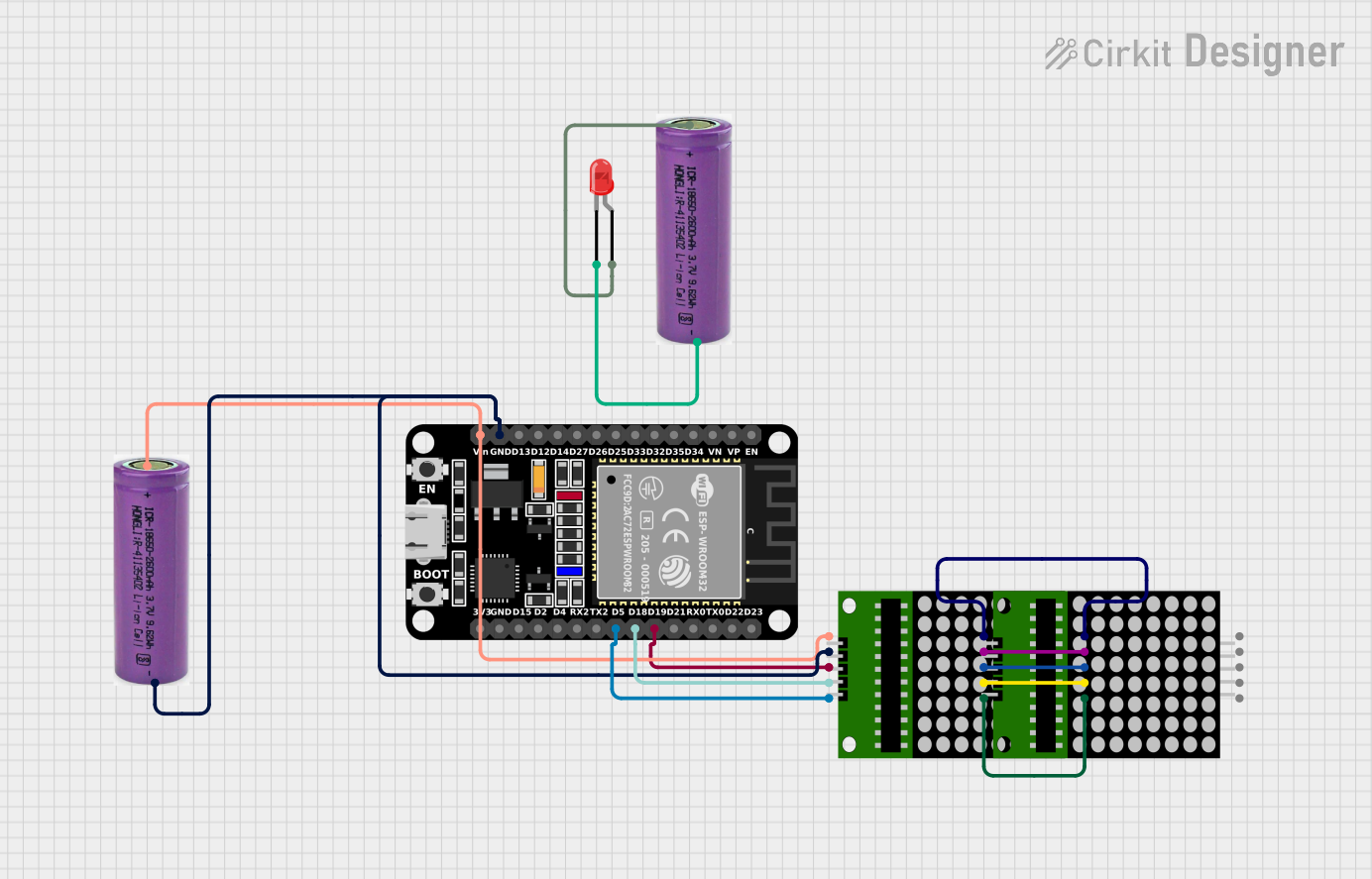 Open Project in Cirkit Designer
Explore Projects Built with ssd1306 128x32
Open Project in Cirkit DesignerOpen Project in Cirkit DesignerOpen Project in Cirkit DesignerOpen Project in Cirkit DesignerCommon Applications
- Wearable devices
- IoT dashboards
- Portable instruments
- Embedded system displays
- Arduino and Raspberry Pi projects
Technical Specifications
Key Technical Details
| Parameter | Value |
|---|---|
| Manufacturer | DSD Tech |
| Part ID | SSD1306 128x32 |
| Display Type | Monochrome OLED |
| Resolution | 128x32 pixels |
| Communication Interface | I2C or SPI |
| Operating Voltage | 3.3V to 5V |
| Current Consumption | ~20mA (typical) |
| Pixel Color | White |
| Dimensions | ~22mm x 11mm |
Pin Configuration (I2C Mode)
| Pin Name | Pin Number | Description |
|---|---|---|
| GND | 1 | Ground |
| VCC | 2 | Power supply (3.3V or 5V) |
| SCL | 3 | Serial Clock Line (I2C) |
| SDA | 4 | Serial Data Line (I2C) |
Pin Configuration (SPI Mode)
| Pin Name | Pin Number | Description |
|---|---|---|
| GND | 1 | Ground |
| VCC | 2 | Power supply (3.3V or 5V) |
| SCK | 3 | Serial Clock (SPI) |
| MOSI | 4 | Master Out Slave In (SPI) |
| CS | 5 | Chip Select (SPI) |
| DC | 6 | Data/Command Control |
| RES | 7 | Reset |
Usage Instructions
Connecting the SSD1306 128x32 to an Arduino UNO (I2C Mode)
Wiring:
- Connect the GND pin of the display to the GND pin of the Arduino.
- Connect the VCC pin of the display to the 5V pin of the Arduino.
- Connect the SCL pin of the display to the A5 pin of the Arduino (I2C clock).
- Connect the SDA pin of the display to the A4 pin of the Arduino (I2C data).
Install Required Libraries:
- Install the
Adafruit_GFXandAdafruit_SSD1306libraries from the Arduino Library Manager.
- Install the
Example Code: Below is an example sketch to display "Hello, World!" on the SSD1306 128x32 display:
#include <Wire.h>
#include <Adafruit_GFX.h>
#include <Adafruit_SSD1306.h>

// Define the screen dimensions
#define SCREEN_WIDTH 128
#define SCREEN_HEIGHT 32

// Create an SSD1306 object with I2C address 0x3C
Adafruit_SSD1306 display(SCREEN_WIDTH, SCREEN_HEIGHT, &Wire, -1);

void setup() {
  // Initialize the display
  if (!display.begin(SSD1306_I2C_ADDRESS, 0x3C)) {
    // If initialization fails, print an error message
    Serial.println(F("SSD1306 allocation failed"));
    for (;;); // Halt execution
  }

  // Clear the display buffer
  display.clearDisplay();

  // Set text size and color
  display.setTextSize(1); // Text size multiplier
  display.setTextColor(SSD1306_WHITE);

  // Set cursor position
  display.setCursor(0, 0);

  // Print text to the display buffer
  display.println(F("Hello, World!"));

  // Display the buffer content on the screen
  display.display();
}

void loop() {
  // Nothing to do here
}
Important Considerations
- Ensure the I2C address of the display matches the one in your code (default is
0x3C). - Use pull-up resistors (4.7kΩ to 10kΩ) on the SDA and SCL lines if communication issues occur.
- Avoid exceeding the operating voltage range (3.3V to 5V) to prevent damage to the display.
- For SPI mode, ensure proper configuration of the CS, DC, and RES pins in your code.
Troubleshooting and FAQs
Common Issues
Display Not Turning On:
- Verify the wiring connections, especially the power (VCC and GND) pins.
- Ensure the correct I2C address (
0x3Cor0x3D) is used in the code.
Flickering or Corrupted Display:
- Check for loose connections on the SDA and SCL lines.
- Use shorter wires to reduce noise in the I2C communication.
Library Errors During Compilation:
- Ensure the
Adafruit_GFXandAdafruit_SSD1306libraries are installed and up to date. - Restart the Arduino IDE after installing the libraries.
- Ensure the
Blank Screen After Uploading Code:
- Confirm that the display dimensions (128x32) are correctly defined in the code.
- Check the power supply voltage and current to ensure it meets the display's requirements.
FAQs
Q: Can I use the SSD1306 128x32 with a Raspberry Pi?
A: Yes, the SSD1306 128x32 is compatible with Raspberry Pi. You can use libraries like luma.oled in Python to control the display.
Q: What is the maximum refresh rate of the display?
A: The SSD1306 supports a refresh rate of up to 100Hz, depending on the communication interface and configuration.
Q: Can I daisy-chain multiple SSD1306 displays?
A: No, the SSD1306 does not support daisy-chaining. However, you can use multiple displays with different I2C addresses or separate SPI chip select lines.
Q: Is the display sunlight-readable?
A: The SSD1306 128x32 is not designed for direct sunlight readability due to its limited brightness. It is best suited for indoor or shaded environments.