
How to Use Microwave Radar Doppler Motion Sensor Module: Examples, Pinouts, and Specs
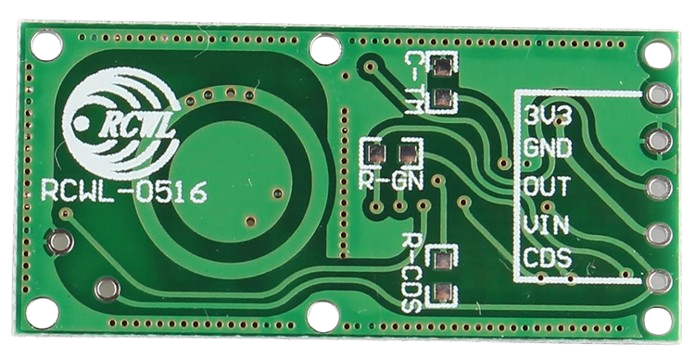
 Design with Microwave Radar Doppler Motion Sensor Module in Cirkit Designer
Introduction
The Microwave Radar Doppler Motion Sensor Module is a highly sensitive motion detection device that operates using microwave radar technology. It detects motion by measuring the Doppler effect of reflected microwave signals, making it capable of sensing moving objects even through certain non-metallic materials like walls or plastic. Unlike traditional PIR (Passive Infrared) sensors, this module is not affected by ambient temperature changes, making it ideal for a wide range of applications.
Explore Projects Built with Microwave Radar Doppler Motion Sensor Module
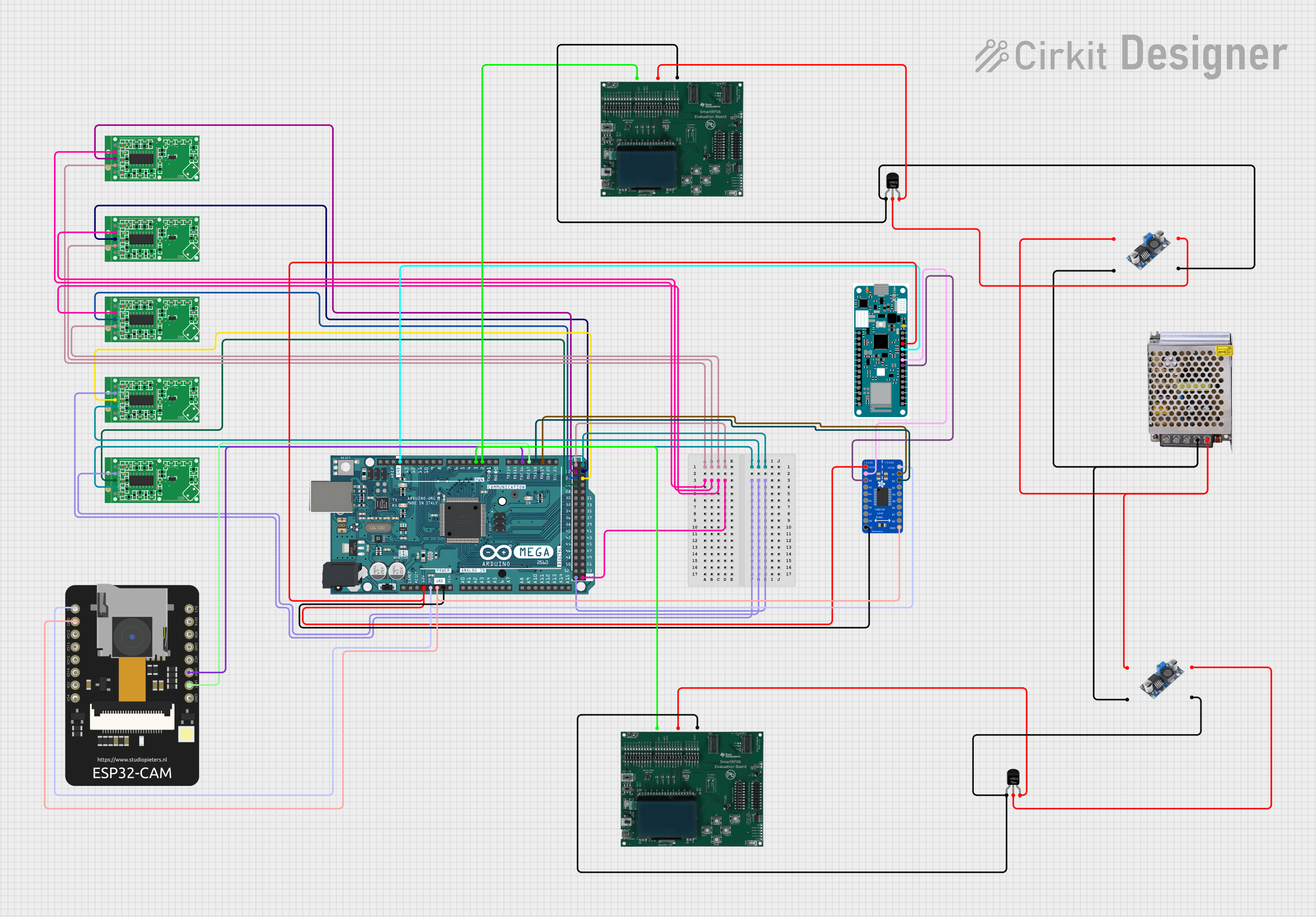 Open Project in Cirkit Designer
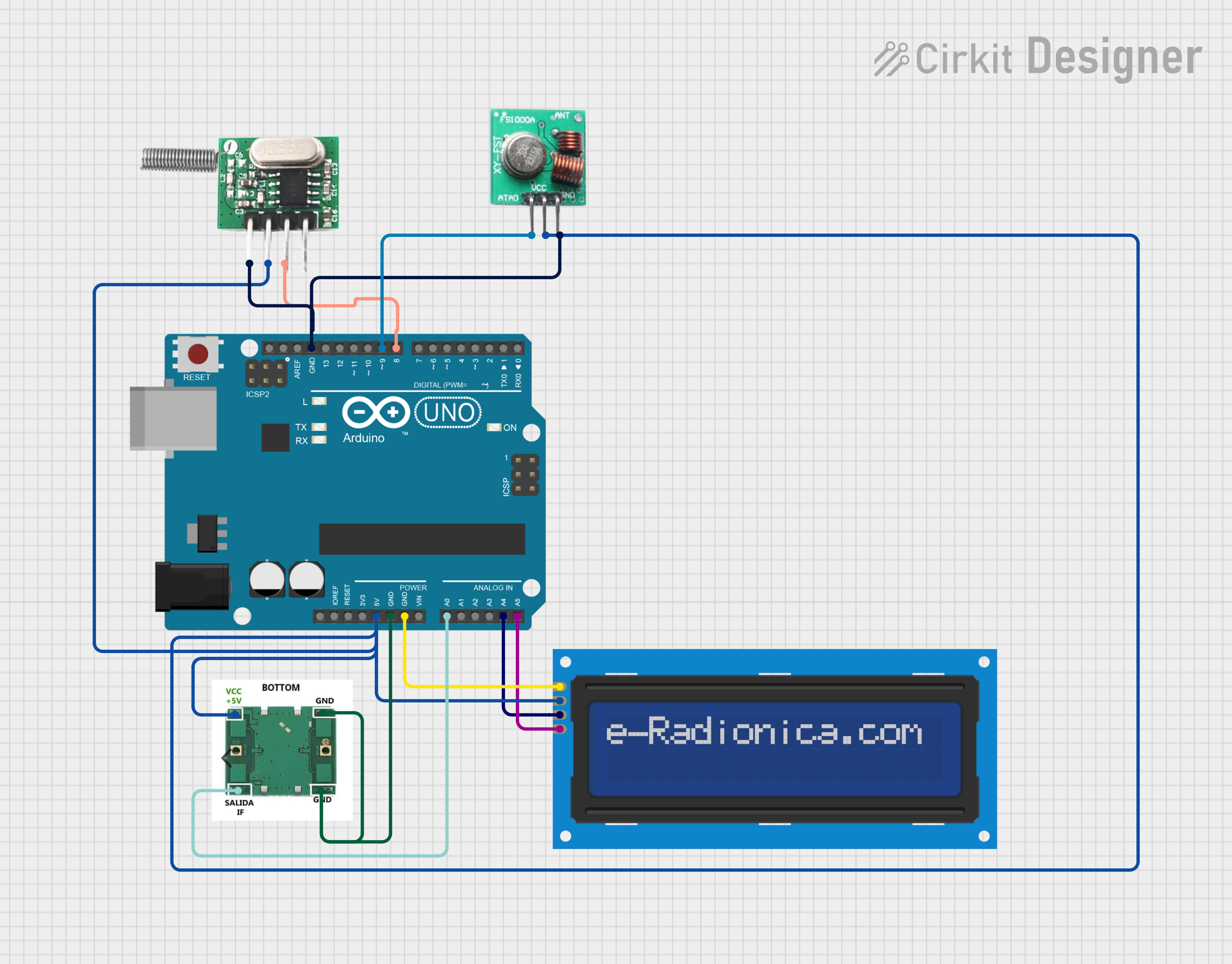 Open Project in Cirkit Designer
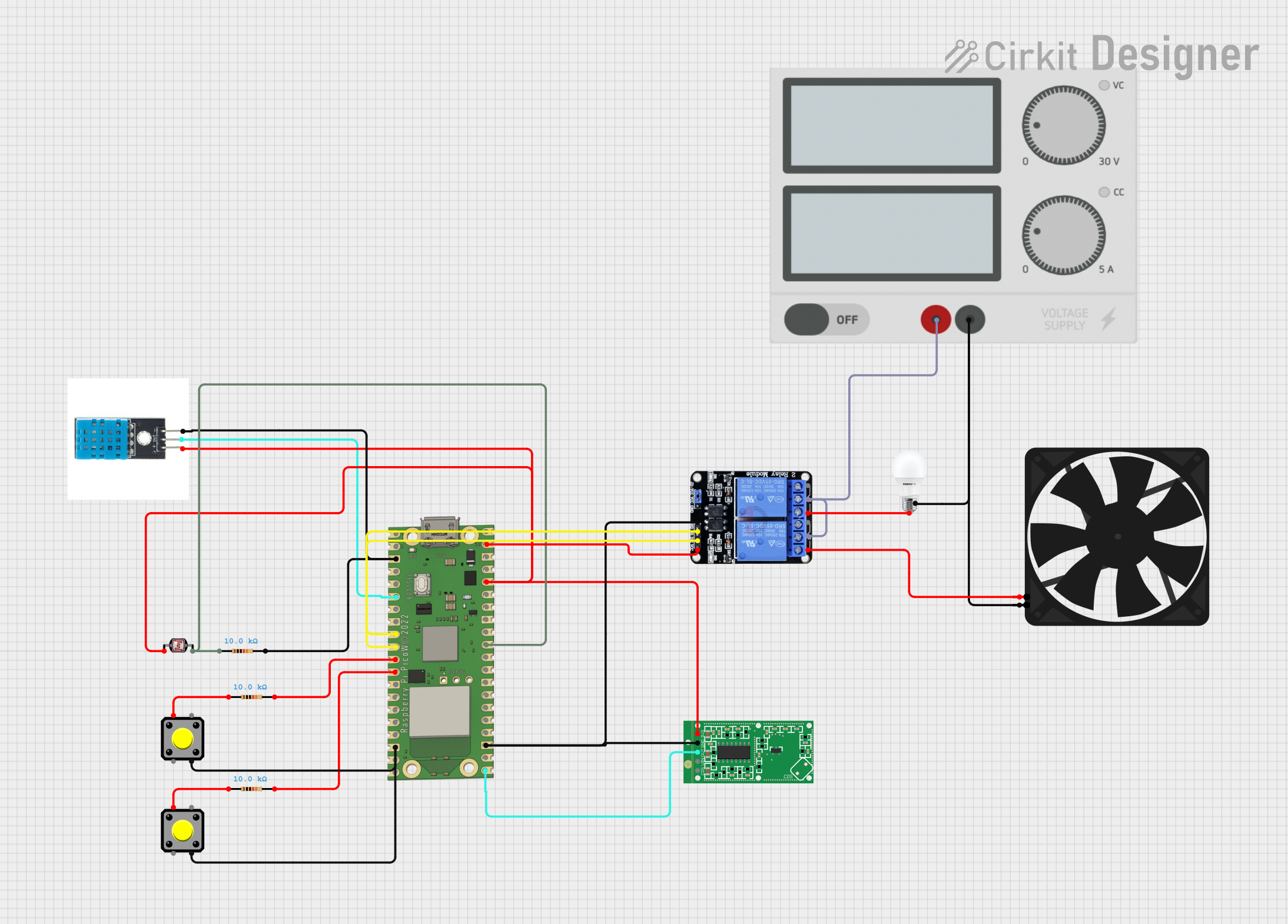 Open Project in Cirkit Designer
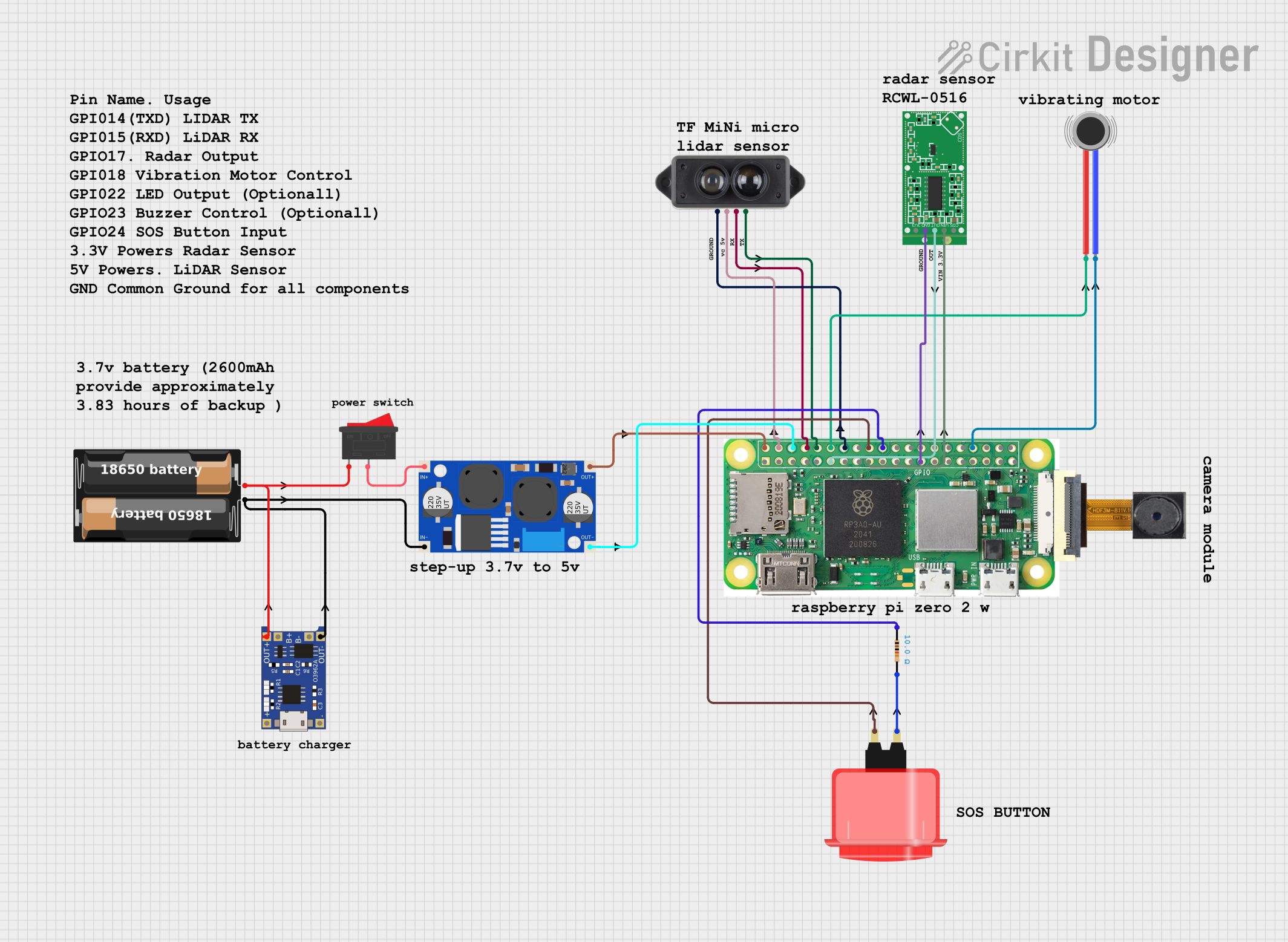 Open Project in Cirkit Designer
Explore Projects Built with Microwave Radar Doppler Motion Sensor Module
Open Project in Cirkit DesignerOpen Project in Cirkit DesignerOpen Project in Cirkit DesignerOpen Project in Cirkit DesignerCommon Applications and Use Cases
- Security systems for motion detection
- Automatic lighting systems
- Industrial automation for object detection
- Smart home devices
- Robotics for obstacle detection
Technical Specifications
The following table outlines the key technical details of the Microwave Radar Doppler Motion Sensor Module:
| Parameter | Specification |
|---|---|
| Operating Voltage | 4.0V to 28.0V DC |
| Operating Current | < 3mA |
| Detection Range | 5 to 15 meters (adjustable) |
| Operating Frequency | 10.525 GHz |
| Output Voltage (High) | 3.3V |
| Output Voltage (Low) | 0V |
| Detection Angle | 360° (omnidirectional) |
| Operating Temperature | -20°C to +80°C |
| Dimensions | ~35mm x 17mm x 8mm |
Pin Configuration and Descriptions
The module typically has three or four pins, depending on the model. Below is the pin configuration:
| Pin Name | Description |
|---|---|
| VCC | Power supply input (4.0V to 28.0V DC) |
| GND | Ground connection |
| OUT | Output signal pin (High: motion detected, Low: no motion) |
| EN (optional) | Enable pin for controlling the module (active high) |
Usage Instructions
How to Use the Component in a Circuit
- Power the Module: Connect the
VCCpin to a DC power source (4.0V to 28.0V) and theGNDpin to the ground of your circuit. - Connect the Output: Use the
OUTpin to interface with a microcontroller, relay, or other control circuitry. The output will be HIGH (3.3V) when motion is detected and LOW (0V) otherwise. - Optional Enable Pin: If your module includes an
ENpin, you can use it to enable or disable the sensor. Connect it to a HIGH signal (e.g., 3.3V) to enable the module.
Important Considerations and Best Practices
- Placement: Avoid placing the module near large metal objects, as they can interfere with the microwave signals.
- Obstructions: The sensor can detect motion through non-metallic materials like wood, plastic, or glass, but detection range may vary.
- Power Supply: Ensure a stable power supply to avoid false triggers or erratic behavior.
- Adjustments: Some modules allow you to adjust the detection range and sensitivity using onboard potentiometers.
Example: Connecting to an Arduino UNO
Below is an example of how to connect the Microwave Radar Doppler Motion Sensor Module to an Arduino UNO and read motion detection data.
Circuit Diagram
- Connect the
VCCpin of the module to the 5V pin of the Arduino. - Connect the
GNDpin of the module to the GND pin of the Arduino. - Connect the
OUTpin of the module to digital pin 2 of the Arduino.
Arduino Code
// Define the pin connected to the sensor's output
const int sensorPin = 2;
// Define the onboard LED pin
const int ledPin = 13;

void setup() {
  pinMode(sensorPin, INPUT);  // Set the sensor pin as input
  pinMode(ledPin, OUTPUT);   // Set the LED pin as output
  Serial.begin(9600);        // Initialize serial communication
}

void loop() {
  int motionDetected = digitalRead(sensorPin);  // Read the sensor output

  if (motionDetected == HIGH) {  // If motion is detected
    digitalWrite(ledPin, HIGH);  // Turn on the LED
    Serial.println("Motion detected!");  // Print message to serial monitor
  } else {
    digitalWrite(ledPin, LOW);   // Turn off the LED
    Serial.println("No motion detected.");  // Print message to serial monitor
  }

  delay(500);  // Wait for 500ms before the next reading
}
Troubleshooting and FAQs
Common Issues and Solutions
False Triggers:
- Cause: Electrical noise or unstable power supply.
- Solution: Use a decoupling capacitor (e.g., 0.1µF) across the
VCCandGNDpins to stabilize the power supply.
No Motion Detected:
- Cause: Incorrect placement or obstructions.
- Solution: Ensure the sensor is not blocked by metallic objects and is placed in an open area.
Short Detection Range:
- Cause: Sensitivity settings or environmental factors.
- Solution: Adjust the sensitivity potentiometer (if available) or test in a different environment.
Interference with Other Devices:
- Cause: Operating frequency overlaps with other devices.
- Solution: Ensure the module is not placed near devices operating at 10.525 GHz.
FAQs
Q1: Can the sensor detect motion through walls?
A1: Yes, the sensor can detect motion through non-metallic walls, but the detection range may be reduced.
Q2: Is the module affected by ambient temperature?
A2: No, the module uses microwave radar technology, which is not influenced by temperature changes.
Q3: Can I use this module outdoors?
A3: Yes, but ensure it is protected from direct exposure to water or extreme environmental conditions.
Q4: How do I increase the detection range?
A4: If your module has an adjustable potentiometer, you can increase the sensitivity to extend the range.