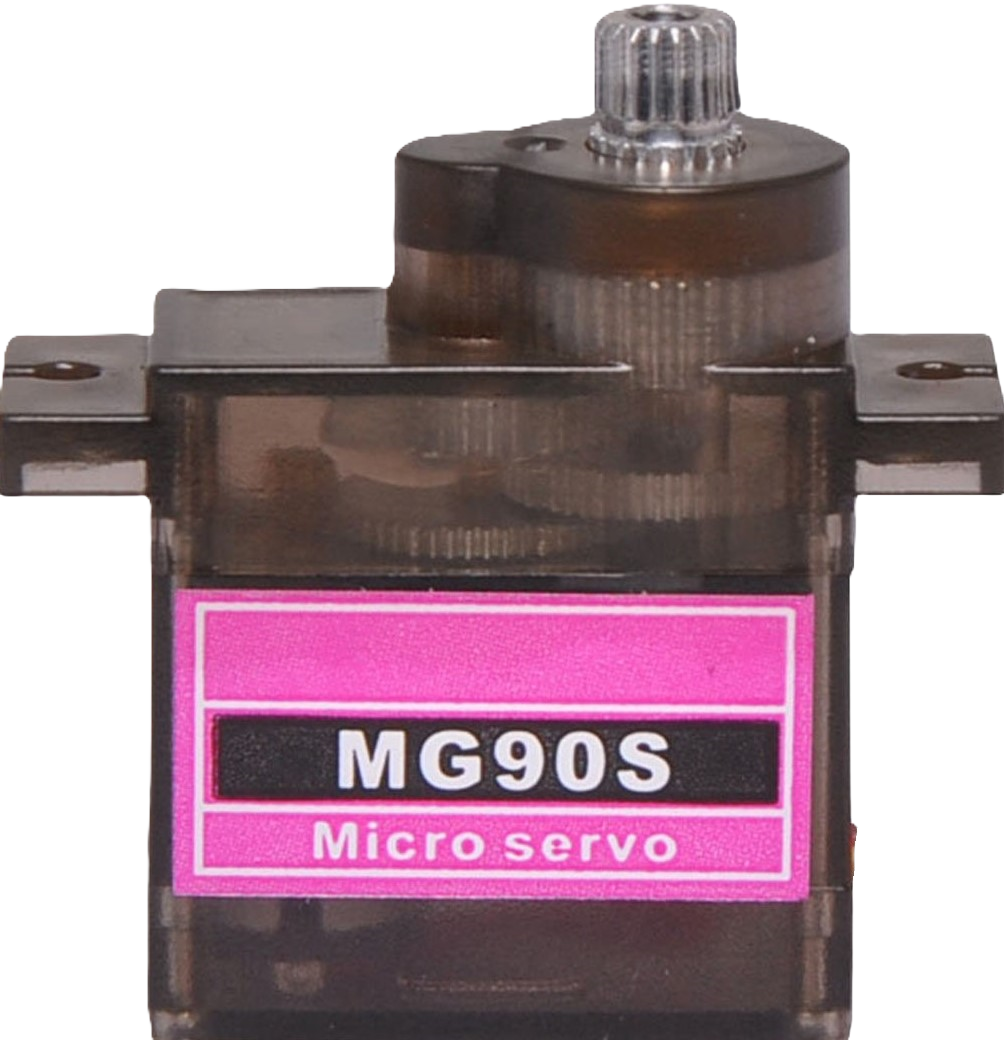
The MG90S is a micro servo motor manufactured by Tower Pro, renowned for its compact size, lightweight design, and high performance. It is widely used in robotics, remote-controlled devices, and other applications requiring precise mechanical movement. The MG90S features a 180-degree range of motion and is equipped with metal gears, ensuring durability and reliability under load.
Explore Projects Built with MG90S
Use Cirkit Designer to design, explore, and prototype these projects online. Some projects support real-time simulation. Click "Open Project" to start designing instantly!
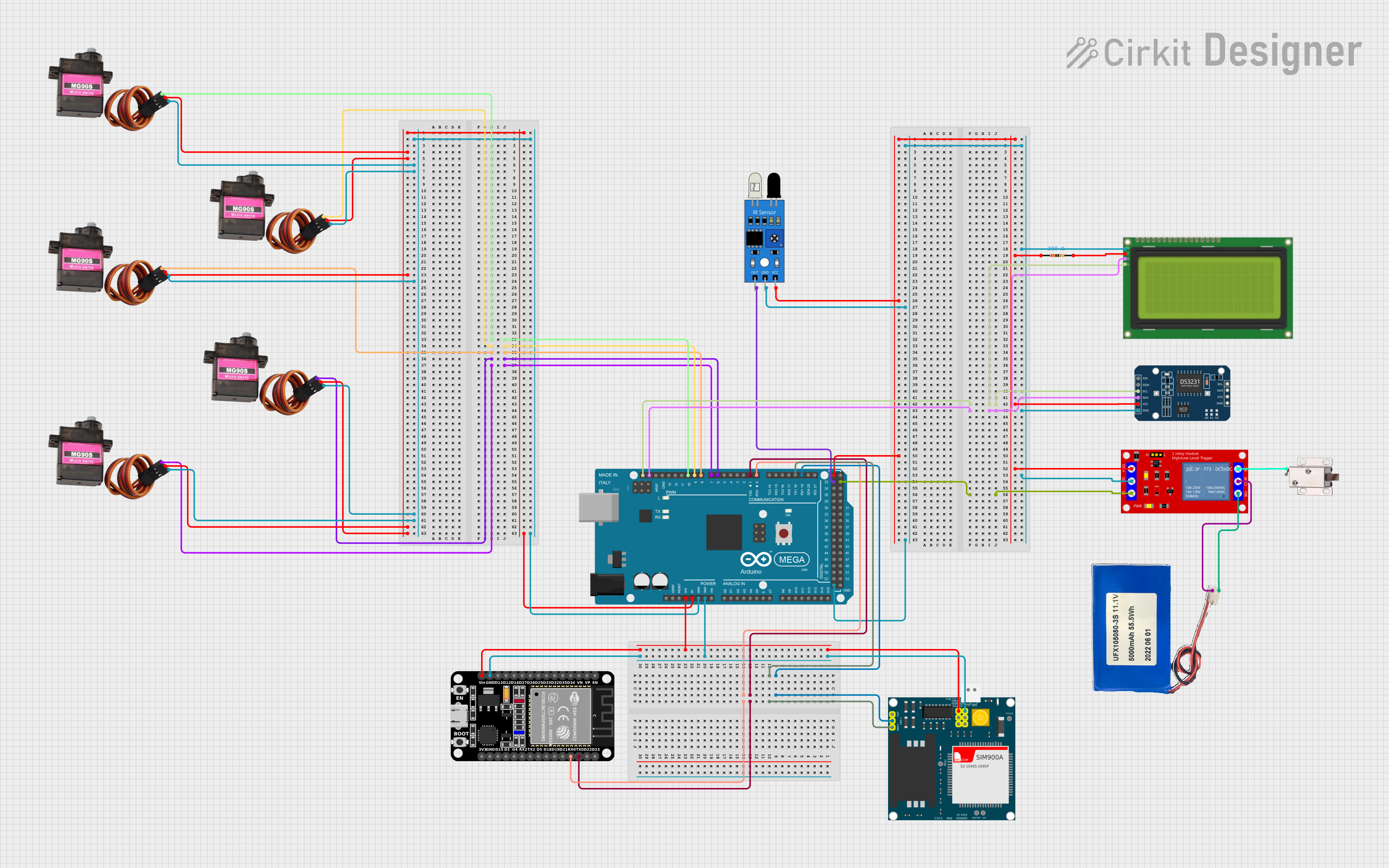
This circuit is a control system utilizing an Arduino Mega 2560 to manage multiple MG90S servos, an LCD display, a DS3231 RTC module, a SIM900A GSM module, and an ESP32 for communication. It also includes a relay module to control a 12V solenoid lock, an IR sensor for input, and a Li-ion battery for power supply.
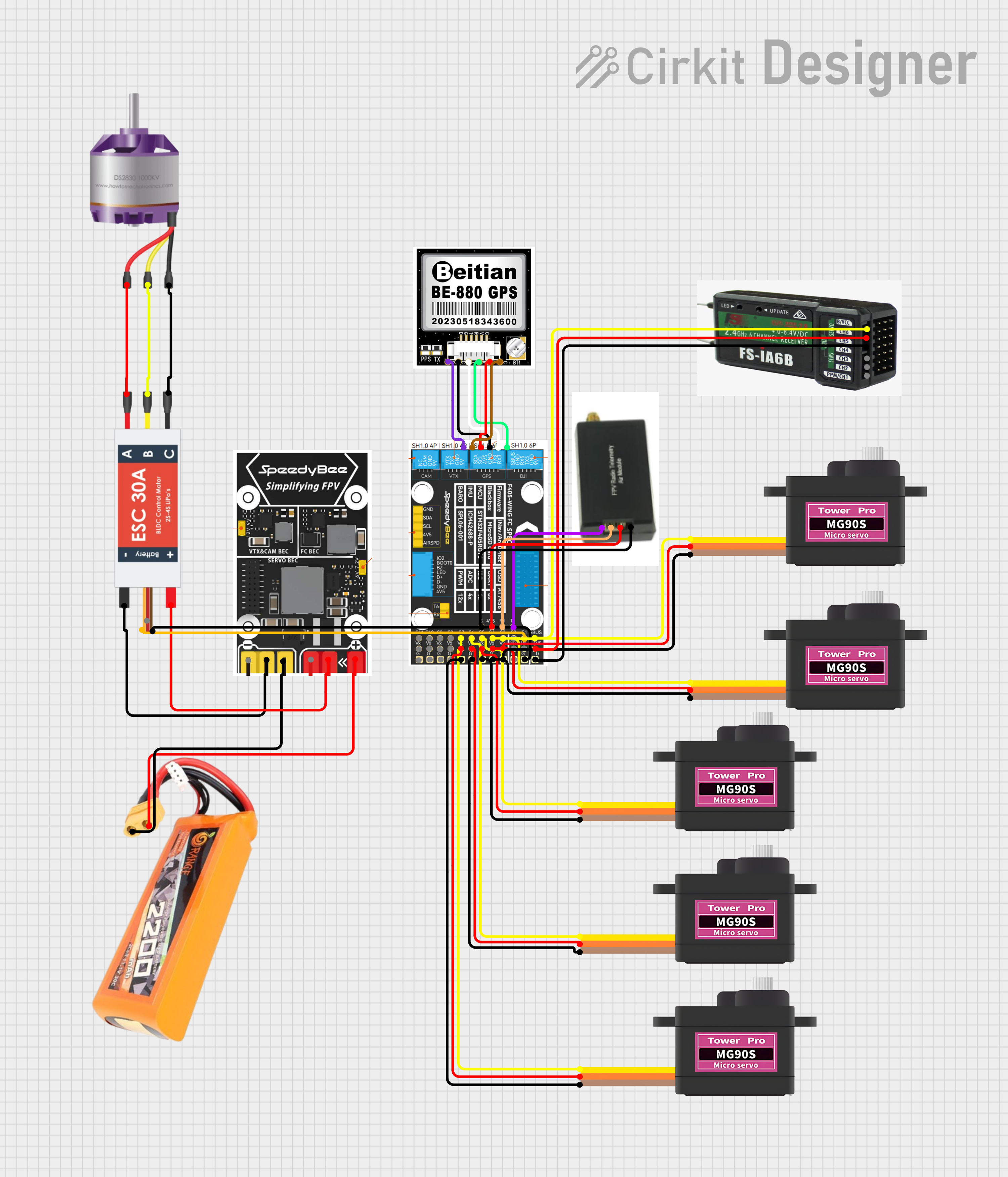
This circuit is designed for a remote-controlled vehicle or drone, featuring a flight controller that manages a brushless motor, servomotors for actuation, telemetry for data communication, and a GPS module for positioning. It is powered by a lipo battery and includes a receiver for remote control inputs.
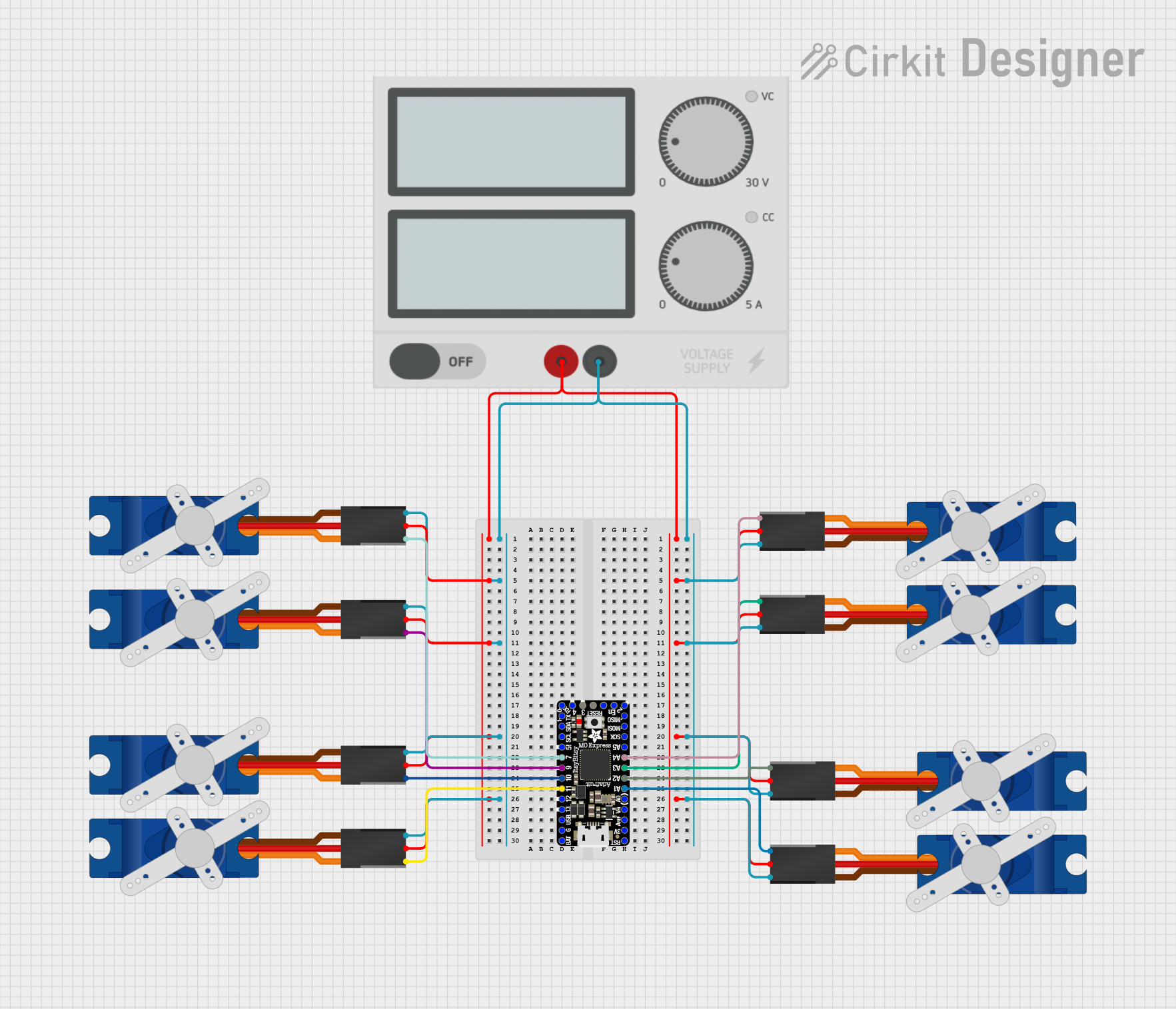
This circuit consists of an Itsy Bitsy M0 Express microcontroller connected to eight Tower Pro SG90 servos. Each servo is controlled by a different digital or analog output pin on the microcontroller. A single power supply provides +5V and GND to all servos, and the microcontroller is configured with some of its pins interconnected for potential programming or operational purposes.
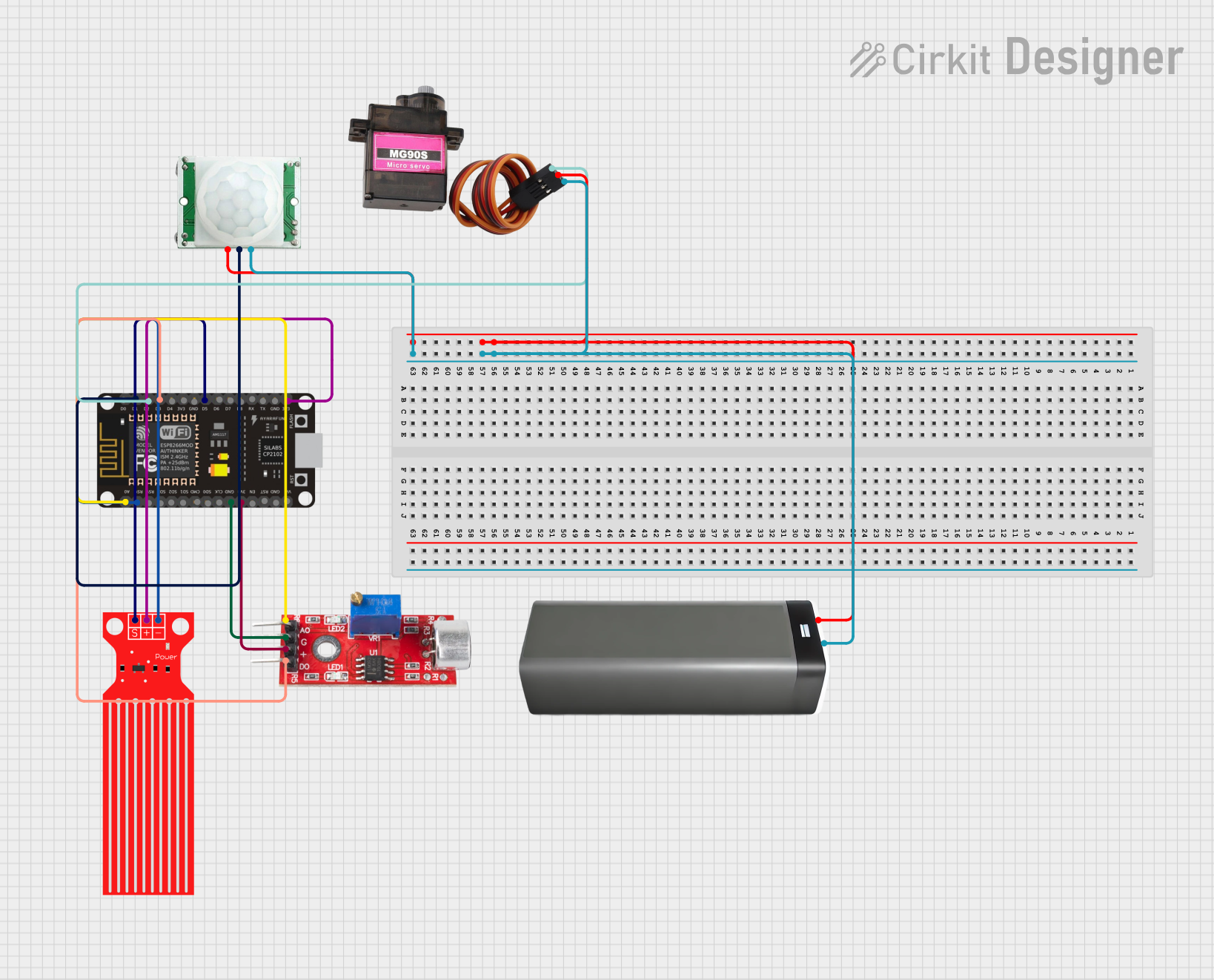
This circuit is designed around an ESP8266 NodeMCU microcontroller, which interfaces with a variety of sensors and a servo motor. It includes a PIR motion sensor to detect movement, a sound sensor for audio detection, and a water level sensor for monitoring liquid levels. The MG90S servo motor is controlled by the microcontroller, and the entire system is powered by a battery pack.
The MG90S micro servo motor is designed to deliver high torque and precision in a small form factor. Below are its key technical details:
Parameter
Specification
Operating Voltage
4.8V to 6.0V
Stall Torque
1.8 kg·cm (4.8V), 2.2 kg·cm (6.0V)
Operating Speed
0.1 s/60° (4.8V), 0.08 s/60° (6.0V)
Gear Type
Metal
Range of Motion
0° to 180°
Weight
13.4 g
Dimensions
22.8 mm × 12.2 mm × 28.5 mm
Connector Type
3-pin female header (Futaba compatible)
Operating Temperature
-30°C to +60°C
Pin Configuration
The MG90S has a 3-pin connector for interfacing with control systems. The pinout is as follows:
Pin
Wire Color
Function
1
Brown
Ground (GND)
2
Red
Power (VCC, 4.8V to 6.0V)
3
Orange
Signal (PWM control input)
Usage Instructions
The MG90S is controlled using Pulse Width Modulation (PWM), where the width of the pulse determines the servo's position within its 180-degree range. Below are the steps to use the MG90S in a circuit:
Connecting the MG90S
Power Supply: Connect the red wire to a 5V power source (e.g., Arduino 5V pin or external power supply). Ensure the power source can supply sufficient current (at least 500 mA per servo).
Ground: Connect the brown wire to the ground (GND) of the power source.
Signal: Connect the orange wire to a PWM-capable pin on your microcontroller (e.g., Arduino pin 9).
Arduino Example Code
Below is an example of how to control the MG90S using an Arduino UNO:
#include <Servo.h> // Include the Servo library

Servo myServo; // Create a Servo object to control the MG90S

void setup() {
  myServo.attach(9); // Attach the servo to pin 9
}

void loop() {
  myServo.write(0); // Move the servo to 0 degrees
  delay(1000);      // Wait for 1 second

  myServo.write(90); // Move the servo to 90 degrees
  delay(1000);       // Wait for 1 second

  myServo.write(180); // Move the servo to 180 degrees
  delay(1000);        // Wait for 1 second
}
Important Considerations
Power Supply: Avoid powering the servo directly from the Arduino if multiple servos are used or if the servo operates under heavy load. Use an external power supply instead.
PWM Signal: Ensure the PWM signal is within the servo's operating range (typically 500 µs to 2500 µs pulse width).
Mechanical Limits: Do not force the servo beyond its 0° to 180° range to prevent damage to the gears.
Troubleshooting and FAQs
Common Issues
Servo Not Moving
Cause: Incorrect wiring or insufficient power supply.
Solution: Double-check the wiring and ensure the power supply provides adequate current.
Servo Jittering
Cause: Electrical noise or unstable power supply.
Solution: Add a decoupling capacitor (e.g., 100 µF) across the power and ground lines near the servo.
Servo Overheating
Cause: Prolonged operation under heavy load or insufficient cooling.
Solution: Reduce the load or allow the servo to cool down periodically.
Servo Not Reaching Full Range
Cause: Incorrect PWM signal or mechanical obstruction.
Solution: Verify the PWM signal range and ensure there are no physical obstructions.
FAQs
Q: Can the MG90S be powered directly from an Arduino?
A: While it is possible to power a single MG90S from the Arduino's 5V pin, it is not recommended for multiple servos or high-load applications. Use an external power supply for better performance.
Q: What is the maximum current draw of the MG90S?
A: The MG90S can draw up to 700 mA under stall conditions. Ensure your power supply can handle this current.
Q: Can the MG90S rotate continuously?
A: No, the MG90S is a standard servo with a 0° to 180° range. For continuous rotation, use a continuous rotation servo.
Q: How do I extend the servo's lifespan?
A: Avoid overloading the servo, operate it within its specified voltage range, and ensure proper cooling during extended use.

 Open Project in Cirkit Designer