
How to Use ZOV MOV (275/20) 20D431K: Examples, Pinouts, and Specs
 Design with ZOV MOV (275/20) 20D431K in Cirkit Designer
Introduction
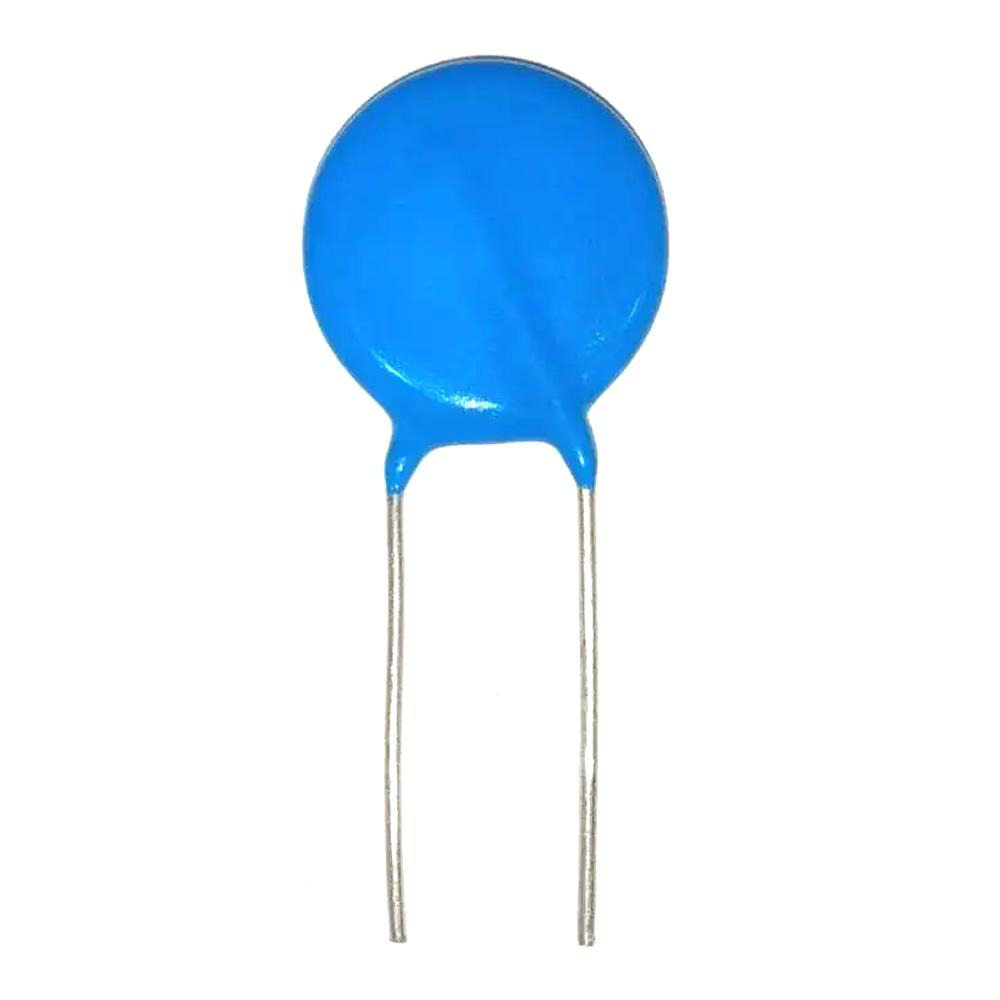
The ZOV MOV (275/20) 20D431K, manufactured by Bourns Inc., is a Metal Oxide Varistor (MOV) designed to protect electronic circuits from voltage spikes and transient surges. It operates by clamping excess voltage to a safe level, thereby safeguarding sensitive components. This MOV is rated for a maximum continuous voltage of 275V and can handle surge currents up to 20A. The "20D431K" designation specifies its energy absorption capacity, clamping voltage, and response time.
Explore Projects Built with ZOV MOV (275/20) 20D431K
 Open Project in Cirkit Designer
 Open Project in Cirkit Designer
 Open Project in Cirkit Designer
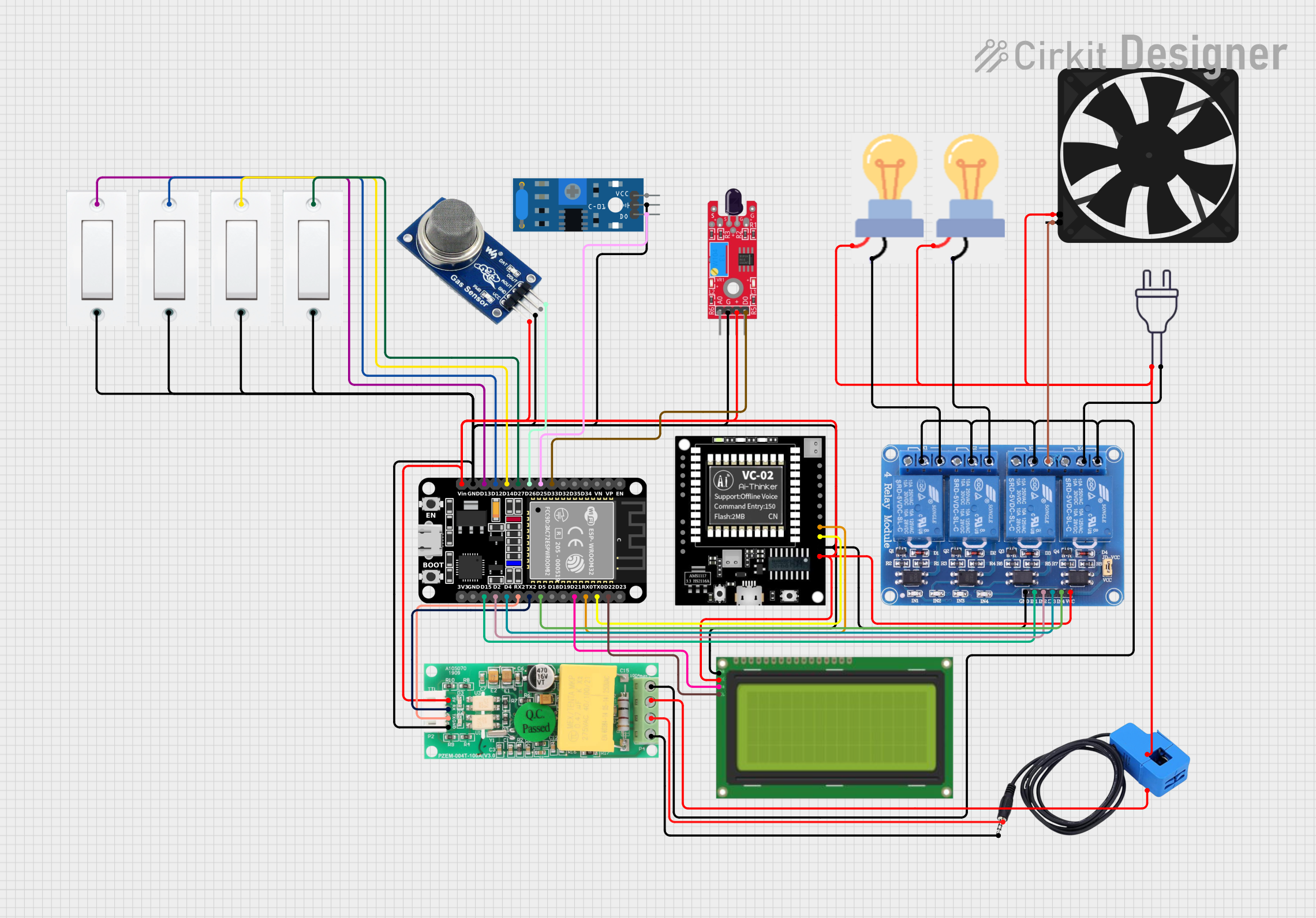 Open Project in Cirkit Designer
Explore Projects Built with ZOV MOV (275/20) 20D431K
Open Project in Cirkit DesignerOpen Project in Cirkit DesignerOpen Project in Cirkit DesignerOpen Project in Cirkit DesignerCommon Applications
- Surge protection in power supplies
- Overvoltage protection in industrial equipment
- Lightning protection in telecommunications systems
- Circuit protection in consumer electronics
- Automotive electronics for transient suppression
Technical Specifications
Key Technical Details
| Parameter | Value |
|---|---|
| Manufacturer | Bourns Inc |
| Part Number | 20D431K |
| Maximum Continuous Voltage | 275V AC |
| Clamping Voltage | 430V |
| Maximum Surge Current | 20A |
| Energy Absorption | 140J |
| Response Time | <25 ns |
| Operating Temperature Range | -40°C to +85°C |
| Diameter | 20mm |
| Lead Spacing | 7.5mm |
Pin Configuration and Descriptions
The ZOV MOV (275/20) 20D431K is a two-terminal device with no polarity. The leads are typically connected as follows:
| Pin Number | Description |
|---|---|
| 1 | MOV Terminal 1 (Connect to Line or Load) |
| 2 | MOV Terminal 2 (Connect to Neutral or Ground) |
Usage Instructions
How to Use the Component in a Circuit
Placement in Circuit:
- The MOV should be connected across the power line and neutral (or ground) in parallel with the load.
- For DC circuits, connect the MOV across the positive and negative terminals of the power supply.
Selection of MOV:
- Ensure the MOV's maximum continuous voltage rating (275V AC) exceeds the normal operating voltage of your circuit.
- Verify that the clamping voltage (430V) is appropriate for your application to prevent damage to downstream components.
Soldering Guidelines:
- Use a soldering iron with a temperature of 260°C or lower.
- Avoid prolonged heating of the leads to prevent damage to the MOV.
Fusing:
- For added safety, use a fuse in series with the MOV to protect against sustained overvoltage conditions.
Testing:
- After installation, test the circuit under normal operating conditions to ensure the MOV is functioning correctly.
Important Considerations and Best Practices
- Derating: Operate the MOV below its maximum ratings to ensure long-term reliability.
- Thermal Management: Avoid placing the MOV near heat-sensitive components, as it may generate heat during operation.
- End-of-Life: Replace the MOV if it shows signs of discoloration, cracking, or physical damage.
- Parallel MOVs: Avoid connecting multiple MOVs in parallel, as current sharing may be uneven.
Arduino UNO Example
While the ZOV MOV (275/20) 20D431K is not directly interfaced with microcontrollers like the Arduino UNO, it can be used to protect the Arduino's power supply from voltage spikes. Below is an example of how to integrate the MOV into an Arduino-based circuit:
/*
  Example: Using ZOV MOV (275/20) 20D431K to protect an Arduino UNO
  ---------------------------------------------------------------
  - The MOV is connected across the 5V power supply input to the Arduino.
  - This protects the Arduino from voltage spikes on the power line.
*/

// No specific code is required for the MOV itself, as it operates passively.
// Ensure the MOV is soldered across the power input terminals as follows:
// MOV Terminal 1 -> 5V input
// MOV Terminal 2 -> GND
Troubleshooting and FAQs
Common Issues and Solutions
| Issue | Possible Cause | Solution |
|---|---|---|
| MOV gets excessively hot | Sustained overvoltage or incorrect rating | Verify the MOV's voltage rating and replace if necessary. |
| Circuit still experiences surges | MOV not properly connected or damaged | Check connections and replace the MOV if damaged. |
| MOV shows physical damage | Excessive surge or end-of-life | Replace the MOV and inspect the circuit for faults. |
FAQs
Can the MOV protect against lightning strikes?
Yes, the MOV can suppress transient surges caused by lightning, but for direct lightning strikes, additional protection like gas discharge tubes may be required.How do I know if the MOV has failed?
A failed MOV may show physical signs like discoloration, cracking, or deformation. It may also cause the circuit to short or fail to suppress surges.Can I use the MOV in a DC circuit?
Yes, the MOV can be used in DC circuits as long as the voltage ratings are within the specified limits.What happens if I exceed the MOV's maximum ratings?
Exceeding the MOV's ratings can cause it to overheat, degrade, or fail catastrophically. Always select an MOV with appropriate ratings for your application.
By following this documentation, you can effectively integrate the ZOV MOV (275/20) 20D431K into your circuit for reliable overvoltage protection.