
How to Use sx 1278: Examples, Pinouts, and Specs
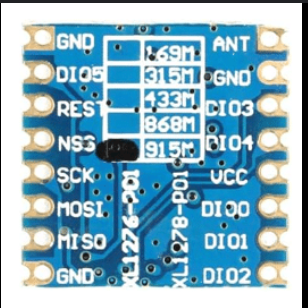
 Design with sx 1278 in Cirkit Designer
Introduction
The SX1278 is a low-power, long-range transceiver designed for wireless communication in the sub-GHz frequency bands (typically 433 MHz and 868 MHz). It supports advanced modulation schemes such as LoRa (Long Range) and FSK, enabling robust and reliable data transmission over extended distances. The SX1278 is widely used in Internet of Things (IoT) applications, smart metering, home automation, industrial monitoring, and other scenarios where long-range, low-power communication is essential.
Explore Projects Built with sx 1278
 Open Project in Cirkit Designer
 Open Project in Cirkit Designer
 Open Project in Cirkit Designer
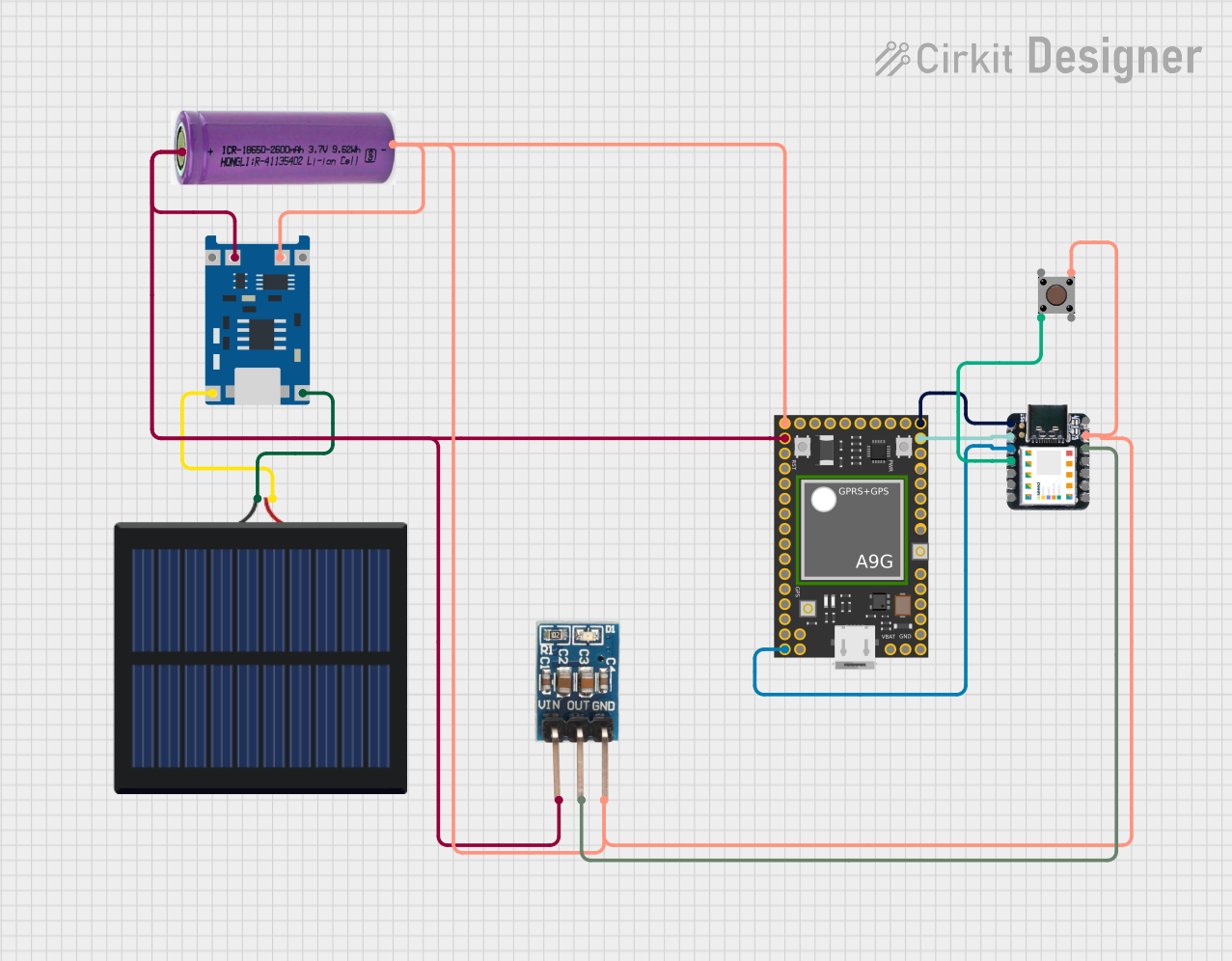 Open Project in Cirkit Designer
Explore Projects Built with sx 1278
Open Project in Cirkit DesignerOpen Project in Cirkit DesignerOpen Project in Cirkit DesignerOpen Project in Cirkit DesignerCommon Applications
- IoT networks (e.g., LoRaWAN)
- Smart agriculture and environmental monitoring
- Home automation and security systems
- Industrial control and telemetry
- Wireless sensor networks
Technical Specifications
The SX1278 offers a range of features and capabilities that make it suitable for long-range, low-power communication. Below are its key technical specifications:
| Parameter | Value |
|---|---|
| Frequency Range | 137 MHz to 525 MHz |
| Modulation Schemes | LoRa, FSK, GFSK, MSK, GMSK |
| Output Power | Up to +20 dBm |
| Sensitivity | Down to -148 dBm (LoRa mode) |
| Data Rate | 0.018 kbps to 37.5 kbps (LoRa) |
| Supply Voltage | 1.8 V to 3.7 V |
| Current Consumption | 9.9 mA (Rx mode), 120 mA (Tx mode) |
| Operating Temperature | -40°C to +85°C |
| Communication Interface | SPI |
Pin Configuration and Descriptions
The SX1278 is typically available in a QFN-28 package. Below is the pin configuration and description:
| Pin Number | Pin Name | Description |
|---|---|---|
| 1 | GND | Ground connection |
| 2 | RFIO | RF input/output for antenna connection |
| 3 | VDD | Power supply input |
| 4 | DIO0 | Digital I/O pin 0 (interrupt or status signaling) |
| 5 | DIO1 | Digital I/O pin 1 (interrupt or status signaling) |
| 6 | DIO2 | Digital I/O pin 2 (interrupt or status signaling) |
| 7 | DIO3 | Digital I/O pin 3 (interrupt or status signaling) |
| 8 | DIO4 | Digital I/O pin 4 (interrupt or status signaling) |
| 9 | DIO5 | Digital I/O pin 5 (interrupt or status signaling) |
| 10 | NSS | SPI chip select |
| 11 | SCK | SPI clock |
| 12 | MOSI | SPI master out, slave in |
| 13 | MISO | SPI master in, slave out |
| 14 | RESET | Reset pin |
| 15-28 | NC | Not connected |
Usage Instructions
The SX1278 is commonly used in LoRa-based communication systems. Below are the steps to use the SX1278 in a circuit:
Circuit Connection
- Power Supply: Connect the VDD pin to a 3.3V power source and GND to ground.
- Antenna: Attach an appropriate antenna to the RFIO pin for optimal signal transmission and reception.
- SPI Interface: Connect the SPI pins (NSS, SCK, MOSI, MISO) to the corresponding SPI pins on your microcontroller.
- Digital I/O Pins: Use the DIO pins for interrupt handling or status monitoring as required.
- Reset: Connect the RESET pin to a GPIO pin on the microcontroller for resetting the module.
Arduino UNO Example
The SX1278 can be interfaced with an Arduino UNO using the SPI interface. Below is an example code snippet for initializing the SX1278 using the popular LoRa library:
#include <SPI.h>
#include <LoRa.h> // Include the LoRa library for SX1278

#define NSS 10    // Chip select pin
#define RESET 9   // Reset pin
#define DIO0 2    // DIO0 pin for interrupt handling

void setup() {
  Serial.begin(9600); // Initialize serial communication
  while (!Serial);

  Serial.println("Initializing SX1278...");

  // Initialize LoRa module
  LoRa.setPins(NSS, RESET, DIO0); // Set SPI and control pins
  if (!LoRa.begin(433E6)) {       // Initialize at 433 MHz
    Serial.println("LoRa initialization failed!");
    while (1);
  }

  Serial.println("LoRa initialized successfully!");
}

void loop() {
  // Send a test message
  Serial.println("Sending message...");
  LoRa.beginPacket();             // Start a new packet
  LoRa.print("Hello, SX1278!");   // Add data to the packet
  LoRa.endPacket();               // Send the packet

  delay(5000); // Wait 5 seconds before sending the next message
}
Important Considerations
- Antenna Matching: Ensure the antenna is properly matched to the operating frequency for optimal performance.
- Power Supply: Use a stable 3.3V power source to avoid communication issues.
- Regulatory Compliance: Operate the SX1278 within the frequency bands and power levels allowed in your region.
Troubleshooting and FAQs
Common Issues
No Communication Between Modules
- Ensure both modules are configured to the same frequency, bandwidth, and data rate.
- Verify the SPI connections between the SX1278 and the microcontroller.
Low Signal Range
- Check the antenna connection and ensure it is tuned to the correct frequency.
- Avoid obstructions and interference in the communication path.
Module Not Initializing
- Verify the power supply voltage (3.3V) and ensure proper connections.
- Check the RESET pin and ensure it is not held low.
FAQs
Q: Can the SX1278 operate at 868 MHz?
A: Yes, the SX1278 supports frequencies from 137 MHz to 525 MHz. For 868 MHz, use the SX1276 instead.
Q: What is the maximum range of the SX1278?
A: The range depends on environmental factors, but it can achieve up to 10 km in open areas with a clear line of sight.
Q: Can I use the SX1278 with a 5V microcontroller?
A: Yes, but you will need a level shifter for the SPI pins, as the SX1278 operates at 3.3V logic levels.
Q: How do I improve signal reliability?
A: Use a high-gain antenna, ensure proper grounding, and minimize interference in the environment.