
How to Use Battrei Litihium Polimer: Examples, Pinouts, and Specs
 Design with Battrei Litihium Polimer in Cirkit Designer
Introduction
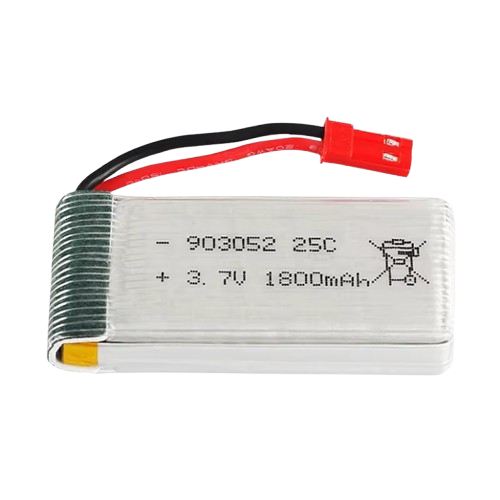
A Lithium Polymer (LiPo) battery is a type of rechargeable battery that uses a polymer electrolyte instead of a liquid electrolyte. This design offers several advantages, including a lightweight and flexible form factor, high energy density, and enhanced safety features. LiPo batteries are widely used in applications where compact size, low weight, and high power output are critical.
Explore Projects Built with Battrei Litihium Polimer
 Open Project in Cirkit Designer
 Open Project in Cirkit Designer
 Open Project in Cirkit Designer
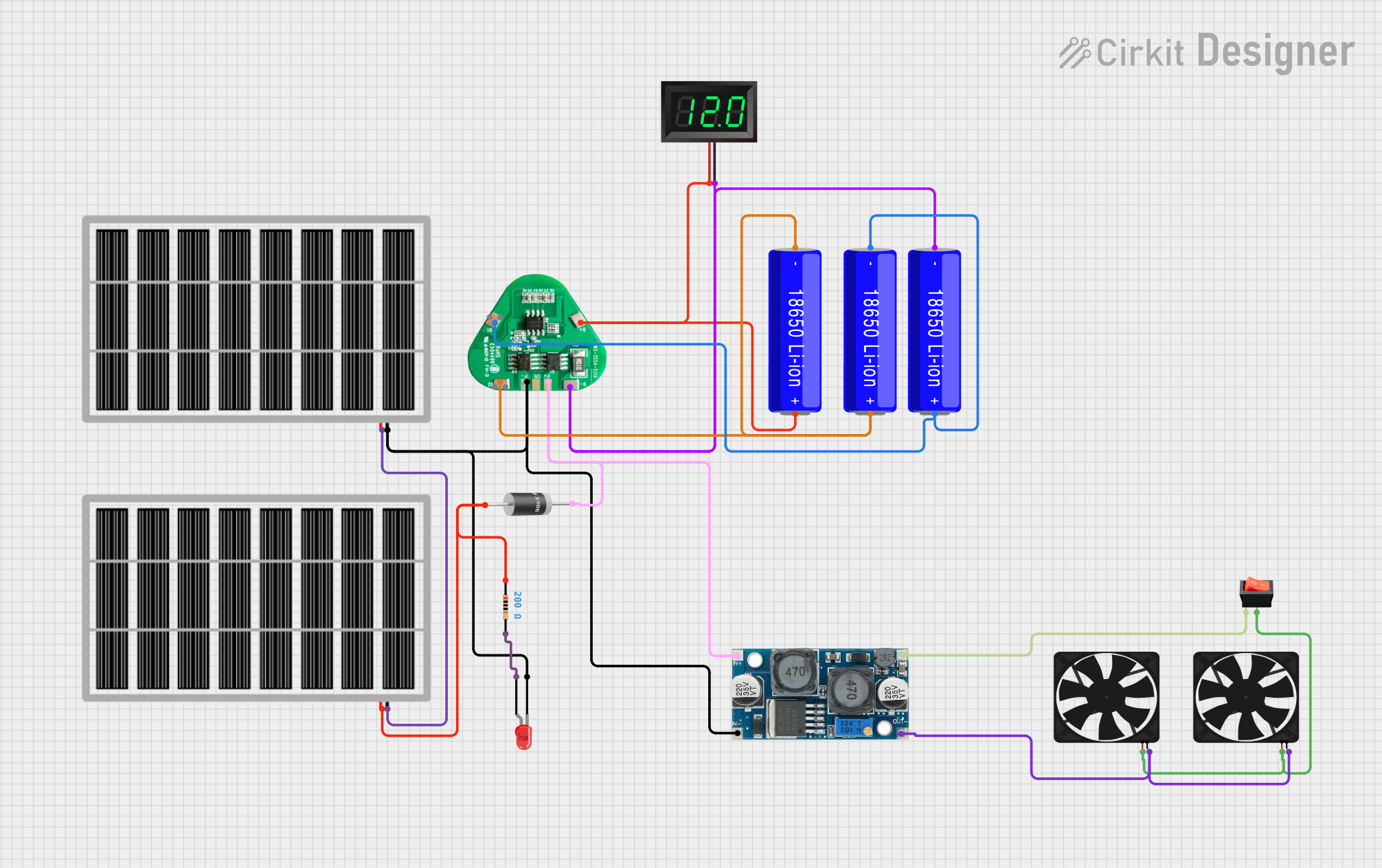 Open Project in Cirkit Designer
Explore Projects Built with Battrei Litihium Polimer
Open Project in Cirkit DesignerOpen Project in Cirkit DesignerOpen Project in Cirkit DesignerOpen Project in Cirkit DesignerCommon Applications and Use Cases
- Consumer Electronics: Smartphones, tablets, and laptops
- RC Models: Drones, remote-controlled cars, and airplanes
- Wearable Devices: Smartwatches and fitness trackers
- Portable Power: Power banks and backup battery systems
- Electric Vehicles: E-bikes, scooters, and other small electric vehicles
Technical Specifications
Below are the general technical specifications for a typical Lithium Polymer battery. Note that specific values may vary depending on the manufacturer and model.
| Parameter | Specification |
|---|---|
| Nominal Voltage | 3.7V per cell |
| Fully Charged Voltage | 4.2V per cell |
| Discharge Cutoff Voltage | 3.0V per cell |
| Capacity Range | 100mAh to 10,000mAh or more |
| Maximum Discharge Rate | 10C to 100C (varies by model) |
| Charging Current | 1C (recommended), 2C (maximum) |
| Operating Temperature | -20°C to 60°C |
| Weight | Varies (e.g., ~20g for 1000mAh cell) |
Pin Configuration and Descriptions
LiPo batteries typically have two or three wires for connection. Below is a table describing the pin configuration:
| Pin | Wire Color | Description |
|---|---|---|
| 1 | Red | Positive terminal (+) |
| 2 | Black | Negative terminal (-) |
| 3 | Yellow/White | Balance lead (for multi-cell packs) |
Usage Instructions
How to Use the Component in a Circuit
- Connection: Connect the red wire to the positive terminal of your circuit and the black wire to the negative terminal. If using a multi-cell pack, connect the balance lead to a compatible charger or battery management system (BMS).
- Charging: Use a LiPo-compatible charger to safely charge the battery. Ensure the charger matches the battery's voltage and capacity specifications.
- Discharging: Avoid discharging the battery below its cutoff voltage (typically 3.0V per cell) to prevent damage.
- Protection: Use a BMS or protection circuit to monitor voltage, current, and temperature during operation.
Important Considerations and Best Practices
- Charging Safety: Always charge the battery on a non-flammable surface and never leave it unattended while charging.
- Storage: Store the battery at a partial charge (around 3.8V per cell) in a cool, dry place to prolong its lifespan.
- Handling: Avoid puncturing, bending, or exposing the battery to water or extreme temperatures.
- Balancing: For multi-cell packs, use a balance charger to ensure all cells are charged evenly.
Example: Using a LiPo Battery with an Arduino UNO
Below is an example of how to power an Arduino UNO using a LiPo battery and a voltage regulator (if required):
Circuit Diagram
- Connect the LiPo battery's positive terminal to the input of a 5V voltage regulator.
- Connect the regulator's output to the Arduino's 5V pin.
- Connect the battery's negative terminal to the Arduino's GND pin.
Sample Code
// Example code to read battery voltage using an Arduino UNO
// Ensure the battery voltage is divided to a safe range (0-5V) for the analog pin

const int batteryPin = A0; // Pin connected to the voltage divider
float voltageDividerRatio = 2.0; // Adjust based on your resistor values

void setup() {
  Serial.begin(9600); // Initialize serial communication
}

void loop() {
  int rawValue = analogRead(batteryPin); // Read the analog pin
  float batteryVoltage = (rawValue / 1023.0) * 5.0 * voltageDividerRatio;

  // Print the battery voltage to the Serial Monitor
  Serial.print("Battery Voltage: ");
  Serial.print(batteryVoltage);
  Serial.println(" V");

  delay(1000); // Wait for 1 second before the next reading
}
Note: Use a voltage divider circuit to scale down the battery voltage to a safe range for the Arduino's analog input pins.
Troubleshooting and FAQs
Common Issues and Solutions
Battery Not Charging:
- Cause: Incorrect charger or damaged battery.
- Solution: Verify the charger is compatible with the battery's voltage and capacity. Inspect the battery for physical damage.
Battery Swelling:
- Cause: Overcharging, over-discharging, or exposure to high temperatures.
- Solution: Stop using the battery immediately. Dispose of it safely according to local regulations.
Short Runtime:
- Cause: Battery capacity degradation or excessive current draw.
- Solution: Check the battery's health and ensure the load does not exceed its discharge rating.
Unbalanced Cells in Multi-Cell Packs:
- Cause: Uneven charging or discharging.
- Solution: Use a balance charger to equalize the cell voltages.
FAQs
Q: Can I use a LiPo battery without a protection circuit?
A: It is not recommended. A protection circuit or BMS is essential to prevent overcharging, over-discharging, and short circuits.Q: How do I know when my LiPo battery is fully charged?
A: A fully charged LiPo battery will have a voltage of 4.2V per cell.Q: Can I connect multiple LiPo batteries in series or parallel?
A: Yes, but ensure the batteries are of the same capacity and charge level. Use a BMS to manage the pack safely.Q: How long does a LiPo battery last?
A: The lifespan depends on usage and care but typically ranges from 300 to 500 charge cycles.
By following these guidelines, you can safely and effectively use Lithium Polymer batteries in your projects.