
How to Use MKE-S15 DS18B20 Waterproof Temperature Sensor: Examples, Pinouts, and Specs
 Design with MKE-S15 DS18B20 Waterproof Temperature Sensor in Cirkit Designer
Introduction
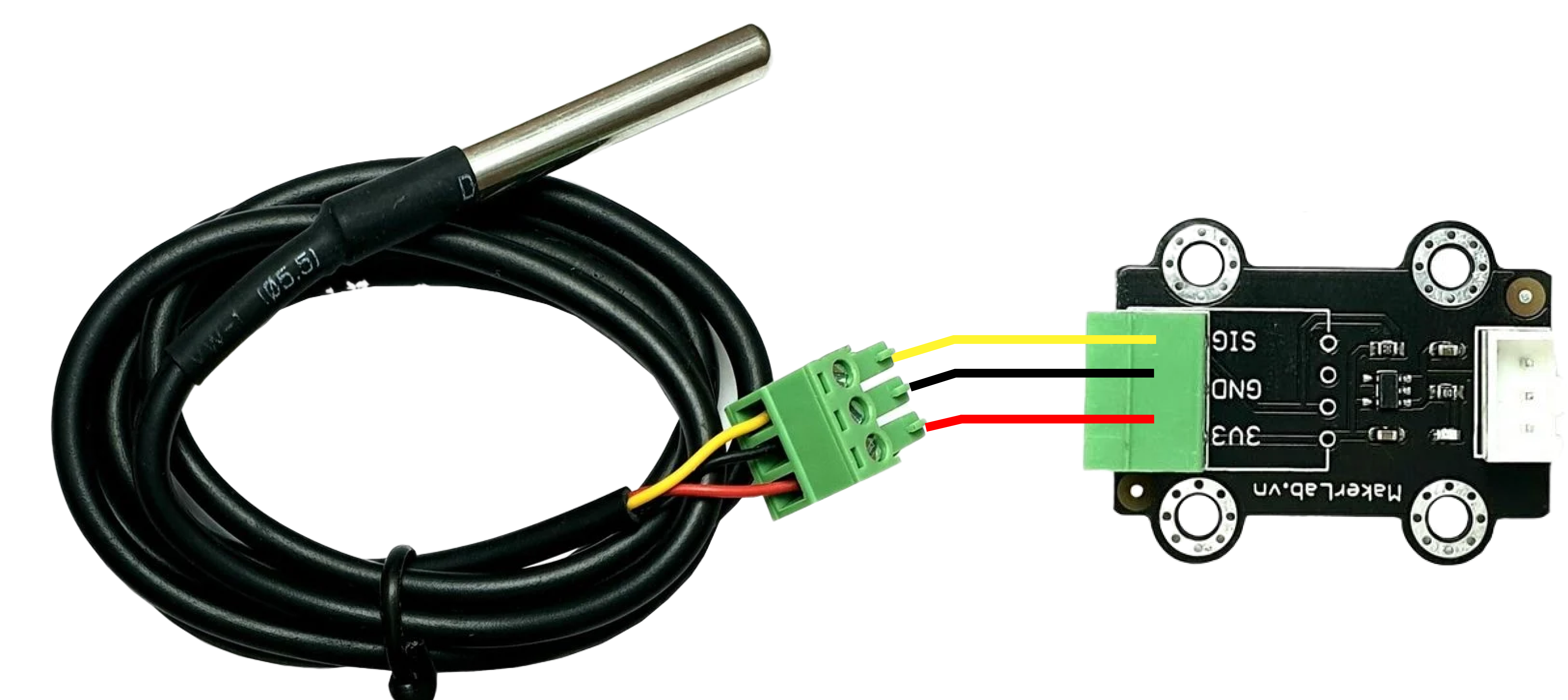
The MKE-S15 DS18B20 is a waterproof digital temperature sensor designed for precise and reliable temperature measurements in a wide range of environments. Encased in a stainless steel probe, it is ideal for applications requiring durability and resistance to moisture, such as outdoor weather monitoring, liquid temperature measurement, and industrial processes.
This sensor communicates using the 1-Wire protocol, allowing multiple sensors to be connected to a single data line. Its compact design and waterproof capabilities make it a versatile choice for both hobbyist and professional projects.
Explore Projects Built with MKE-S15 DS18B20 Waterproof Temperature Sensor
 Open Project in Cirkit Designer
 Open Project in Cirkit Designer
 Open Project in Cirkit Designer
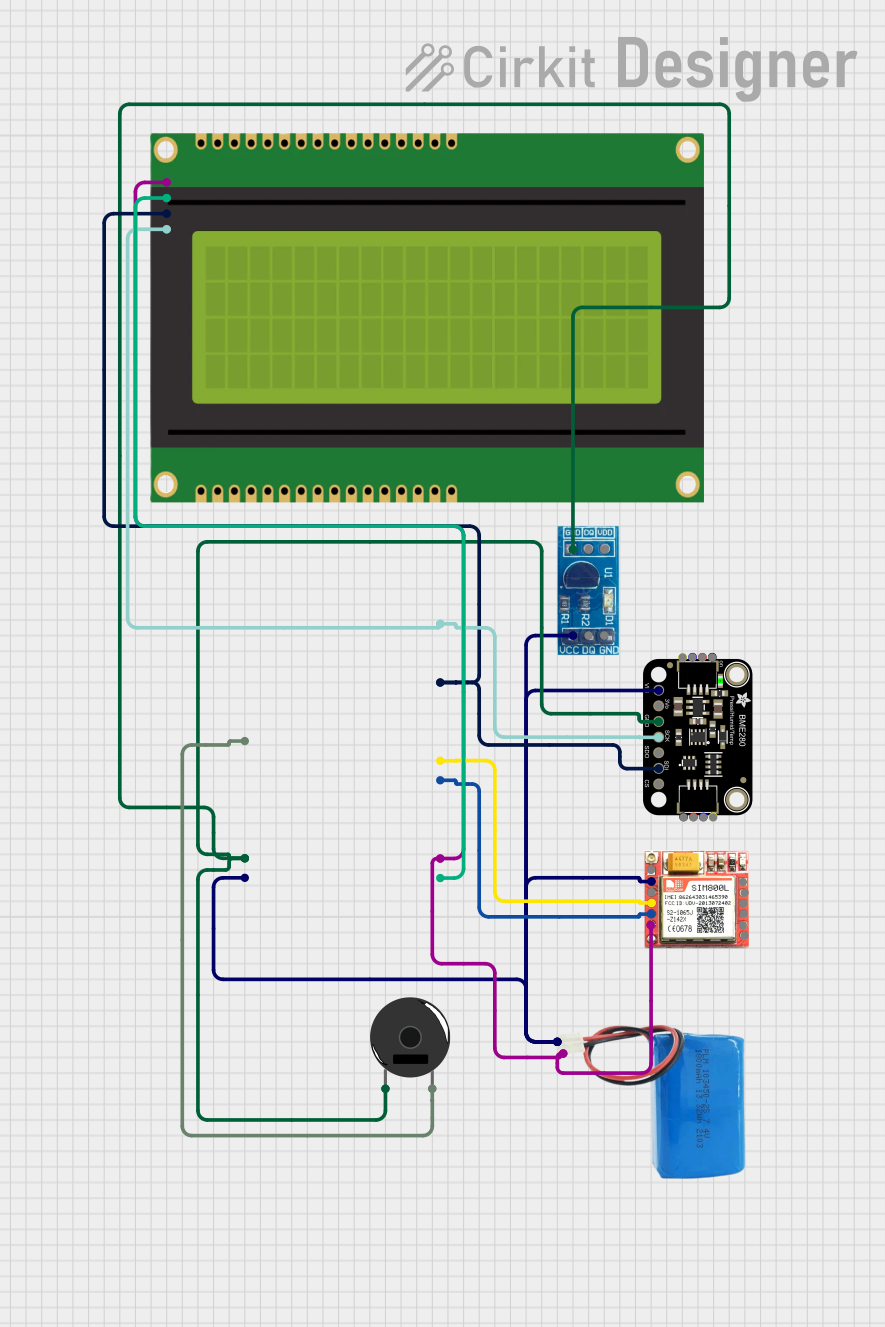 Open Project in Cirkit Designer
Explore Projects Built with MKE-S15 DS18B20 Waterproof Temperature Sensor
Open Project in Cirkit DesignerOpen Project in Cirkit DesignerOpen Project in Cirkit DesignerOpen Project in Cirkit DesignerCommon Applications:
- Weather stations and environmental monitoring
- Liquid temperature measurement (e.g., aquariums, water tanks)
- Industrial temperature sensing
- Home automation systems
- Scientific experiments
Technical Specifications
- Operating Voltage: 3.0V to 5.5V
- Temperature Range: -55°C to +125°C (-67°F to +257°F)
- Accuracy: ±0.5°C (from -10°C to +85°C)
- Resolution: Programmable (9 to 12 bits)
- Communication Protocol: 1-Wire
- Probe Material: Stainless steel
- Cable Length: Typically 1 meter (varies by model)
- Waterproof Rating: IP67
Pin Configuration and Descriptions
The MKE-S15 DS18B20 sensor typically has three wires for connection:
| Wire Color | Pin Name | Description |
|---|---|---|
| Red | VCC | Power supply (3.0V to 5.5V) |
| Yellow | DATA | 1-Wire data line for communication |
| Black | GND | Ground connection |
Usage Instructions
Connecting the Sensor to a Circuit
- Power Supply: Connect the red wire (VCC) to a 3.3V or 5V power source.
- Ground: Connect the black wire (GND) to the ground of your circuit.
- Data Line: Connect the yellow wire (DATA) to a digital input pin on your microcontroller. Use a 4.7kΩ pull-up resistor between the DATA line and the VCC line to ensure proper communication.
Example: Connecting to an Arduino UNO
Below is an example of how to connect the MKE-S15 DS18B20 to an Arduino UNO:
- Red wire → 5V pin on Arduino
- Black wire → GND pin on Arduino
- Yellow wire → Digital pin 2 on Arduino (with a 4.7kΩ pull-up resistor to 5V)
Arduino Code Example
The following code demonstrates how to read temperature data from the DS18B20 sensor using the Arduino IDE. This example uses the DallasTemperature and OneWire libraries, which must be installed via the Arduino Library Manager.
#include <OneWire.h>
#include <DallasTemperature.h>

// Pin connected to the DATA line of the DS18B20 sensor
#define ONE_WIRE_BUS 2

// Initialize the OneWire and DallasTemperature libraries
OneWire oneWire(ONE_WIRE_BUS);
DallasTemperature sensors(&oneWire);

void setup() {
  Serial.begin(9600); // Start serial communication at 9600 baud
  sensors.begin();    // Initialize the DS18B20 sensor
  Serial.println("DS18B20 Temperature Sensor Initialized");
}

void loop() {
  sensors.requestTemperatures(); // Request temperature readings
  float temperatureC = sensors.getTempCByIndex(0); // Get temperature in Celsius

  // Check if the reading is valid
  if (temperatureC != DEVICE_DISCONNECTED_C) {
    Serial.print("Temperature: ");
    Serial.print(temperatureC);
    Serial.println(" °C");
  } else {
    Serial.println("Error: Sensor not detected");
  }

  delay(1000); // Wait 1 second before the next reading
}
Important Considerations:
- Ensure the pull-up resistor (4.7kΩ) is properly connected to the DATA line.
- Avoid exposing the sensor to temperatures beyond its specified range (-55°C to +125°C).
- For long cable runs, consider using a lower pull-up resistor value (e.g., 2.2kΩ) to maintain signal integrity.
Troubleshooting and FAQs
Common Issues:
No Temperature Reading:
- Cause: The pull-up resistor is missing or incorrectly connected.
- Solution: Verify the 4.7kΩ resistor is connected between the DATA line and VCC.
Incorrect Temperature Values:
- Cause: Electrical noise or poor connections.
- Solution: Ensure all connections are secure and use shielded cables for long runs.
Sensor Not Detected:
- Cause: Faulty wiring or damaged sensor.
- Solution: Check the wiring and test the sensor with a different microcontroller or circuit.
Intermittent Readings:
- Cause: Insufficient power supply or long cable length.
- Solution: Use a stable power source and consider adding a capacitor (e.g., 0.1µF) across VCC and GND.
FAQs:
Q: Can I connect multiple DS18B20 sensors to the same data line?
A: Yes, the 1-Wire protocol supports multiple sensors on a single data line. Each sensor has a unique 64-bit address for identification.
Q: Is the sensor safe for use in food-grade applications?
A: While the stainless steel probe is waterproof, confirm with the manufacturer if it meets food-grade standards for your specific use case.
Q: Can I extend the cable length?
A: Yes, but long cables may require a lower pull-up resistor value (e.g., 2.2kΩ) and shielded cables to reduce noise.
Q: What happens if the sensor is exposed to temperatures beyond its range?
A: Prolonged exposure to extreme temperatures may damage the sensor or result in inaccurate readings. Always operate within the specified range.
This concludes the documentation for the MKE-S15 DS18B20 Waterproof Temperature Sensor.