
How to Use NODEMCU ESP8266: Examples, Pinouts, and Specs
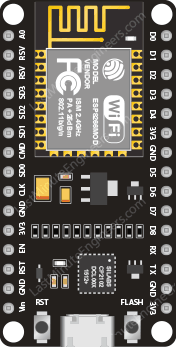
 Design with NODEMCU ESP8266 in Cirkit Designer
Introduction
The NodeMCU ESP8266 is a low-cost, open-source IoT platform based on the ESP8266 Wi-Fi module. It is designed for rapid prototyping and development of IoT applications. The board features a built-in USB interface for easy programming and a variety of GPIO pins for connecting sensors, actuators, and other peripherals. Its compact size, integrated Wi-Fi capabilities, and compatibility with the Arduino IDE make it a popular choice for hobbyists and professionals alike.
Explore Projects Built with NODEMCU ESP8266
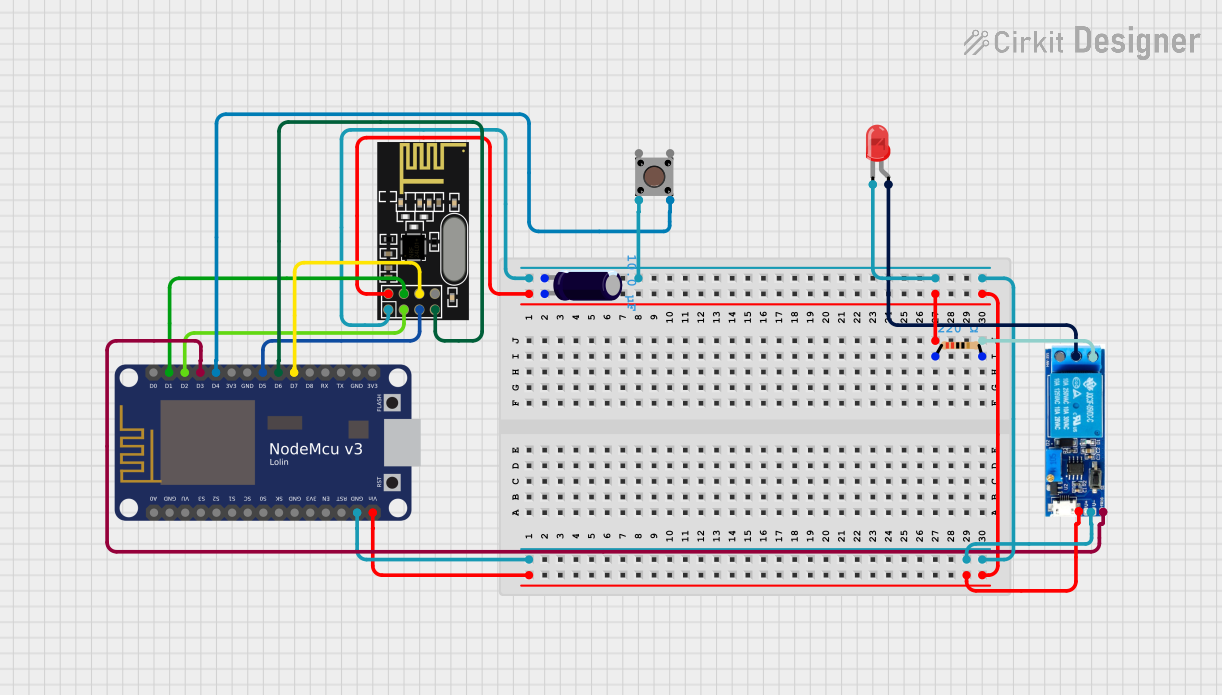 Open Project in Cirkit Designer
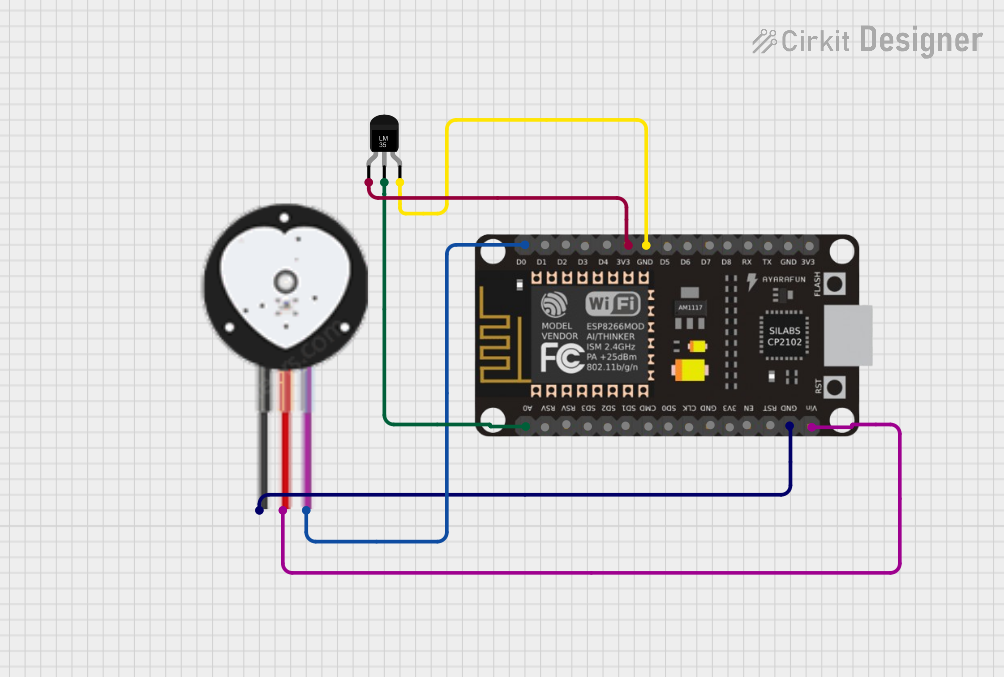 Open Project in Cirkit Designer
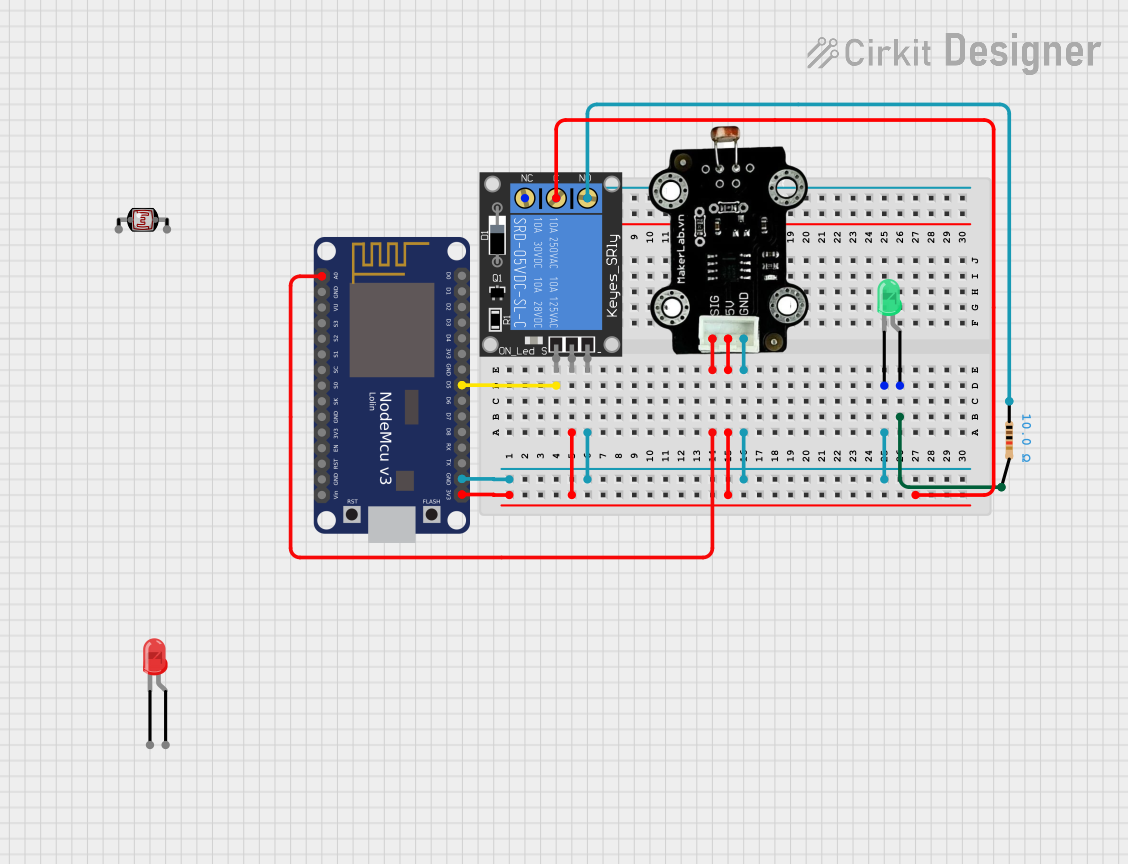 Open Project in Cirkit Designer
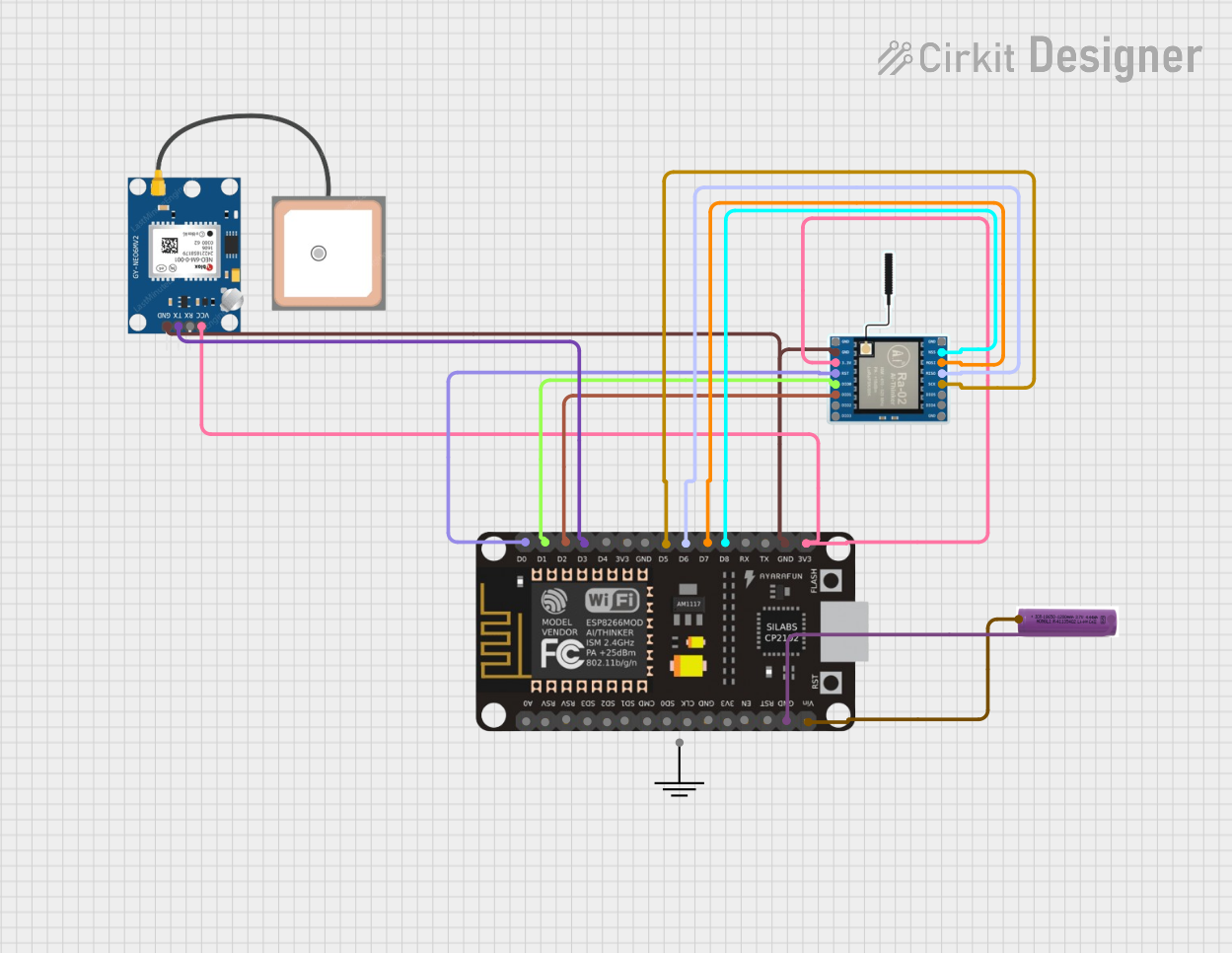 Open Project in Cirkit Designer
Explore Projects Built with NODEMCU ESP8266
Open Project in Cirkit DesignerOpen Project in Cirkit DesignerOpen Project in Cirkit DesignerOpen Project in Cirkit DesignerCommon Applications and Use Cases
- Home automation systems
- IoT-enabled devices and sensors
- Wireless data logging
- Smart appliances
- Remote monitoring and control systems
Technical Specifications
Key Technical Details
| Specification | Value |
|---|---|
| Microcontroller | ESP8266 |
| Operating Voltage | 3.3V |
| Input Voltage (via USB) | 5V |
| Digital I/O Pins | 11 |
| Analog Input Pins | 1 (10-bit ADC) |
| Flash Memory | 4MB (varies by model) |
| Clock Speed | 80 MHz (up to 160 MHz) |
| Wi-Fi Standard | 802.11 b/g/n |
| USB Interface | Micro-USB |
| Power Consumption | ~70mA (idle), ~200mA (Wi-Fi active) |
| Dimensions | 49mm x 26mm x 13mm |
Pin Configuration and Descriptions
| Pin Name | Pin Number | Description |
|---|---|---|
| VIN | - | Input voltage pin (5V input from USB or external power source) |
| GND | - | Ground pin |
| 3V3 | - | 3.3V output pin for powering external components |
| D0-D8 | GPIO Pins | General-purpose digital I/O pins |
| A0 | - | Analog input pin (0-1V range) |
| RX | GPIO3 | UART receive pin (used for serial communication) |
| TX | GPIO1 | UART transmit pin (used for serial communication) |
| EN | - | Enable pin (active HIGH, used to enable/disable the module) |
| RST | - | Reset pin (active LOW, used to reset the module) |
Usage Instructions
How to Use the NodeMCU ESP8266 in a Circuit
Powering the Board:
- Connect the NodeMCU to your computer via a Micro-USB cable for power and programming.
- Alternatively, supply 5V to the VIN pin and connect GND to the ground of your power source.
Programming the Board:
- Install the Arduino IDE and add the ESP8266 board package via the Board Manager.
- Select "NodeMCU 1.0 (ESP-12E Module)" as the board type.
- Connect the board to your computer and select the appropriate COM port.
- Write your code and upload it to the board.
Connecting Peripherals:
- Use the GPIO pins (D0-D8) to connect sensors, actuators, or other devices.
- For analog sensors, connect them to the A0 pin (ensure the voltage does not exceed 1V).
- Use pull-up or pull-down resistors as needed for proper GPIO operation.
Wi-Fi Configuration:
- Use the built-in Wi-Fi capabilities to connect the NodeMCU to a local network.
- Configure the SSID and password in your code to establish a connection.
Example Code for Arduino IDE
The following example demonstrates how to connect the NodeMCU ESP8266 to a Wi-Fi network and control an LED connected to GPIO2 (D4).
#include <ESP8266WiFi.h> // Include the ESP8266 Wi-Fi library

// Replace with your network credentials
const char* ssid = "Your_SSID";       // Your Wi-Fi network name
const char* password = "Your_Password"; // Your Wi-Fi network password

const int ledPin = 2; // GPIO2 (D4) is connected to the LED

void setup() {
  Serial.begin(115200); // Initialize serial communication
  pinMode(ledPin, OUTPUT); // Set GPIO2 as an output pin

  // Connect to Wi-Fi
  Serial.print("Connecting to Wi-Fi");
  WiFi.begin(ssid, password);
  while (WiFi.status() != WL_CONNECTED) {
    delay(500);
    Serial.print(".");
  }
  Serial.println("\nWi-Fi connected!");
  Serial.print("IP Address: ");
  Serial.println(WiFi.localIP()); // Print the assigned IP address
}

void loop() {
  digitalWrite(ledPin, HIGH); // Turn the LED on
  delay(1000);                // Wait for 1 second
  digitalWrite(ledPin, LOW);  // Turn the LED off
  delay(1000);                // Wait for 1 second
}
Important Considerations and Best Practices
- Voltage Levels: Ensure that all connected peripherals operate at 3.3V logic levels. Use level shifters if necessary.
- Analog Input Voltage: The A0 pin accepts a maximum voltage of 1V. Use a voltage divider for higher input voltages.
- Wi-Fi Signal Strength: Place the NodeMCU in an area with good Wi-Fi signal strength for reliable operation.
- Power Supply: Use a stable power source to avoid unexpected resets or malfunctions.
Troubleshooting and FAQs
Common Issues and Solutions
Problem: The NodeMCU is not detected by the computer.
Solution:- Ensure the USB cable is functional and supports data transfer.
- Install the appropriate USB-to-serial driver (e.g., CH340 or CP2102).
Problem: The board fails to connect to Wi-Fi.
Solution:- Double-check the SSID and password in your code.
- Ensure the Wi-Fi network is operational and within range.
- Restart the router if necessary.
Problem: The uploaded code does not run.
Solution:- Verify that the correct board and COM port are selected in the Arduino IDE.
- Check for errors in the code and re-upload it.
Problem: The board resets unexpectedly.
Solution:- Ensure the power supply is stable and capable of providing sufficient current.
- Avoid excessive power draw from the GPIO pins.
FAQs
Q: Can I power the NodeMCU with a 5V power bank?
A: Yes, you can power the NodeMCU via the VIN pin or the Micro-USB port using a 5V power bank.Q: How do I expand the number of GPIO pins?
A: Use an I2C GPIO expander (e.g., PCF8574) to add more GPIO pins.Q: Can the NodeMCU operate as a standalone web server?
A: Yes, the NodeMCU can host a web server to control devices or display data.Q: Is the NodeMCU compatible with 5V sensors?
A: Use a level shifter or voltage divider to interface 5V sensors with the NodeMCU.
This documentation provides a comprehensive guide to using the NodeMCU ESP8266 for IoT projects.