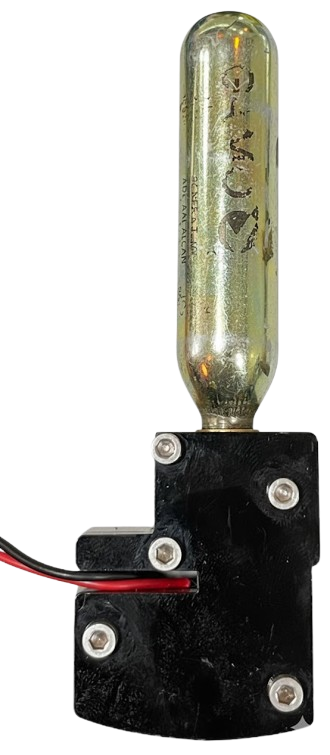
The Motor + Canister CO2 by Robo Marine Indonesia is a compact and efficient propulsion system designed for small-scale robotics and marine applications. This component integrates a motor with a CO2 canister to provide thrust, making it ideal for underwater vehicles, small boats, and other robotic systems requiring controlled propulsion. Its lightweight design and ease of integration make it a popular choice for hobbyists and professionals alike.
Explore Projects Built with Motor + Canister CO2
Use Cirkit Designer to design, explore, and prototype these projects online. Some projects support real-time simulation. Click "Open Project" to start designing instantly!
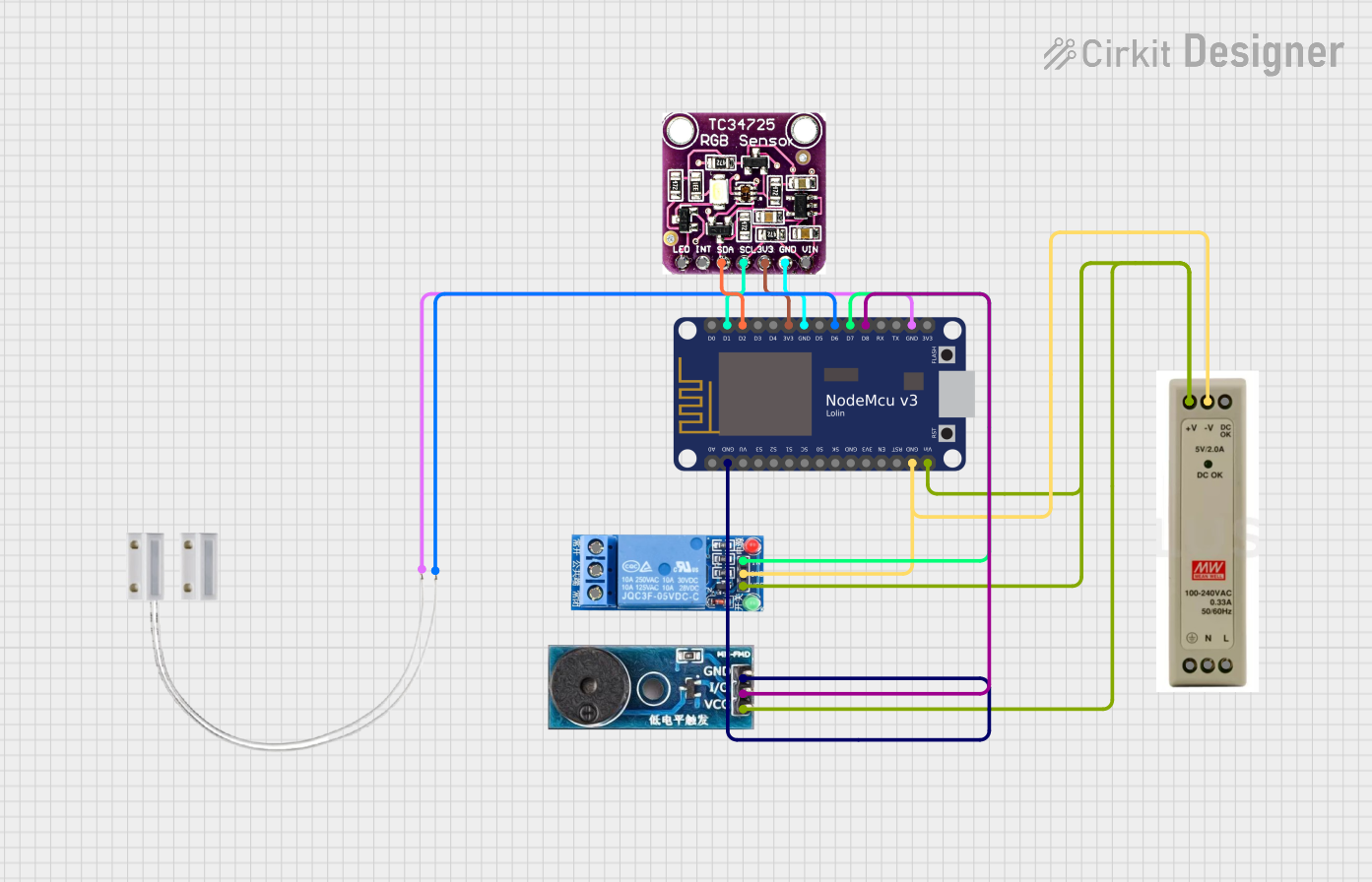
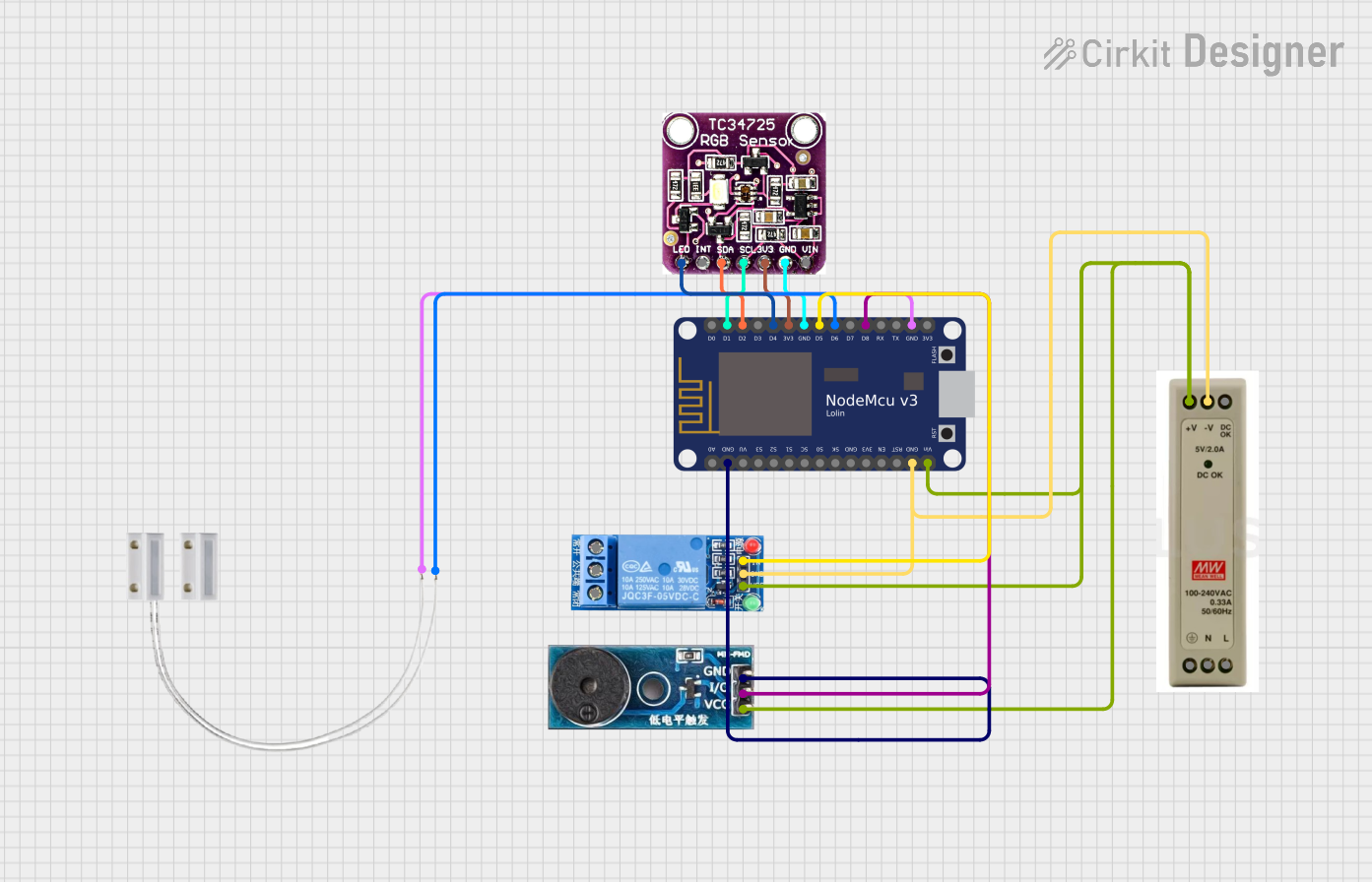
This circuit is a smart canister monitoring system that uses a NodeMCU ESP8266 microcontroller to detect the color of the canister contents via a TCS3472 color sensor. When the sensor detects a brown color, indicating an empty canister, the system triggers a buzzer and a relay to alert the user. The relay can be used to control an external device, and the system is powered by a 5V power supply.
This circuit is a smart canister monitoring system that uses a TCS3472 color sensor to detect the color of the canister contents. The NodeMCU ESP8266 microcontroller processes the sensor data and controls a relay and buzzer to provide alerts based on the detected color, indicating whether the canister is empty or not.
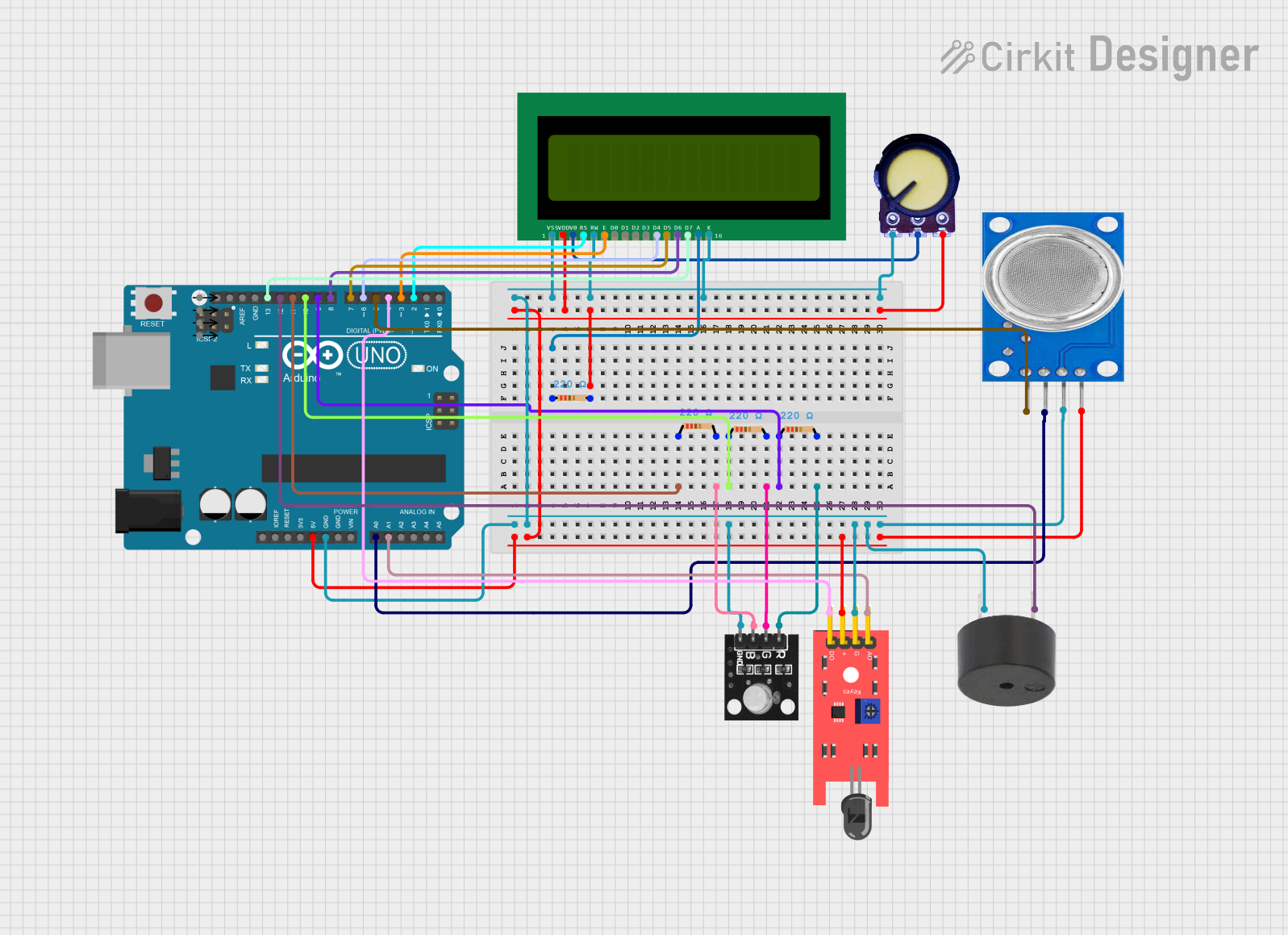
This circuit features an Arduino UNO microcontroller interfaced with an MQ135 gas sensor for CO2 detection, a KY-026 flame sensor for fire detection, a buzzer for alarms, and an RGB LED to visually indicate CO2 levels. A 16x2 LCD displays CO2 concentration and fire alerts, while potentiometers control LCD contrast. The embedded code manages sensor readings, activates the buzzer based on predefined thresholds, and adjusts the RGB LED color in response to CO2 levels.
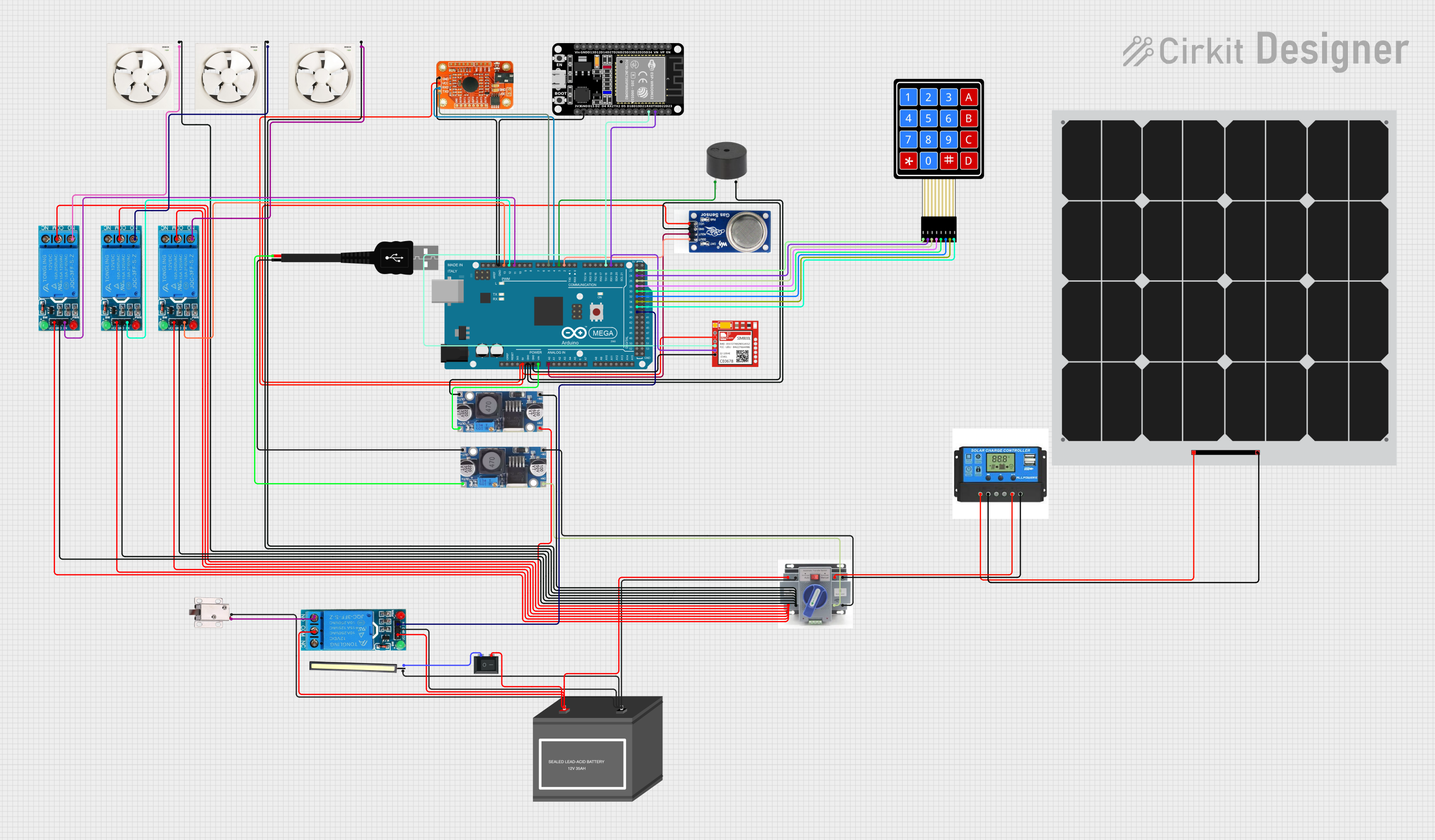
This circuit is an automated safety system that detects smoke or gas using an MQ2 sensor and activates a solenoid lock and buzzer in response. It includes a voice recognition module, an ESP32 for additional functionalities, and is powered by a 12V battery and solar panel with a charge controller. The system is controlled by an Arduino Mega 2560, which also manages multiple relays to control exhaust fans and other components.
Underwater drones and remotely operated vehicles (ROVs)
Small-scale marine robotics
Educational robotics projects
Emergency flotation or propulsion systems
Experimental propulsion systems for research
Technical Specifications
Key Technical Details
Parameter
Value
Manufacturer
Robo Marine Indonesia
Motor Type
Brushed DC Motor
Operating Voltage
6V - 12V
Maximum Current
2A
Thrust Output (CO2)
Up to 5N
CO2 Canister Capacity
16g
Motor Speed
3000 RPM (at 12V)
Dimensions
50mm x 30mm x 20mm
Weight
150g (with canister)
Operating Temperature
-10°C to 50°C
Pin Configuration and Descriptions
The motor has two terminals for electrical connections, and the CO2 canister is integrated into the system. Below is the pin configuration for the motor:
Pin Number
Label
Description
1
V+
Positive terminal for motor power input
2
V-
Negative terminal for motor power input
The CO2 canister does not require electrical connections but is activated mechanically when the motor is powered.
Usage Instructions
How to Use the Component in a Circuit
Power the Motor: Connect the motor terminals (V+ and V-) to a DC power source. Ensure the voltage is within the operating range (6V - 12V).
Secure the CO2 Canister: Attach the CO2 canister to the designated slot on the motor assembly. Ensure it is tightly secured to prevent leaks.
Control the Motor: Use a motor driver or an H-bridge circuit to control the motor's speed and direction. For Arduino users, a motor driver like the L298N is recommended.
Test the System: Once connected, test the motor and CO2 canister in a safe environment. Ensure proper ventilation when testing the CO2 system.
Important Considerations and Best Practices
Safety First: Always handle the CO2 canister with care. Avoid puncturing or exposing it to high temperatures.
Voltage Regulation: Use a regulated power supply to prevent damage to the motor.
Environmental Conditions: Avoid using the component in environments exceeding the specified temperature range.
CO2 Refills: Replace the CO2 canister once depleted. Ensure compatibility with 16g canisters.
Arduino UNO Example Code
Below is an example of how to control the motor using an Arduino UNO and an L298N motor driver:
// Define motor control pins
const int motorPin1 = 9; // Connect to IN1 on L298N
const int motorPin2 = 10; // Connect to IN2 on L298N
const int enablePin = 11; // Connect to ENA on L298N

void setup() {
  // Set motor pins as outputs
  pinMode(motorPin1, OUTPUT);
  pinMode(motorPin2, OUTPUT);
  pinMode(enablePin, OUTPUT);

  // Initialize motor in stopped state
  digitalWrite(motorPin1, LOW);
  digitalWrite(motorPin2, LOW);
  analogWrite(enablePin, 0); // Set speed to 0
}

void loop() {
  // Example: Run motor forward at 50% speed
  digitalWrite(motorPin1, HIGH);
  digitalWrite(motorPin2, LOW);
  analogWrite(enablePin, 128); // 50% duty cycle

  delay(5000); // Run for 5 seconds

  // Stop the motor
  digitalWrite(motorPin1, LOW);
  digitalWrite(motorPin2, LOW);
  analogWrite(enablePin, 0);

  delay(2000); // Wait for 2 seconds
}
Troubleshooting and FAQs
Common Issues and Solutions
Motor Does Not Spin
Cause: Insufficient power supply or loose connections.
Solution: Check the power source and ensure all connections are secure.
CO2 Canister Does Not Release Thrust
Cause: Canister not properly secured or depleted.
Solution: Ensure the canister is tightly attached and replace it if empty.
Overheating
Cause: Prolonged operation at high current.
Solution: Operate the motor within the recommended voltage and current limits.
Irregular Thrust Output
Cause: CO2 canister valve malfunction.
Solution: Inspect the valve for blockages or damage and replace the canister if necessary.
FAQs
Q: Can I use a higher voltage than 12V for the motor?
A: No, exceeding 12V may damage the motor and void the warranty.
Q: How do I know when the CO2 canister is empty?
A: The thrust output will decrease significantly. Replace the canister when this occurs.
Q: Is the component waterproof?
A: The motor is not waterproof, but it is designed for use in controlled environments. Ensure proper sealing if used underwater.
Q: Can I refill the CO2 canister?
A: The canister is not refillable. Use compatible 16g replacement canisters.
By following this documentation, you can effectively integrate and operate the Motor + Canister CO2 in your projects.

 Open Project in Cirkit Designer