
How to Use Anti Spark: Examples, Pinouts, and Specs
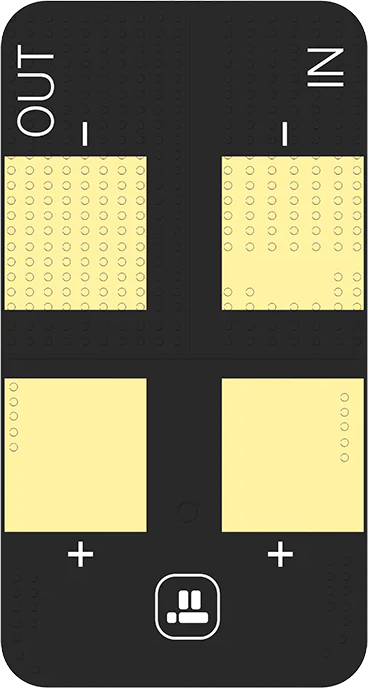
 Design with Anti Spark in Cirkit Designer
Introduction
The iFlight Anti Spark is a specialized electronic component designed to prevent or minimize sparking in electrical circuits. Sparking often occurs when connecting or disconnecting high-voltage systems, which can lead to damage to sensitive components, reduced safety, and wear on connectors. The Anti Spark device mitigates these issues by controlling inrush current and ensuring a safer connection process.
Explore Projects Built with Anti Spark
 Open Project in Cirkit Designer
 Open Project in Cirkit Designer
 Open Project in Cirkit Designer
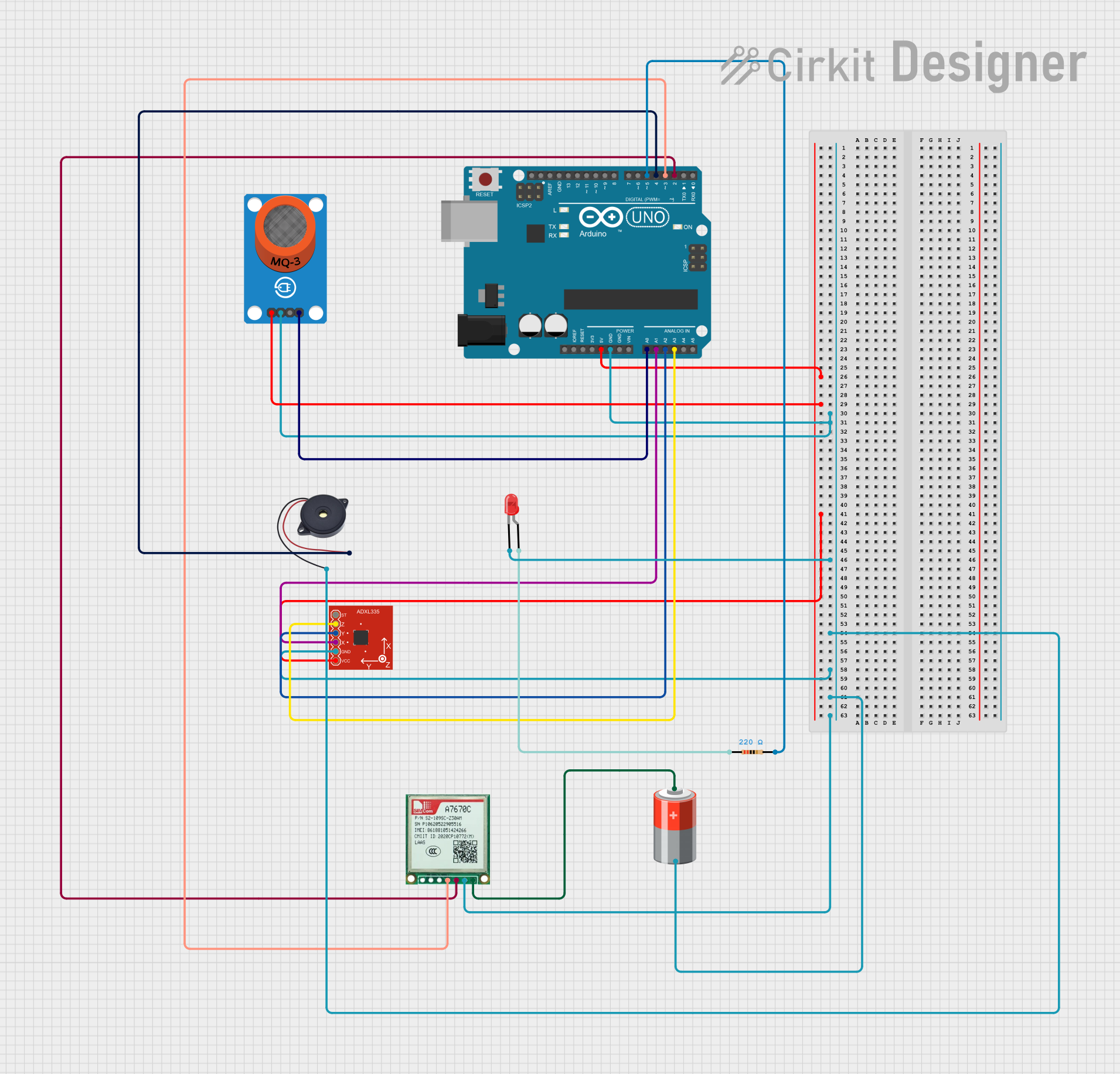 Open Project in Cirkit Designer
Explore Projects Built with Anti Spark
Open Project in Cirkit DesignerOpen Project in Cirkit DesignerOpen Project in Cirkit DesignerOpen Project in Cirkit DesignerCommon Applications and Use Cases
- High-voltage battery systems (e.g., lithium polymer (LiPo) batteries in drones or RC vehicles)
- Electric vehicles (EVs) and power distribution systems
- High-power motor controllers and ESCs (Electronic Speed Controllers)
- Industrial equipment with large capacitive loads
- Protection of sensitive electronics during power-up
Technical Specifications
The iFlight Anti Spark is engineered to handle high-power applications while maintaining compactness and reliability. Below are the key technical details:
General Specifications
| Parameter | Value |
|---|---|
| Rated Voltage | 6V - 60V DC |
| Maximum Current | 200A |
| Peak Current (10ms) | 400A |
| Resistance | < 0.5 mΩ |
| Operating Temperature | -20°C to 85°C |
| Dimensions | 30mm x 20mm x 10mm |
| Weight | 15g |
Pin Configuration and Descriptions
The iFlight Anti Spark typically features two main connection points for integration into a circuit. Below is the pin configuration:
| Pin Name | Description |
|---|---|
| Input (+) | Positive terminal for the power source |
| Input (-) | Negative terminal for the power source |
| Output (+) | Positive terminal for the load or circuit |
| Output (-) | Negative terminal for the load or circuit |
Usage Instructions
The iFlight Anti Spark is straightforward to use and can be integrated into a variety of high-voltage systems. Follow the steps below to ensure proper operation:
How to Use the Component in a Circuit
- Identify the Power Source and Load: Determine the positive and negative terminals of your power source (e.g., battery) and the load (e.g., ESC, motor controller, or other electronics).
- Connect the Input Terminals: Attach the Input (+) and Input (-) terminals of the Anti Spark to the corresponding positive and negative terminals of the power source.
- Connect the Output Terminals: Attach the Output (+) and Output (-) terminals of the Anti Spark to the corresponding positive and negative terminals of the load.
- Power On the System: Once all connections are secure, power on the system. The Anti Spark will limit inrush current and prevent sparking during the connection process.
Important Considerations and Best Practices
- Voltage Compatibility: Ensure the voltage of your system is within the rated range of 6V to 60V DC.
- Current Handling: Do not exceed the maximum continuous current rating of 200A or the peak current rating of 400A for short durations.
- Secure Connections: Use high-quality connectors and ensure all connections are tight to minimize resistance and heat generation.
- Heat Dissipation: If the Anti Spark is used in high-current applications, ensure adequate ventilation or cooling to prevent overheating.
- Polarity: Double-check the polarity of all connections to avoid damage to the component or the circuit.
Example: Using the Anti Spark with an Arduino UNO
While the Anti Spark is not directly connected to an Arduino UNO, it can be used in conjunction with high-power systems controlled by the Arduino. For example, if the Arduino is controlling a motor driver powered by a high-voltage battery, the Anti Spark can protect the system during power-up.
Here is an example Arduino code snippet for controlling a motor driver:
// Example Arduino code for controlling a motor driver
// connected to a high-voltage system with an Anti Spark device

const int motorPin = 9; // PWM pin connected to the motor driver

void setup() {
  pinMode(motorPin, OUTPUT); // Set motor pin as output
  analogWrite(motorPin, 0);  // Ensure motor is off at startup
}

void loop() {
  // Gradually increase motor speed
  for (int speed = 0; speed <= 255; speed += 5) {
    analogWrite(motorPin, speed); // Set motor speed (0-255)
    delay(100); // Wait for 100ms
  }

  // Gradually decrease motor speed
  for (int speed = 255; speed >= 0; speed -= 5) {
    analogWrite(motorPin, speed); // Set motor speed (0-255)
    delay(100); // Wait for 100ms
  }
}
Note: The Anti Spark device should be installed between the battery and the motor driver to prevent sparking during power-up.
Troubleshooting and FAQs
Common Issues and Solutions
No Power to the Load
- Cause: Loose or incorrect connections.
- Solution: Verify all connections are secure and that the polarity is correct.
Excessive Heat Generation
- Cause: Current exceeding the rated maximum or poor ventilation.
- Solution: Ensure the current is within the specified range and provide adequate cooling.
Sparking Still Occurs
- Cause: Faulty Anti Spark device or incorrect installation.
- Solution: Check the device for physical damage and ensure it is installed correctly.
Device Fails to Operate
- Cause: Voltage outside the rated range.
- Solution: Verify that the input voltage is between 6V and 60V DC.
FAQs
Q: Can the Anti Spark be used with AC systems?
A: No, the iFlight Anti Spark is designed for DC systems only. Using it with AC systems may result in malfunction or damage.
Q: Is the Anti Spark reusable?
A: Yes, the device is designed for repeated use in high-voltage applications, provided it is not subjected to conditions beyond its specifications.
Q: Can I use the Anti Spark with a 12V car battery?
A: Yes, the device is compatible with 12V systems as long as the current does not exceed the rated limits.
Q: How do I know if the Anti Spark is working?
A: If sparking is significantly reduced or eliminated during connection, the device is functioning correctly. Additionally, check for proper power delivery to the load.
By following this documentation, users can safely and effectively integrate the iFlight Anti Spark into their high-voltage systems.