
How to Use AVR 10-pin ICSP Header: Examples, Pinouts, and Specs
 Design with AVR 10-pin ICSP Header in Cirkit Designer
Introduction
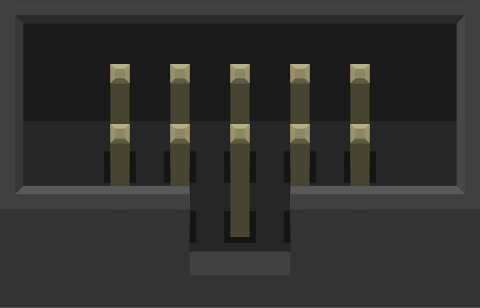
The AVR 10-pin ICSP (In-Circuit Serial Programming) Header is a standardized connector used for programming and debugging AVR microcontrollers. It allows developers to program microcontrollers directly on the circuit board without the need to remove the chip. This header is commonly found in development boards and custom PCB designs that utilize AVR microcontrollers.
Explore Projects Built with AVR 10-pin ICSP Header
 Open Project in Cirkit Designer
 Open Project in Cirkit Designer
 Open Project in Cirkit Designer
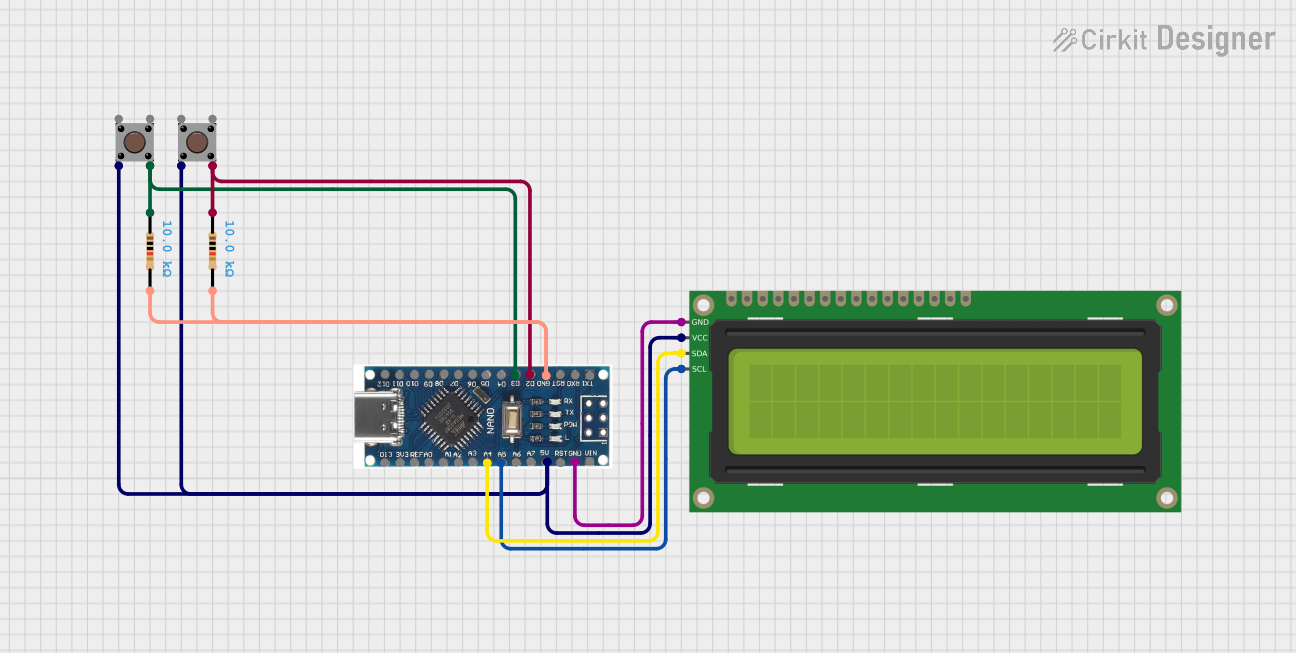 Open Project in Cirkit Designer
Explore Projects Built with AVR 10-pin ICSP Header
Open Project in Cirkit DesignerOpen Project in Cirkit DesignerOpen Project in Cirkit DesignerOpen Project in Cirkit DesignerCommon Applications and Use Cases
- Programming AVR microcontrollers in embedded systems.
- Debugging firmware during development.
- Updating firmware in deployed devices.
- Used in conjunction with programmers like the AVRISP, USBasp, or Atmel-ICE.
Technical Specifications
The AVR 10-pin ICSP Header follows the standard 2x5 pin configuration with a 0.1-inch (2.54 mm) pitch. Below are the key technical details and pin descriptions:
Key Technical Details
- Connector Type: 2x5 pin header.
- Pin Pitch: 2.54 mm (0.1 inch).
- Voltage Levels: Compatible with 5V and 3.3V systems (depending on the programmer and target device).
- Signal Type: Serial communication for programming and debugging.
Pin Configuration and Descriptions
The pinout of the AVR 10-pin ICSP Header is as follows:
| Pin Number | Signal Name | Description |
|---|---|---|
| 1 | MISO | Master In Slave Out (data from target) |
| 2 | VCC | Target voltage supply |
| 3 | SCK | Serial Clock |
| 4 | GND | Ground |
| 5 | MOSI | Master Out Slave In (data to target) |
| 6 | GND | Ground |
| 7 | RESET | Reset signal for the target MCU |
| 8 | NC | Not Connected |
| 9 | NC | Not Connected |
| 10 | GND | Ground |
Note: Pins 8 and 9 are typically not connected but may be reserved for future use or custom implementations.
Usage Instructions
How to Use the AVR 10-pin ICSP Header in a Circuit
Connect the Header to the Target Device:
- Ensure the 10-pin ICSP header is properly soldered to the PCB.
- Align the programmer's connector with the header, ensuring correct orientation (pin 1 is usually marked with a dot or triangle).
Connect the Programmer:
- Use a compatible programmer (e.g., AVRISP, USBasp, or Atmel-ICE) with a 10-pin cable.
- Plug the cable into the ICSP header, ensuring proper alignment.
Power the Circuit:
- Ensure the target device is powered either through the programmer (if supported) or an external power source.
Program the Microcontroller:
- Use software like Atmel Studio, AVRDude, or Arduino IDE to upload firmware to the microcontroller.
Important Considerations and Best Practices
- Orientation: Always verify the orientation of the programmer's connector to avoid incorrect connections.
- Voltage Compatibility: Ensure the programmer's voltage matches the target device's operating voltage (e.g., 5V or 3.3V).
- Signal Integrity: Keep the ICSP cable as short as possible to minimize noise and signal degradation.
- Reset Pin: Ensure the RESET pin is not being used for other purposes in the circuit during programming.
Example: Using with Arduino UNO
Although the Arduino UNO uses a 6-pin ICSP header, you can adapt the 10-pin ICSP header using a 10-to-6 pin adapter. Below is an example of using AVRDude to program an AVR microcontroller:
Example command to program an AVR microcontroller using AVRDude
avrdude -c usbasp -p atmega328p -U flash:w:firmware.hex
-c specifies the programmer type (usbasp in this case)
-p specifies the target microcontroller (e.g., atmega328p)
-U specifies the memory operation (write flash with firmware.hex)
Troubleshooting and FAQs
Common Issues Users Might Face
Programmer Not Detected:
- Solution: Ensure the programmer is properly connected to the ICSP header and the USB port. Check for driver installation if using a USB programmer.
Incorrect Orientation:
- Solution: Verify the alignment of the programmer's connector with the ICSP header. Pin 1 is usually marked on both the header and the cable.
Programming Fails or Times Out:
- Solution: Check the power supply to the target device. Ensure the RESET pin is not being held high or low by other components.
Signal Noise or Interference:
- Solution: Use a shorter ICSP cable and ensure proper grounding.
FAQs
Q: Can I use the AVR 10-pin ICSP Header with a 6-pin programmer?
A: Yes, you can use a 10-to-6 pin adapter to connect a 6-pin programmer to the 10-pin ICSP header.
Q: What software is compatible with the AVR 10-pin ICSP Header?
A: Common software includes Atmel Studio, AVRDude, and Arduino IDE.
Q: How do I identify pin 1 on the ICSP header?
A: Pin 1 is typically marked with a dot, triangle, or square pad on the PCB.
Q: Can I use the ICSP header for debugging?
A: Yes, the ICSP header can be used for debugging if supported by the programmer and microcontroller.
By following this documentation, you can effectively use the AVR 10-pin ICSP Header for programming and debugging AVR microcontrollers.