
How to Use Connector 4 In 8 Out: Examples, Pinouts, and Specs

 Design with Connector 4 In 8 Out in Cirkit Designer
Introduction
The Connector 4 In 8 Out is a versatile electronic component designed to route four input signals to eight output channels. This component is ideal for applications requiring signal distribution, such as multiplexing, signal replication, or managing multiple output devices from a limited number of input sources. Its compact design and straightforward functionality make it a valuable addition to complex circuits.
Explore Projects Built with Connector 4 In 8 Out
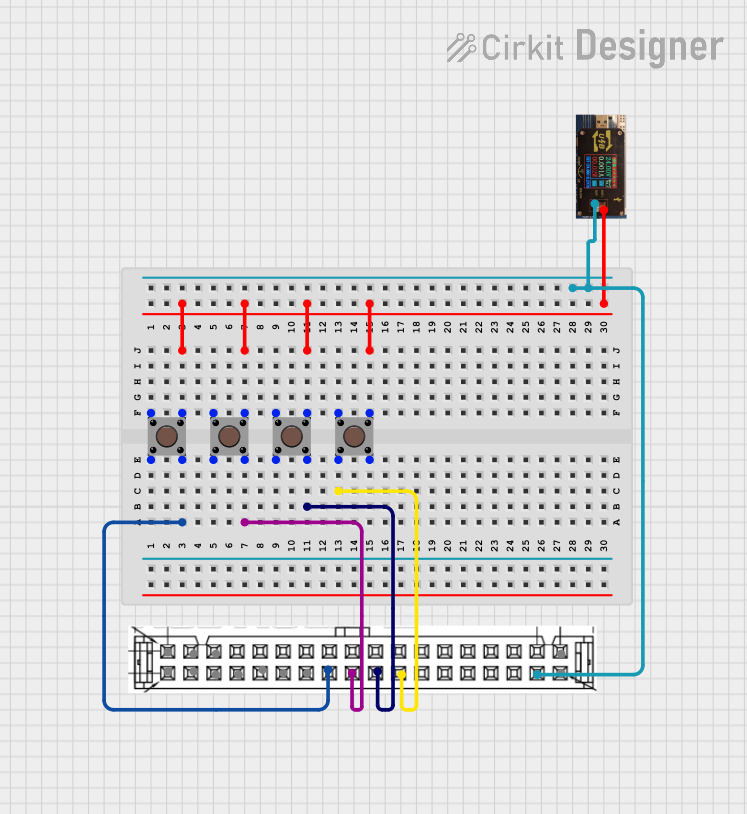 Open Project in Cirkit Designer
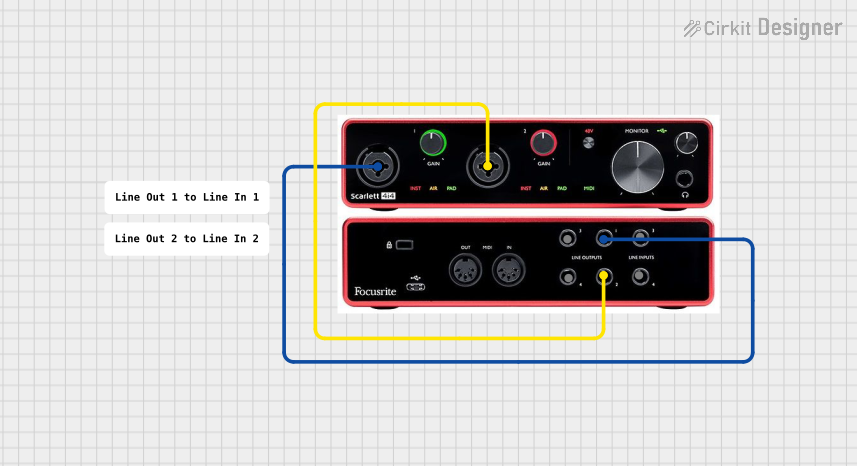 Open Project in Cirkit Designer
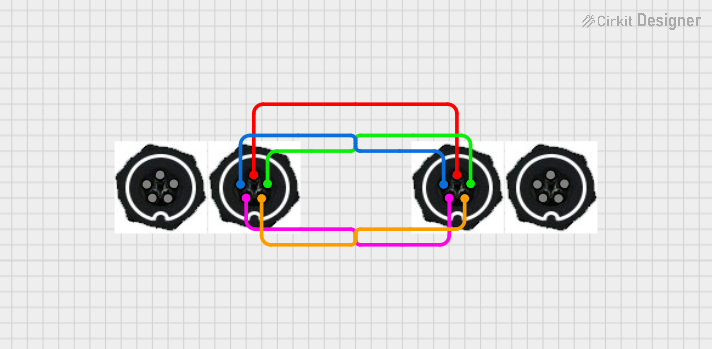 Open Project in Cirkit Designer
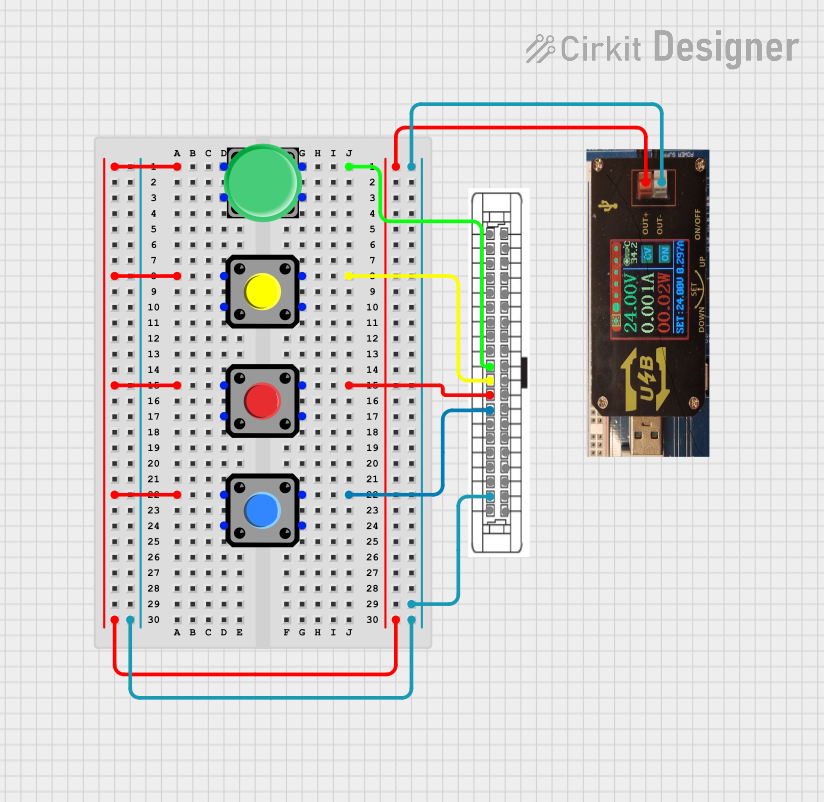 Open Project in Cirkit Designer
Explore Projects Built with Connector 4 In 8 Out
Open Project in Cirkit DesignerOpen Project in Cirkit DesignerOpen Project in Cirkit DesignerOpen Project in Cirkit DesignerCommon Applications and Use Cases
- Signal distribution in audio systems
- Multiplexing in digital circuits
- LED matrix control
- Data routing in microcontroller-based projects
- Industrial automation systems
Technical Specifications
The Connector 4 In 8 Out is designed to handle low-power signals and is compatible with both digital and analog signals. Below are the key technical details:
| Parameter | Value |
|---|---|
| Input Channels | 4 |
| Output Channels | 8 |
| Voltage Range | 3.3V to 5V (logic level) |
| Maximum Current | 500mA per channel |
| Signal Type | Digital or Analog |
| Operating Temperature | -40°C to 85°C |
| Dimensions | 40mm x 20mm x 10mm |
Pin Configuration and Descriptions
The Connector 4 In 8 Out has a total of 12 pins: 4 input pins, 8 output pins, and 2 power pins (VCC and GND). Below is the pinout table:
| Pin | Name | Description |
|---|---|---|
| 1 | IN1 | Input signal 1 |
| 2 | IN2 | Input signal 2 |
| 3 | IN3 | Input signal 3 |
| 4 | IN4 | Input signal 4 |
| 5 | OUT1 | Output signal 1 (connected to IN1) |
| 6 | OUT2 | Output signal 2 (connected to IN1) |
| 7 | OUT3 | Output signal 3 (connected to IN2) |
| 8 | OUT4 | Output signal 4 (connected to IN2) |
| 9 | OUT5 | Output signal 5 (connected to IN3) |
| 10 | OUT6 | Output signal 6 (connected to IN3) |
| 11 | OUT7 | Output signal 7 (connected to IN4) |
| 12 | OUT8 | Output signal 8 (connected to IN4) |
| 13 | VCC | Power supply (3.3V to 5V) |
| 14 | GND | Ground |
Usage Instructions
How to Use the Component in a Circuit
- Power the Connector: Connect the VCC pin to a 3.3V or 5V power source and the GND pin to the ground of your circuit.
- Connect Input Signals: Attach up to four input signals to the IN1, IN2, IN3, and IN4 pins. These can be digital or analog signals.
- Connect Output Devices: Connect up to eight output devices to the OUT1 through OUT8 pins. Each input signal is routed to two corresponding output pins.
- Verify Connections: Ensure all connections are secure and that the input signals are within the specified voltage range.
Important Considerations and Best Practices
- Signal Integrity: Use short and shielded wires for input and output connections to minimize noise and signal degradation.
- Power Supply: Ensure the power supply voltage matches the operating range of the connector (3.3V to 5V).
- Current Limitations: Do not exceed the maximum current rating of 500mA per channel to avoid damage.
- Compatibility: Verify that the input and output devices are compatible with the voltage and current levels of the connector.
Example: Using with an Arduino UNO
The Connector 4 In 8 Out can be easily integrated with an Arduino UNO for signal distribution. Below is an example code snippet to demonstrate its usage:
// Example: Distributing signals from Arduino to multiple outputs
// Connect Arduino pins 2, 3, 4, and 5 to IN1, IN2, IN3, and IN4 of the connector
// OUT1 to OUT8 will replicate the signals from these inputs

void setup() {
  // Configure Arduino pins as outputs
  pinMode(2, OUTPUT); // IN1
  pinMode(3, OUTPUT); // IN2
  pinMode(4, OUTPUT); // IN3
  pinMode(5, OUTPUT); // IN4
}

void loop() {
  // Example signal distribution
  digitalWrite(2, HIGH); // Set IN1 high, OUT1 and OUT2 will also be high
  digitalWrite(3, LOW);  // Set IN2 low, OUT3 and OUT4 will also be low
  digitalWrite(4, HIGH); // Set IN3 high, OUT5 and OUT6 will also be high
  digitalWrite(5, LOW);  // Set IN4 low, OUT7 and OUT8 will also be low

  delay(1000); // Wait for 1 second

  // Toggle signals
  digitalWrite(2, LOW);
  digitalWrite(3, HIGH);
  digitalWrite(4, LOW);
  digitalWrite(5, HIGH);

  delay(1000); // Wait for 1 second
}
Troubleshooting and FAQs
Common Issues and Solutions
No Output Signal:
- Cause: Incorrect power supply or loose connections.
- Solution: Verify that the VCC and GND pins are properly connected and that the input signals are within the specified voltage range.
Signal Degradation:
- Cause: Long or unshielded wires causing noise.
- Solution: Use shorter wires and, if possible, shielded cables to maintain signal integrity.
Overheating:
- Cause: Exceeding the maximum current rating of 500mA per channel.
- Solution: Reduce the load on the output channels or use external drivers for high-current devices.
Uneven Signal Distribution:
- Cause: Mismatched input and output device specifications.
- Solution: Ensure that the input and output devices are compatible with the connector's voltage and current ratings.
FAQs
Can I use this connector with analog signals? Yes, the Connector 4 In 8 Out supports both digital and analog signals.
What happens if I connect fewer than four inputs? The unused output channels will remain inactive unless connected to an input signal.
Is this component compatible with 12V systems? No, the connector is designed for low-voltage systems (3.3V to 5V). Using it with 12V may damage the component.
Can I connect multiple connectors in series? Yes, but ensure that the total current does not exceed the maximum rating and that signal integrity is maintained.