
How to Use 18650 7.4V 2S Li-ion Battery: Examples, Pinouts, and Specs
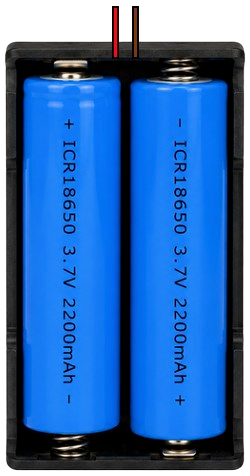
 Design with 18650 7.4V 2S Li-ion Battery in Cirkit Designer
Introduction
The 18650 7.4V 2S Li-ion Battery, manufactured by Espressif, is a rechargeable lithium-ion battery pack composed of two 18650 cells connected in series. This configuration provides a nominal voltage of 7.4V and is widely recognized for its high energy density, long cycle life, and reliability. It is an ideal power source for a variety of applications, including portable electronics, robotics, electric vehicles, and backup power systems.
Explore Projects Built with 18650 7.4V 2S Li-ion Battery
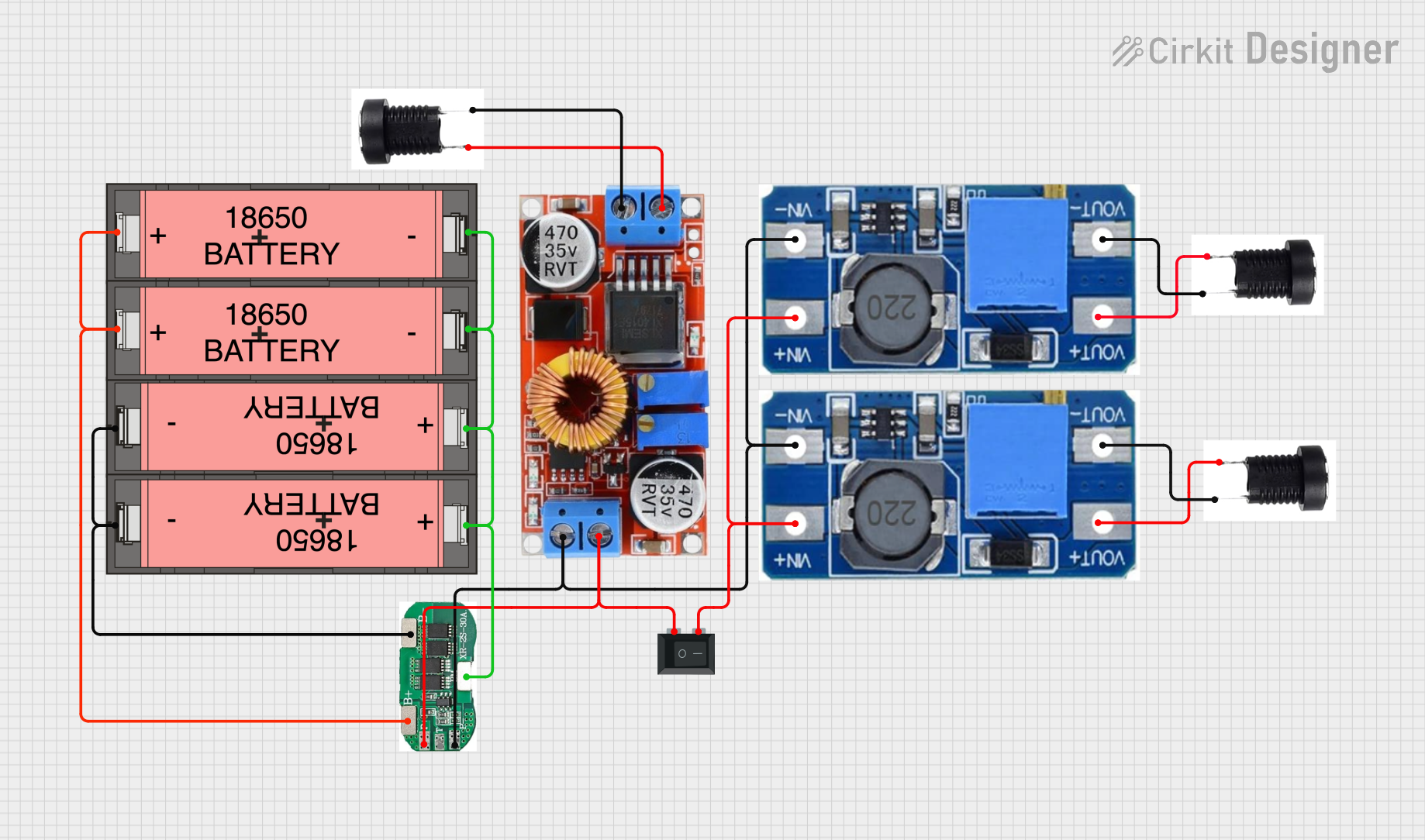 Open Project in Cirkit Designer
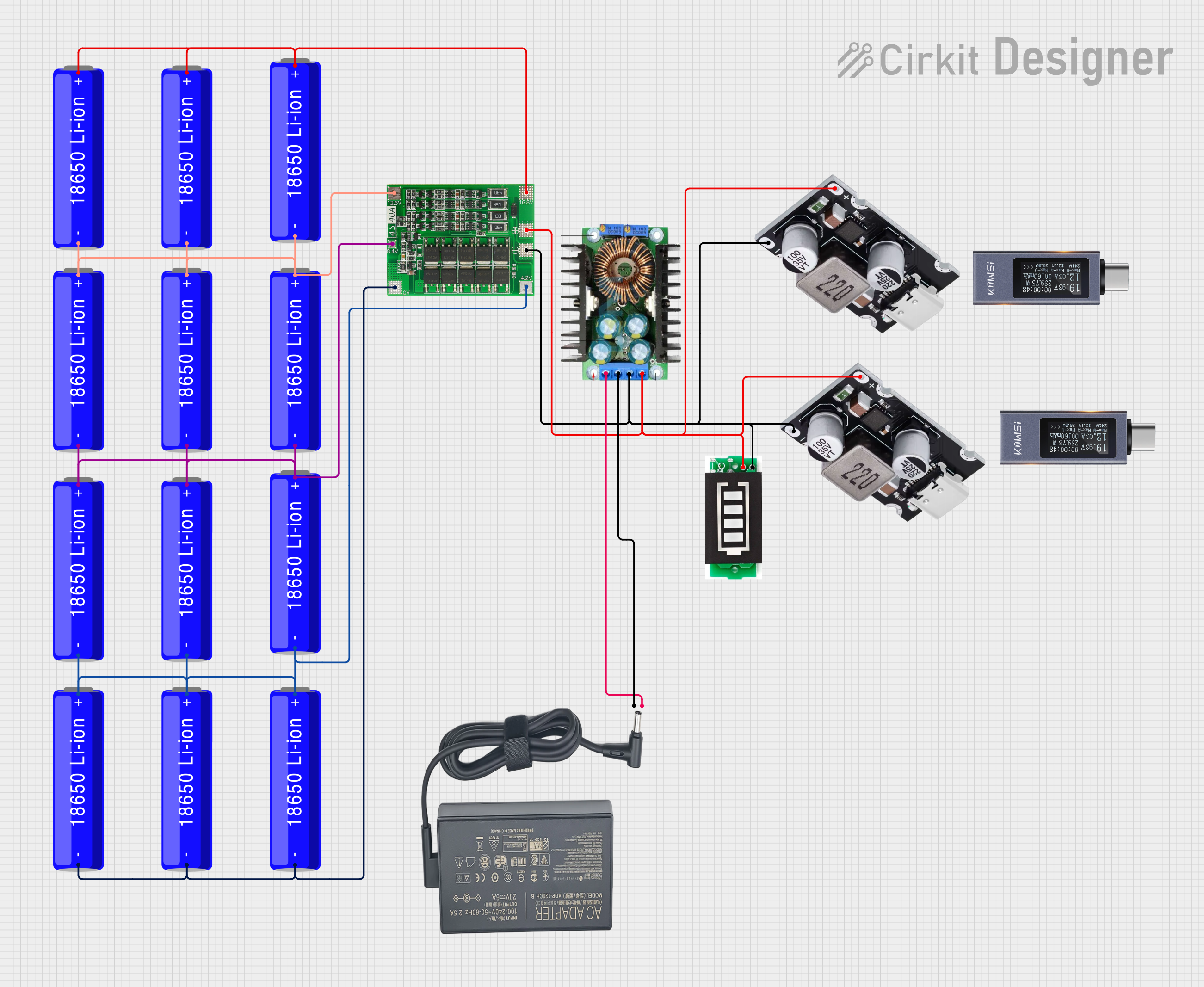 Open Project in Cirkit Designer
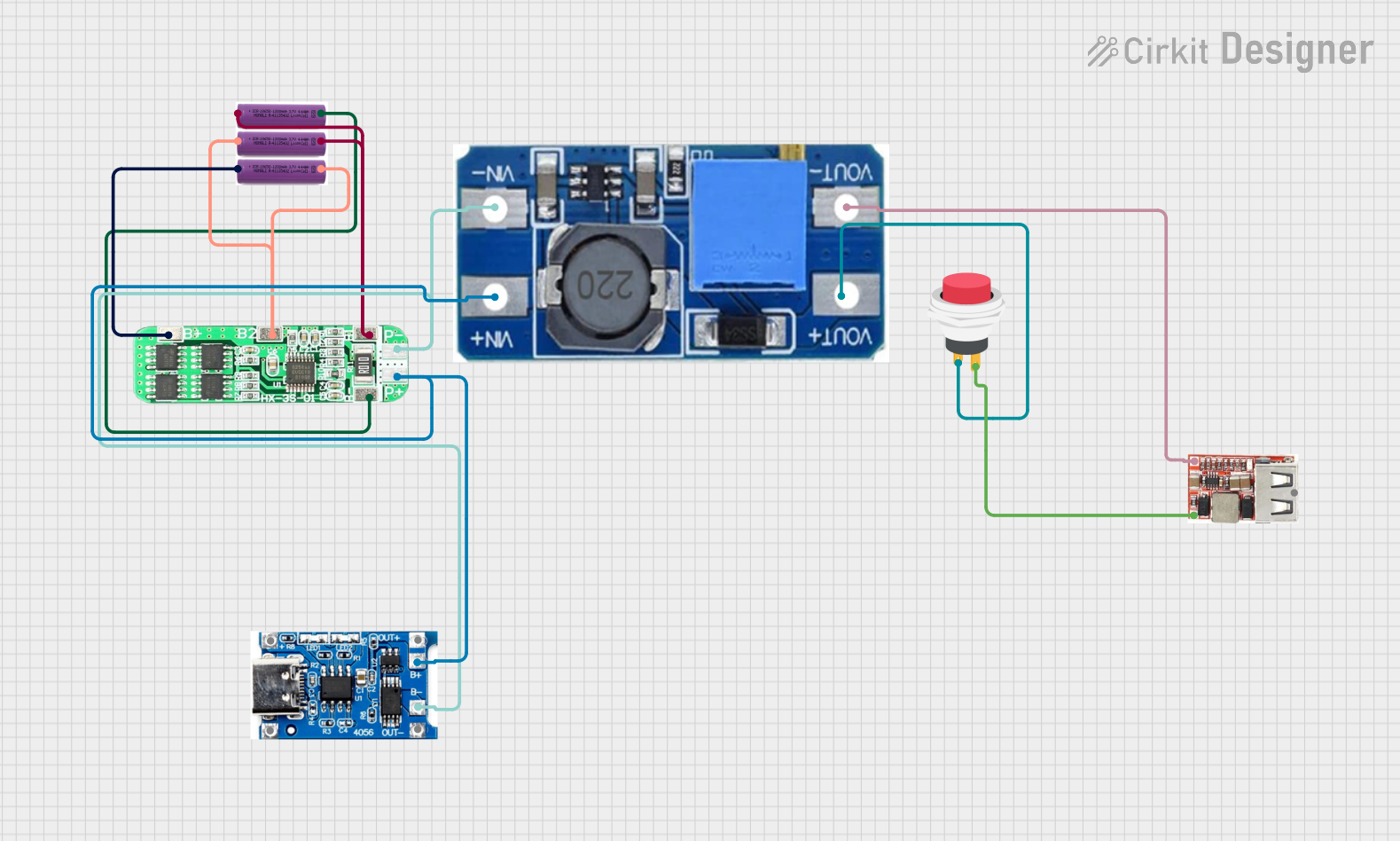 Open Project in Cirkit Designer
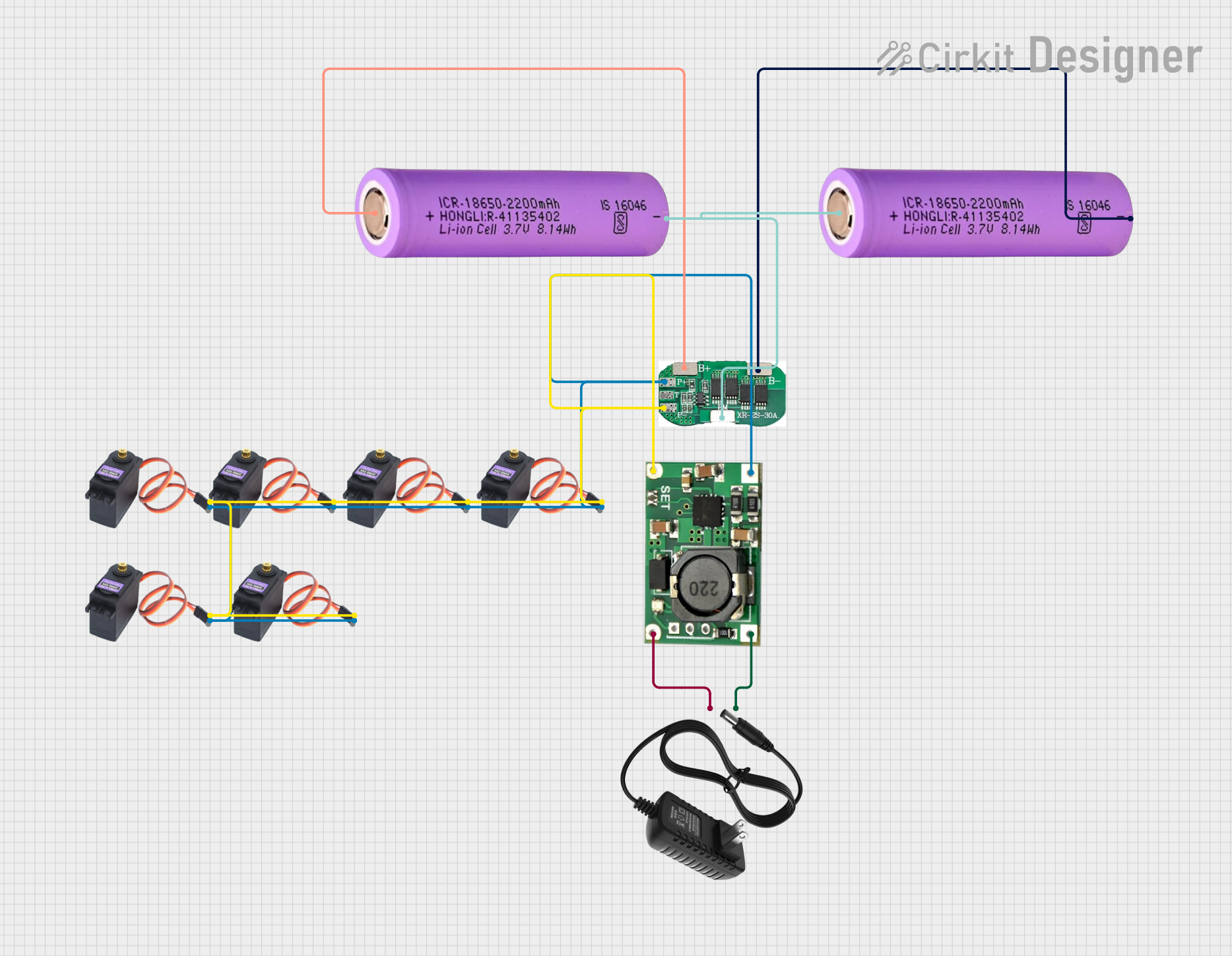 Open Project in Cirkit Designer
Explore Projects Built with 18650 7.4V 2S Li-ion Battery
Open Project in Cirkit DesignerOpen Project in Cirkit DesignerOpen Project in Cirkit DesignerOpen Project in Cirkit DesignerCommon Applications
- Portable electronic devices (e.g., handheld tools, flashlights)
- Robotics and IoT devices
- Electric vehicles and e-bikes
- Uninterruptible Power Supplies (UPS)
- DIY electronics projects
Technical Specifications
The following table outlines the key technical details of the 18650 7.4V 2S Li-ion Battery:
| Parameter | Specification |
|---|---|
| Nominal Voltage | 7.4V |
| Capacity Range | 2000mAh to 3500mAh (varies by model) |
| Maximum Charging Voltage | 8.4V |
| Discharge Cutoff Voltage | 6.0V |
| Maximum Continuous Current | 2A to 10A (depending on cell type) |
| Chemistry | Lithium-ion |
| Configuration | 2S (two cells in series) |
| Cycle Life | 300–500 cycles (typical) |
| Operating Temperature | -20°C to 60°C |
| Dimensions | Varies based on cell holder design |
| Weight | ~90g to 120g (depending on capacity) |
Pin Configuration and Descriptions
The 18650 7.4V 2S Li-ion Battery typically has three terminals: Positive (+), Negative (-), and a Battery Management System (BMS) connection for protection. The table below describes the pin configuration:
| Pin | Label | Description |
|---|---|---|
| 1 | + | Positive terminal of the battery pack. Connect to the positive side of the load. |
| 2 | - | Negative terminal of the battery pack. Connect to the negative side of the load. |
| 3 | BMS | Connection to the Battery Management System for overcharge and discharge protection. |
Usage Instructions
How to Use the Component in a Circuit
- Connection: Connect the positive terminal (
+) of the battery to the positive input of your circuit and the negative terminal (-) to the ground or negative input. - Charging: Use a compatible Li-ion battery charger designed for 2S (7.4V) configurations. Ensure the charger has overcharge protection and does not exceed 8.4V.
- Load Compatibility: Verify that the load does not exceed the battery's maximum continuous current rating. For high-current applications, ensure proper heat dissipation.
- Protection Circuit: Always use a Battery Management System (BMS) to prevent overcharging, over-discharging, and short circuits.
Important Considerations and Best Practices
- Charging Safety: Always charge the battery with a charger specifically designed for 2S Li-ion batteries. Avoid overcharging or using unregulated chargers.
- Discharge Limits: Do not allow the battery voltage to drop below 6.0V, as this can damage the cells and reduce their lifespan.
- Storage: Store the battery in a cool, dry place at a partial charge (around 40–60%) for long-term storage.
- Heat Management: Avoid exposing the battery to high temperatures or direct sunlight, as this can degrade its performance and safety.
- Polarity: Double-check the polarity before connecting the battery to a circuit to prevent damage to the battery or connected components.
Example: Using with Arduino UNO
The 18650 7.4V 2S Li-ion Battery can be used to power an Arduino UNO via its VIN pin. Below is an example circuit and code to read the battery voltage using a voltage divider:
Circuit Setup
- Connect the battery's positive terminal to the VIN pin of the Arduino UNO.
- Connect the battery's negative terminal to the GND pin of the Arduino UNO.
- Use a voltage divider (e.g., 10kΩ and 20kΩ resistors) to step down the battery voltage for safe measurement by the Arduino's analog input pin.
Arduino Code
// Define the analog pin connected to the voltage divider
const int voltagePin = A0;

// Define the voltage divider ratio (e.g., 10kΩ and 20kΩ resistors)
const float voltageDividerRatio = 3.0;

// Reference voltage of the Arduino (5V for most boards)
const float referenceVoltage = 5.0;

void setup() {
  Serial.begin(9600); // Initialize serial communication
}

void loop() {
  // Read the analog value from the voltage divider
  int analogValue = analogRead(voltagePin);

  // Convert the analog value to the actual battery voltage
  float batteryVoltage = (analogValue * referenceVoltage / 1023.0) * voltageDividerRatio;

  // Print the battery voltage to the Serial Monitor
  Serial.print("Battery Voltage: ");
  Serial.print(batteryVoltage);
  Serial.println(" V");

  delay(1000); // Wait for 1 second before the next reading
}
Troubleshooting and FAQs
Common Issues and Solutions
Battery Not Charging
- Cause: Faulty charger or damaged BMS.
- Solution: Verify the charger output voltage and current. Replace the charger or BMS if necessary.
Battery Drains Quickly
- Cause: High self-discharge rate or excessive load.
- Solution: Check for parasitic loads in the circuit. Replace the battery if it has degraded.
Overheating During Use
- Cause: Excessive current draw or poor ventilation.
- Solution: Ensure the load is within the battery's current rating. Improve heat dissipation.
Voltage Drops Below 6.0V
- Cause: Over-discharge due to lack of BMS.
- Solution: Use a BMS to prevent over-discharge. Recharge the battery immediately.
FAQs
Q: Can I use this battery without a BMS?
- A: It is not recommended. A BMS is essential for safety and to extend the battery's lifespan.
Q: How do I know when the battery is fully charged?
- A: The battery is fully charged when the voltage reaches 8.4V. Most chargers have an indicator for full charge.
Q: Can I connect multiple 2S packs in parallel?
- A: Yes, but ensure all packs have the same voltage and capacity. Use a BMS for each pack.
Q: Is this battery safe for outdoor use?
- A: Yes, but avoid exposure to extreme temperatures or moisture. Use a protective enclosure if necessary.