
How to Use Starter Battery: Examples, Pinouts, and Specs
 Design with Starter Battery in Cirkit Designer
Introduction
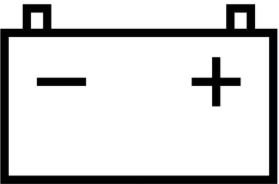
A starter battery is a rechargeable battery designed to provide the necessary electrical energy to start an internal combustion engine. It powers the starter motor, which cranks the engine to initiate the combustion process. Starter batteries are commonly used in automobiles, motorcycles, boats, and other vehicles equipped with internal combustion engines.
Explore Projects Built with Starter Battery
 Open Project in Cirkit Designer
 Open Project in Cirkit Designer
 Open Project in Cirkit Designer
 Open Project in Cirkit Designer
Explore Projects Built with Starter Battery
Open Project in Cirkit DesignerOpen Project in Cirkit DesignerOpen Project in Cirkit DesignerOpen Project in Cirkit DesignerCommon Applications and Use Cases
- Starting internal combustion engines in cars, trucks, and motorcycles.
- Powering auxiliary systems in vehicles, such as lights, radios, and onboard electronics.
- Providing backup power for certain systems in boats and recreational vehicles (RVs).
- Used in emergency generators to start the engine.
Technical Specifications
Key Technical Details
| Parameter | Specification |
|---|---|
| Battery Type | Lead-acid (Flooded, AGM, or Gel) |
| Nominal Voltage | 12V (common for most vehicles) |
| Capacity | 35Ah to 100Ah (varies by application) |
| Cold Cranking Amps (CCA) | 300A to 1000A (varies by model) |
| Reserve Capacity (RC) | 60 to 180 minutes |
| Operating Temperature | -30°C to 50°C |
| Recharge Cycles | 200 to 1000 cycles (depending on type) |
Terminal Configuration
| Terminal Type | Description |
|---|---|
| Positive (+) | Larger terminal, typically marked with a "+" symbol. |
| Negative (-) | Smaller terminal, typically marked with a "-" symbol. |
Physical Dimensions
Starter batteries come in various sizes, typically defined by group numbers (e.g., Group 24, Group 35). Refer to the manufacturer's datasheet for exact dimensions.
Usage Instructions
How to Use the Starter Battery in a Circuit
Installation:
- Ensure the battery is compatible with your vehicle's specifications (voltage, capacity, and terminal type).
- Disconnect the vehicle's negative terminal before installing the battery to avoid short circuits.
- Connect the positive terminal of the battery to the vehicle's positive cable, followed by the negative terminal.
Charging:
- Use a compatible battery charger with the correct voltage and current rating.
- Avoid overcharging, as it can damage the battery. Use a charger with an automatic cutoff feature if possible.
Maintenance:
- For flooded lead-acid batteries, check the electrolyte levels regularly and top up with distilled water if needed.
- Keep the terminals clean and free of corrosion. Use a terminal cleaner or baking soda solution to remove buildup.
Important Considerations and Best Practices
- Always wear protective gear (gloves and goggles) when handling the battery.
- Avoid shorting the terminals, as this can cause sparks or damage the battery.
- Store the battery in a cool, dry place when not in use.
- For vehicles with sensitive electronics, use a memory saver device to retain settings during battery replacement.
Arduino UNO Integration
While starter batteries are not directly used with Arduino UNO, they can power circuits indirectly through a voltage regulator or DC-DC converter. Below is an example of using a 12V starter battery to power an Arduino UNO:
/* Example: Powering Arduino UNO with a 12V Starter Battery
   This setup uses a 12V to 5V DC-DC converter to safely power the Arduino. */

void setup() {
  // Initialize serial communication for debugging
  Serial.begin(9600);
  Serial.println("Arduino powered by starter battery via DC-DC converter.");
}

void loop() {
  // Example loop code
  Serial.println("System running...");
  delay(1000); // Wait for 1 second
}
Note: Always use a DC-DC converter to step down the 12V from the starter battery to 5V for the Arduino UNO, as directly connecting 12V can damage the board.
Troubleshooting and FAQs
Common Issues and Solutions
| Issue | Possible Cause | Solution |
|---|---|---|
| Engine fails to start | Battery is discharged | Recharge the battery or replace if faulty. |
| Corroded terminals | Exposure to moisture or acid | Clean terminals with baking soda solution. |
| Battery drains quickly | Parasitic load or faulty alternator | Check for parasitic draw or test alternator. |
| Swollen battery case | Overcharging or extreme temperatures | Replace the battery and check the charger. |
| Low electrolyte levels (flooded type) | Lack of maintenance | Refill with distilled water as needed. |
FAQs
How long does a starter battery last?
- Typically, 3 to 5 years, depending on usage and maintenance.
Can I use a starter battery for deep-cycle applications?
- No, starter batteries are designed for short bursts of high current, not prolonged discharges.
What is the difference between CCA and RC?
- CCA (Cold Cranking Amps) measures the battery's ability to start an engine in cold temperatures, while RC (Reserve Capacity) indicates how long the battery can provide power without being recharged.
How do I know if my battery is fully charged?
- Use a multimeter to measure the voltage. A fully charged 12V battery should read around 12.6V to 12.8V.
By following this documentation, you can ensure the proper use and maintenance of your starter battery for optimal performance and longevity.