
How to Use hlk-ld2412: Examples, Pinouts, and Specs
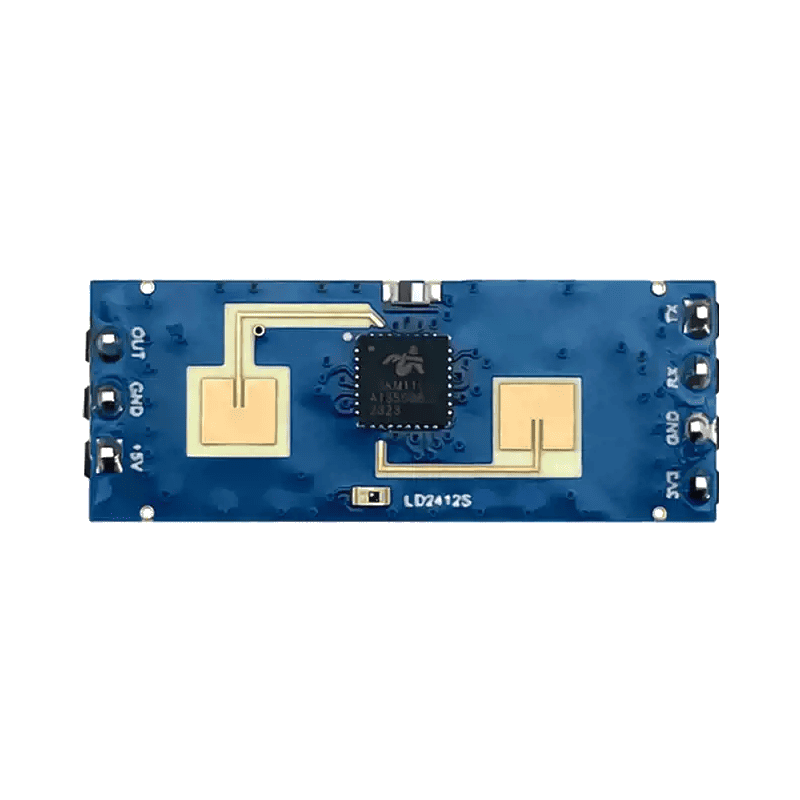
 Design with hlk-ld2412 in Cirkit Designer
Introduction
The HLK-LD2412 is a compact, isolated DC-DC converter module manufactured by Hi-Link. It is designed to convert a 24V DC input into a stable and regulated 12V DC output. This module is highly efficient, reliable, and suitable for powering a wide range of electronic devices and circuits. Its small form factor and robust design make it ideal for industrial, automotive, and embedded system applications.
Explore Projects Built with hlk-ld2412
 Open Project in Cirkit Designer
 Open Project in Cirkit Designer
 Open Project in Cirkit Designer
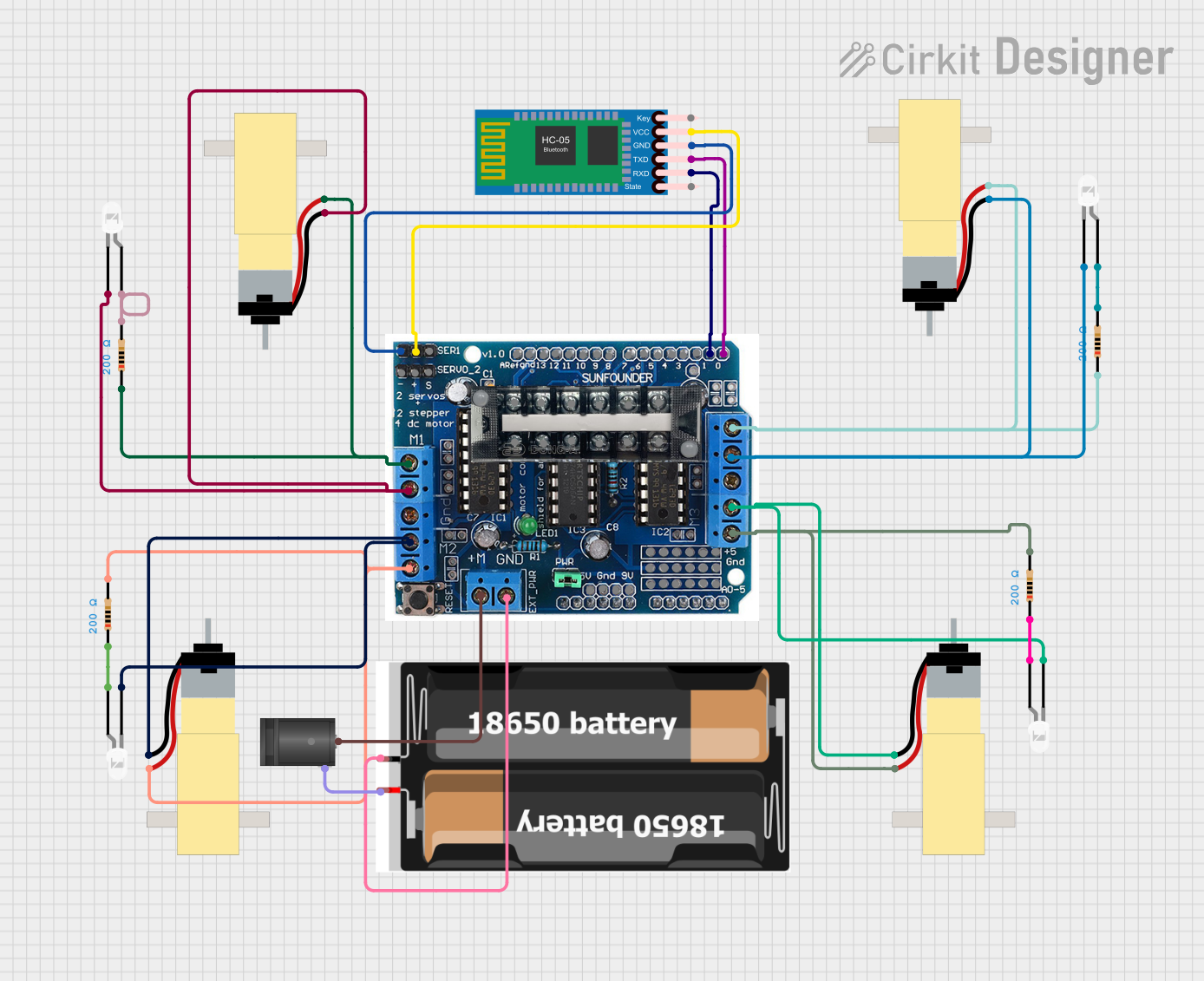 Open Project in Cirkit Designer
Explore Projects Built with hlk-ld2412
Open Project in Cirkit DesignerOpen Project in Cirkit DesignerOpen Project in Cirkit DesignerOpen Project in Cirkit DesignerCommon Applications
- Powering microcontrollers, sensors, and other low-power devices
- Industrial automation systems
- Automotive electronics
- Embedded systems and IoT devices
- Battery-powered equipment requiring voltage regulation
Technical Specifications
The HLK-LD2412 module is designed to meet the needs of various applications with the following key specifications:
| Parameter | Value |
|---|---|
| Input Voltage Range | 18V DC to 36V DC |
| Output Voltage | 12V DC |
| Output Current | 0A to 1A |
| Output Power | 12W (maximum) |
| Efficiency | Up to 85% |
| Isolation Voltage | 1500V DC |
| Operating Temperature | -25°C to +70°C |
| Storage Temperature | -40°C to +85°C |
| Dimensions | 50mm x 25mm x 15mm |
| Weight | Approximately 20g |
Pin Configuration and Descriptions
The HLK-LD2412 module has four pins for input and output connections. The pinout is as follows:
| Pin Number | Pin Name | Description |
|---|---|---|
| 1 | VIN+ | Positive input voltage (18V to 36V DC) |
| 2 | VIN- | Negative input voltage (Ground) |
| 3 | VOUT+ | Positive regulated output voltage (12V) |
| 4 | VOUT- | Negative regulated output voltage (Ground) |
Usage Instructions
How to Use the HLK-LD2412 in a Circuit
- Input Voltage Connection: Connect the VIN+ and VIN- pins to a 24V DC power source. Ensure the input voltage is within the specified range (18V to 36V DC).
- Output Voltage Connection: Connect the VOUT+ and VOUT- pins to the load or circuit requiring a 12V DC supply.
- Decoupling Capacitors: For optimal performance, place decoupling capacitors (e.g., 10µF and 0.1µF) close to the input and output pins to reduce noise and improve stability.
- Mounting: Secure the module on a PCB or enclosure using appropriate mounting hardware. Ensure proper ventilation to prevent overheating.
Important Considerations and Best Practices
- Input Voltage Range: Do not exceed the input voltage range (18V to 36V DC) to avoid damaging the module.
- Load Requirements: Ensure the connected load does not exceed the maximum output current of 1A.
- Heat Dissipation: If the module operates near its maximum power rating, consider adding a heatsink or improving airflow to manage heat dissipation.
- Isolation: The module provides 1500V DC isolation, making it suitable for applications requiring electrical isolation between input and output.
Example: Using HLK-LD2412 with an Arduino UNO
The HLK-LD2412 can be used to power an Arduino UNO by converting a 24V DC input to a regulated 12V DC output. Below is an example circuit and Arduino code:
Circuit Diagram
- Connect a 24V DC power source to the VIN+ and VIN- pins of the HLK-LD2412.
- Connect the VOUT+ pin to the Arduino UNO's VIN pin.
- Connect the VOUT- pin to the Arduino UNO's GND pin.
Arduino Code Example
// Example code to blink an LED connected to pin 13 of the Arduino UNO
// Ensure the Arduino is powered via the HLK-LD2412 module

void setup() {
  pinMode(13, OUTPUT); // Set pin 13 as an output
}

void loop() {
  digitalWrite(13, HIGH); // Turn the LED on
  delay(1000);            // Wait for 1 second
  digitalWrite(13, LOW);  // Turn the LED off
  delay(1000);            // Wait for 1 second
}
Troubleshooting and FAQs
Common Issues and Solutions
No Output Voltage
- Cause: Input voltage is outside the specified range.
- Solution: Verify that the input voltage is between 18V and 36V DC.
Overheating
- Cause: Module is operating near its maximum power rating without proper ventilation.
- Solution: Improve airflow or add a heatsink to dissipate heat.
Output Voltage Fluctuations
- Cause: Insufficient decoupling capacitors or unstable input voltage.
- Solution: Add decoupling capacitors (e.g., 10µF and 0.1µF) near the input and output pins.
Module Not Powering the Load
- Cause: Load exceeds the maximum output current of 1A.
- Solution: Reduce the load to within the module's specifications.
FAQs
Can the HLK-LD2412 be used with a 12V input?
- No, the input voltage must be between 18V and 36V DC for proper operation.
Is the module protected against reverse polarity?
- No, the module does not have built-in reverse polarity protection. Ensure correct polarity when connecting the input voltage.
Can the module be used in outdoor applications?
- The HLK-LD2412 is not weatherproof. If used outdoors, it must be enclosed in a weatherproof housing.
What is the maximum cable length for input and output connections?
- Keep cable lengths as short as possible to minimize voltage drops and noise. Use appropriately rated wires for the current and voltage.
By following this documentation, users can effectively integrate the HLK-LD2412 into their projects and ensure reliable performance.