
How to Use TMC2208 Stepper driver: Examples, Pinouts, and Specs
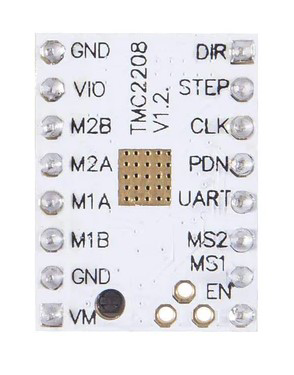
 Design with TMC2208 Stepper driver in Cirkit Designer
Introduction
The TMC2208 is a high-performance stepper motor driver manufactured by Analog Devices Inc. (Part ID: Stepper Driver). It is designed to provide smooth and quiet operation for stepper motors, making it ideal for applications requiring precision and low noise. The TMC2208 supports advanced features such as microstepping and UART communication for configuration and control. These features make it a popular choice for 3D printers, CNC machines, and other motion control systems.
Explore Projects Built with TMC2208 Stepper driver
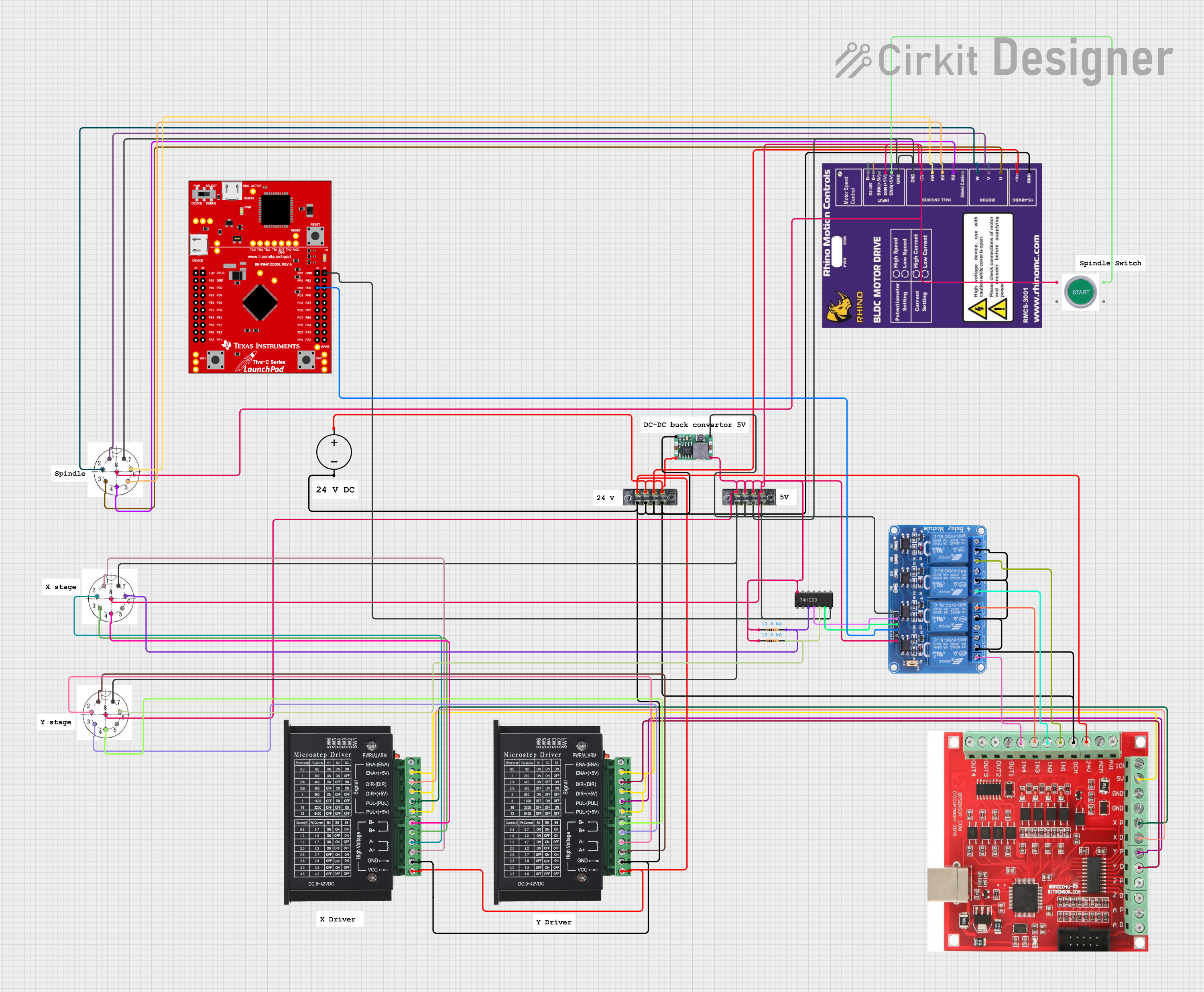 Open Project in Cirkit Designer
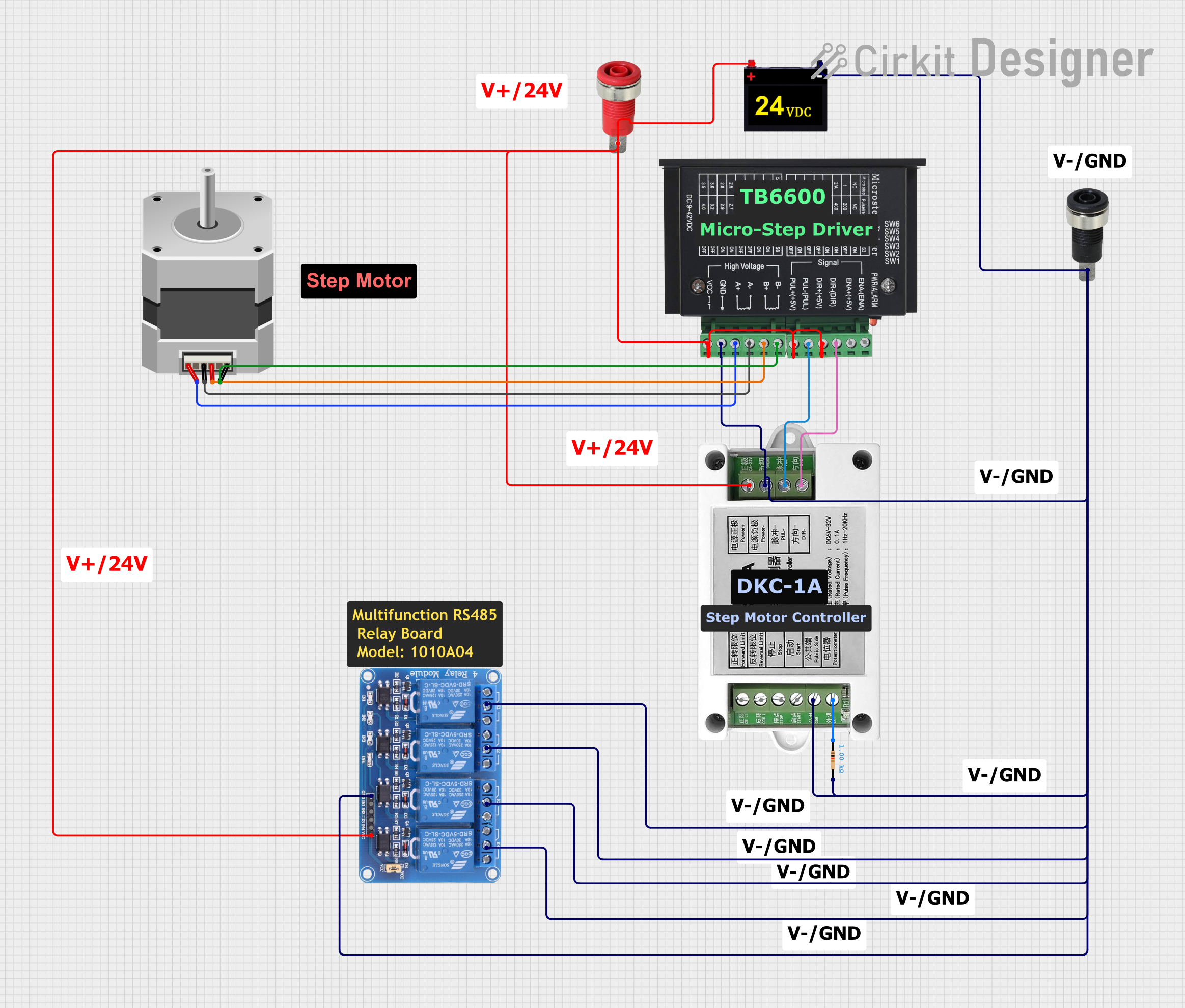 Open Project in Cirkit Designer
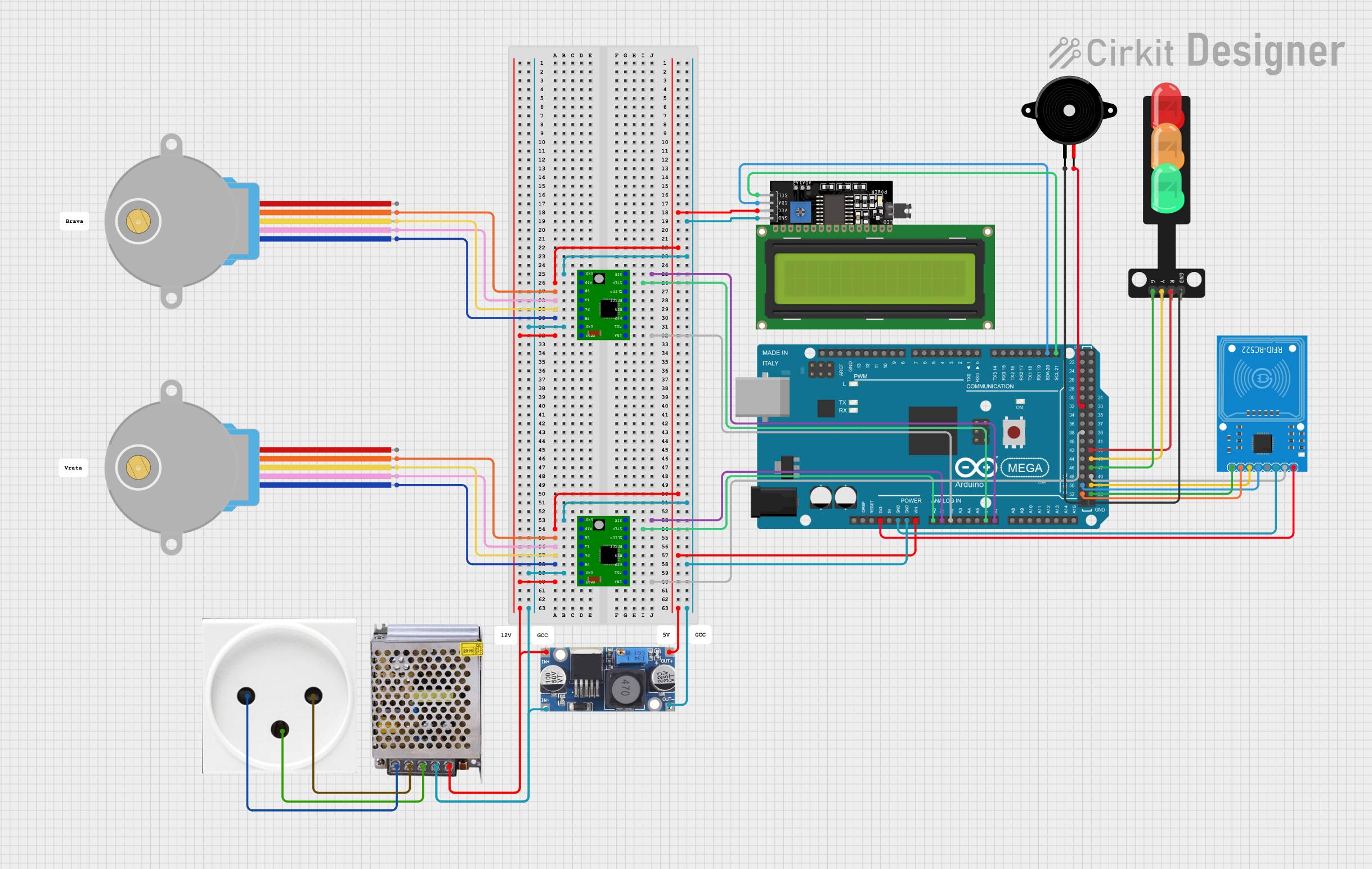 Open Project in Cirkit Designer
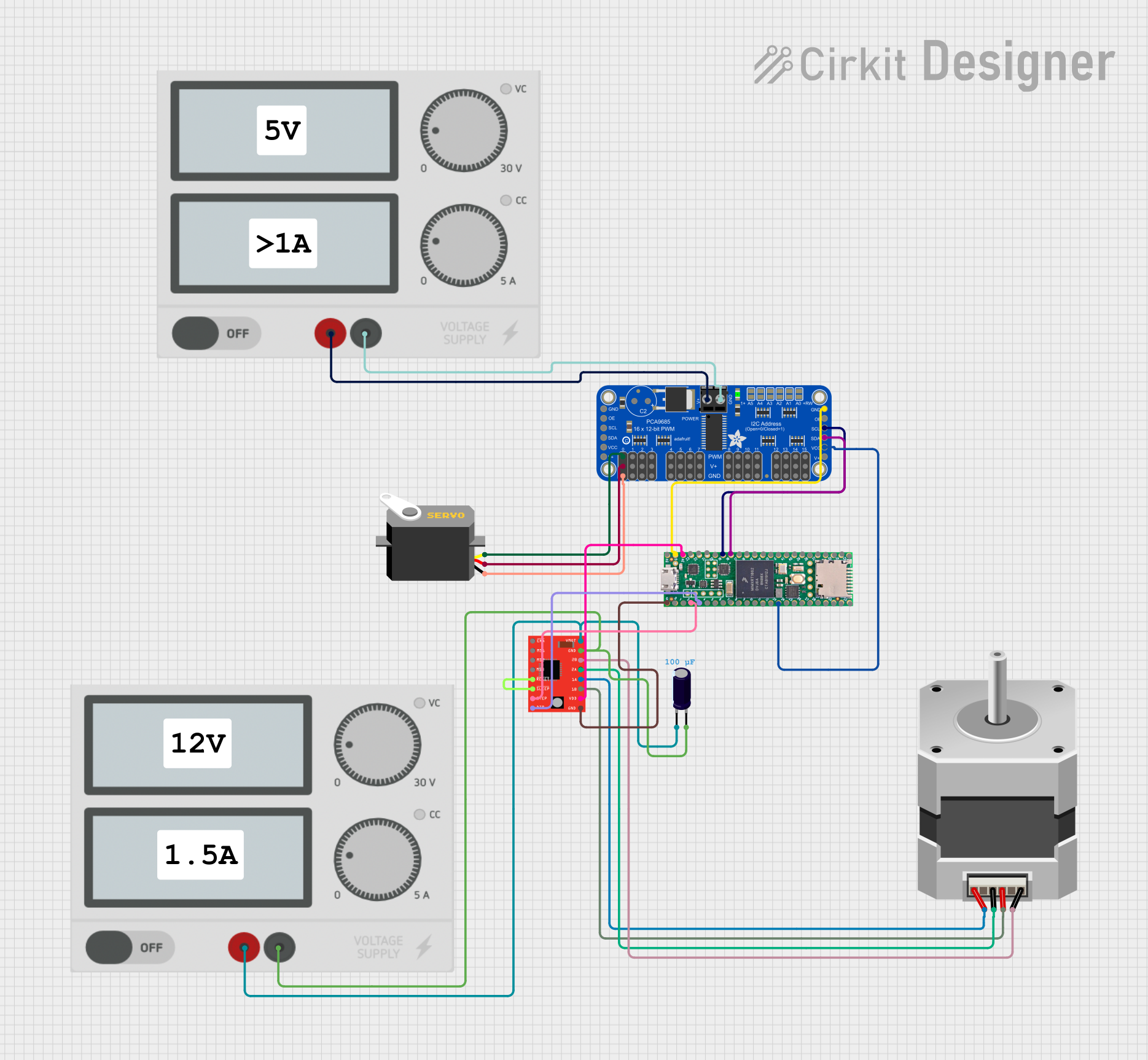 Open Project in Cirkit Designer
Explore Projects Built with TMC2208 Stepper driver
Open Project in Cirkit DesignerOpen Project in Cirkit DesignerOpen Project in Cirkit DesignerOpen Project in Cirkit DesignerCommon Applications
- 3D printers for precise and quiet motor control
- CNC machines for smooth motion and reduced vibration
- Robotics and automation systems
- Camera sliders and other motion control devices
Technical Specifications
The TMC2208 offers a range of technical features that enhance its performance and usability. Below are the key specifications:
| Parameter | Value |
|---|---|
| Supply Voltage (V_M) | 4.75V to 36V |
| Logic Voltage (V_IO) | 3.3V or 5V |
| Maximum Motor Current | 1.2A RMS (2.0A peak) |
| Microstepping Resolution | Up to 256 microsteps per full step |
| Communication Interface | UART |
| Standby Current | <50mA |
| Operating Temperature | -40°C to +125°C |
Pin Configuration and Descriptions
The TMC2208 comes in a 16-pin package. Below is the pin configuration and description:
| Pin | Name | Description |
|---|---|---|
| 1 | GND | Ground connection for the driver |
| 2 | V_M | Motor power supply input (4.75V to 36V) |
| 3 | V_IO | Logic voltage input (3.3V or 5V) |
| 4 | EN | Enable pin (active low) |
| 5 | DIR | Direction control input |
| 6 | STEP | Step pulse input for motor control |
| 7 | UART_TX | UART transmit pin for communication |
| 8 | UART_RX | UART receive pin for communication |
| 9 | MS1 | Microstepping resolution selection pin 1 |
| 10 | MS2 | Microstepping resolution selection pin 2 |
| 11 | DIAG | Diagnostic output (e.g., stall detection) |
| 12 | INDEX | Index output for step position indication |
| 13 | NC | Not connected |
| 14 | NC | Not connected |
| 15 | NC | Not connected |
| 16 | NC | Not connected |
Usage Instructions
How to Use the TMC2208 in a Circuit
- Power Supply: Connect the motor power supply (V_M) to a voltage source between 4.75V and 36V. Ensure the logic voltage (V_IO) matches your microcontroller's logic level (3.3V or 5V).
- Motor Connection: Connect the stepper motor's coils to the appropriate output pins of the TMC2208.
- Control Pins: Use the STEP and DIR pins to control the motor's movement and direction. Optionally, configure microstepping using the MS1 and MS2 pins.
- UART Communication: Connect the UART_TX and UART_RX pins to your microcontroller for advanced configuration and control.
- Enable Pin: Pull the EN pin low to enable the driver.
Important Considerations
- Cooling: The TMC2208 can generate heat during operation. Use a heatsink or active cooling if necessary.
- Microstepping: For smoother motion, configure the microstepping resolution using the MS1 and MS2 pins or via UART.
- Current Limiting: Set the motor current limit appropriately to prevent overheating or damage to the motor and driver.
- Decoupling Capacitors: Place decoupling capacitors close to the V_M and V_IO pins to reduce noise and ensure stable operation.
Example Code for Arduino UNO
Below is an example of how to control the TMC2208 using an Arduino UNO:
// Example code to control a stepper motor using the TMC2208 driver
// Connect STEP to pin 3, DIR to pin 4, and EN to pin 5 on the Arduino UNO

#define STEP_PIN 3  // Pin connected to STEP
#define DIR_PIN 4   // Pin connected to DIR
#define EN_PIN 5    // Pin connected to EN

void setup() {
  pinMode(STEP_PIN, OUTPUT); // Set STEP pin as output
  pinMode(DIR_PIN, OUTPUT);  // Set DIR pin as output
  pinMode(EN_PIN, OUTPUT);   // Set EN pin as output

  digitalWrite(EN_PIN, LOW); // Enable the driver (active low)
  digitalWrite(DIR_PIN, HIGH); // Set direction (HIGH or LOW)
}

void loop() {
  // Generate step pulses to move the motor
  digitalWrite(STEP_PIN, HIGH); // Set STEP pin HIGH
  delayMicroseconds(500);       // Wait for 500 microseconds
  digitalWrite(STEP_PIN, LOW);  // Set STEP pin LOW
  delayMicroseconds(500);       // Wait for 500 microseconds
}
Troubleshooting and FAQs
Common Issues and Solutions
Motor Not Moving
- Cause: Incorrect wiring or insufficient power supply.
- Solution: Double-check all connections and ensure the power supply meets the voltage and current requirements.
Overheating
- Cause: Excessive motor current or inadequate cooling.
- Solution: Reduce the current limit and add a heatsink or fan for cooling.
Noisy Operation
- Cause: Incorrect microstepping configuration or insufficient decoupling.
- Solution: Configure microstepping properly and add decoupling capacitors near the power pins.
UART Communication Not Working
- Cause: Incorrect baud rate or wiring.
- Solution: Verify the UART settings (default baud rate is 9600) and check the connections.
FAQs
Q: Can the TMC2208 operate without UART communication?
A: Yes, the TMC2208 can operate in standalone mode using the STEP, DIR, and MS pins for basic control.
Q: What is the maximum microstepping resolution?
A: The TMC2208 supports up to 256 microsteps per full step for ultra-smooth motion.
Q: How do I set the motor current limit?
A: The motor current limit can be configured via UART or by adjusting the reference voltage (V_REF) on the driver.
Q: Is the TMC2208 compatible with 12V and 24V systems?
A: Yes, the TMC2208 supports a wide voltage range (4.75V to 36V), making it compatible with both 12V and 24V systems.