
How to Use AO3401: Examples, Pinouts, and Specs
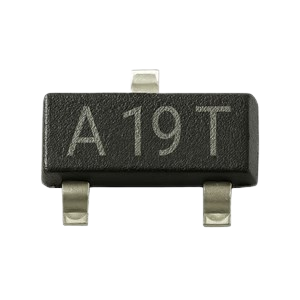
 Design with AO3401 in Cirkit Designer
Introduction
The AO3401 is an N-channel MOSFET (Metal-Oxide-Semiconductor Field-Effect Transistor) designed for low voltage and high-speed switching applications. It is widely used in power management, signal switching, and load control circuits due to its low on-resistance and fast switching capabilities. The AO3401 is particularly suitable for applications requiring efficient power delivery and minimal energy loss.
Explore Projects Built with AO3401
 Open Project in Cirkit Designer
 Open Project in Cirkit Designer
 Open Project in Cirkit Designer
 Open Project in Cirkit Designer
Explore Projects Built with AO3401
Open Project in Cirkit DesignerOpen Project in Cirkit DesignerOpen Project in Cirkit DesignerOpen Project in Cirkit DesignerCommon Applications
- DC-DC converters
- Load switching in battery-powered devices
- Signal switching in microcontroller-based circuits
- Motor control and LED drivers
- General-purpose power management in consumer electronics
Technical Specifications
Key Specifications
| Parameter | Value |
|---|---|
| Type | N-Channel MOSFET |
| Maximum Drain-Source Voltage (VDS) | 30V |
| Maximum Gate-Source Voltage (VGS) | ±20V |
| Continuous Drain Current (ID) | 4.1A (at 25°C) |
| Pulsed Drain Current (IDM) | 20A |
| On-Resistance (RDS(on)) | 44mΩ (at VGS = 10V) |
| Gate Threshold Voltage (VGS(th)) | 1.0V to 2.5V |
| Power Dissipation (PD) | 1.4W |
| Operating Temperature Range | -55°C to +150°C |
| Package Type | SOT-23 |
Pin Configuration
The AO3401 is available in a 3-pin SOT-23 package. The pinout is as follows:
| Pin Number | Pin Name | Description |
|---|---|---|
| 1 | Gate | Controls the MOSFET switching |
| 2 | Source | Connected to the negative side of the circuit |
| 3 | Drain | Connected to the load or positive side of the circuit |
Usage Instructions
How to Use the AO3401 in a Circuit
- Gate Control: Apply a voltage to the Gate (Pin 1) to control the MOSFET. A voltage above the Gate Threshold Voltage (VGS(th)) will turn the MOSFET on, allowing current to flow between the Drain (Pin 3) and Source (Pin 2).
- Load Connection: Connect the load between the Drain (Pin 3) and the positive voltage supply. The Source (Pin 2) should be connected to ground.
- Gate Resistor: Use a resistor (typically 10Ω to 100Ω) in series with the Gate to limit inrush current and protect the microcontroller or driver circuit.
- Flyback Diode: For inductive loads (e.g., motors or relays), add a flyback diode across the load to prevent voltage spikes when the MOSFET switches off.
Example Circuit with Arduino UNO
The AO3401 can be used to control a small DC motor with an Arduino UNO. Below is an example circuit and code:
Circuit Connections
- AO3401 Gate (Pin 1): Connect to Arduino digital pin (e.g., D9) through a 100Ω resistor.
- AO3401 Source (Pin 2): Connect to ground.
- AO3401 Drain (Pin 3): Connect to one terminal of the motor. The other terminal of the motor connects to the positive voltage supply (e.g., 5V or 12V).
- Add a flyback diode across the motor terminals (cathode to positive supply, anode to Drain).
Arduino Code
// Define the pin connected to the AO3401 Gate
const int mosfetGatePin = 9;

void setup() {
  pinMode(mosfetGatePin, OUTPUT); // Set the Gate pin as an output
}

void loop() {
  digitalWrite(mosfetGatePin, HIGH); // Turn the MOSFET on (motor runs)
  delay(1000); // Keep the motor running for 1 second

  digitalWrite(mosfetGatePin, LOW); // Turn the MOSFET off (motor stops)
  delay(1000); // Wait for 1 second before repeating
}
Important Considerations
- Ensure the Gate voltage (VGS) is within the specified range (±20V maximum).
- Avoid exceeding the maximum Drain-Source voltage (30V) or Drain current (4.1A continuous).
- Use proper heat dissipation techniques (e.g., heat sinks or PCB thermal pads) if operating near the maximum power dissipation.
Troubleshooting and FAQs
Common Issues and Solutions
MOSFET Not Turning On
- Ensure the Gate voltage exceeds the Gate Threshold Voltage (VGS(th)).
- Check for proper connections and verify the Gate resistor value.
Excessive Heat Generation
- Verify that the Drain current does not exceed the maximum rating.
- Ensure proper heat dissipation (e.g., use a heat sink or improve PCB thermal design).
Circuit Not Working as Expected
- Check for loose or incorrect connections.
- Verify the flyback diode is installed correctly for inductive loads.
MOSFET Fails or Shorts
- Ensure the voltage and current ratings are not exceeded.
- Avoid static discharge by handling the component with proper ESD precautions.
FAQs
Q: Can the AO3401 be used with 3.3V logic levels?
A: Yes, the AO3401 can be driven by 3.3V logic levels, as its Gate Threshold Voltage (VGS(th)) is as low as 1.0V. However, ensure the Gate voltage is sufficient to fully turn on the MOSFET for your specific load.
Q: Is the AO3401 suitable for high-frequency switching?
A: Yes, the AO3401 is designed for high-speed switching applications. However, ensure proper Gate drive circuitry to minimize switching losses.
Q: Can I use the AO3401 for AC loads?
A: No, the AO3401 is designed for DC applications. For AC loads, consider using a TRIAC or other suitable components.
Q: Do I need a heatsink for the AO3401?
A: A heatsink is generally not required for low-power applications. However, for higher power dissipation, ensure adequate thermal management.