
How to Use LiFePo4 12.8V 30AH: Examples, Pinouts, and Specs

 Design with LiFePo4 12.8V 30AH in Cirkit Designer
Introduction
The LiFePo4 12.8V 30AH is a lithium iron phosphate battery designed for high-performance energy storage applications. With a nominal voltage of 12.8 volts and a capacity of 30 amp-hours, this battery is known for its safety, long cycle life, and stable performance. It is an ideal choice for applications requiring reliable and efficient power delivery, such as renewable energy systems, electric vehicles, backup power supplies, and portable electronics.
Explore Projects Built with LiFePo4 12.8V 30AH
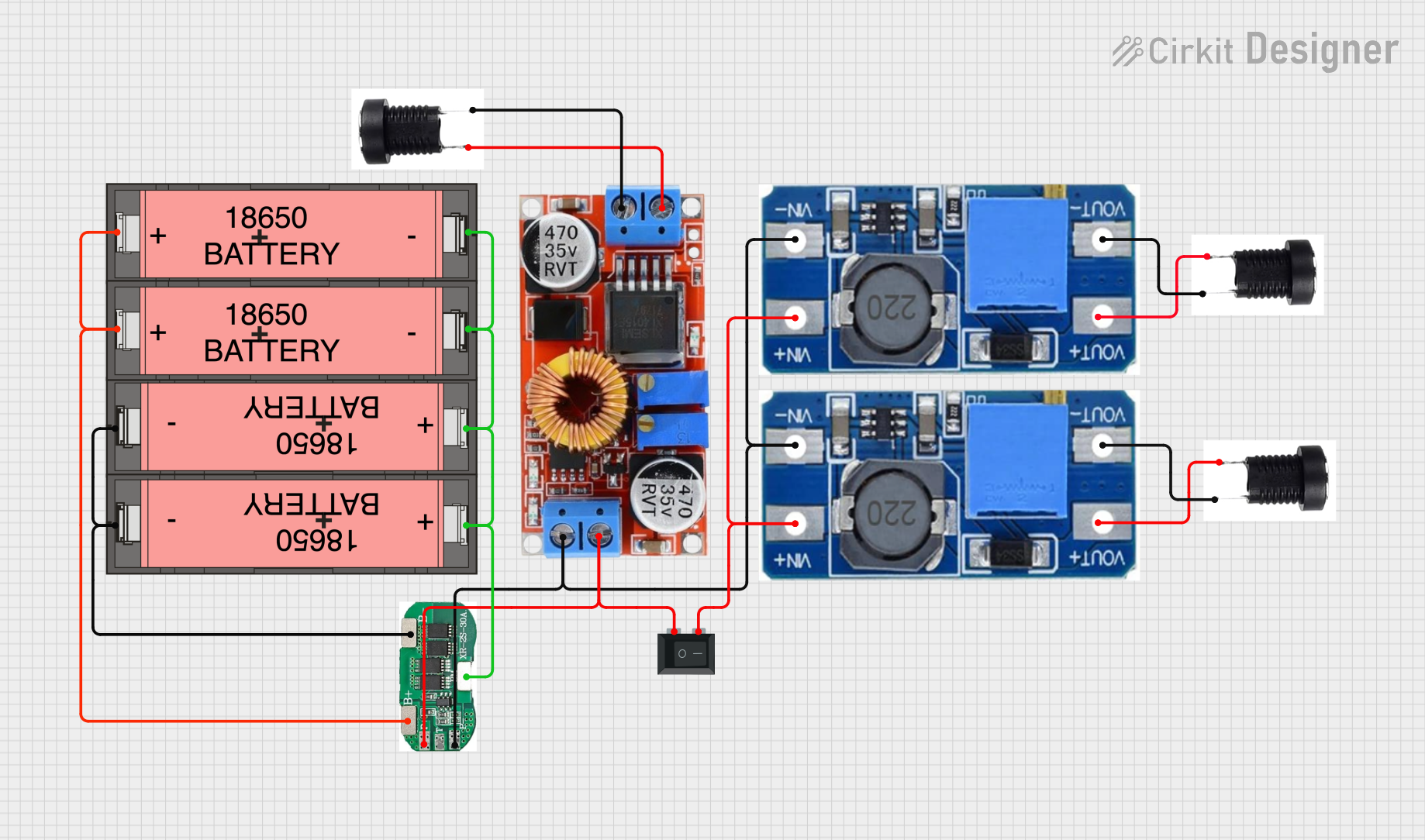 Open Project in Cirkit Designer
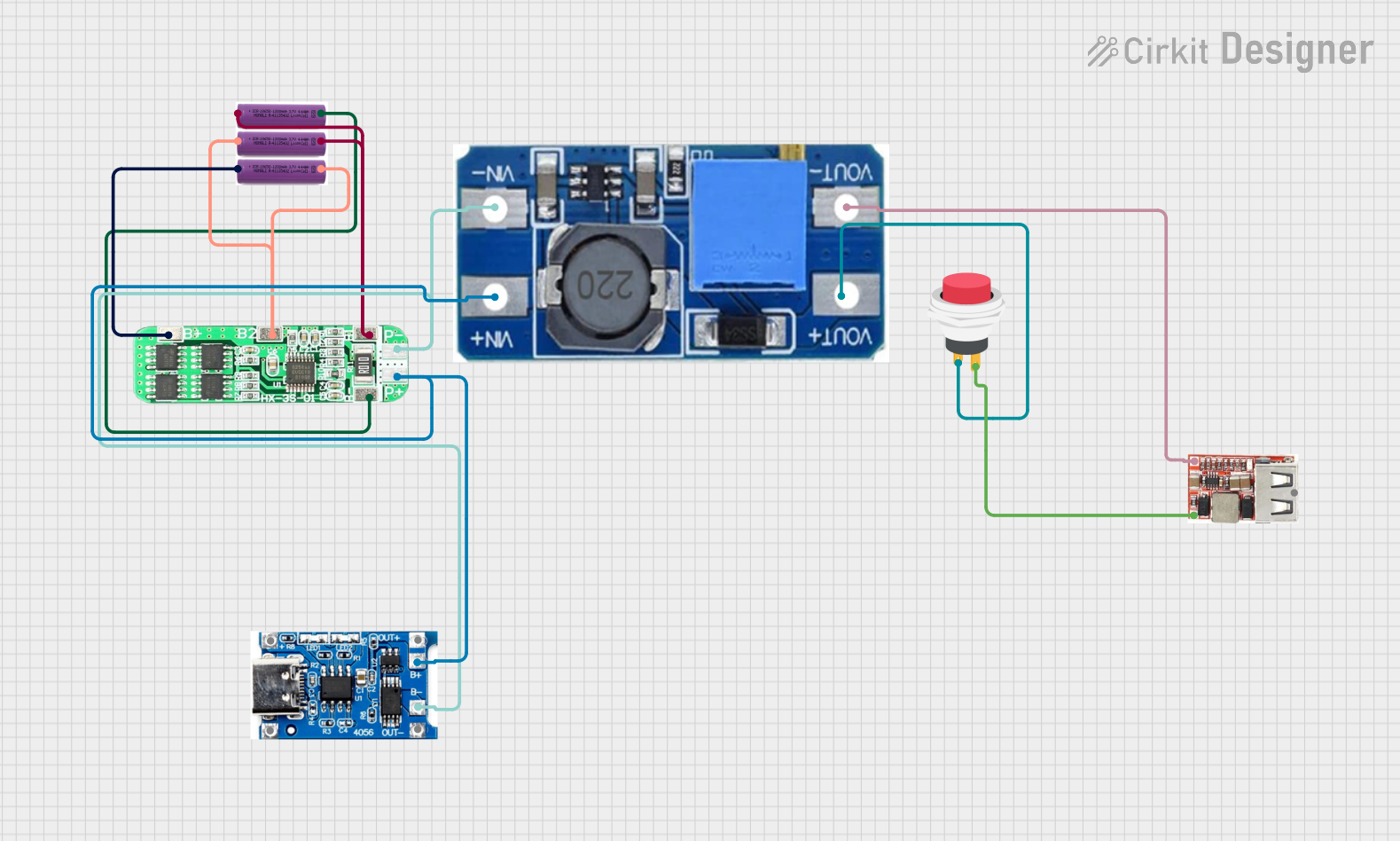 Open Project in Cirkit Designer
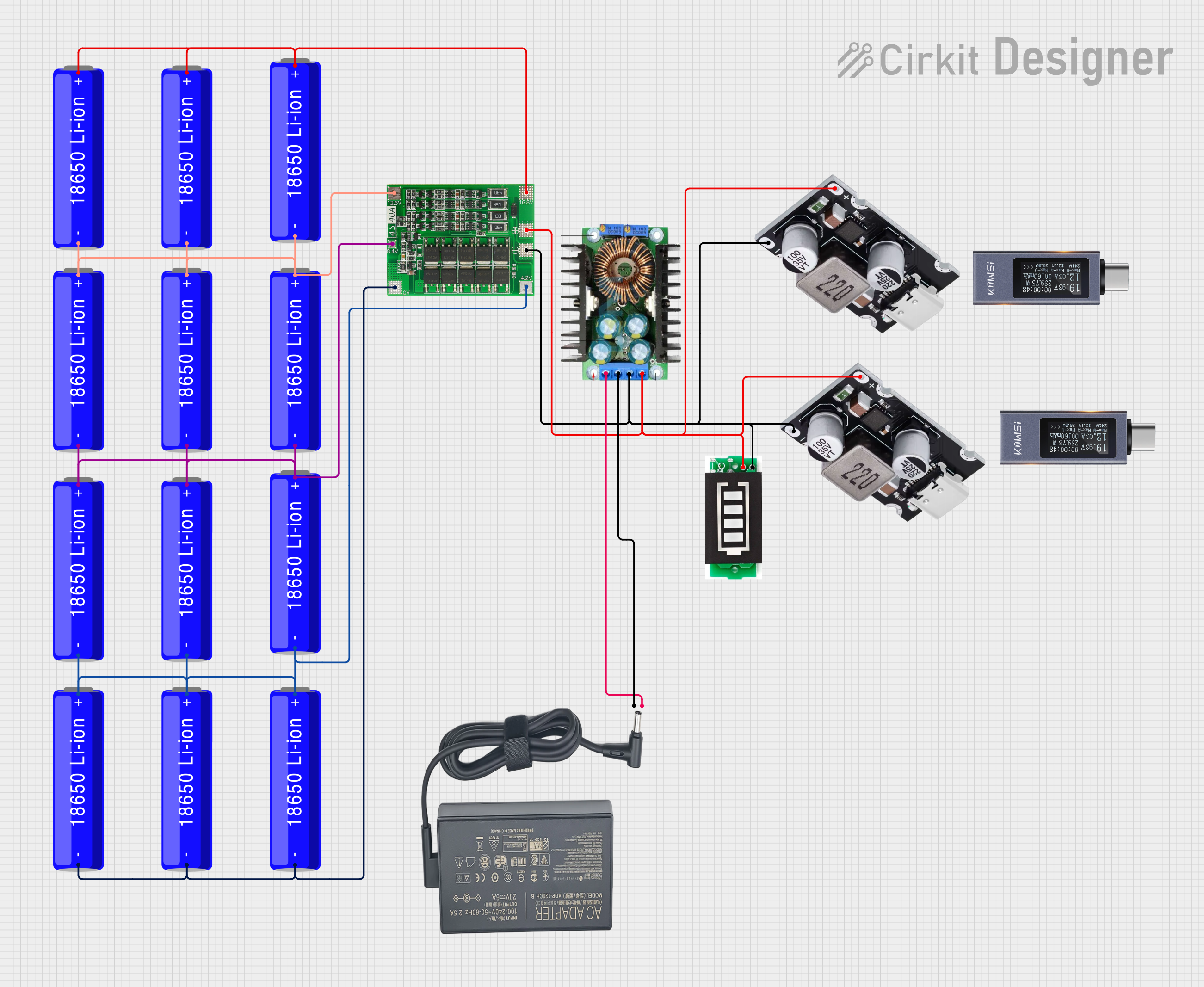 Open Project in Cirkit Designer
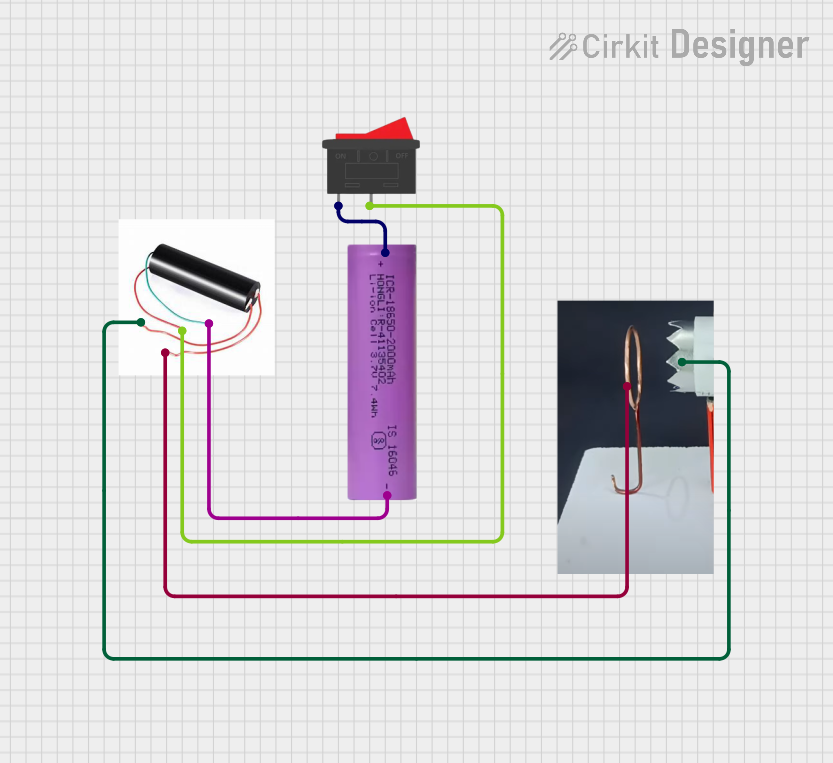 Open Project in Cirkit Designer
Explore Projects Built with LiFePo4 12.8V 30AH
Open Project in Cirkit DesignerOpen Project in Cirkit DesignerOpen Project in Cirkit DesignerOpen Project in Cirkit DesignerCommon Applications
- Solar energy storage systems
- Electric vehicles (EVs) and e-bikes
- Uninterruptible power supplies (UPS)
- Marine and RV power systems
- Portable power stations and tools
Technical Specifications
Key Specifications
| Parameter | Value |
|---|---|
| Nominal Voltage | 12.8V |
| Capacity | 30Ah |
| Energy | 384Wh |
| Charge Voltage Range | 14.2V - 14.6V |
| Discharge Voltage Range | 10.0V - 12.8V |
| Maximum Continuous Current | 30A |
| Peak Discharge Current | 60A (for 10 seconds) |
| Cycle Life | >2000 cycles (at 80% DoD) |
| Operating Temperature | -20°C to 60°C (discharge) |
| Weight | ~3.5kg |
| Dimensions (LxWxH) | ~195mm x 130mm x 170mm |
Pin Configuration and Descriptions
The LiFePo4 12.8V 30AH battery typically has two terminals for electrical connections:
| Terminal | Description |
|---|---|
| Positive (+) | Connects to the positive side of the circuit |
| Negative (-) | Connects to the negative side of the circuit |
Some models may include additional terminals or connectors for battery management system (BMS) communication or monitoring.
Usage Instructions
How to Use the LiFePo4 12.8V 30AH Battery
Charging the Battery:
- Use a LiFePo4-compatible charger with a constant current/constant voltage (CC/CV) charging profile.
- Set the charger to a voltage range of 14.2V to 14.6V.
- Ensure the charging current does not exceed the maximum recommended value (e.g., 30A).
Connecting the Battery:
- Connect the positive terminal of the battery to the positive terminal of your load or circuit.
- Connect the negative terminal of the battery to the negative terminal of your load or circuit.
- Use appropriately rated wires and connectors to handle the current safely.
Discharging the Battery:
- Ensure the load does not draw more than the maximum continuous current (30A).
- Avoid discharging the battery below 10.0V to prevent damage.
Battery Management System (BMS):
- Most LiFePo4 batteries include an integrated BMS to protect against overcharging, over-discharging, and short circuits.
- Ensure the BMS is functioning correctly and monitor the battery's status if possible.
Important Considerations and Best Practices
- Avoid Overcharging: Do not exceed the maximum charge voltage of 14.6V.
- Prevent Deep Discharge: Avoid discharging the battery below 10.0V to maximize its lifespan.
- Temperature Management: Operate the battery within the specified temperature range (-20°C to 60°C).
- Storage: Store the battery at a partial charge (30-50%) in a cool, dry place if not in use for extended periods.
- Parallel and Series Connections: Consult the manufacturer’s guidelines before connecting multiple batteries in parallel or series.
Example: Using the Battery with an Arduino UNO
The LiFePo4 12.8V 30AH battery can power an Arduino UNO through a voltage regulator or a DC-DC converter to step down the voltage to 5V. Below is an example of connecting the battery to an Arduino UNO:
// Example: Powering an Arduino UNO with a LiFePo4 12.8V 30AH battery
// Ensure a DC-DC converter is used to step down the voltage to 5V.

#include <Arduino.h>

void setup() {
  // Initialize serial communication for debugging
  Serial.begin(9600);
  Serial.println("Arduino powered by LiFePo4 battery!");
}

void loop() {
  // Example: Blink an LED connected to pin 13
  digitalWrite(13, HIGH); // Turn the LED on
  delay(1000);            // Wait for 1 second
  digitalWrite(13, LOW);  // Turn the LED off
  delay(1000);            // Wait for 1 second
}
Note: Always use a voltage regulator or DC-DC converter to ensure the Arduino receives a stable 5V input.
Troubleshooting and FAQs
Common Issues and Solutions
Battery Not Charging:
- Cause: Charger not compatible with LiFePo4 batteries.
- Solution: Use a charger specifically designed for LiFePo4 batteries with the correct voltage and current settings.
Battery Drains Quickly:
- Cause: Excessive load or deep discharge.
- Solution: Ensure the load does not exceed the maximum continuous current. Avoid discharging below 10.0V.
Battery Overheats:
- Cause: Operating outside the recommended temperature range or excessive current draw.
- Solution: Reduce the load or improve ventilation. Operate within the specified temperature range.
No Output Voltage:
- Cause: BMS protection triggered due to over-discharge or short circuit.
- Solution: Recharge the battery to reset the BMS. Check for short circuits in the circuit.
FAQs
Q: Can I connect multiple LiFePo4 batteries in series or parallel?
- A: Yes, but consult the manufacturer’s guidelines to ensure proper balancing and safety.
Q: How long will the battery last?
- A: The battery can last over 2000 cycles at 80% depth of discharge (DoD), depending on usage and maintenance.
Q: Is the battery safe for indoor use?
- A: Yes, LiFePo4 batteries are safer than other lithium-ion chemistries due to their thermal stability and non-flammable nature.
Q: Can I use a standard lead-acid charger for this battery?
- A: No, use a charger specifically designed for LiFePo4 batteries to avoid overcharging or damaging the battery.
This documentation provides a comprehensive guide to using the LiFePo4 12.8V 30AH battery effectively and safely.