The VEML6070 is an advanced ultraviolet (UV) light sensor with I2C protocol interface, designed for detecting the intensity of incident UV light. This sensor is capable of providing a digital representation of UV light intensity, which can be used in various applications such as monitoring the UV index for weather stations, personal UV exposure measurement devices, and in UV sterilization systems.
Explore Projects Built with VEML6070
Use Cirkit Designer to design, explore, and prototype these projects online. Some projects support real-time simulation. Click "Open Project" to start designing instantly!
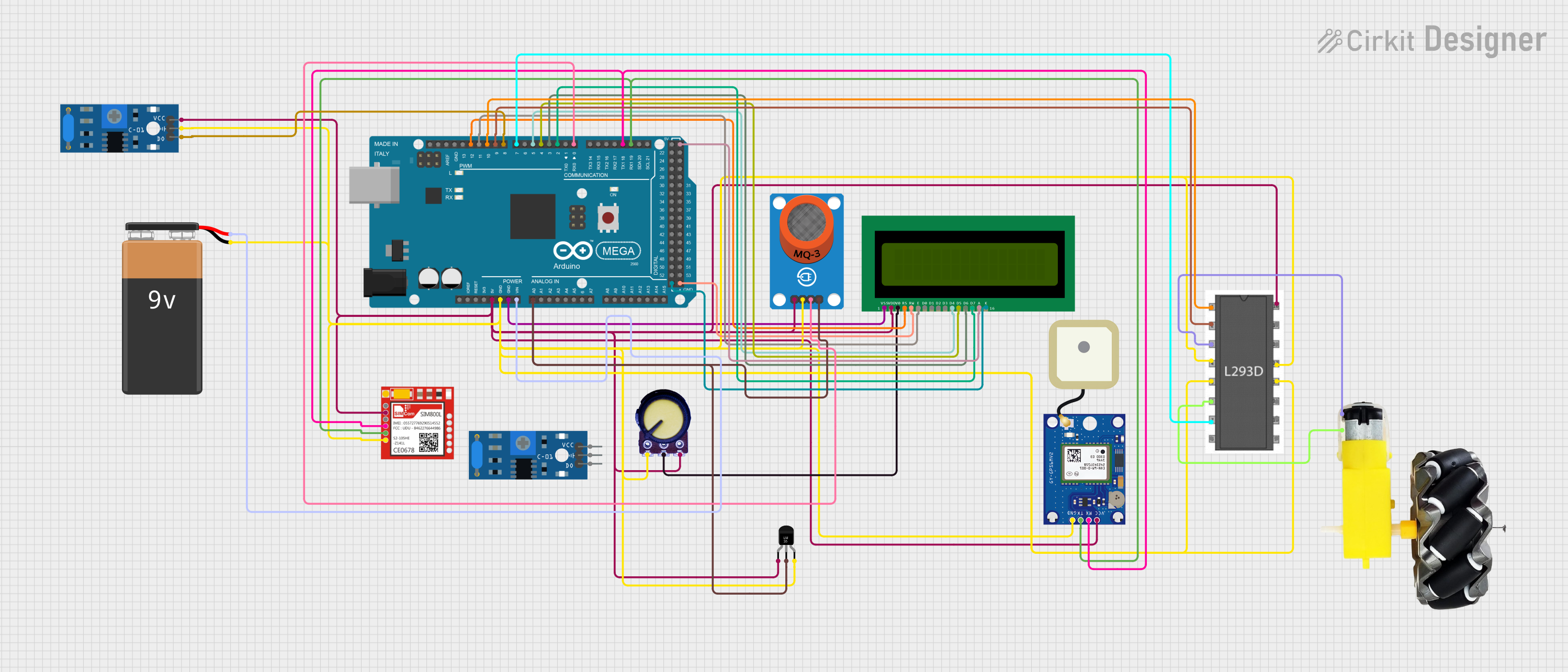
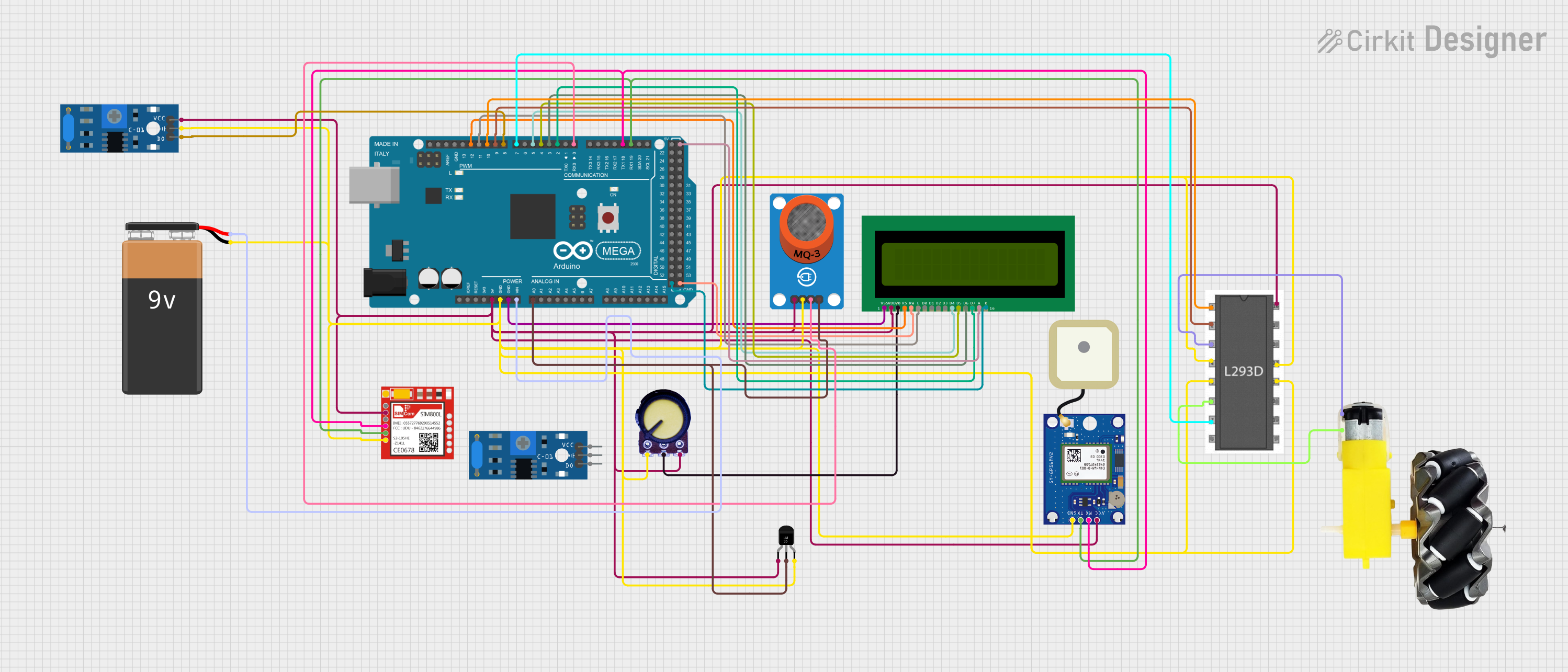
This is a sensor-rich embedded system with communication and display capabilities, designed for monitoring environmental parameters and controlling motors. It integrates alcohol and temperature sensors, vibration detection, GPS tracking, GSM communication, and an LCD for output, all managed by an Arduino Mega 2560.
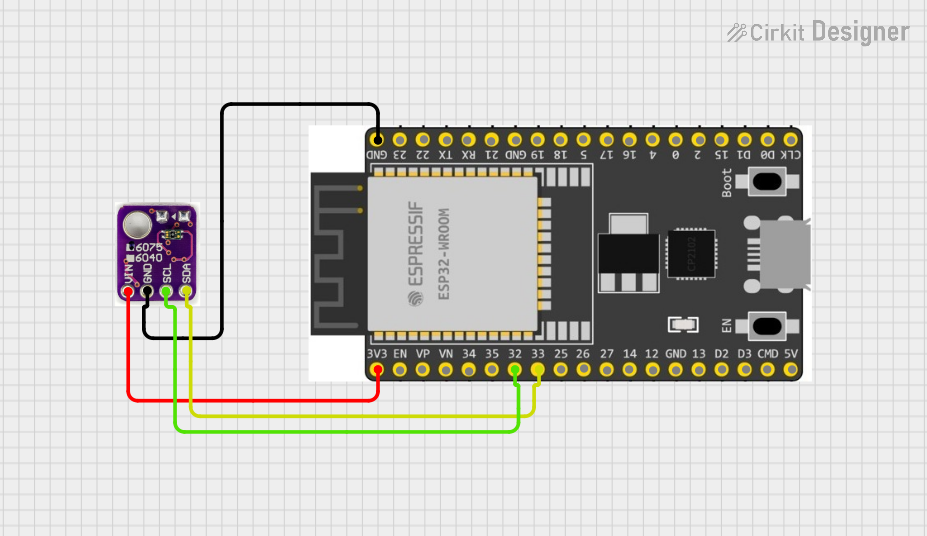
This circuit connects an ESP32 Wroom Dev Kit microcontroller with a VEML6075 UV light sensor. The ESP32 powers the sensor and communicates with it via I2C, using GPIO 32 and GPIO 33 for the SCL and SDA lines, respectively. The purpose of this circuit is to enable the ESP32 to read UV index measurements from the VEML6075 sensor.
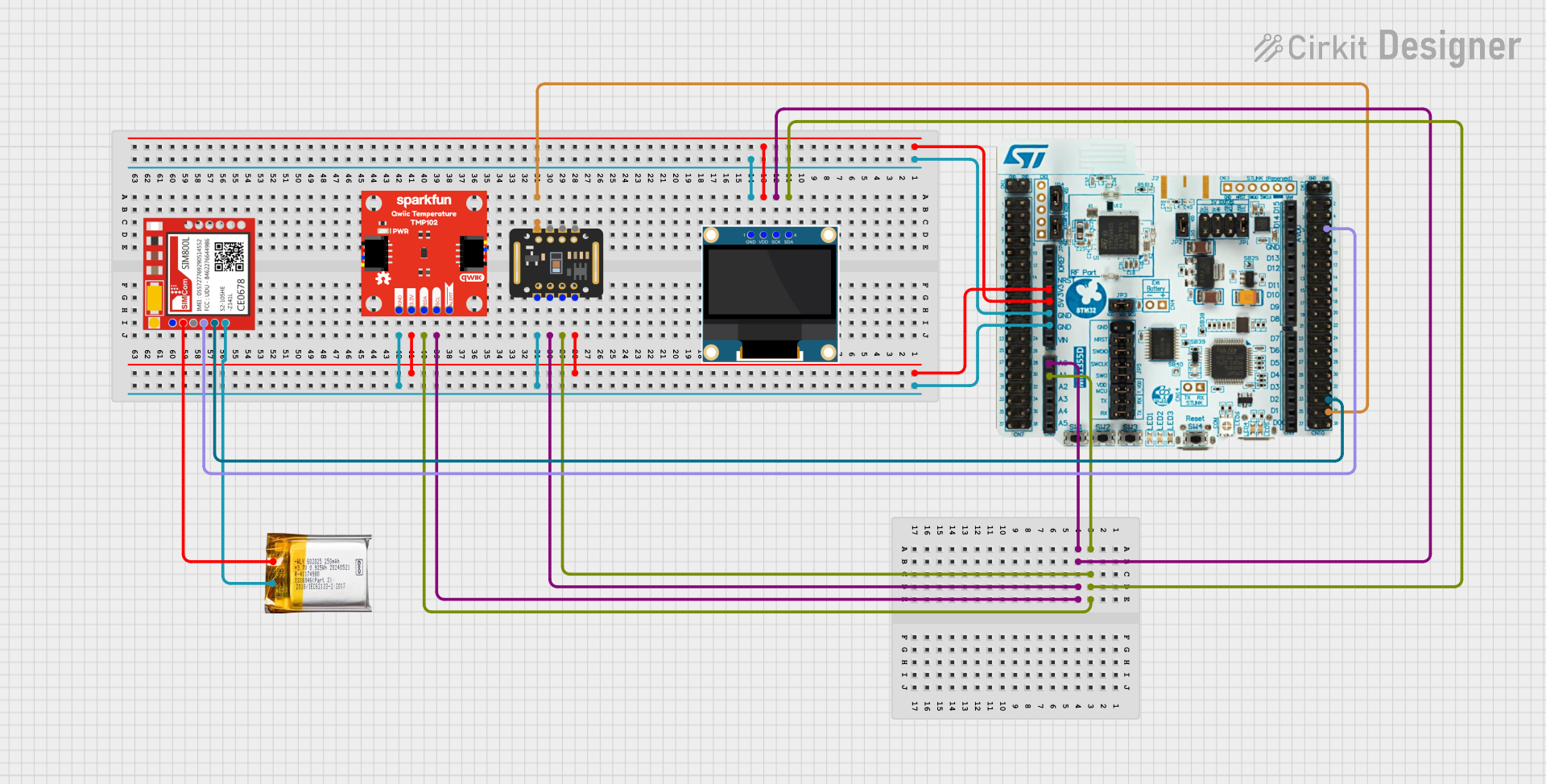
This circuit is a multi-sensor data acquisition system that uses a Nucleo WB55RG microcontroller to interface with a digital temperature sensor (TMP102), a pulse oximeter and heart-rate sensor (MAX30102), and a 0.96" OLED display via I2C. Additionally, it includes a Sim800l module for GSM communication, powered by a 3.7V LiPo battery.
This is a vehicle safety and tracking system that uses an Arduino Mega 2560 to monitor alcohol levels with an MQ-3 sensor, track location with a GPS module, communicate via GSM with a Sim800l module, display data on an LCD, and control a motor with an L293D driver. It also includes temperature sensing and vibration detection for additional monitoring and feedback.
Connect the VDD pin to a 2.7 V to 5.5 V power supply.
Connect the GND pin to the ground of the power supply.
Connect the SDA and SCL pins to the I2C data and clock lines, respectively.
If interrupt functionality is required, connect the -INT pin to an interrupt-capable GPIO pin on your microcontroller.
Important Considerations and Best Practices
Ensure that the power supply voltage does not exceed the maximum rating of 5.5 V.
Use pull-up resistors on the I2C data and clock lines, typically 4.7 kΩ to 10 kΩ.
Avoid exposing the sensor to direct sunlight or strong UV sources for extended periods to prevent damage.
Place the sensor away from heat sources to prevent false readings due to temperature effects.
Example Code for Arduino UNO
#include <Wire.h>
#include "VEML6070.h"

VEML6070 uv = VEML6070();

void setup() {
  Wire.begin();
  Serial.begin(9600);
  uv.begin(VEML6070_1_T); // Initialize the sensor with 1T integration time
}

void loop() {
  uint16_t uvLevel = uv.readUV();
  Serial.print("UV Level: ");
  Serial.println(uvLevel);
  delay(1000); // Delay between readings
}
Troubleshooting and FAQs
Common Issues
No Data on I2C: Ensure that the I2C lines are properly connected with pull-up resistors and that the correct I2C address is being used.
Inaccurate Readings: Verify that the sensor is not exposed to high temperatures or direct sunlight, which can affect the readings.
Intermittent Operation: Check for loose connections and ensure that the power supply is stable and within the specified voltage range.
Solutions and Tips for Troubleshooting
Double-check wiring, especially the I2C connections.
Use a logic analyzer or oscilloscope to verify I2C communication.
Ensure that the sensor is properly initialized in your code with the correct integration time setting.
FAQs
Q: Can the VEML6070 be used to detect UVB or UVC light?
A: No, the VEML6070 is designed specifically for the UVA spectrum (320 nm to 400 nm).
Q: How can I adjust the sensitivity of the sensor?
A: Sensitivity can be adjusted by changing the integration time setting in the initialization of the sensor in your code.
Q: Is the VEML6070 waterproof?
A: No, the VEML6070 is not inherently waterproof. Additional protection is required for use in moist or outdoor environments.
Q: What is the I2C address of the VEML6070?
A: The VEML6070 uses two I2C addresses, 0x38 and 0x39, for reading the UV data.
For further assistance or technical support, please refer to the manufacturer's datasheet or contact technical support.


 Open Project in Cirkit Designer