
How to Use BC547: Examples, Pinouts, and Specs
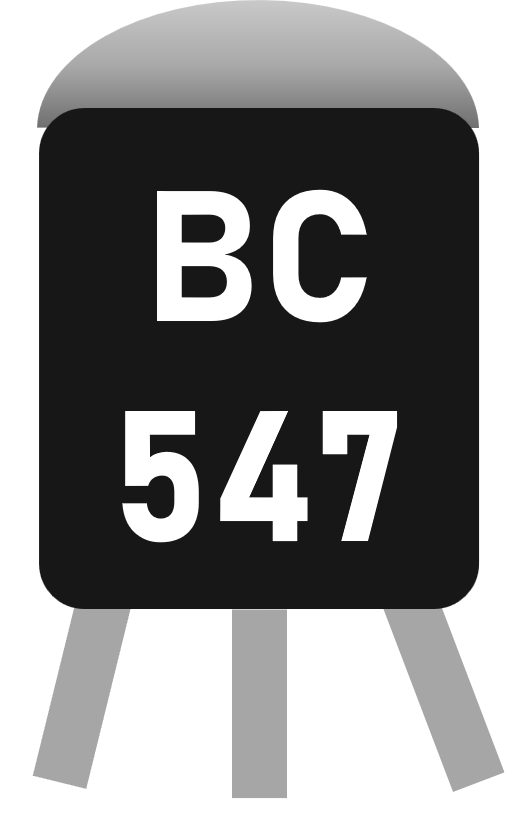
 Design with BC547 in Cirkit Designer
Introduction
The BC547 is a general-purpose NPN bipolar junction transistor (BJT) widely used in low-power amplification and switching applications. It is a reliable and versatile component, making it a popular choice for hobbyists and professionals alike. With a maximum collector current of 100 mA and a maximum voltage rating of 45 V, the BC547 is suitable for a variety of electronic circuits, including signal amplification, small motor control, and digital switching.
Explore Projects Built with BC547
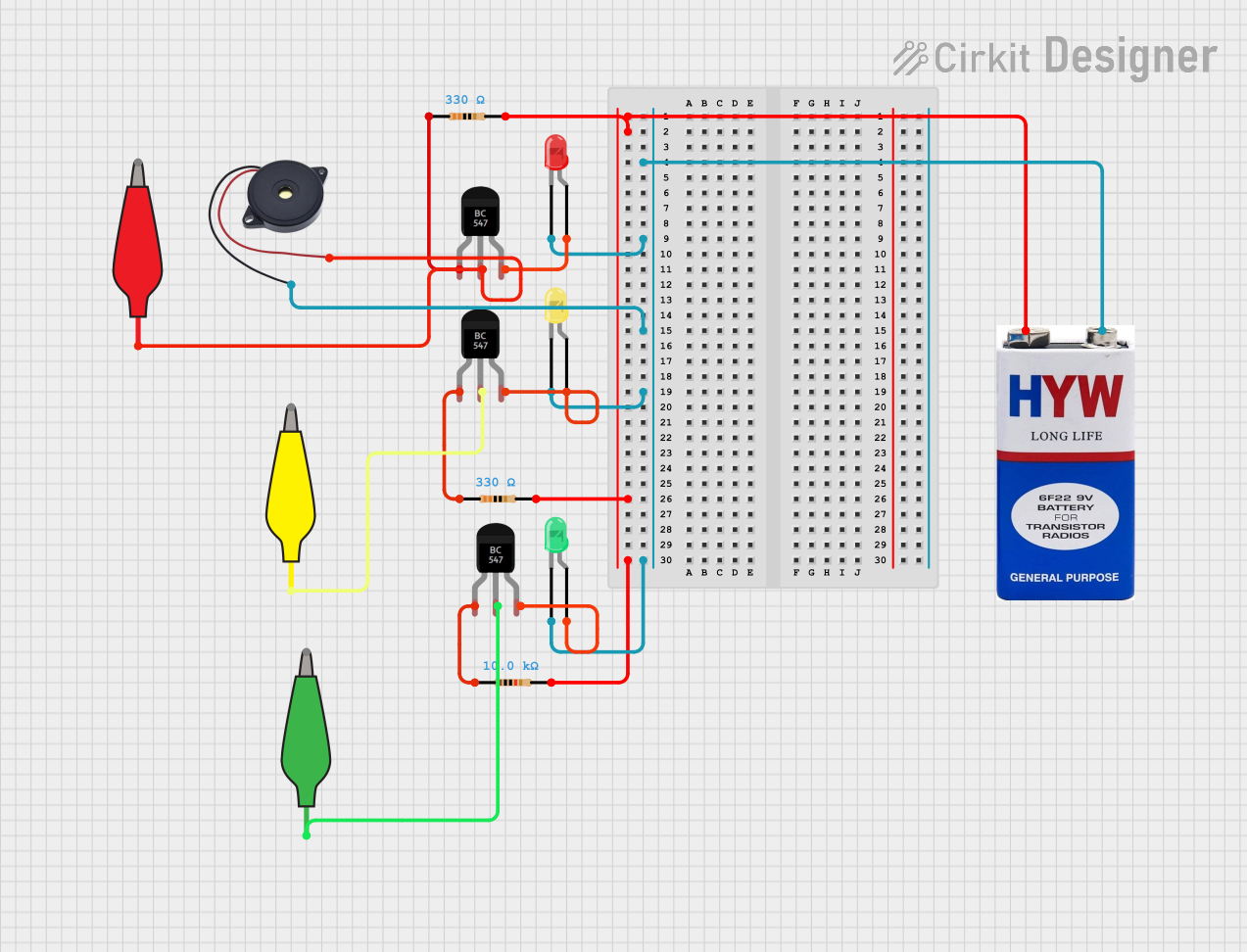 Open Project in Cirkit Designer
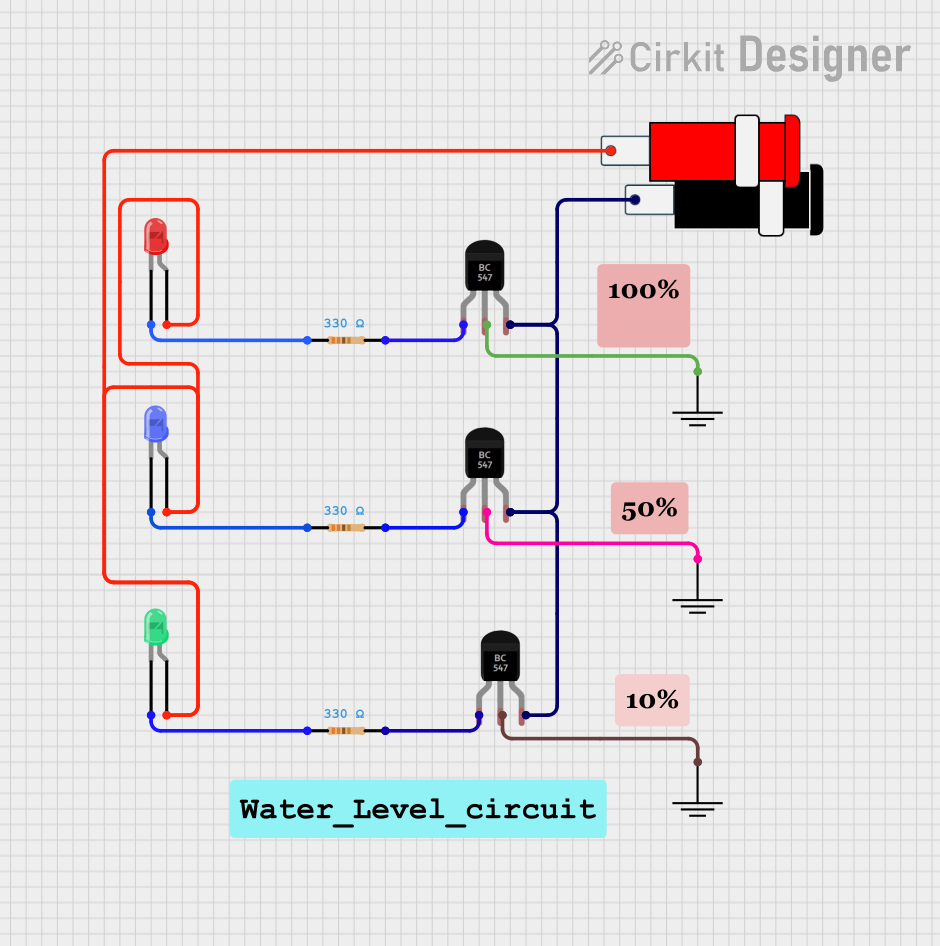 Open Project in Cirkit Designer
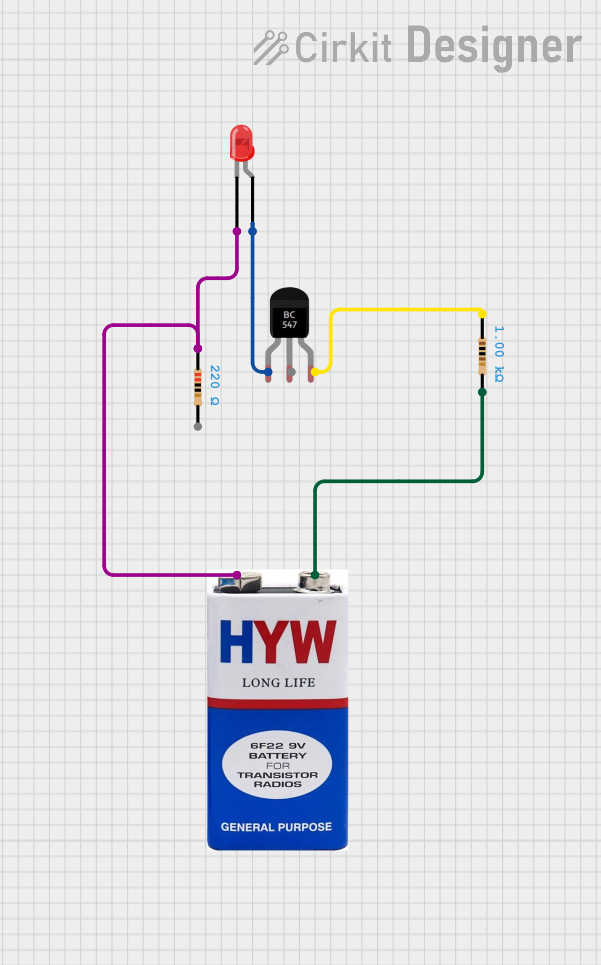 Open Project in Cirkit Designer
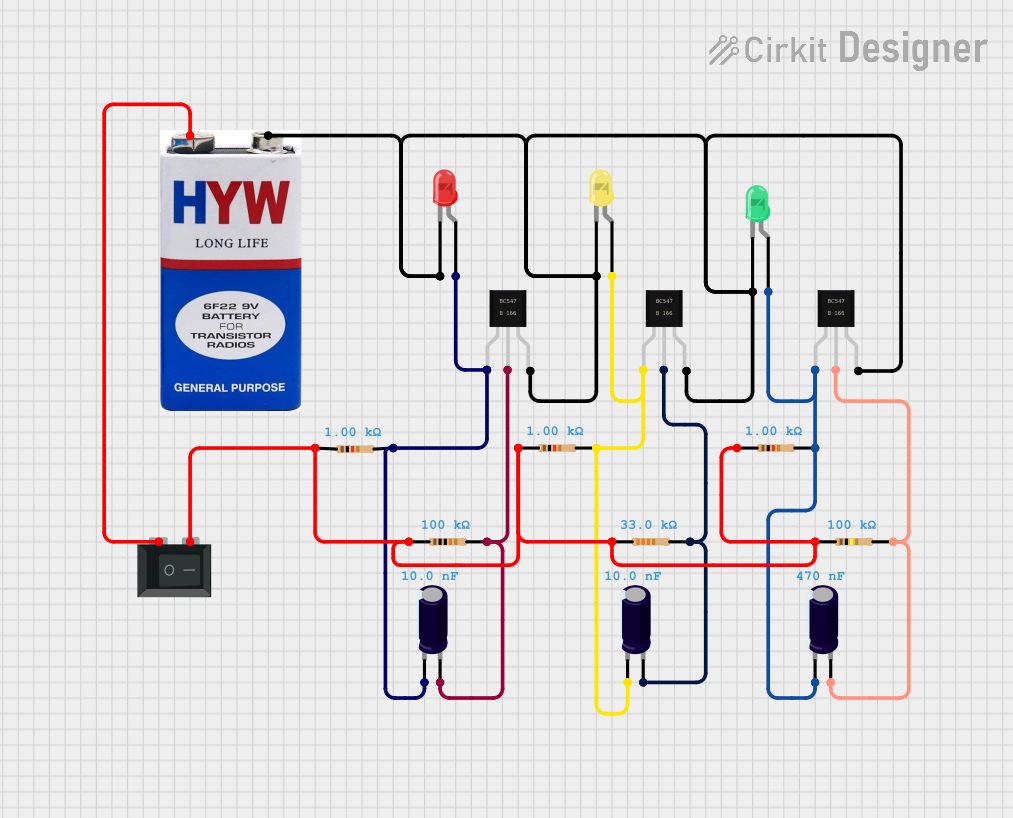 Open Project in Cirkit Designer
Explore Projects Built with BC547
Open Project in Cirkit DesignerOpen Project in Cirkit DesignerOpen Project in Cirkit DesignerOpen Project in Cirkit DesignerCommon Applications:
- Signal amplification in audio and RF circuits
- Switching small loads such as LEDs or relays
- Oscillator circuits
- Voltage regulation and current limiting
- General-purpose low-power applications
Technical Specifications
Below are the key technical details of the BC547 transistor:
| Parameter | Value |
|---|---|
| Transistor Type | NPN |
| Maximum Collector Current (Ic) | 100 mA |
| Maximum Collector-Emitter Voltage (Vce) | 45 V |
| Maximum Collector-Base Voltage (Vcb) | 50 V |
| Maximum Emitter-Base Voltage (Veb) | 6 V |
| DC Current Gain (hFE) | 110 to 800 (varies by model) |
| Power Dissipation (Ptot) | 500 mW |
| Transition Frequency (ft) | 150 MHz |
| Package Type | TO-92 |
Pin Configuration
The BC547 transistor comes in a TO-92 package with three pins. The pinout is as follows:
| Pin Number | Pin Name | Description |
|---|---|---|
| 1 | Collector | Current flows out of this pin. |
| 2 | Base | Controls the transistor's operation. |
| 3 | Emitter | Current flows into this pin. |
Below is a diagram of the BC547 pin configuration (viewed from the flat side of the TO-92 package):
   _______
  |       |
  |       |
  |_______|
   | | |
   1 2 3
   C B E
Usage Instructions
Using the BC547 in a Circuit
The BC547 operates as a current-controlled device. A small current applied to the base pin (B) controls a larger current flowing between the collector (C) and emitter (E). Below are the steps to use the BC547 in a circuit:
Determine the Operating Region:
- Cutoff Region: The transistor is OFF (no current flows from collector to emitter).
- Active Region: The transistor amplifies the input signal.
- Saturation Region: The transistor is fully ON, acting as a closed switch.
Base Resistor Calculation: To limit the base current, use a resistor between the base pin and the input signal. The resistor value can be calculated using: [ R_b = \frac{V_{in} - V_{be}}{I_b} ] Where:
- ( V_{in} ): Input voltage
- ( V_{be} ): Base-emitter voltage (typically 0.7 V for BC547)
- ( I_b ): Desired base current (( I_b = \frac{I_c}{h_{FE}} ))
Connect the Circuit:
- Connect the emitter to ground.
- Connect the collector to the load (e.g., an LED with a current-limiting resistor).
- Apply the input signal to the base through the base resistor.
Example: Switching an LED with Arduino UNO
The BC547 can be used to control an LED with an Arduino UNO. Below is an example circuit and code:
Circuit Connections:
- BC547:
- Emitter (E): Connect to GND.
- Collector (C): Connect to one terminal of the LED (with a current-limiting resistor in series).
- Base (B): Connect to an Arduino digital pin through a 1 kΩ resistor.
- LED:
- Anode: Connect to the collector of BC547.
- Cathode: Connect to GND through a 220 Ω resistor.
Arduino Code:
// Define the pin connected to the BC547 base
const int transistorBasePin = 9; // Digital pin 9

void setup() {
  pinMode(transistorBasePin, OUTPUT); // Set pin as output
}

void loop() {
  digitalWrite(transistorBasePin, HIGH); // Turn ON the transistor
  delay(1000); // Keep LED ON for 1 second
  digitalWrite(transistorBasePin, LOW);  // Turn OFF the transistor
  delay(1000); // Keep LED OFF for 1 second
}
Important Considerations:
- Base Resistor: Always use a base resistor to prevent excessive current through the base pin.
- Power Dissipation: Ensure the transistor does not exceed its maximum power dissipation of 500 mW.
- Voltage Ratings: Do not exceed the maximum voltage ratings for Vce, Vcb, or Veb.
Troubleshooting and FAQs
Common Issues:
Transistor Not Switching:
- Cause: Insufficient base current.
- Solution: Check the base resistor value and ensure the input signal provides enough current.
Overheating:
- Cause: Exceeding the maximum collector current or power dissipation.
- Solution: Reduce the load current or use a heat sink if necessary.
LED Not Lighting Up:
- Cause: Incorrect pin connections or insufficient base drive.
- Solution: Verify the circuit connections and ensure the base resistor is correctly calculated.
Low Gain:
- Cause: Variation in hFE between transistors.
- Solution: Use a transistor with a higher hFE or adjust the base resistor.
FAQs:
Q1: Can the BC547 handle high-power loads?
A1: No, the BC547 is designed for low-power applications with a maximum collector current of 100 mA. For high-power loads, consider using a power transistor like TIP120.
Q2: What is the difference between BC547A, BC547B, and BC547C?
A2: The difference lies in their DC current gain (hFE) range:
- BC547A: 110–220
- BC547B: 200–450
- BC547C: 420–800
Q3: Can I use the BC547 for audio amplification?
A3: Yes, the BC547 is suitable for low-power audio amplification applications.
Q4: What is the maximum frequency the BC547 can handle?
A4: The BC547 has a transition frequency (( f_t )) of 150 MHz, making it suitable for high-frequency applications within this range.