
How to Use RCCB type B: Examples, Pinouts, and Specs
 Design with RCCB type B in Cirkit Designer
Introduction
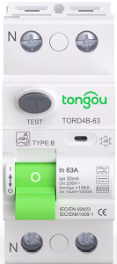
A Residual Current Circuit Breaker (RCCB) Type B is an advanced safety device designed to detect and disconnect electrical circuits in the presence of residual currents, including those with direct current (DC) components. Unlike standard RCCBs, Type B devices are capable of detecting AC, pulsating DC, and smooth DC residual currents, making them suitable for modern electrical systems with complex loads.
Explore Projects Built with RCCB type B
 Open Project in Cirkit Designer
 Open Project in Cirkit Designer
 Open Project in Cirkit Designer
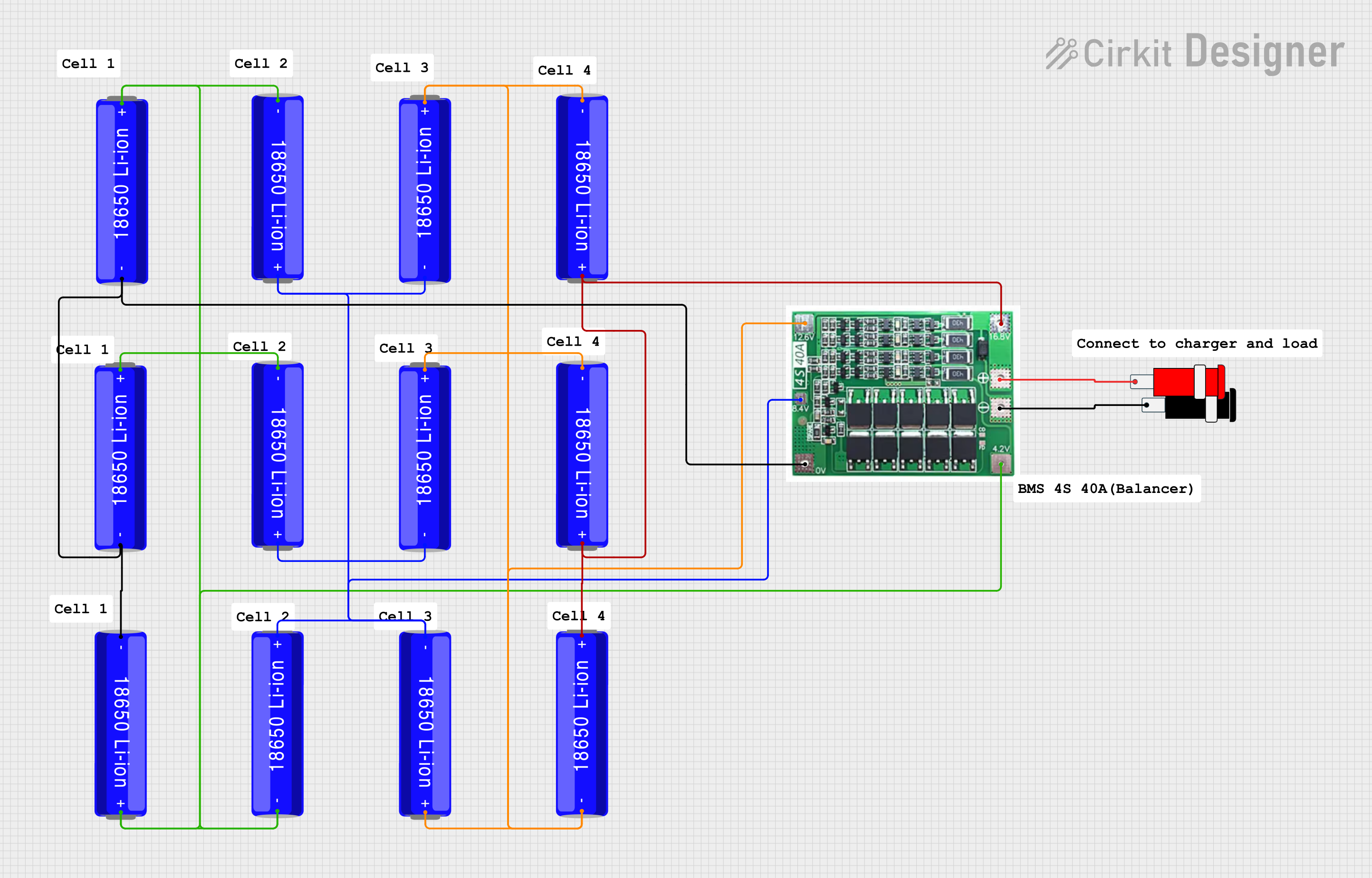 Open Project in Cirkit Designer
Explore Projects Built with RCCB type B
Open Project in Cirkit DesignerOpen Project in Cirkit DesignerOpen Project in Cirkit DesignerOpen Project in Cirkit DesignerCommon Applications and Use Cases
- Electric vehicle (EV) charging stations
- Photovoltaic (solar panel) systems
- Industrial machinery with variable frequency drives (VFDs)
- Medical equipment and laboratories
- Data centers and IT infrastructure
- Protection against electric shock and fire hazards in residential, commercial, and industrial installations
Technical Specifications
Key Technical Details
| Parameter | Value/Range |
|---|---|
| Rated Voltage (Un) | 230V AC / 400V AC |
| Rated Current (In) | 16A, 25A, 40A, 63A, 80A, 100A |
| Rated Residual Current (IΔn) | 10mA, 30mA, 100mA, 300mA, 500mA |
| Frequency | 50/60 Hz |
| Sensitivity | AC, pulsating DC, and smooth DC |
| Breaking Capacity | 6kA to 10kA (depending on model) |
| Operating Temperature | -25°C to +40°C |
| Mounting | DIN rail (35mm) |
| Standards Compliance | IEC 61008-1, IEC 62423 |
Pin Configuration and Descriptions
| Pin/Terminal | Description |
|---|---|
| L (Line) | Connects to the live wire of the input circuit |
| N (Neutral) | Connects to the neutral wire of the input circuit |
| Load L | Connects to the live wire of the output circuit |
| Load N | Connects to the neutral wire of the output circuit |
Usage Instructions
How to Use the RCCB Type B in a Circuit
Wiring the RCCB:
- Connect the input live wire to the
Lterminal and the input neutral wire to theNterminal. - Connect the output live wire to the
Load Lterminal and the output neutral wire to theLoad Nterminal. - Ensure all connections are secure and properly insulated.
- Connect the input live wire to the
Testing the RCCB:
- Use the built-in test button to verify the functionality of the RCCB. Pressing the test button should trip the breaker, disconnecting the circuit. Reset the RCCB after testing.
Installation Guidelines:
- Install the RCCB on a DIN rail in a distribution board.
- Ensure the rated current and residual current sensitivity match the requirements of the circuit.
- Avoid installing the RCCB in environments with excessive moisture, dust, or extreme temperatures.
Connecting to an EV Charger or Solar Inverter:
- For EV chargers, ensure the RCCB Type B is installed upstream of the charger to detect DC leakage currents.
- For solar inverters, connect the RCCB between the inverter and the load to provide comprehensive protection.
Important Considerations and Best Practices
- Always turn off the main power supply before installing or servicing the RCCB.
- Use an RCCB Type B specifically for circuits with DC components, as standard RCCBs may not detect DC residual currents.
- Periodically test the RCCB using the test button to ensure proper operation.
- Consult a licensed electrician for installation in complex systems or high-current applications.
Troubleshooting and FAQs
Common Issues and Solutions
| Issue | Possible Cause | Solution |
|---|---|---|
| RCCB does not trip during testing | Faulty test button or internal mechanism | Replace the RCCB |
| Frequent tripping of the RCCB | Overload or actual residual current | Check the circuit for faults or overload |
| RCCB does not reset after tripping | Persistent fault in the circuit | Inspect and repair the circuit |
| RCCB trips randomly | Electrical noise or transient currents | Use surge protection devices |
FAQs
Can I use an RCCB Type B for standard AC circuits?
- Yes, but it is specifically designed for circuits with DC components. For standard AC circuits, a Type AC or Type A RCCB may be more cost-effective.
How often should I test the RCCB?
- It is recommended to test the RCCB using the test button at least once a month.
What happens if I install a standard RCCB instead of Type B in a DC circuit?
- A standard RCCB may fail to detect DC residual currents, leaving the circuit unprotected against certain faults.
Can I install the RCCB Type B outdoors?
- Only if it is housed in a weatherproof enclosure with appropriate IP ratings.
By following this documentation, users can safely and effectively utilize the RCCB Type B for enhanced electrical protection in modern systems.