
How to Use HC05 Bluetooth Module: Examples, Pinouts, and Specs
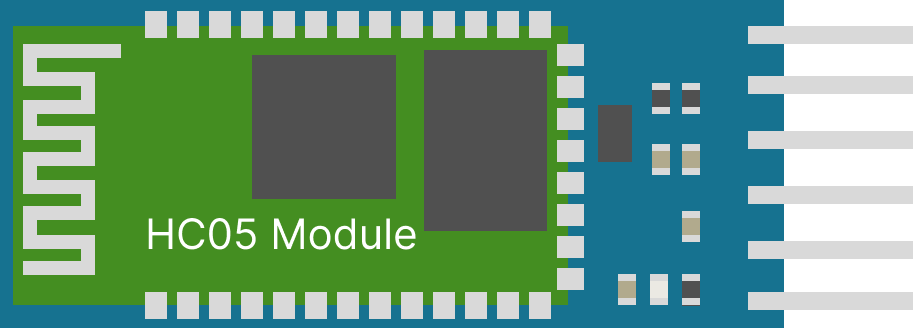
 Design with HC05 Bluetooth Module in Cirkit Designer
Introduction
The HC05 Bluetooth Module is a wireless communication device that allows for the transmission of data over short distances using Bluetooth technology. It operates on the Bluetooth 2.0 protocol and supports both master and slave modes, making it versatile for a wide range of applications. The module is commonly used in embedded systems, IoT applications, and robotics to enable wireless connectivity between devices such as microcontrollers, smartphones, and computers.
Explore Projects Built with HC05 Bluetooth Module
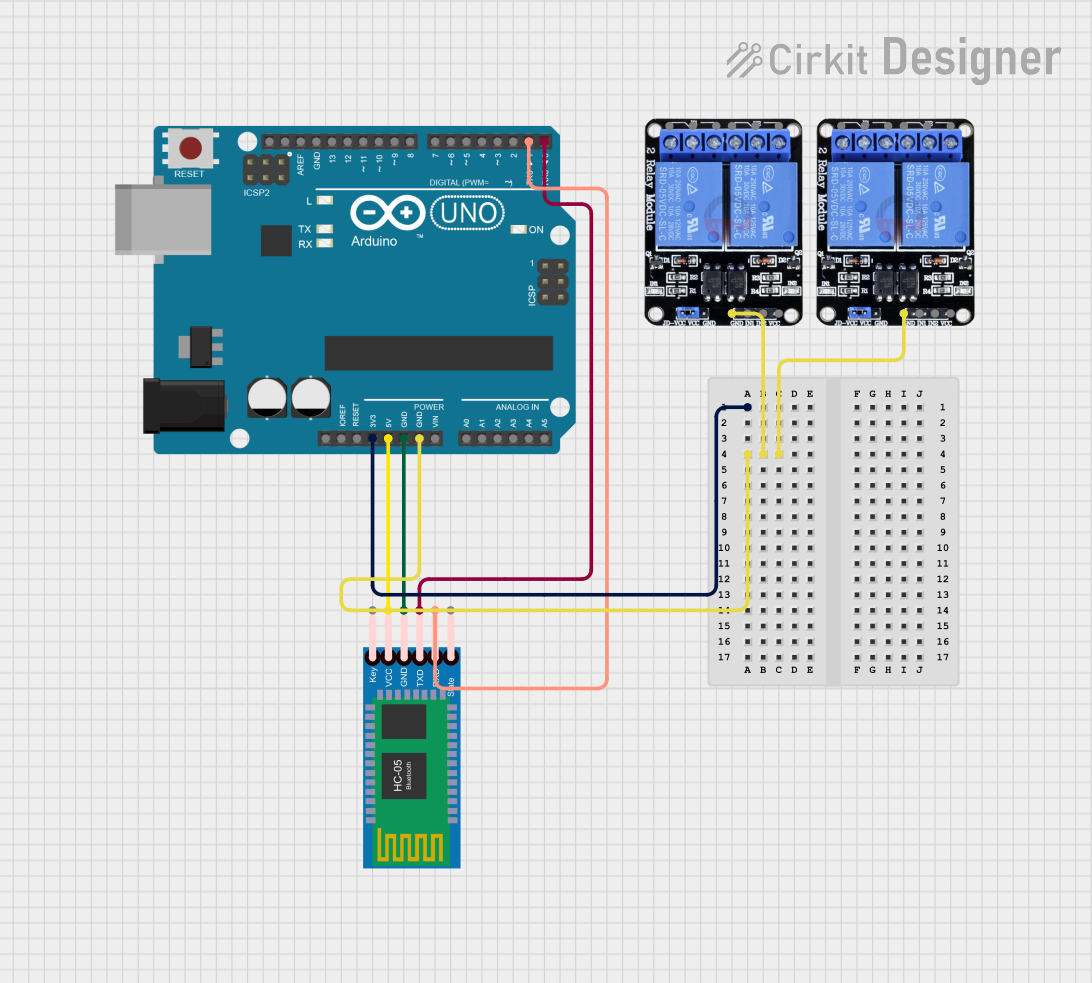 Open Project in Cirkit Designer
 Open Project in Cirkit Designer
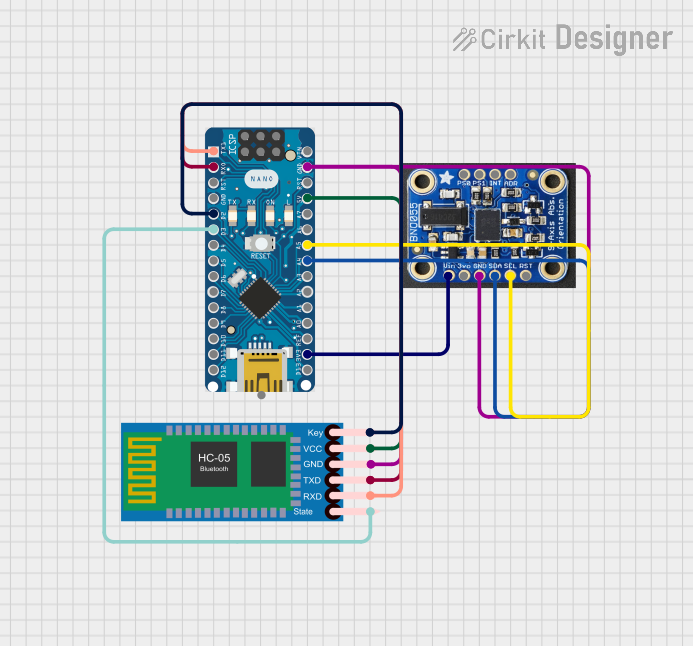 Open Project in Cirkit Designer
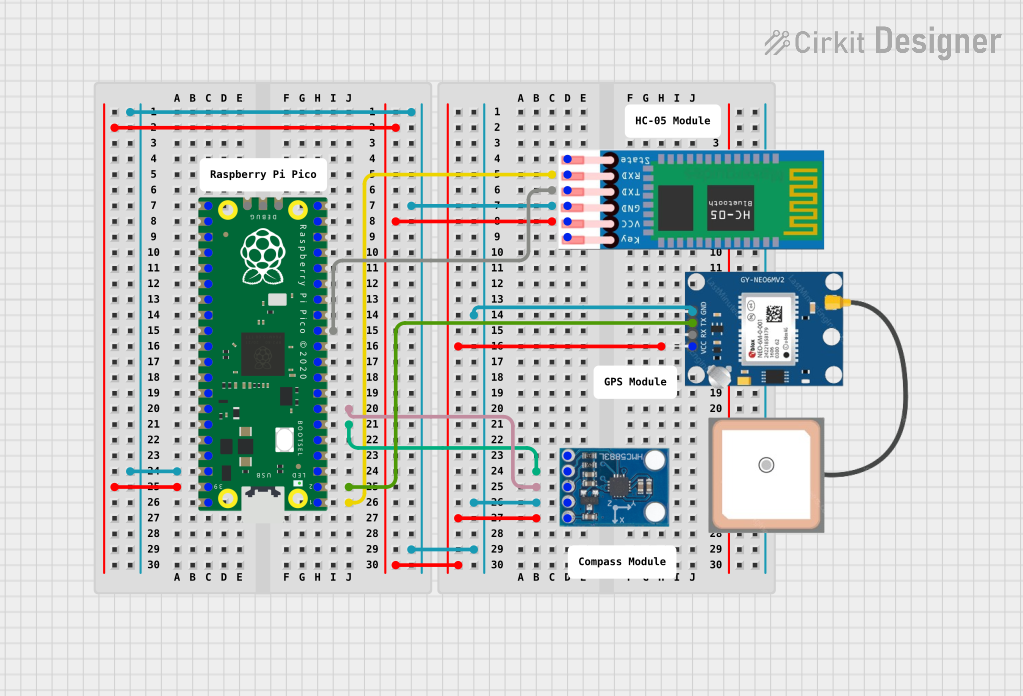 Open Project in Cirkit Designer
Explore Projects Built with HC05 Bluetooth Module
Open Project in Cirkit DesignerOpen Project in Cirkit DesignerOpen Project in Cirkit DesignerOpen Project in Cirkit DesignerCommon Applications and Use Cases
- Wireless communication in IoT devices
- Remote control of robots and drones
- Data logging and wireless sensor networks
- Serial communication between microcontrollers and PCs
- Home automation systems
Technical Specifications
The HC05 Bluetooth Module is designed for ease of use and reliable performance. Below are its key technical details:
| Parameter | Specification |
|---|---|
| Bluetooth Version | 2.0 + EDR (Enhanced Data Rate) |
| Operating Voltage | 3.3V to 5V |
| Operating Current | 30mA (typical) |
| Communication Protocol | UART (Universal Asynchronous Receiver-Transmitter) |
| Baud Rate | Default: 9600 bps (configurable) |
| Range | Up to 10 meters (unobstructed) |
| Frequency Band | 2.4 GHz ISM |
| Modes | Master and Slave |
| Dimensions | 37.5mm x 15.2mm x 2.7mm |
Pin Configuration and Descriptions
The HC05 module has six pins, as described in the table below:
| Pin | Name | Description |
|---|---|---|
| 1 | EN (Key) | Enables AT command mode when pulled HIGH. Leave LOW for normal operation. |
| 2 | VCC | Power supply input (3.3V to 5V). |
| 3 | GND | Ground connection. |
| 4 | TXD | Transmit data pin. Sends serial data to the connected device. |
| 5 | RXD | Receive data pin. Receives serial data from the connected device. |
| 6 | STATE | Indicates the connection status (HIGH when connected, LOW when disconnected). |
Usage Instructions
The HC05 Bluetooth Module is straightforward to use and can be easily integrated into a circuit. Below are the steps and considerations for using the module:
Connecting the HC05 to a Microcontroller
- Power Supply: Connect the
VCCpin to a 5V power source and theGNDpin to ground. - Serial Communication:
- Connect the
TXDpin of the HC05 to theRXpin of the microcontroller. - Connect the
RXDpin of the HC05 to theTXpin of the microcontroller. Use a voltage divider if the microcontroller operates at 5V logic levels to avoid damaging the HC05.
- Connect the
- Enable AT Command Mode (if needed):
- Pull the
ENpin HIGH before powering the module to enter AT command mode. - Use AT commands to configure the module (e.g., change the baud rate, set the device name, or switch between master and slave modes).
- Pull the
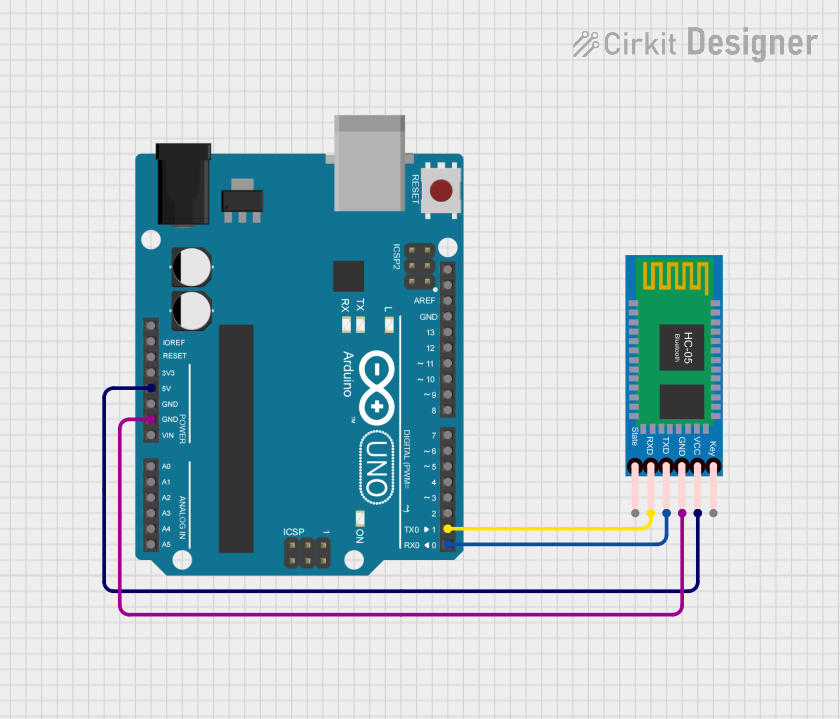
Example: Connecting HC05 to Arduino UNO
Below is an example of how to use the HC05 module with an Arduino UNO for basic serial communication:
Circuit Connections
- HC05
VCC→ Arduino5V - HC05
GND→ ArduinoGND - HC05
TXD→ ArduinoRX(Pin 0) - HC05
RXD→ ArduinoTX(Pin 1) (use a voltage divider if necessary)
Arduino Code Example
#include <SoftwareSerial.h>

// Define RX and TX pins for SoftwareSerial
SoftwareSerial BTSerial(10, 11); // RX = Pin 10, TX = Pin 11

void setup() {
  // Initialize serial communication with the computer
  Serial.begin(9600);
  // Initialize serial communication with the HC05 module
  BTSerial.begin(9600);

  Serial.println("HC05 Bluetooth Module Test");
  Serial.println("Type a message to send via Bluetooth:");
}

void loop() {
  // Check if data is available from the HC05 module
  if (BTSerial.available()) {
    char received = BTSerial.read();
    Serial.print("Received: ");
    Serial.println(received);
  }

  // Check if data is available from the Serial Monitor
  if (Serial.available()) {
    char toSend = Serial.read();
    BTSerial.write(toSend); // Send data to the HC05 module
    Serial.print("Sent: ");
    Serial.println(toSend);
  }
}
Important Considerations and Best Practices
- Voltage Levels: The HC05 operates at 3.3V logic levels. If your microcontroller uses 5V logic, use a voltage divider or level shifter for the
RXDpin. - AT Command Mode: Always ensure the
ENpin is HIGH before powering the module to enter AT command mode. - Baud Rate: The default baud rate is 9600 bps. Ensure your microcontroller's UART settings match this value.
- Connection Status: Use the
STATEpin to monitor the connection status of the module.
Troubleshooting and FAQs
Common Issues and Solutions
Module Not Responding to AT Commands
- Ensure the
ENpin is HIGH before powering the module. - Verify the baud rate is set to 38400 bps in AT command mode.
- Ensure the
No Data Transmission
- Check the wiring of the
TXDandRXDpins. - Ensure the baud rate of the microcontroller matches the HC05's baud rate.
- Check the wiring of the
Unstable Connection
- Reduce the distance between devices to within 10 meters.
- Avoid interference from other 2.4 GHz devices.
Module Not Pairing with Other Devices
- Use AT commands to verify the module is in the correct mode (master or slave).
- Ensure the pairing code (default:
1234) matches the other device's requirements.
FAQs
Q: Can the HC05 module communicate with smartphones?
A: Yes, the HC05 can pair with smartphones that support Bluetooth 2.0 or higher. Use a Bluetooth terminal app to send and receive data.
Q: How do I reset the HC05 module to factory settings?
A: Enter AT command mode and send the AT+ORGL command to reset the module to its default settings.
Q: Can I use the HC05 module for audio transmission?
A: No, the HC05 is designed for serial data communication and does not support audio transmission.
Q: How do I change the module's name?
A: Enter AT command mode and send the AT+NAME=<desired_name> command to set a new name.
By following this documentation, you can effectively integrate and troubleshoot the HC05 Bluetooth Module in your projects.