Cirkit Designer Logo
Cirkit Designer
Your all-in-one circuit design IDE
Home / 
Component Documentation

How to Use MCP1407: Examples, Pinouts, and Specs
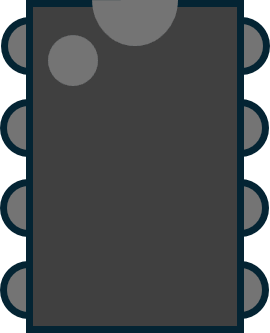

Image of MCP1407
Cirkit Designer LogoDesign with MCP1407 in Cirkit Designer

Introduction

The MCP1407 is a high-speed, low-side MOSFET driver designed to drive N-channel MOSFETs. It is capable of delivering high peak currents and features fast rise and fall times, making it ideal for applications requiring rapid switching. The MCP1407 is commonly used in power management systems, motor control circuits, and other high-speed switching applications. Its robust design ensures reliable operation in demanding environments.

Explore Projects Built with MCP1407
Use Cirkit Designer to design, explore, and prototype these projects online. Some projects support real-time simulation. Click "Open Project" to start designing instantly!
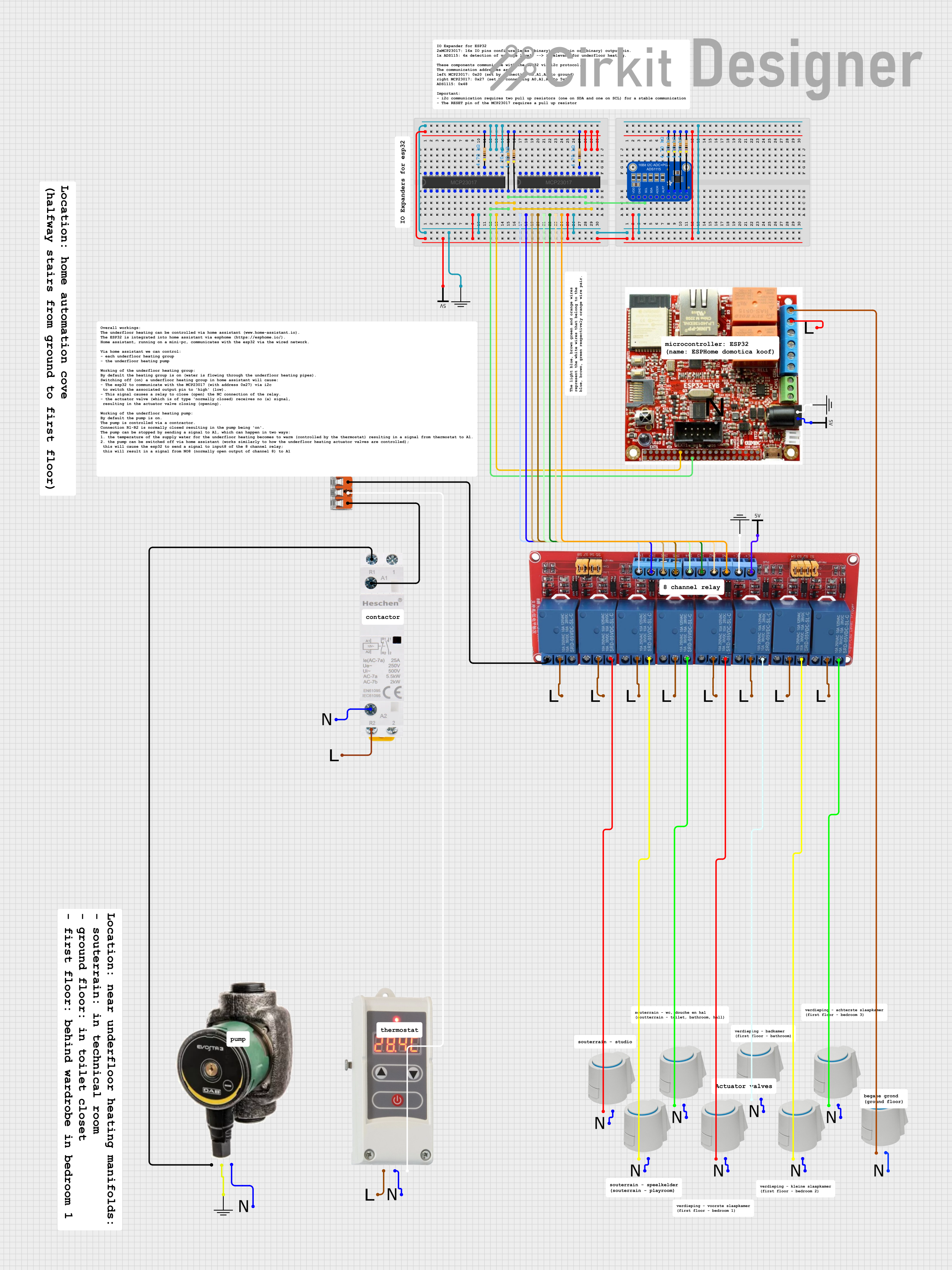
I2C-Controlled Relay Switching with ESP32 and MCP23017 for Home Automation
Image of Vloerverwarming: A project utilizing MCP1407 in a practical application
This circuit appears to be a control system utilizing two MCP23017 I/O expanders interfaced with an Olimex ESP32-EVB microcontroller via I2C communication, as indicated by the SDA and SCL connections with pull-up resistors. The MCP23017 expanders control an 8-channel relay module, allowing the microcontroller to switch various loads, potentially for home automation or industrial control. Additionally, there is an Adafruit ADS1115 16-bit ADC for analog signal measurement, and several heating actuators and a thermostat are connected, suggesting temperature control functionality.
Cirkit Designer LogoOpen Project in Cirkit Designer
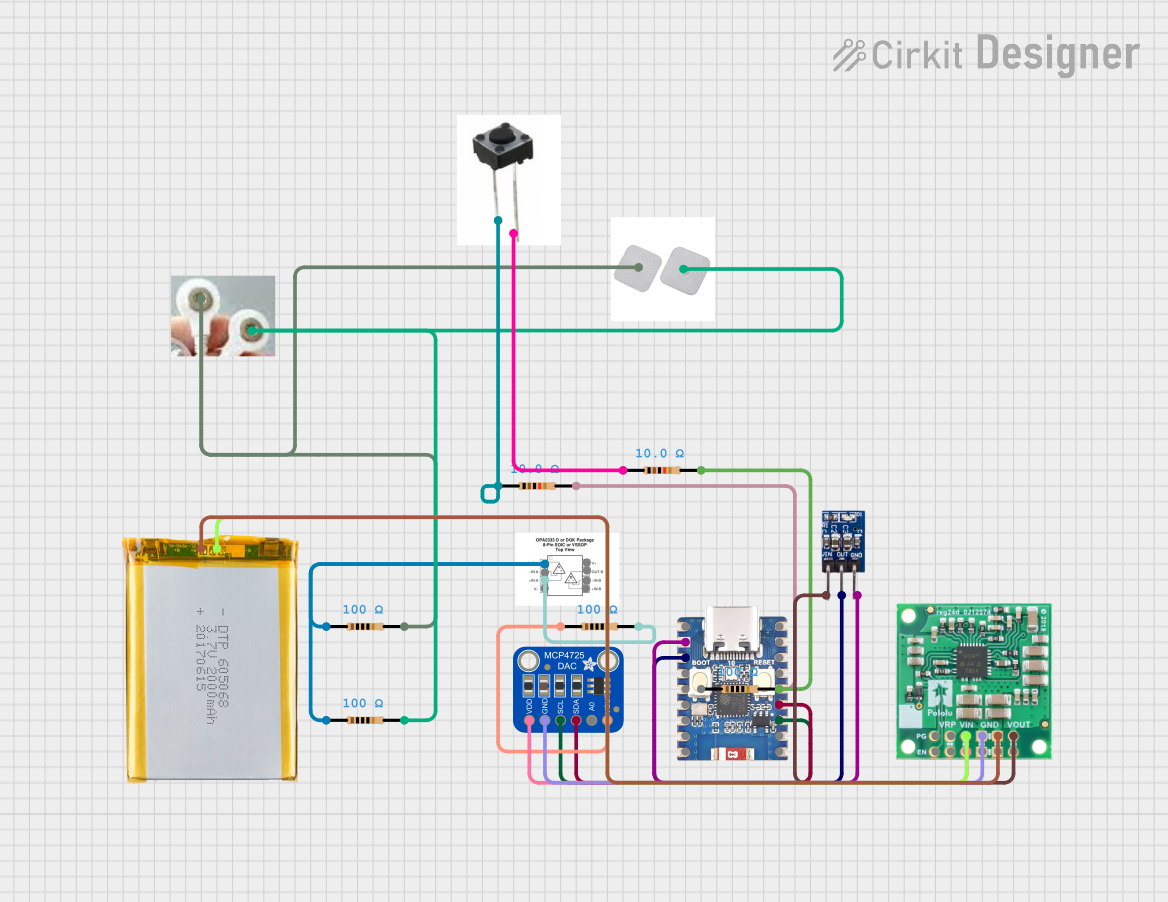
ESP32-C3 Mini and MCP4725 DAC Controlled Analog Output Circuit
Image of pp: A project utilizing MCP1407 in a practical application
This circuit features an ESP32-C3 Mini microcontroller that interfaces with an Adafruit MCP4725 DAC via I2C for analog output, which is then fed into an OPA2333 operational amplifier. Power management is handled by a 5V step-down voltage regulator that receives power from a 2000mAh battery and supplies the ESP32-C3 and a 3.3V AMS1117 voltage regulator. Additionally, the circuit includes user input through buttons and electro pads, with debouncing provided by resistors.
Cirkit Designer LogoOpen Project in Cirkit Designer
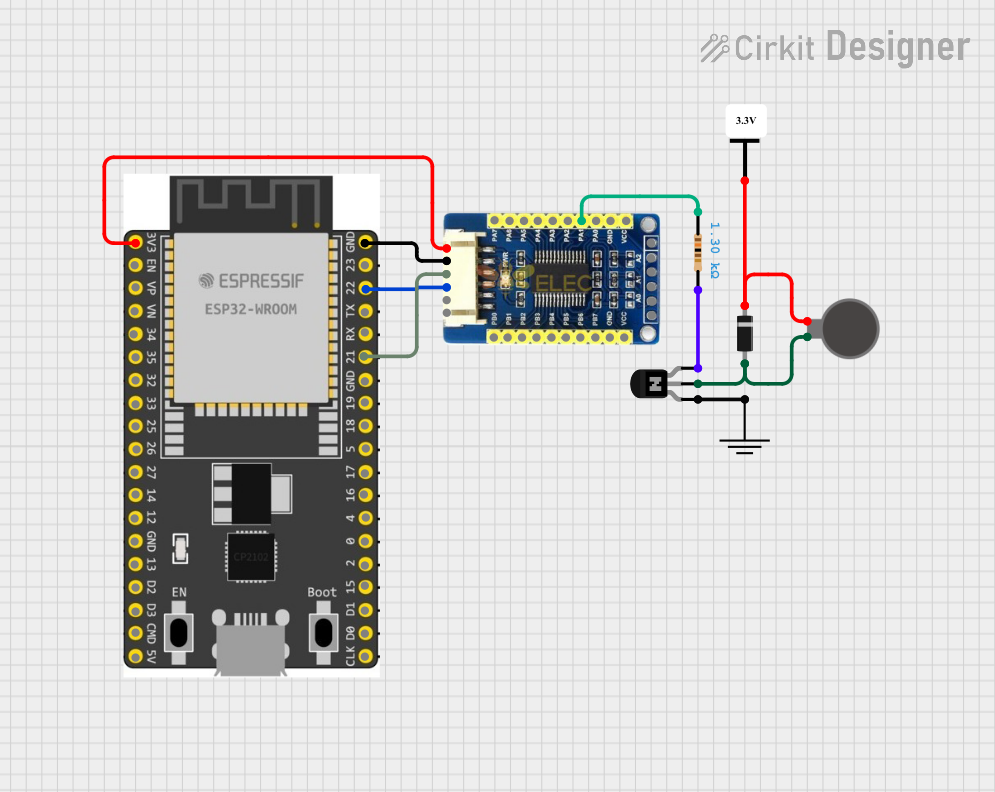
ESP32-Based Vibration Motor Controller with I2C IO Expansion
Image of VIBRATYION: A project utilizing MCP1407 in a practical application
This circuit features an ESP32 Wroom Dev Kit microcontroller interfaced with an MCP23017 I/O expansion board via I2C communication, utilizing GPIO 21 and GPIO 22 for SDA and SCL lines, respectively. A vibration motor is controlled by an NPN transistor acting as a switch, with a diode for back EMF protection and a resistor to limit base current. The ESP32 can control the motor by sending signals to the MCP23017, which then interfaces with the transistor to turn the motor on or off.
Cirkit Designer LogoOpen Project in Cirkit Designer
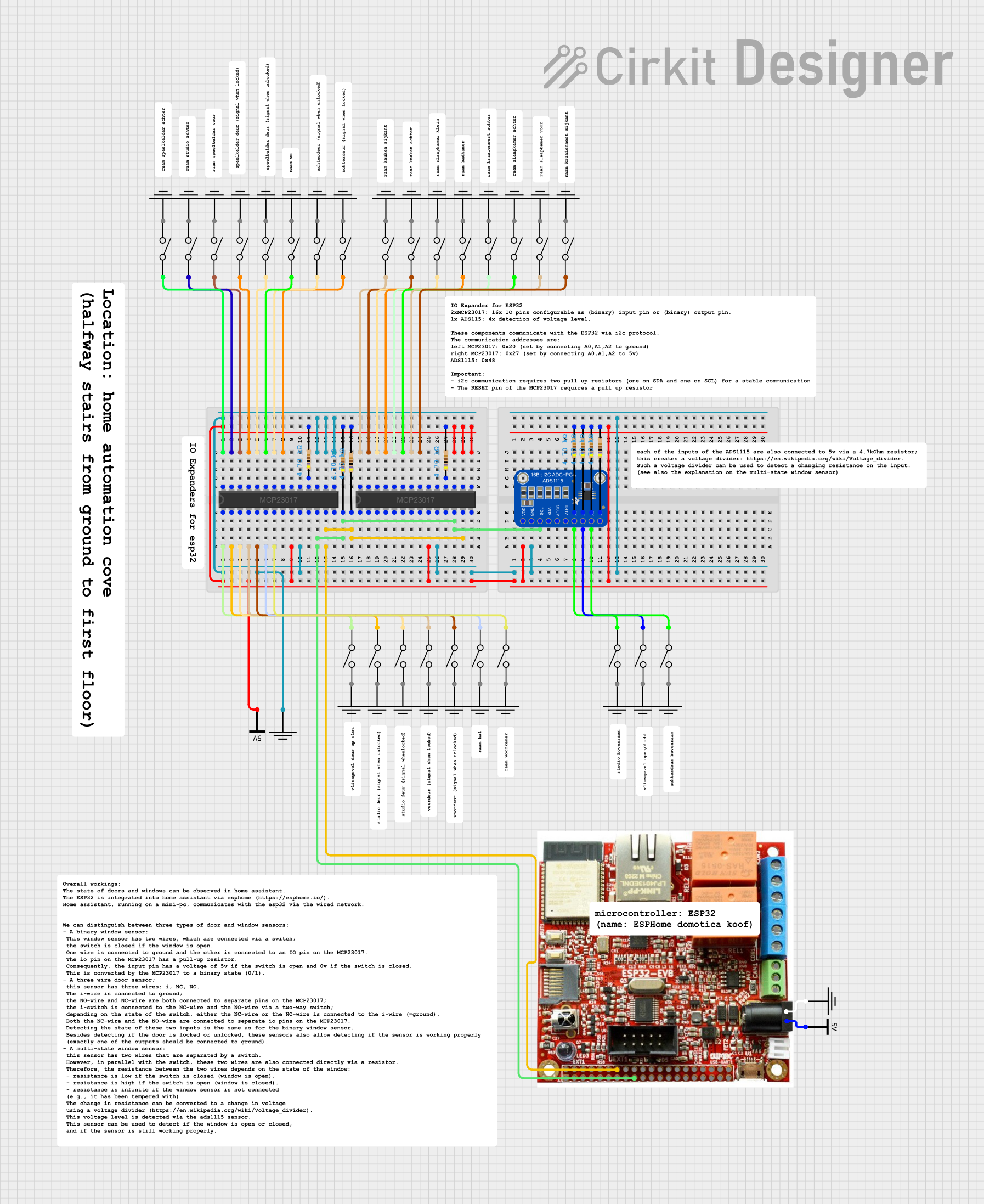
MCP23017-Expanded I/O Interface with ADS1115 ADC and ESP32 Control
Image of door and window sensors: A project utilizing MCP1407 in a practical application
This circuit features two MCP23017 I/O expanders interfaced with multiple switches, allowing for the expansion of input capabilities. The MCP23017s are connected via I2C to an Olimex ESP32-EVB microcontroller, which likely manages the input states from the switches. Additionally, an Adafruit ADS1115 16-bit ADC is included, suggesting that some analog inputs are being monitored, with the ADC also interfaced with the ESP32 via I2C.
Cirkit Designer LogoOpen Project in Cirkit Designer

Explore Projects Built with MCP1407

Use Cirkit Designer to design, explore, and prototype these projects online. Some projects support real-time simulation. Click "Open Project" to start designing instantly!
Image of Vloerverwarming: A project utilizing MCP1407 in a practical application
I2C-Controlled Relay Switching with ESP32 and MCP23017 for Home Automation
This circuit appears to be a control system utilizing two MCP23017 I/O expanders interfaced with an Olimex ESP32-EVB microcontroller via I2C communication, as indicated by the SDA and SCL connections with pull-up resistors. The MCP23017 expanders control an 8-channel relay module, allowing the microcontroller to switch various loads, potentially for home automation or industrial control. Additionally, there is an Adafruit ADS1115 16-bit ADC for analog signal measurement, and several heating actuators and a thermostat are connected, suggesting temperature control functionality.
Cirkit Designer LogoOpen Project in Cirkit Designer
Image of pp: A project utilizing MCP1407 in a practical application
ESP32-C3 Mini and MCP4725 DAC Controlled Analog Output Circuit
This circuit features an ESP32-C3 Mini microcontroller that interfaces with an Adafruit MCP4725 DAC via I2C for analog output, which is then fed into an OPA2333 operational amplifier. Power management is handled by a 5V step-down voltage regulator that receives power from a 2000mAh battery and supplies the ESP32-C3 and a 3.3V AMS1117 voltage regulator. Additionally, the circuit includes user input through buttons and electro pads, with debouncing provided by resistors.
Cirkit Designer LogoOpen Project in Cirkit Designer
Image of VIBRATYION: A project utilizing MCP1407 in a practical application
ESP32-Based Vibration Motor Controller with I2C IO Expansion
This circuit features an ESP32 Wroom Dev Kit microcontroller interfaced with an MCP23017 I/O expansion board via I2C communication, utilizing GPIO 21 and GPIO 22 for SDA and SCL lines, respectively. A vibration motor is controlled by an NPN transistor acting as a switch, with a diode for back EMF protection and a resistor to limit base current. The ESP32 can control the motor by sending signals to the MCP23017, which then interfaces with the transistor to turn the motor on or off.
Cirkit Designer LogoOpen Project in Cirkit Designer
Image of door and window sensors: A project utilizing MCP1407 in a practical application
MCP23017-Expanded I/O Interface with ADS1115 ADC and ESP32 Control
This circuit features two MCP23017 I/O expanders interfaced with multiple switches, allowing for the expansion of input capabilities. The MCP23017s are connected via I2C to an Olimex ESP32-EVB microcontroller, which likely manages the input states from the switches. Additionally, an Adafruit ADS1115 16-bit ADC is included, suggesting that some analog inputs are being monitored, with the ADC also interfaced with the ESP32 via I2C.
Cirkit Designer LogoOpen Project in Cirkit Designer

Common Applications

  • Power supply circuits
  • Motor control systems
  • DC-DC converters
  • LED drivers
  • High-speed switching circuits

Technical Specifications

Key Specifications

  • Supply Voltage (Vdd): 4.5V to 18V
  • Peak Output Current: 6A
  • Input Threshold Voltage: TTL/CMOS compatible
  • Rise Time (typical): 14 ns (with 1.8 nF load)
  • Fall Time (typical): 12 ns (with 1.8 nF load)
  • Operating Temperature Range: -40°C to +125°C
  • Package Options: 8-pin PDIP, SOIC, and DFN

Pin Configuration and Descriptions

The MCP1407 is available in an 8-pin package. Below is the pinout and description:

Pin Number Pin Name Description
1 GND Ground connection
2 IN Input signal (TTL/CMOS compatible)
3 NC No connection (leave unconnected)
4 VDD Positive supply voltage
5 OUT Output to drive the gate of the MOSFET
6 NC No connection (leave unconnected)
7 NC No connection (leave unconnected)
8 GND Ground connection (internally connected to Pin 1)

Usage Instructions

Using the MCP1407 in a Circuit

  1. Power Supply: Connect the VDD pin to a stable power supply within the range of 4.5V to 18V. Ensure proper decoupling by placing a 0.1 µF ceramic capacitor close to the VDD pin.
  2. Input Signal: Provide a TTL/CMOS-compatible signal to the IN pin. This signal will control the output state of the MCP1407.
  3. Output Connection: Connect the OUT pin to the gate of the N-channel MOSFET. Use a short and low-inductance trace to minimize switching noise.
  4. Grounding: Connect both GND pins (Pin 1 and Pin 8) to the circuit ground. Ensure a solid ground plane for optimal performance.

Important Considerations

  • Load Capacitance: The MCP1407 is designed to drive capacitive loads, such as the gate of a MOSFET. Ensure the load capacitance does not exceed the driver’s capability.
  • Thermal Management: If operating at high frequencies or driving large loads, ensure adequate heat dissipation to prevent overheating.
  • Input Signal Integrity: Use clean and noise-free input signals to avoid erratic switching behavior.

Example: Using MCP1407 with Arduino UNO

Below is an example of how to use the MCP1407 to drive an N-channel MOSFET with an Arduino UNO:

// Example: Driving an N-channel MOSFET using MCP1407 and Arduino UNO

const int driverInputPin = 9; // Arduino pin connected to MCP1407 IN pin

void setup() {
  pinMode(driverInputPin, OUTPUT); // Set the pin as an output
}

void loop() {
  digitalWrite(driverInputPin, HIGH); // Turn the MOSFET ON
  delay(1000); // Keep it ON for 1 second
  digitalWrite(driverInputPin, LOW);  // Turn the MOSFET OFF
  delay(1000); // Keep it OFF for 1 second
}

Note: Ensure the MCP1407 is properly connected to the MOSFET and the Arduino. Use a common ground between the Arduino, MCP1407, and the power supply.

Troubleshooting and FAQs

Common Issues and Solutions

  1. No Output Signal:

    • Cause: Input signal not connected or incorrect voltage level.
    • Solution: Verify the input signal is TTL/CMOS compatible and properly connected to the IN pin.
  2. Overheating:

    • Cause: Excessive load capacitance or high switching frequency.
    • Solution: Reduce the load capacitance or operating frequency. Ensure proper heat dissipation.
  3. Erratic Switching:

    • Cause: Noise on the input signal or poor grounding.
    • Solution: Use a clean input signal and ensure a solid ground connection.
  4. MOSFET Not Switching:

    • Cause: Incorrect connection between MCP1407 and MOSFET gate.
    • Solution: Verify the OUT pin is connected to the MOSFET gate with a short, low-inductance trace.

FAQs

Q1: Can the MCP1407 drive P-channel MOSFETs?
A1: No, the MCP1407 is designed specifically for driving N-channel MOSFETs.

Q2: What is the maximum switching frequency of the MCP1407?
A2: The maximum switching frequency depends on the load capacitance and supply voltage. Typically, it can operate in the MHz range with appropriate load conditions.

Q3: Can I use the MCP1407 with a 3.3V logic signal?
A3: Yes, the MCP1407 has TTL/CMOS-compatible inputs and can accept 3.3V logic signals.

Q4: What happens if the supply voltage exceeds 18V?
A4: Exceeding the maximum supply voltage can damage the MCP1407. Always operate within the specified voltage range.

By following this documentation, users can effectively integrate the MCP1407 into their circuits for high-speed MOSFET driving applications.