
How to Use Soil Sensor HW-080: Examples, Pinouts, and Specs
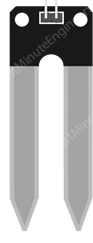
 Design with Soil Sensor HW-080 in Cirkit Designer
Introduction
The Soil Sensor HW-080 is a device designed to measure the moisture level in soil. It is widely used in agricultural and gardening applications to monitor soil conditions, enabling users to optimize irrigation schedules and improve plant health. The sensor provides an analog output that corresponds to the soil's moisture level, making it easy to integrate with microcontrollers and other electronic systems.
Explore Projects Built with Soil Sensor HW-080
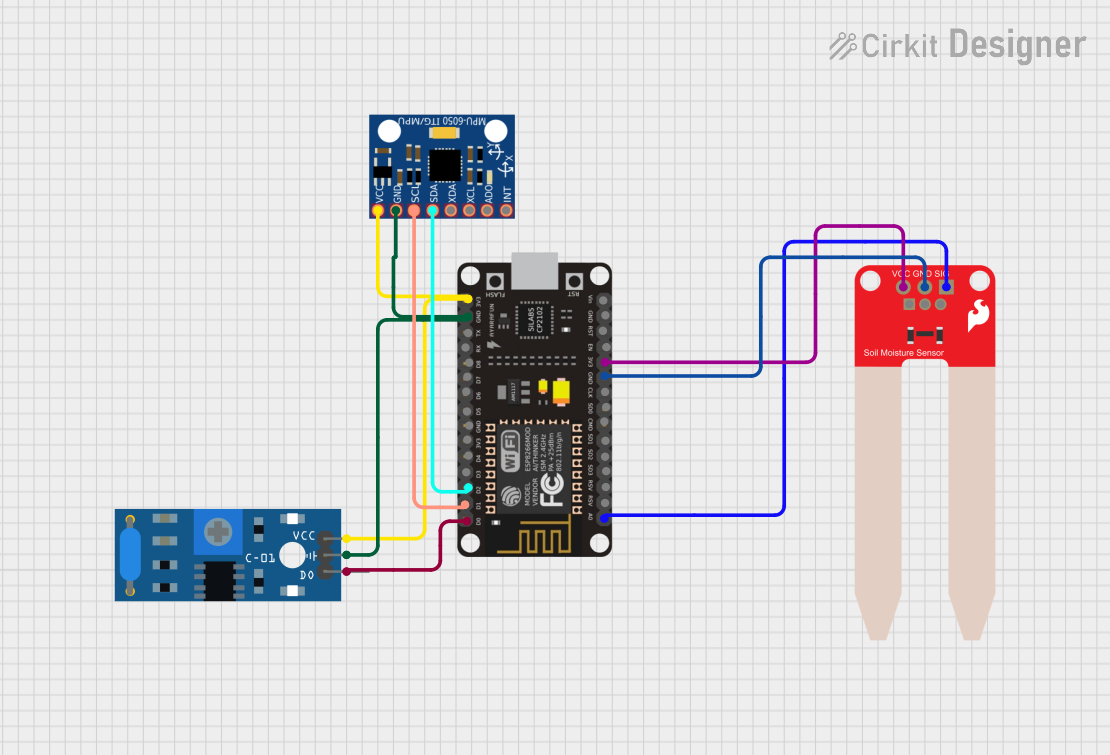 Open Project in Cirkit Designer
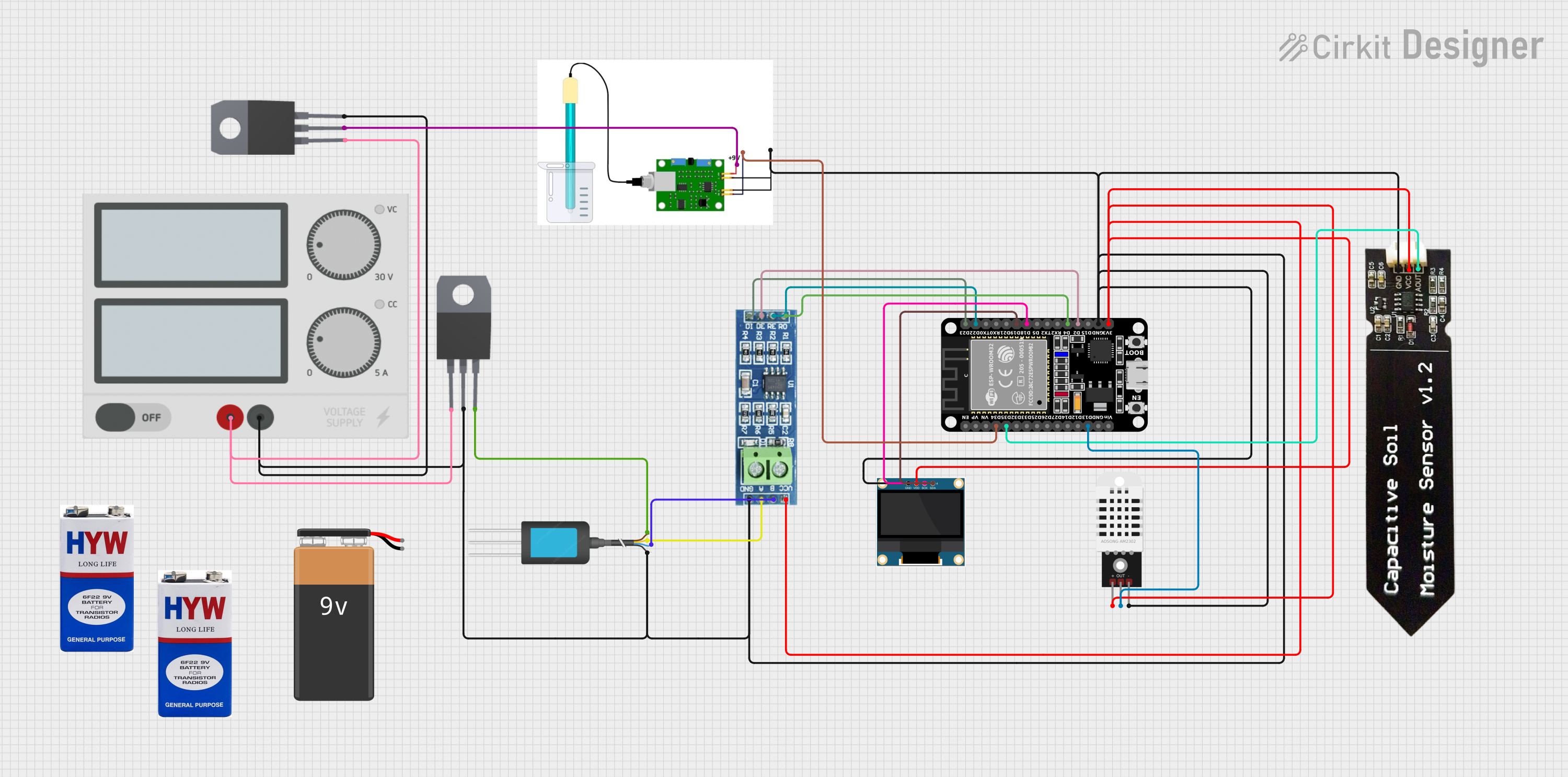 Open Project in Cirkit Designer
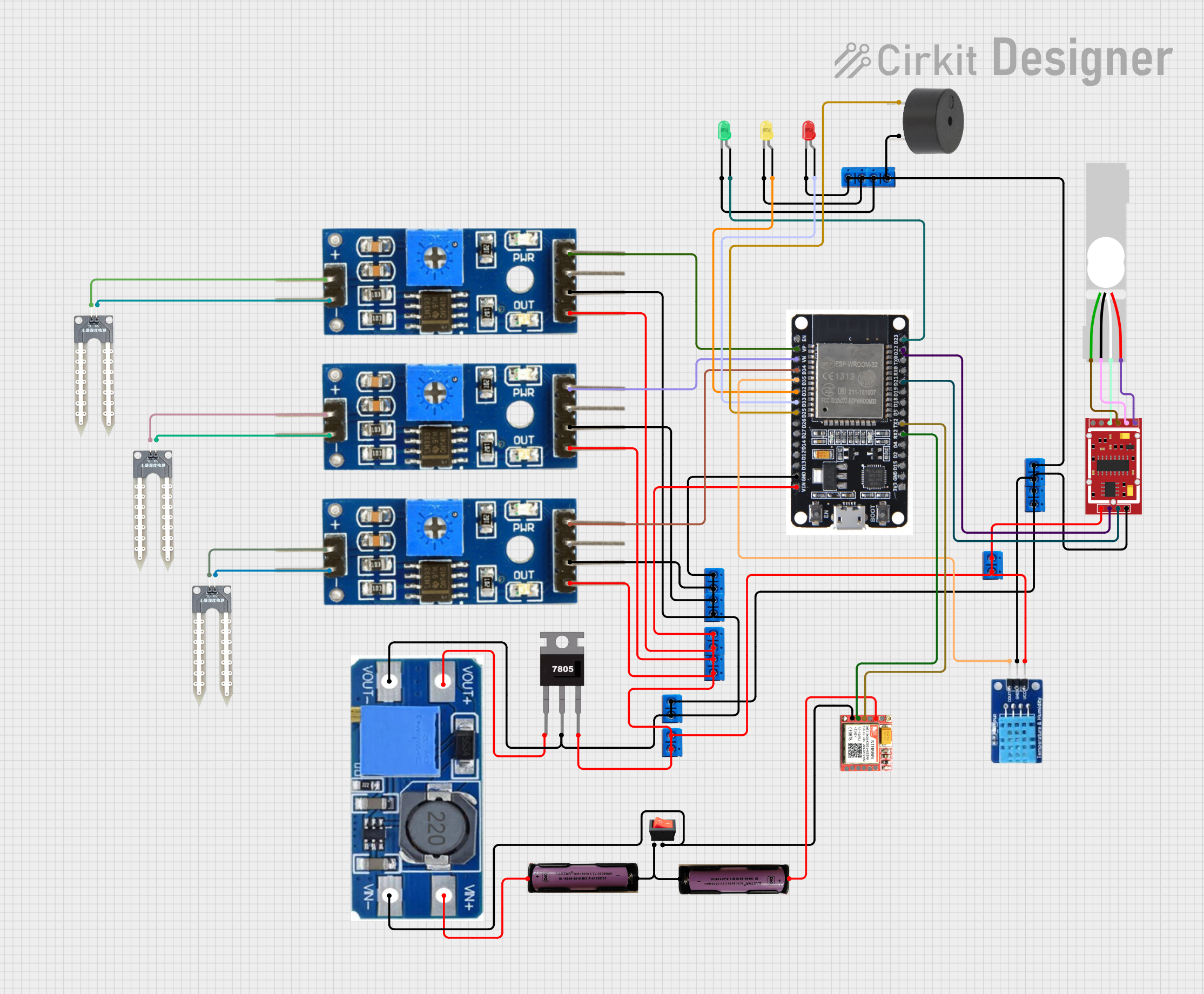 Open Project in Cirkit Designer
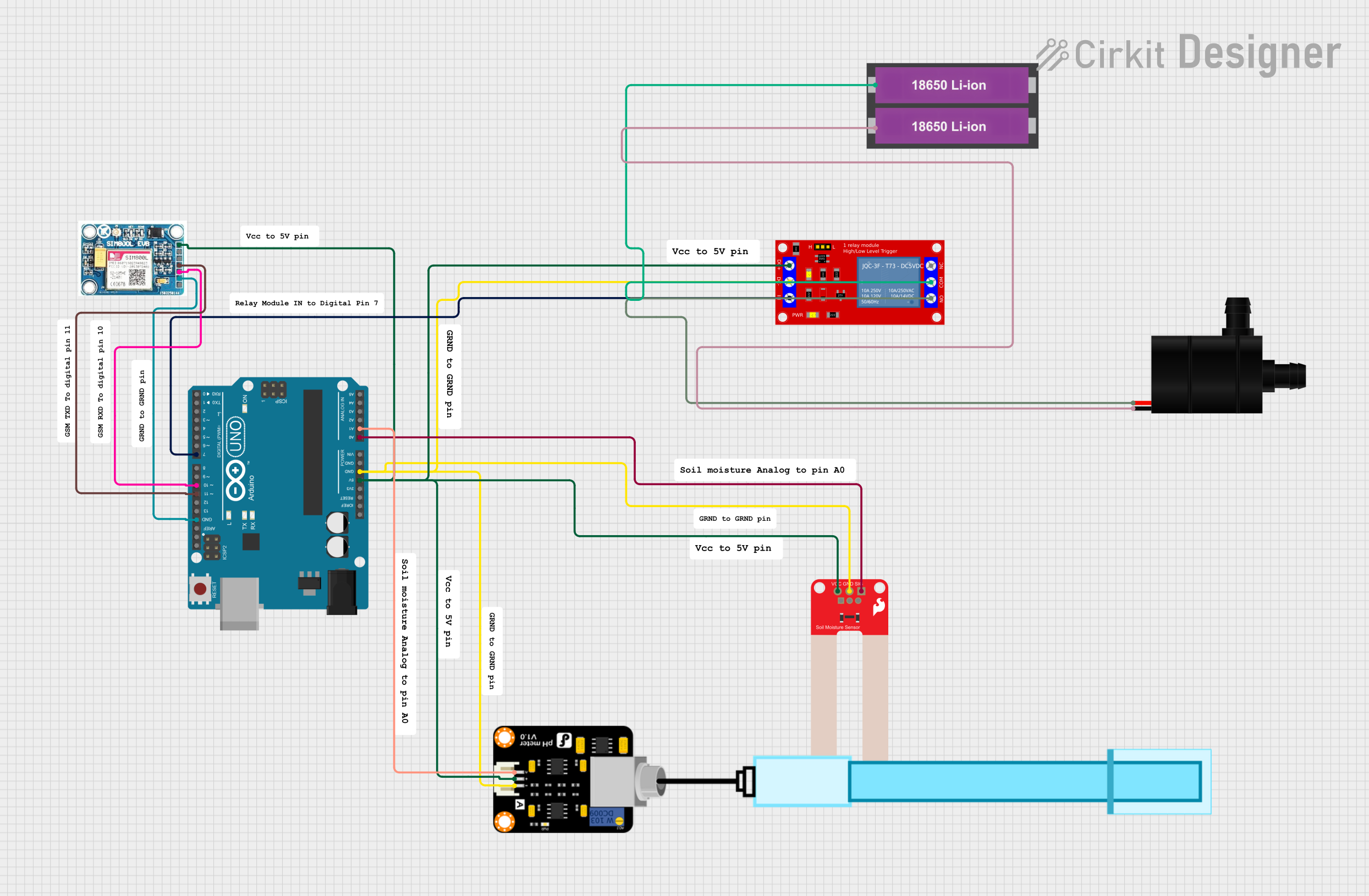 Open Project in Cirkit Designer
Explore Projects Built with Soil Sensor HW-080
Open Project in Cirkit DesignerOpen Project in Cirkit DesignerOpen Project in Cirkit DesignerOpen Project in Cirkit DesignerCommon Applications
- Automated irrigation systems
- Smart gardening projects
- Soil moisture monitoring for agriculture
- Environmental monitoring systems
- Educational projects involving sensors and microcontrollers
Technical Specifications
The Soil Sensor HW-080 is a simple and efficient device with the following key specifications:
| Parameter | Value |
|---|---|
| Operating Voltage | 3.3V - 5V |
| Output Type | Analog (voltage proportional to moisture level) |
| Current Consumption | < 20mA |
| Dimensions | 60mm x 20mm x 5mm (approx.) |
| Operating Temperature | -10°C to 60°C |
| Sensor Material | Corrosion-resistant metal probes |
Pin Configuration
The HW-080 typically comes with three pins for easy interfacing:
| Pin | Name | Description |
|---|---|---|
| 1 | VCC | Power supply input (3.3V - 5V) |
| 2 | GND | Ground connection |
| 3 | AOUT | Analog output (voltage proportional to soil moisture) |
Usage Instructions
Connecting the Soil Sensor HW-080
- Power the Sensor: Connect the
VCCpin to a 3.3V or 5V power source and theGNDpin to the ground of your circuit. - Read the Output: Connect the
AOUTpin to an analog input pin of a microcontroller (e.g., Arduino UNO) to read the moisture level. - Insert the Probes: Place the sensor's metal probes into the soil you wish to measure. Ensure the probes are fully inserted for accurate readings.
Important Considerations
- Avoid Corrosion: Prolonged exposure to moisture can corrode the sensor's probes. To extend the sensor's lifespan, avoid leaving it in wet soil for extended periods.
- Calibration: The sensor's output voltage varies with soil moisture. Calibrate the sensor by measuring the output in dry and wet soil to determine the range of values for your specific application.
- Power Supply: Ensure the power supply voltage matches the sensor's operating range (3.3V - 5V) to avoid damage.
Example Code for Arduino UNO
The following code demonstrates how to use the Soil Sensor HW-080 with an Arduino UNO to read and display soil moisture levels:
// Define the analog pin connected to the sensor's AOUT pin
const int sensorPin = A0;

void setup() {
  // Initialize serial communication for debugging
  Serial.begin(9600);
}

void loop() {
  // Read the analog value from the sensor
  int sensorValue = analogRead(sensorPin);

  // Convert the analog value to a percentage (0% to 100%)
  // Assuming 0 (dry soil) corresponds to 0 and 1023 (wet soil) corresponds to 100%
  float moisturePercentage = (sensorValue / 1023.0) * 100;

  // Print the moisture level to the Serial Monitor
  Serial.print("Soil Moisture: ");
  Serial.print(moisturePercentage);
  Serial.println("%");

  // Wait for 1 second before taking the next reading
  delay(1000);
}
Best Practices
- Use the sensor in well-drained soil to avoid waterlogging, which can affect readings.
- Periodically clean the sensor probes to remove dirt and debris for accurate measurements.
- If using the sensor outdoors, consider waterproofing the connections to protect against environmental factors.
Troubleshooting and FAQs
Common Issues and Solutions
No Output or Incorrect Readings
- Cause: Loose or incorrect wiring.
- Solution: Double-check all connections, ensuring the
VCC,GND, andAOUTpins are properly connected.
Fluctuating Readings
- Cause: Electrical noise or unstable power supply.
- Solution: Use a decoupling capacitor (e.g., 0.1µF) between
VCCandGNDto stabilize the power supply.
Corroded Probes
- Cause: Prolonged exposure to moisture.
- Solution: Clean the probes with a soft cloth and avoid leaving the sensor in wet soil for extended periods.
Sensor Not Responding
- Cause: Sensor damage or incorrect voltage.
- Solution: Verify the power supply voltage is within the specified range (3.3V - 5V). Replace the sensor if damaged.
FAQs
Q: Can the Soil Sensor HW-080 be used with a Raspberry Pi?
A: Yes, but since the Raspberry Pi lacks analog input pins, you will need an external ADC (Analog-to-Digital Converter) to read the sensor's output.
Q: How do I interpret the sensor's analog output?
A: The output voltage is proportional to the soil's moisture level. Higher voltage indicates wetter soil, while lower voltage indicates drier soil.
Q: Is the sensor waterproof?
A: The probes are designed to be inserted into soil, but the rest of the sensor is not waterproof. Protect the electronics from water exposure.
Q: Can I use the sensor for long-term monitoring?
A: While possible, the sensor's probes may corrode over time. Consider using a more durable sensor for long-term applications.