
How to Use rlyr998: Examples, Pinouts, and Specs
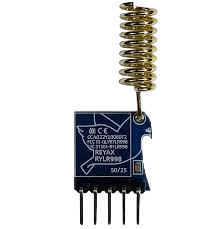
 Design with rlyr998 in Cirkit Designer
Introduction
The RLYR998, manufactured by Reyax, is a relay component designed for use in electronic circuits to control high-power loads using low-power signals. It functions as an electrically operated switch, allowing users to open or close a circuit when a control signal is applied. This relay provides electrical isolation between the control circuit and the load circuit, ensuring safety and reliability in various applications.
Explore Projects Built with rlyr998
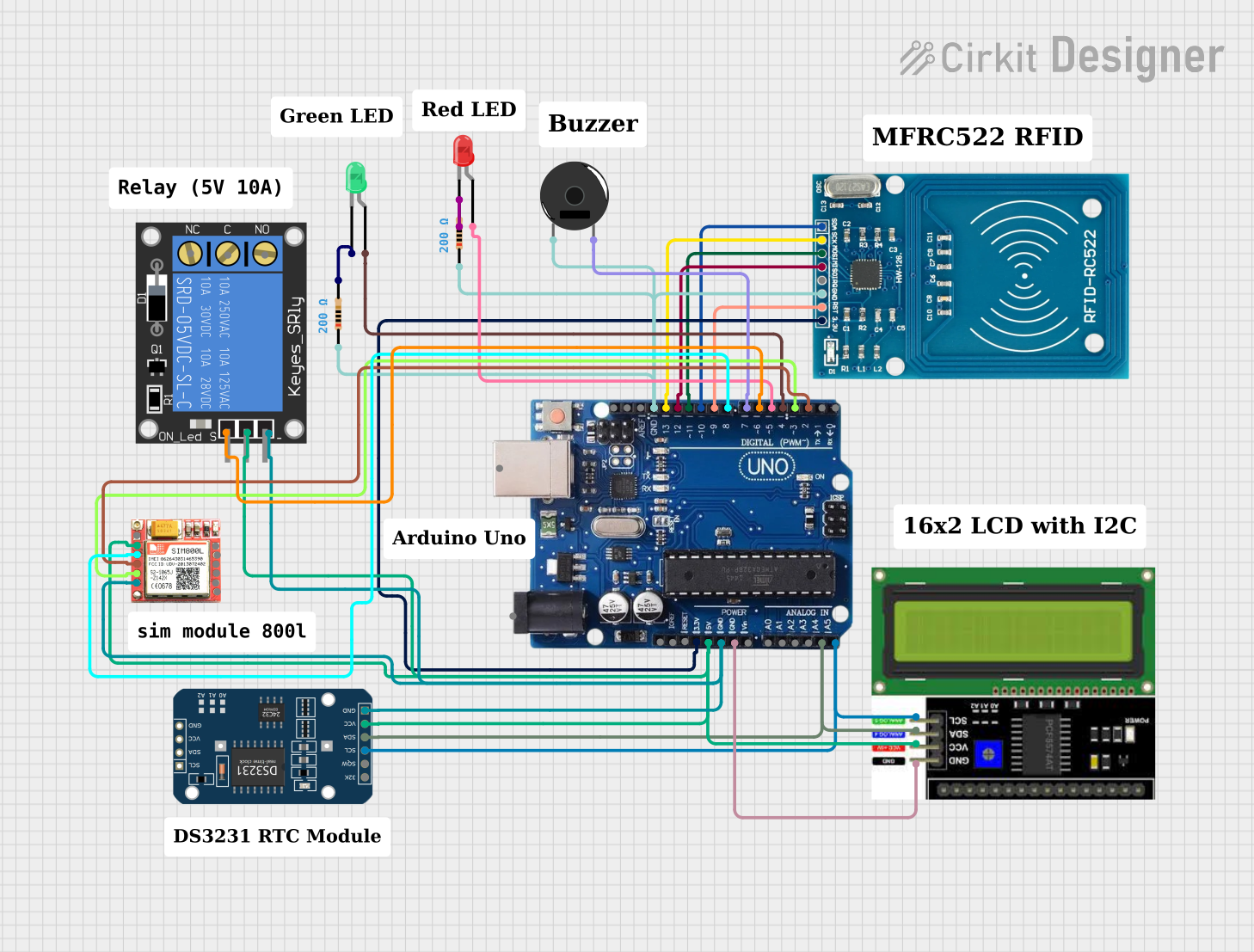 Open Project in Cirkit Designer
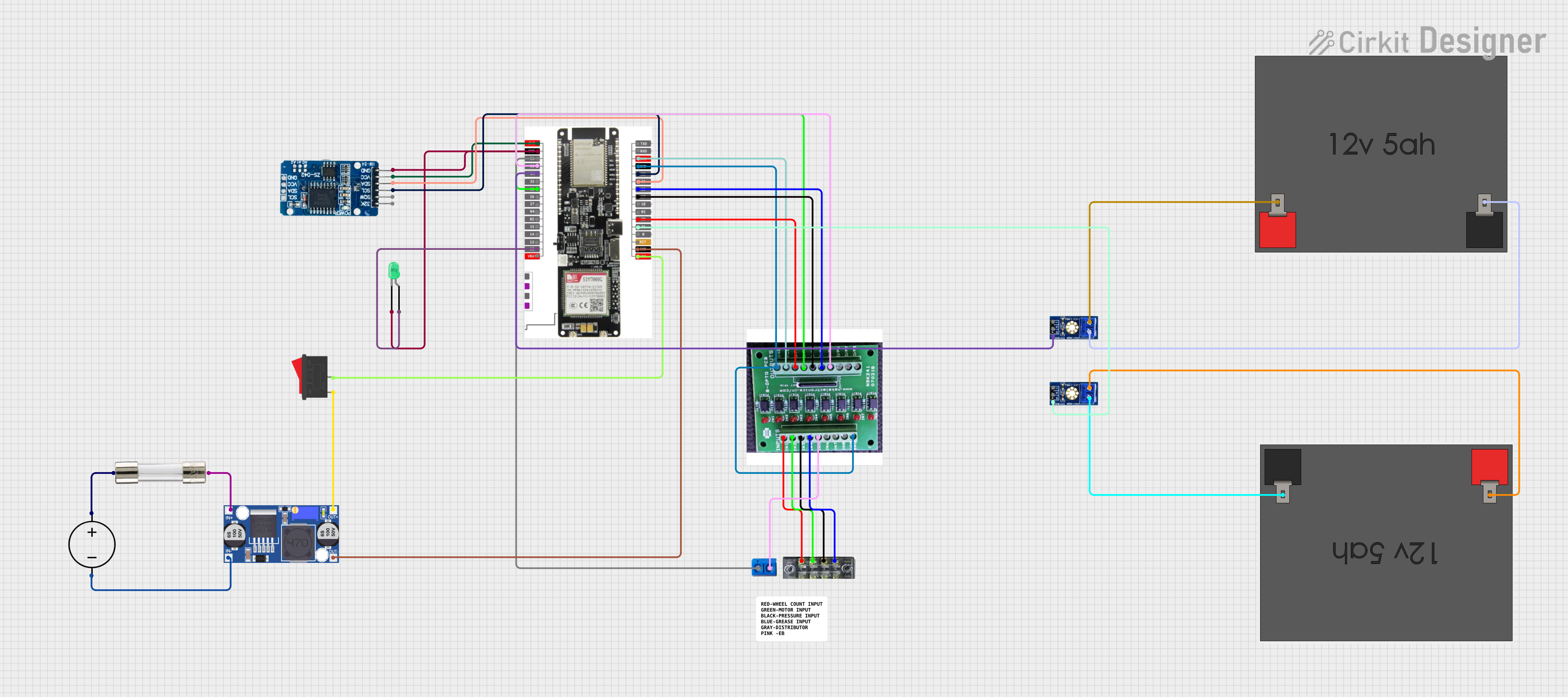 Open Project in Cirkit Designer
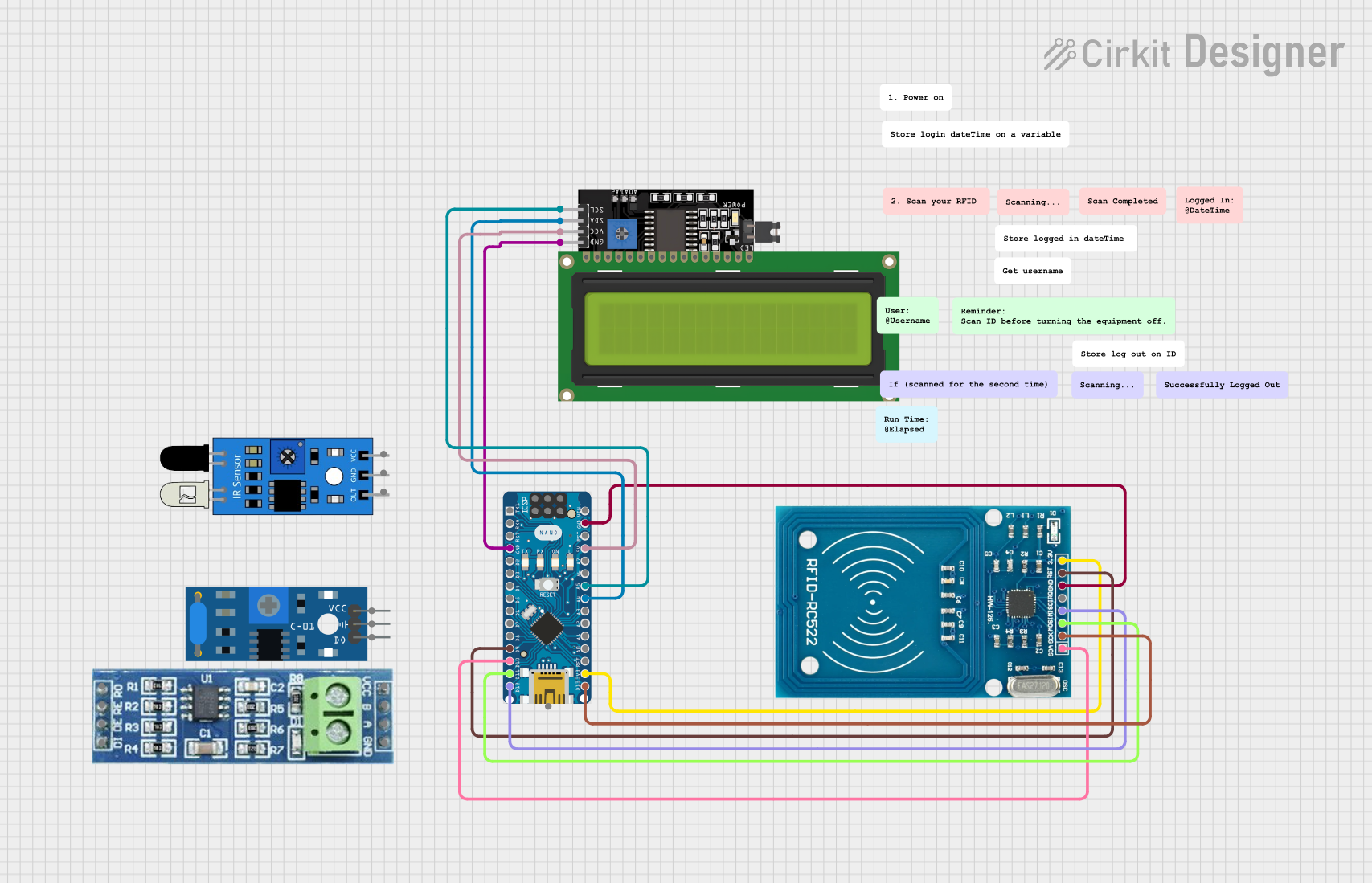 Open Project in Cirkit Designer
![Image of [Circuit Design] RFID-Based Equipment Logger for DPWH : A project utilizing rlyr998 in a practical application](https://abacasstorageaccnt.blob.core.windows.net/cirkit/c81f4194-7010-43d8-91fe-f2eb970df771.png) Open Project in Cirkit Designer
Open Project in Cirkit DesignerExplore Projects Built with rlyr998
Open Project in Cirkit DesignerOpen Project in Cirkit DesignerOpen Project in Cirkit DesignerOpen Project in Cirkit DesignerCommon Applications and Use Cases
- Home automation systems (e.g., controlling lights, fans, or appliances)
- Industrial control systems
- Motor control circuits
- Power distribution and switching
- Signal isolation in sensitive electronic systems
Technical Specifications
The RLYR998 relay is designed to handle a wide range of applications with the following key specifications:
| Parameter | Value |
|---|---|
| Operating Voltage | 5V DC |
| Coil Resistance | 70 Ω |
| Switching Voltage (Max) | 250V AC / 30V DC |
| Switching Current (Max) | 10A |
| Contact Configuration | SPDT (Single Pole Double Throw) |
| Contact Material | Silver Alloy |
| Insulation Resistance | ≥ 100 MΩ (at 500V DC) |
| Dielectric Strength | 1500V AC (between coil and contacts) |
| Operating Temperature | -40°C to +85°C |
| Dimensions | 19mm x 15mm x 15mm |
| Weight | 10g |
Pin Configuration and Descriptions
The RLYR998 relay has a standard 5-pin configuration. The table below describes each pin:
| Pin Number | Name | Description |
|---|---|---|
| 1 | Coil+ | Positive terminal of the relay coil (connect to control signal or power source). |
| 2 | Coil- | Negative terminal of the relay coil (connect to ground). |
| 3 | Common (COM) | Common terminal for the load circuit. |
| 4 | Normally Open (NO) | Open circuit when the relay is inactive; closes when the relay is activated. |
| 5 | Normally Closed (NC) | Closed circuit when the relay is inactive; opens when the relay is activated. |
Usage Instructions
How to Use the RLYR998 in a Circuit
- Power the Relay Coil: Connect the
Coil+pin to a control signal or power source (e.g., 5V DC) and theCoil-pin to ground. Ensure the control signal matches the relay's operating voltage. - Connect the Load Circuit:
- Connect the load's power source to the
COMpin. - Use the
NOpin if you want the load to be powered only when the relay is activated. - Use the
NCpin if you want the load to be powered when the relay is inactive.
- Connect the load's power source to the
- Control the Relay: Apply a control signal to the relay coil to activate or deactivate the relay, switching the load circuit on or off.
Important Considerations and Best Practices
- Flyback Diode: Always connect a flyback diode across the relay coil to protect the control circuit from voltage spikes caused by the collapsing magnetic field when the relay is deactivated.
- Current Ratings: Ensure the load's current does not exceed the relay's maximum switching current (10A).
- Isolation: Use the relay to isolate high-power circuits from low-power control circuits for safety.
- Mounting: Secure the relay properly to prevent vibrations or movement that could affect performance.
Example: Connecting the RLYR998 to an Arduino UNO
Below is an example of how to control the RLYR998 relay using an Arduino UNO:
// Define the pin connected to the relay's Coil+ terminal
const int relayPin = 7;

void setup() {
  // Set the relay pin as an output
  pinMode(relayPin, OUTPUT);
}

void loop() {
  // Activate the relay (turn on the load)
  digitalWrite(relayPin, HIGH);
  delay(5000); // Keep the relay on for 5 seconds

  // Deactivate the relay (turn off the load)
  digitalWrite(relayPin, LOW);
  delay(5000); // Keep the relay off for 5 seconds
}
Note: Ensure the relay's Coil+ pin is connected to the Arduino's digital pin (e.g., pin 7), and the Coil- pin is connected to the Arduino's ground (GND). Use a transistor or relay driver circuit if the relay requires more current than the Arduino pin can supply.
Troubleshooting and FAQs
Common Issues and Solutions
Relay Not Activating:
- Cause: Insufficient control voltage or current.
- Solution: Verify that the control signal matches the relay's operating voltage (5V DC). Use a transistor or relay driver circuit if necessary.
Load Not Switching:
- Cause: Incorrect wiring of the load circuit.
- Solution: Double-check the connections to the
COM,NO, andNCpins. Ensure the load is properly connected and powered.
Voltage Spikes Damaging the Circuit:
- Cause: Lack of a flyback diode across the relay coil.
- Solution: Install a flyback diode (e.g., 1N4007) across the
Coil+andCoil-pins, with the cathode connected toCoil+.
Relay Overheating:
- Cause: Exceeding the relay's maximum current rating.
- Solution: Ensure the load's current does not exceed 10A. Use a higher-rated relay if necessary.
FAQs
Q: Can the RLYR998 be used with AC loads?
A: Yes, the RLYR998 can switch AC loads up to 250V, provided the current does not exceed 10A.
Q: Is the relay suitable for PWM control?
A: No, relays like the RLYR998 are not designed for high-speed switching. Use a solid-state relay or transistor for PWM applications.
Q: How do I know if the relay is activated?
A: You can use an LED in the control circuit to indicate when the relay is activated, or check the state of the load circuit (e.g., whether the load is powered).
Q: Can I use the RLYR998 with a 3.3V control signal?
A: No, the RLYR998 requires a 5V control signal. Use a level shifter or transistor to interface with 3.3V systems.