
How to Use LM2596: Examples, Pinouts, and Specs
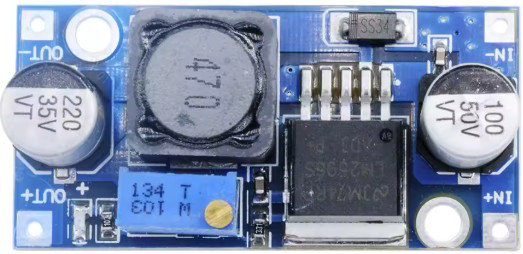
 Design with LM2596 in Cirkit Designer
Introduction
The LM2596 is a step-down (buck) voltage regulator designed to efficiently convert a higher input voltage into a stable, lower output voltage. Manufactured by Arduino with the part ID UNO, this regulator is capable of delivering up to 3A of output current. Its wide input voltage range and high efficiency make it ideal for use in power supply circuits, battery chargers, and embedded systems.
Explore Projects Built with LM2596
 Open Project in Cirkit Designer
 Open Project in Cirkit Designer
 Open Project in Cirkit Designer
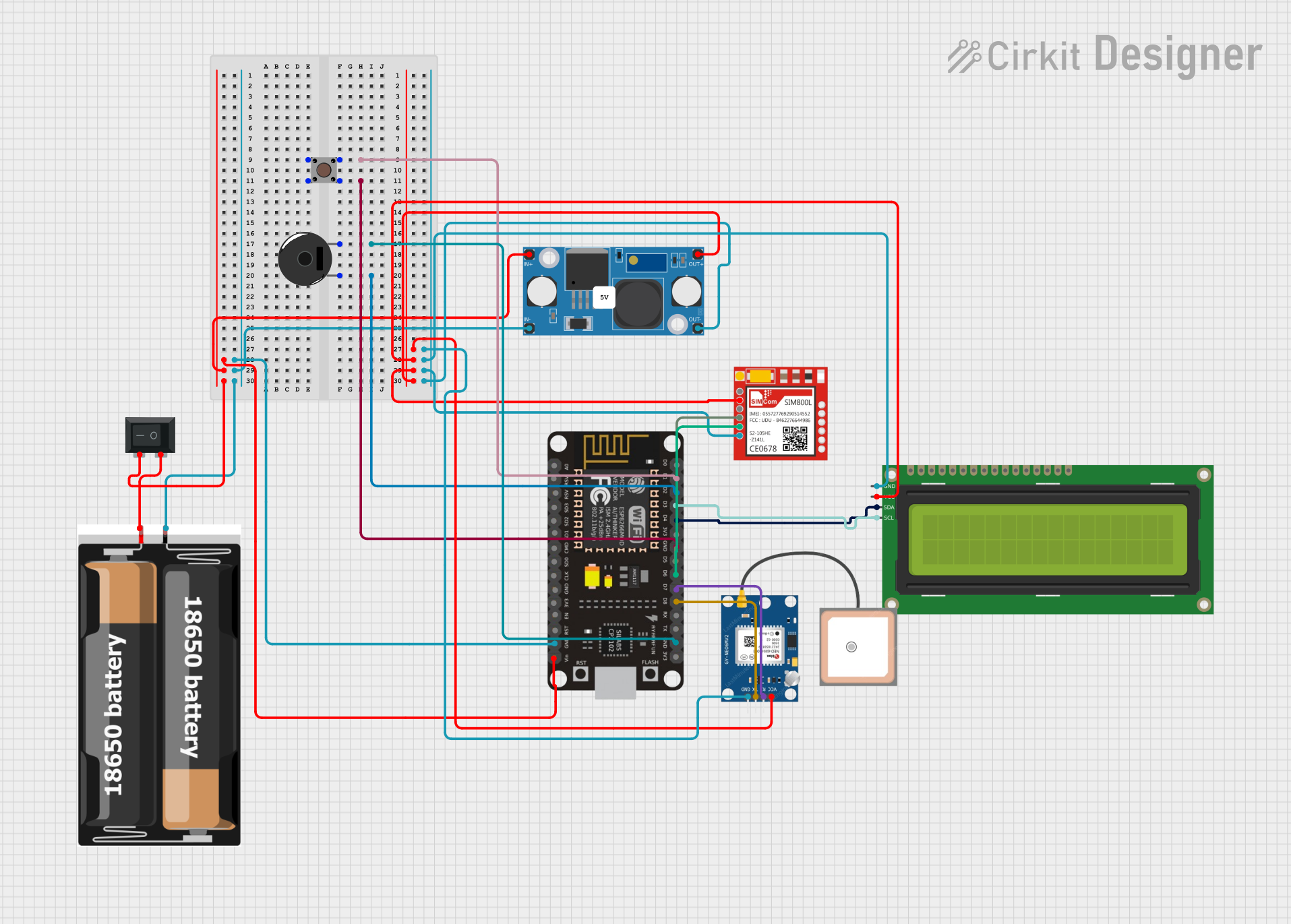 Open Project in Cirkit Designer
Explore Projects Built with LM2596
Open Project in Cirkit DesignerOpen Project in Cirkit DesignerOpen Project in Cirkit DesignerOpen Project in Cirkit DesignerCommon Applications
- DC-DC power supply modules
- Battery-powered devices
- Voltage regulation for microcontrollers and sensors
- LED drivers
- Industrial automation systems
Technical Specifications
The LM2596 is a versatile and robust component with the following key specifications:
| Parameter | Value |
|---|---|
| Input Voltage Range | 4.5V to 40V |
| Output Voltage Range | 1.23V to 37V (adjustable) |
| Maximum Output Current | 3A |
| Efficiency | Up to 90% |
| Switching Frequency | 150 kHz |
| Operating Temperature | -40°C to +125°C |
| Package Type | TO-220, TO-263 |
Pin Configuration and Descriptions
The LM2596 typically comes in a 5-pin package. Below is the pinout and description:
| Pin Number | Pin Name | Description |
|---|---|---|
| 1 | VIN | Input voltage pin. Connect to the unregulated DC input voltage. |
| 2 | Output | Regulated output voltage pin. Connect to the load. |
| 3 | Ground (GND) | Ground pin. Connect to the circuit ground. |
| 4 | Feedback | Feedback pin. Used to set the output voltage via an external resistor divider. |
| 5 | ON/OFF | Enable pin. Logic high enables the regulator; logic low disables it. |
Usage Instructions
How to Use the LM2596 in a Circuit
- Input Voltage: Connect the input voltage (VIN) to the LM2596's VIN pin. Ensure the input voltage is within the range of 4.5V to 40V.
- Output Voltage Adjustment: Use a resistor divider network connected to the Feedback pin to set the desired output voltage. The formula for the output voltage is: [ V_{OUT} = V_{REF} \times \left(1 + \frac{R1}{R2}\right) ] where ( V_{REF} ) is 1.23V.
- Output Capacitor: Place a suitable capacitor (e.g., 100µF) at the output to stabilize the voltage and reduce ripple.
- Input Capacitor: Add a capacitor (e.g., 100µF) at the input to filter noise and improve stability.
- Inductor Selection: Choose an inductor with a suitable current rating (greater than 3A) and appropriate inductance value for your application.
- Enable Pin: Connect the ON/OFF pin to logic high (or leave it floating) to enable the regulator. Pull it to ground to disable the regulator.
Important Considerations
- Ensure proper heat dissipation by using a heatsink if the LM2596 operates at high currents.
- Use low ESR capacitors for better performance.
- Avoid exceeding the maximum input voltage (40V) to prevent damage to the regulator.
- Verify the output voltage with a multimeter before connecting sensitive components.
Example: Connecting LM2596 to Arduino UNO
The LM2596 can be used to power an Arduino UNO by stepping down a higher voltage (e.g., 12V) to 5V. Below is an example circuit and Arduino code:
Circuit Connections
- Connect the VIN pin of the LM2596 to a 12V DC power source.
- Set the output voltage to 5V using the feedback resistor network.
- Connect the Output pin of the LM2596 to the 5V pin of the Arduino UNO.
- Connect the GND pin of the LM2596 to the GND pin of the Arduino UNO.
Arduino Code Example
// Example code to blink an LED using Arduino UNO powered by LM2596
// Ensure the LM2596 output is set to 5V before connecting to the Arduino UNO.

const int ledPin = 13; // Pin connected to the onboard LED

void setup() {
  pinMode(ledPin, OUTPUT); // Set the LED pin as an output
}

void loop() {
  digitalWrite(ledPin, HIGH); // Turn the LED on
  delay(1000);                // Wait for 1 second
  digitalWrite(ledPin, LOW);  // Turn the LED off
  delay(1000);                // Wait for 1 second
}
Troubleshooting and FAQs
Common Issues and Solutions
No Output Voltage
- Cause: The ON/OFF pin is pulled low or not connected.
- Solution: Ensure the ON/OFF pin is connected to logic high or left floating.
Output Voltage is Incorrect
- Cause: Incorrect resistor values in the feedback network.
- Solution: Recalculate the resistor values using the output voltage formula and verify connections.
Excessive Heat
- Cause: High current draw or insufficient heat dissipation.
- Solution: Use a heatsink or reduce the load current.
High Output Ripple
- Cause: Inadequate output capacitor or poor capacitor quality.
- Solution: Use a low ESR capacitor with a higher capacitance value.
FAQs
Q1: Can the LM2596 be used to power a Raspberry Pi?
A1: Yes, the LM2596 can step down a higher voltage (e.g., 12V) to 5V to power a Raspberry Pi. Ensure the output current does not exceed 3A.
Q2: What is the efficiency of the LM2596?
A2: The LM2596 has an efficiency of up to 90%, depending on the input voltage, output voltage, and load current.
Q3: Can I use the LM2596 for AC voltage regulation?
A3: No, the LM2596 is designed for DC-DC voltage regulation. Use a rectifier and filter circuit to convert AC to DC before using the LM2596.
Q4: How do I calculate the inductor value for my application?
A4: Refer to the LM2596 datasheet for detailed guidelines on selecting the inductor value based on your input voltage, output voltage, and load current.
By following this documentation, you can effectively integrate the LM2596 into your projects and troubleshoot common issues.