
How to Use filter: Examples, Pinouts, and Specs
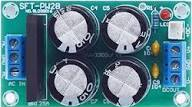
 Design with filter in Cirkit Designer
Introduction
A filter is an electronic component designed to selectively allow certain frequencies of signals to pass while attenuating others. Filters are essential in signal processing applications, where they are used to remove unwanted noise, isolate specific frequency bands, or shape signals for further processing. Filters can be implemented in both analog and digital domains and are classified into various types, such as low-pass, high-pass, band-pass, and band-stop filters.
Explore Projects Built with filter
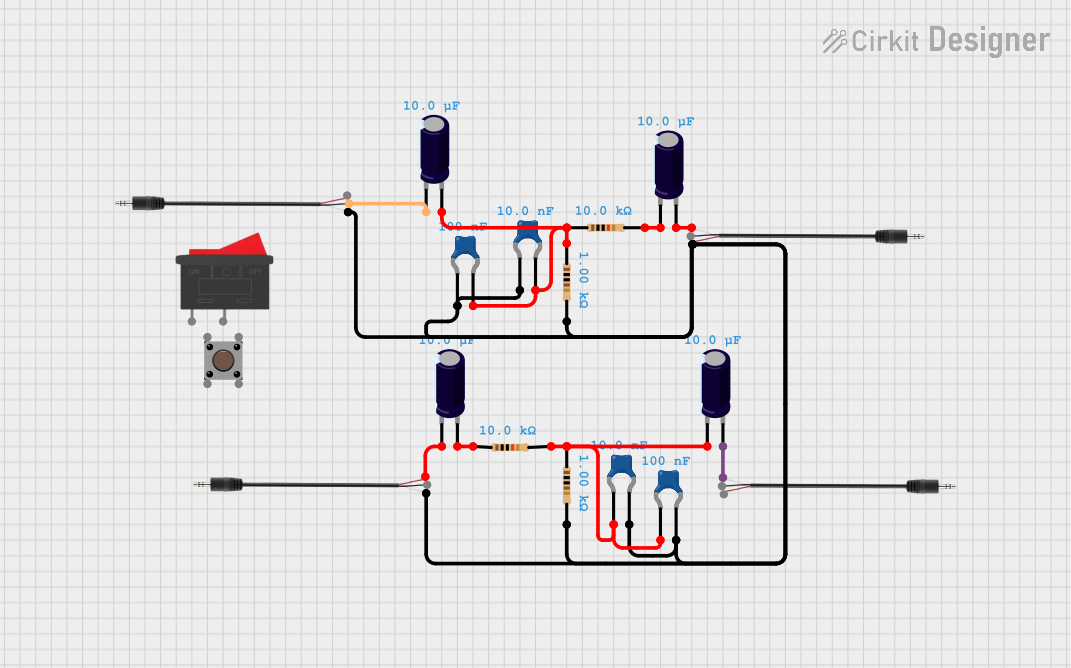 Open Project in Cirkit Designer
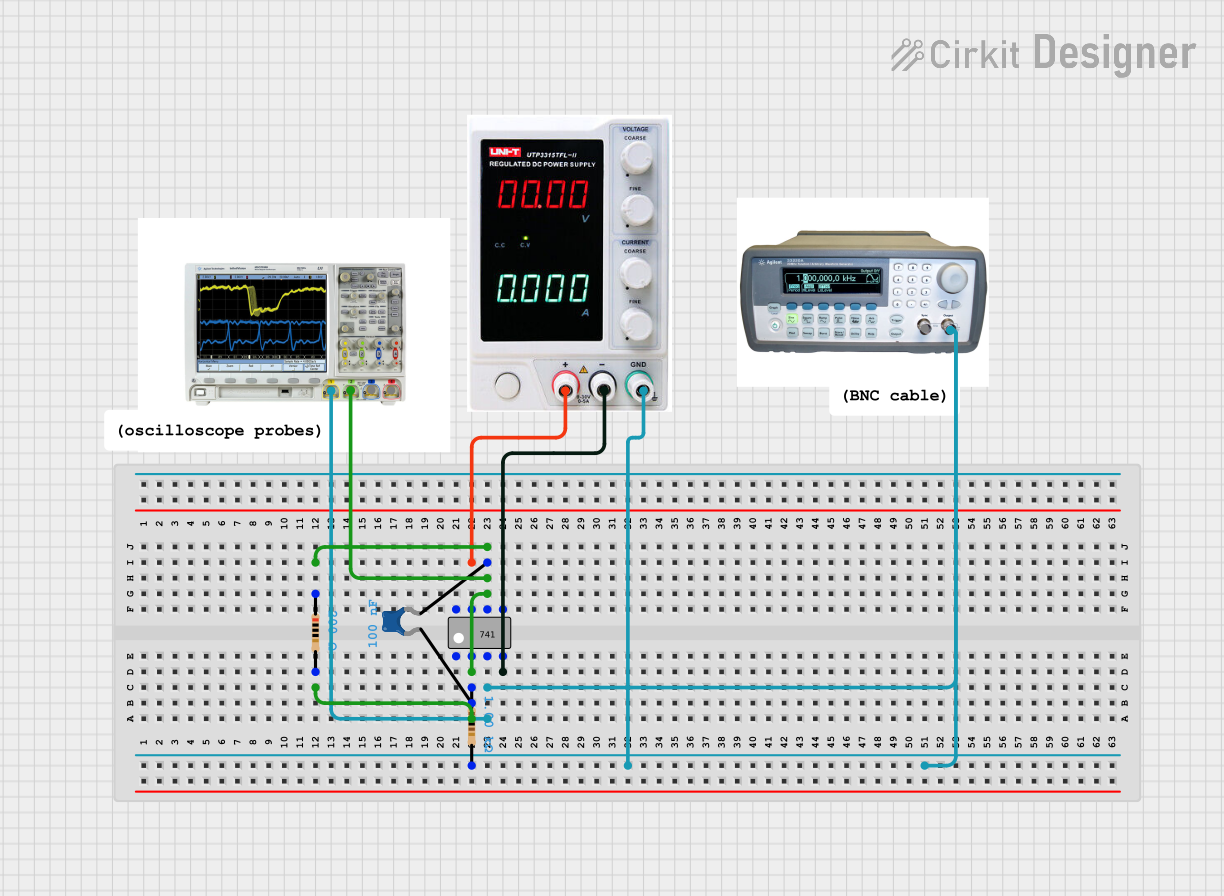 Open Project in Cirkit Designer
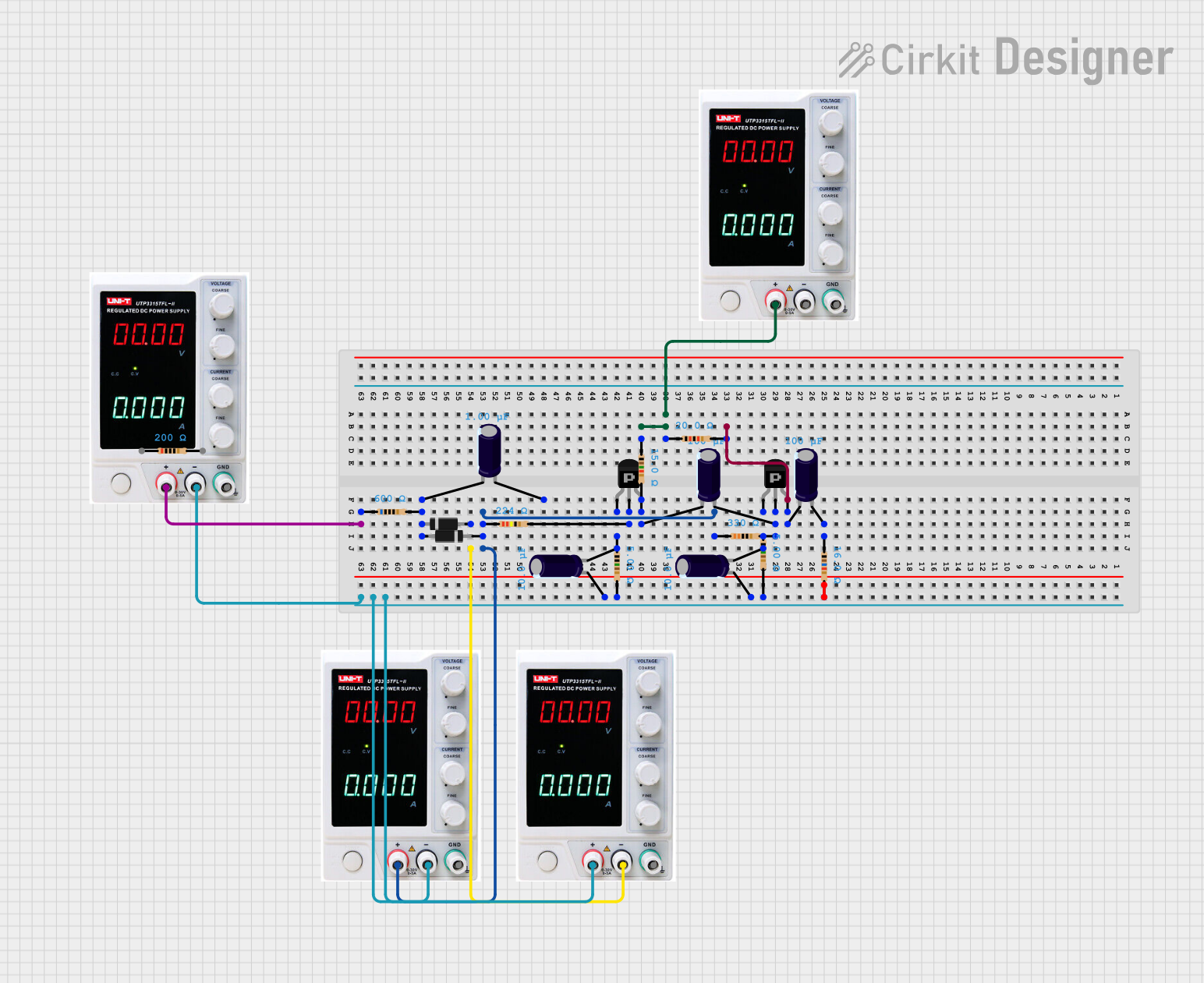 Open Project in Cirkit Designer
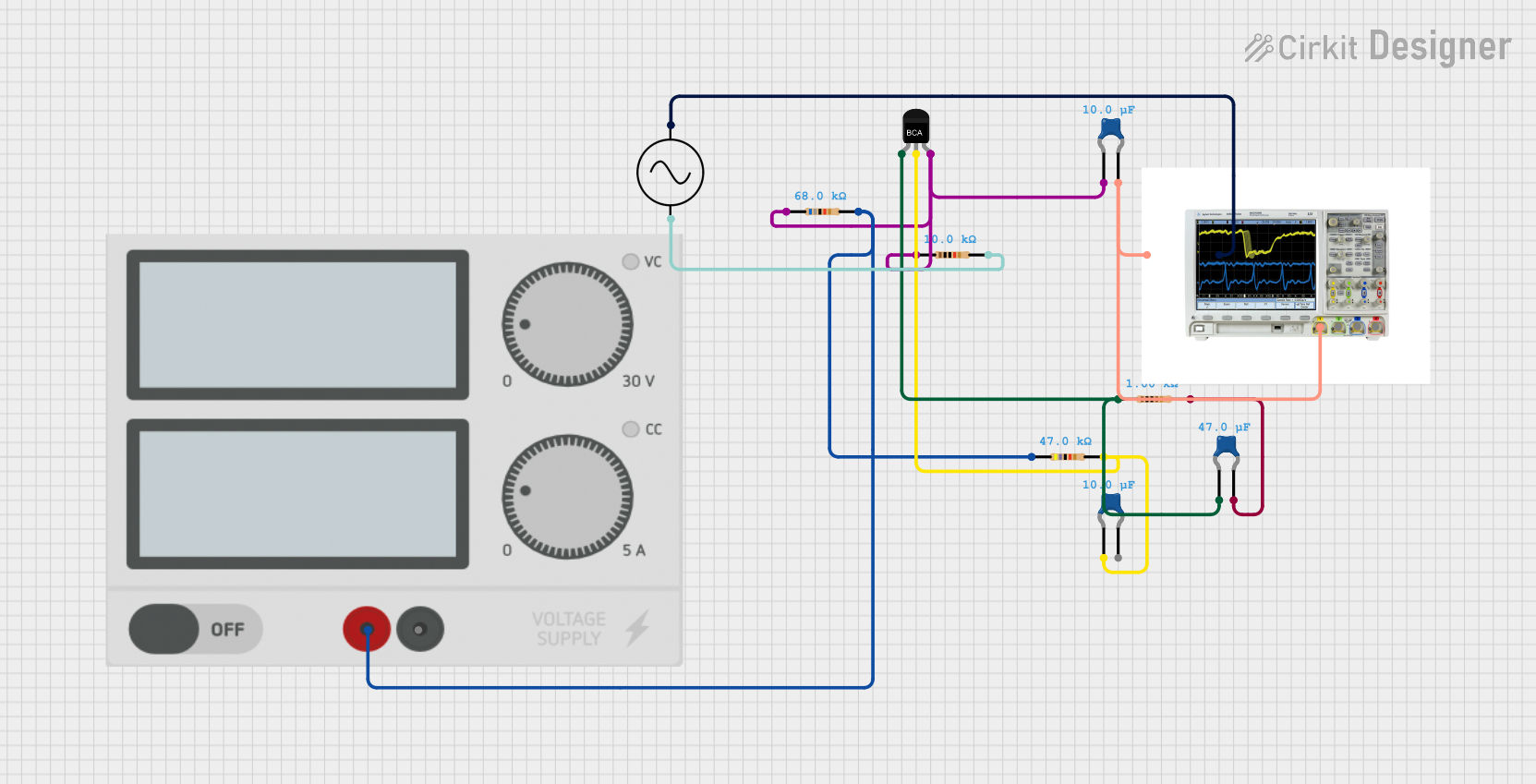 Open Project in Cirkit Designer
Explore Projects Built with filter
Open Project in Cirkit DesignerOpen Project in Cirkit DesignerOpen Project in Cirkit DesignerOpen Project in Cirkit DesignerCommon Applications and Use Cases
- Audio signal processing to remove noise or enhance specific frequencies
- Radio frequency (RF) communication systems for channel selection
- Power supplies to filter out AC ripple from DC output
- Biomedical devices for isolating specific physiological signals
- Image processing for edge detection and noise reduction
Technical Specifications
Filters come in various forms, including passive filters (using resistors, capacitors, and inductors) and active filters (using operational amplifiers). Below are the general technical specifications for a basic RC (Resistor-Capacitor) low-pass filter:
Key Technical Details
- Cutoff Frequency (fc): Determined by the formula ( f_c = \frac{1}{2\pi RC} )
- Impedance: Depends on the resistor and capacitor values
- Voltage Rating: Limited by the capacitor's voltage rating
- Power Rating: Limited by the resistor's power dissipation capacity
- Filter Type: Low-pass, high-pass, band-pass, or band-stop
Pin Configuration and Descriptions
For a basic RC filter, the connections are as follows:
| Pin Name | Description |
|---|---|
| Input | Signal input to the filter |
| Output | Filtered signal output |
| Ground (GND) | Common ground connection for the circuit |
For active filters using operational amplifiers, the pin configuration will depend on the specific op-amp used (e.g., LM741, TL081).
Usage Instructions
How to Use the Component in a Circuit
- Determine the Filter Type: Decide whether you need a low-pass, high-pass, band-pass, or band-stop filter based on your application.
- Calculate Component Values: Use the formula ( f_c = \frac{1}{2\pi RC} ) to calculate the resistor (R) and capacitor (C) values for the desired cutoff frequency.
- Assemble the Circuit:
- For a low-pass filter, connect the resistor in series with the input signal and the capacitor in parallel to the ground.
- For a high-pass filter, connect the capacitor in series with the input signal and the resistor in parallel to the ground.
- Connect the Input and Output: Feed the input signal to the filter and connect the output to the next stage of your circuit.
- Power the Circuit (if Active): For active filters, ensure the operational amplifier is powered according to its specifications.
Important Considerations and Best Practices
- Component Tolerances: Use precision resistors and capacitors to ensure accurate cutoff frequencies.
- Signal Amplitude: Ensure the input signal amplitude does not exceed the voltage rating of the components.
- Noise Reduction: Place the filter circuit close to the signal source to minimize noise pickup.
- Active Filters: For active filters, use a stable power supply to avoid introducing noise into the circuit.
Example: Using a Low-Pass Filter with Arduino UNO
Below is an example of using a simple RC low-pass filter to smooth a PWM signal from an Arduino UNO:
// Arduino code to generate a PWM signal on pin 9
// The RC low-pass filter will smooth the PWM signal into an analog voltage

const int pwmPin = 9; // PWM output pin

void setup() {
  pinMode(pwmPin, OUTPUT); // Set pin 9 as an output
}

void loop() {
  for (int dutyCycle = 0; dutyCycle <= 255; dutyCycle++) {
    analogWrite(pwmPin, dutyCycle); // Generate PWM signal with varying duty cycle
    delay(10); // Wait for 10ms before changing the duty cycle
  }
}
Note: Connect the RC low-pass filter to pin 9 of the Arduino UNO. The resistor (R) and capacitor (C) values should be chosen based on the desired cutoff frequency.
Troubleshooting and FAQs
Common Issues Users Might Face
Incorrect Cutoff Frequency:
- Cause: Incorrect resistor or capacitor values.
- Solution: Recalculate the values using the formula ( f_c = \frac{1}{2\pi RC} ) and verify component tolerances.
Signal Distortion:
- Cause: Input signal amplitude exceeds the voltage rating of the components.
- Solution: Ensure the input signal is within the voltage limits of the filter components.
Noise in the Output Signal:
- Cause: Poor layout or long wires picking up interference.
- Solution: Use short, shielded wires and place the filter close to the signal source.
Active Filter Not Working:
- Cause: Operational amplifier not powered correctly.
- Solution: Verify the power supply connections and ensure the voltage levels match the op-amp's requirements.
FAQs
Q: Can I use a filter to block DC signals?
A: Yes, a high-pass filter can block DC signals by attenuating frequencies below the cutoff frequency.
Q: What is the difference between passive and active filters?
A: Passive filters use only resistors, capacitors, and inductors, while active filters include active components like operational amplifiers to achieve higher performance and gain.
Q: How do I choose between a low-pass and high-pass filter?
A: Use a low-pass filter to allow low frequencies to pass and attenuate high frequencies. Use a high-pass filter to allow high frequencies to pass and attenuate low frequencies.
Q: Can I cascade multiple filters?
A: Yes, cascading filters can improve the roll-off rate and achieve sharper frequency separation.