
How to Use DP4T: Examples, Pinouts, and Specs
 Design with DP4T in Cirkit Designer
Introduction
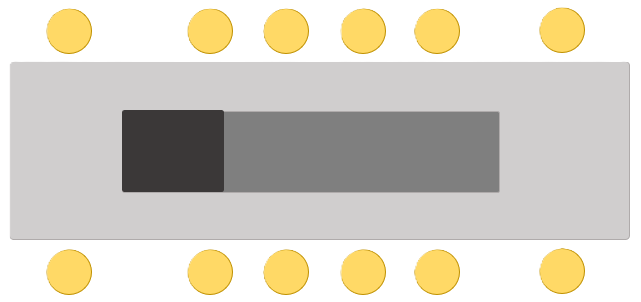
The DP4T (Double Pole 4 Throw) switch, manufactured by Comax with part ID SK-42F05G6, is an electromechanical device designed to route one input to one of four possible outputs. This versatile switch is commonly used in applications requiring multiple circuit paths, such as audio signal routing, test equipment, and multi-channel control systems. Its robust design ensures reliable operation in a variety of environments.
Explore Projects Built with DP4T
 Open Project in Cirkit Designer
 Open Project in Cirkit Designer
 Open Project in Cirkit Designer
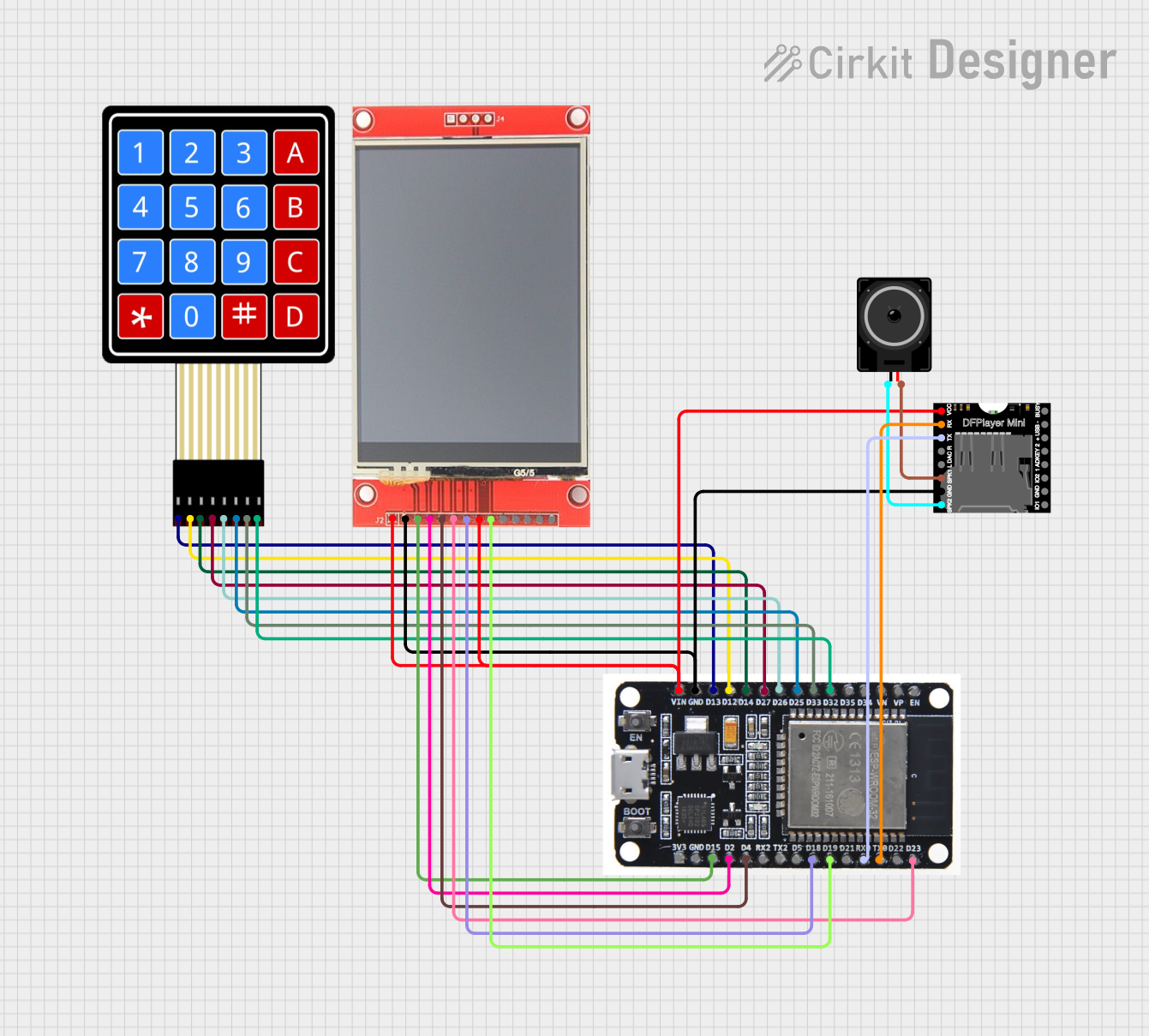 Open Project in Cirkit Designer
Explore Projects Built with DP4T
Open Project in Cirkit DesignerOpen Project in Cirkit DesignerOpen Project in Cirkit DesignerOpen Project in Cirkit DesignerCommon Applications
- Audio and video signal switching
- Test and measurement equipment
- Multi-channel control systems
- Prototyping and circuit design
- Industrial automation
Technical Specifications
The following table outlines the key technical details of the DP4T switch:
| Parameter | Value |
|---|---|
| Manufacturer | Comax |
| Part ID | SK-42F05G6 |
| Configuration | Double Pole, 4 Throw (DP4T) |
| Contact Rating | 0.5A at 50V DC |
| Insulation Resistance | ≥ 100 MΩ at 500V DC |
| Contact Resistance | ≤ 50 mΩ |
| Operating Temperature | -25°C to +85°C |
| Mechanical Life | 10,000 cycles |
| Mounting Style | Through-hole |
Pin Configuration and Descriptions
The DP4T switch has a total of 12 pins, arranged as follows:
| Pin Number | Description |
|---|---|
| 1, 2, 3, 4 | Output terminals for Pole 1 |
| 5 | Common terminal for Pole 1 |
| 6, 7, 8, 9 | Output terminals for Pole 2 |
| 10 | Common terminal for Pole 2 |
| 11, 12 | Not connected (NC) or unused pins |
Usage Instructions
How to Use the DP4T Switch in a Circuit
- Identify the Pins: Refer to the pin configuration table to locate the common terminals (Pins 5 and 10) and the output terminals for each pole.
- Connect the Common Terminals: Connect the input signal to the common terminals (Pins 5 and 10).
- Connect the Output Terminals: Connect the desired output paths to the corresponding output terminals (Pins 1–4 for Pole 1 and Pins 6–9 for Pole 2).
- Switch Operation: Use the switch actuator to select the desired output path. Each pole operates independently, allowing two separate input signals to be routed simultaneously.
Important Considerations
- Voltage and Current Ratings: Ensure the input signal does not exceed the switch's rated voltage (50V DC) and current (0.5A).
- Debouncing: If the switch is used in digital circuits, consider implementing debouncing techniques to avoid signal noise.
- Mounting: Secure the switch properly on a PCB using the through-hole mounting style to ensure mechanical stability.
Example: Connecting to an Arduino UNO
The DP4T switch can be used with an Arduino UNO to select between multiple input signals. Below is an example code snippet:
// Example: Reading the state of a DP4T switch with Arduino UNO
// Connect the common terminal of Pole 1 to GND
// Connect the output terminals of Pole 1 to digital pins 2, 3, 4, and 5

const int switchPins[] = {2, 3, 4, 5}; // DP4T output terminals
int switchState[4]; // Array to store the state of each terminal

void setup() {
  Serial.begin(9600); // Initialize serial communication
  for (int i = 0; i < 4; i++) {
    pinMode(switchPins[i], INPUT_PULLUP); // Set pins as input with pull-up resistors
  }
}

void loop() {
  for (int i = 0; i < 4; i++) {
    switchState[i] = digitalRead(switchPins[i]); // Read the state of each terminal
  }

  // Print the state of the switch
  Serial.print("Switch States: ");
  for (int i = 0; i < 4; i++) {
    Serial.print(switchState[i]);
    Serial.print(" ");
  }
  Serial.println();
  delay(500); // Delay for readability
}
Notes:
- Ensure the common terminal is connected to GND for proper operation.
- Use pull-up resistors (internal or external) to avoid floating inputs.
Troubleshooting and FAQs
Common Issues
No Signal Output:
- Cause: Incorrect wiring of the common or output terminals.
- Solution: Double-check the pin configuration and ensure proper connections.
Intermittent Signal:
- Cause: Poor contact or mechanical wear.
- Solution: Inspect the switch for damage or debris. Replace if necessary.
Signal Noise in Digital Circuits:
- Cause: Switch bouncing.
- Solution: Implement software or hardware debouncing techniques.
FAQs
Q: Can the DP4T switch handle AC signals?
A: Yes, the switch can handle low-power AC signals, provided the voltage and current ratings are not exceeded.
Q: How do I clean the switch contacts?
A: Use a contact cleaner spray and a soft brush to remove debris. Avoid using excessive force.
Q: Can I use the DP4T switch for high-frequency signals?
A: The switch is not optimized for high-frequency signals due to potential signal loss and crosstalk. For such applications, consider using a dedicated RF switch.
This concludes the documentation for the DP4T (SK-42F05G6) switch. For further assistance, refer to the manufacturer's datasheet or contact Comax support.