The 15W 16V Digital Amplifier Module is a compact and efficient audio amplifier designed to deliver up to 15 watts of power at 16 volts. This module is ideal for driving small to medium-sized speakers in a variety of audio applications. Its digital design ensures high efficiency, low heat generation, and minimal distortion, making it suitable for portable audio systems, DIY speaker projects, and embedded audio solutions.
Explore Projects Built with 15W 16V Digital Amplifier Module
Use Cirkit Designer to design, explore, and prototype these projects online. Some projects support real-time simulation. Click "Open Project" to start designing instantly!
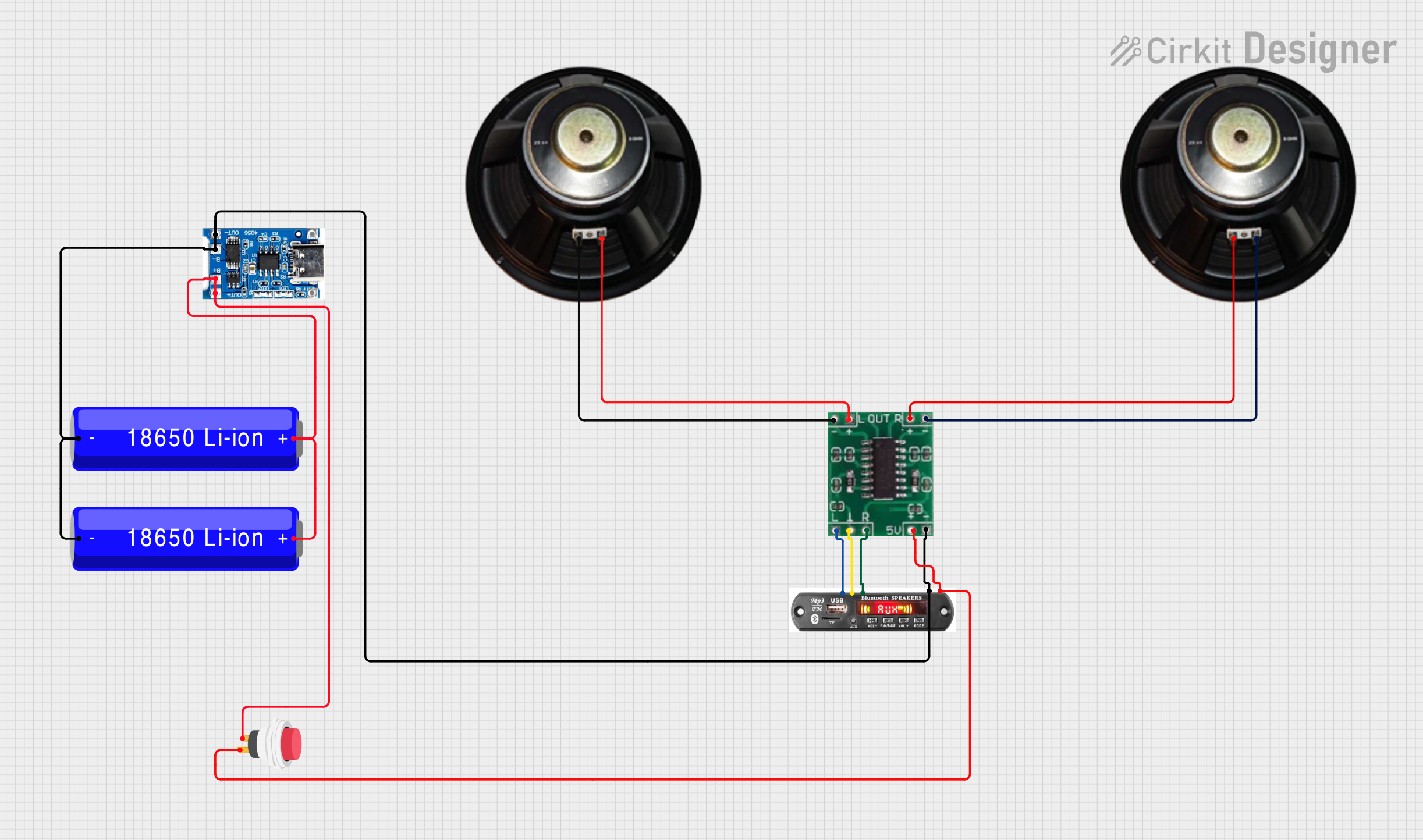
This circuit is a portable audio playback system powered by two 18650 Li-ion batteries, which are charged and protected by a TP4056 module. The MP3 module provides audio signals to a 5V amplifier board, which then drives two speakers. A push switch is used to control the power to the MP3 module and amplifier.
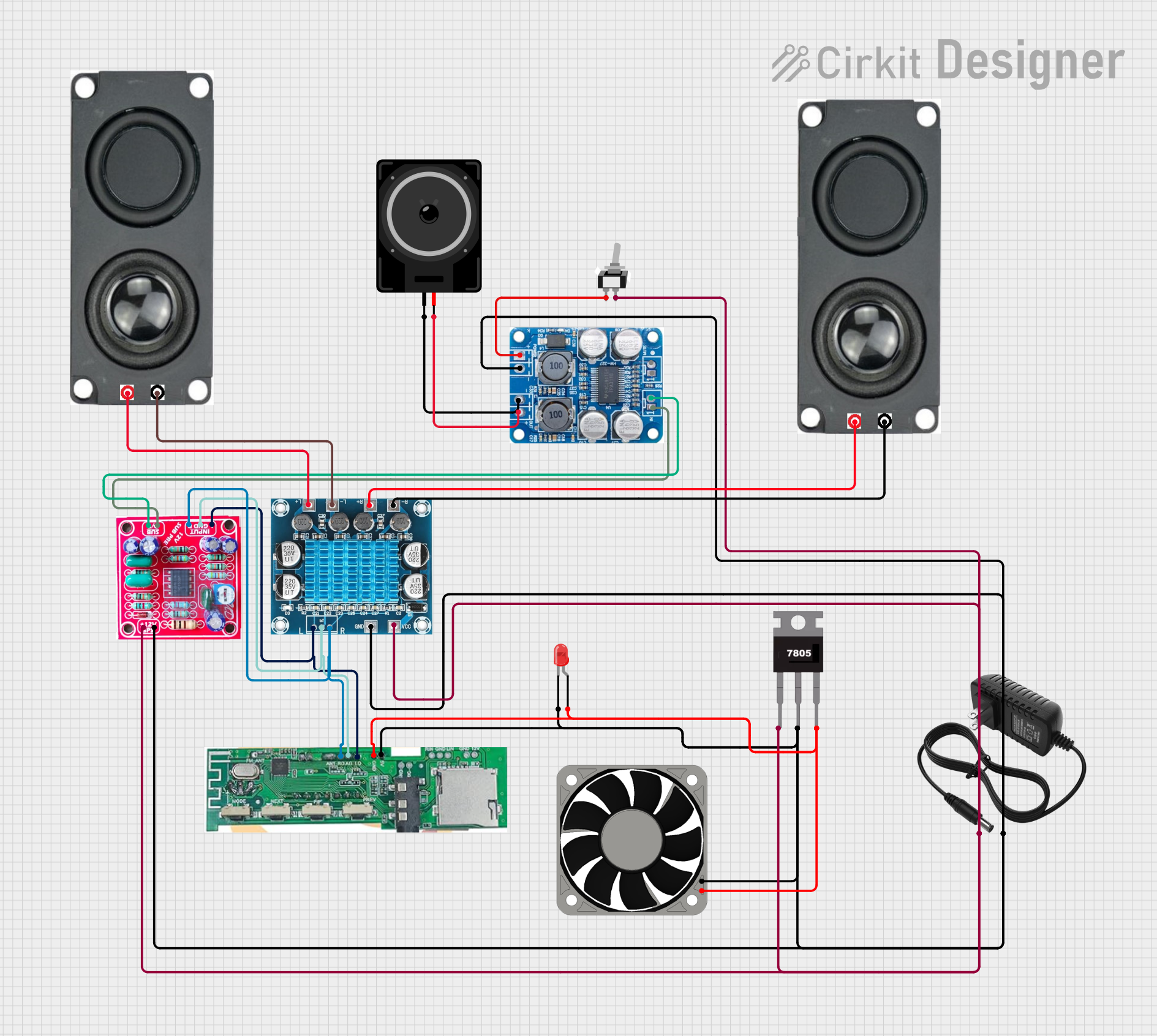
This circuit is a Bluetooth-enabled audio amplifier system with a subwoofer pre-amp and dual 8-ohm speakers. It includes a 12V power supply, a 7805 voltage regulator, and a cooling fan, with a toggle switch to control power. The Bluetooth module provides audio input to the amplifiers, which drive the speakers and subwoofer.
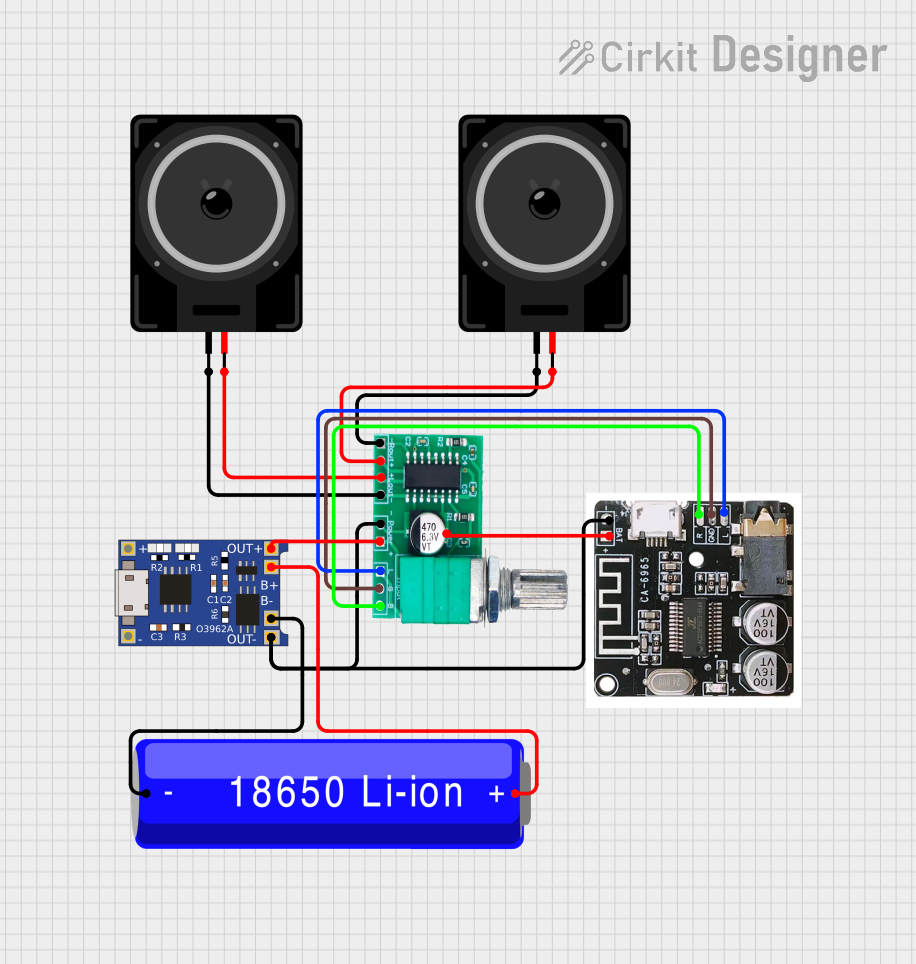
This circuit is a Bluetooth-enabled audio system powered by a rechargeable 18650 Li-ion battery. It includes a TP4056 module for battery charging and protection, a PAM8403 amplifier with volume control to drive two loudspeakers, and a Bluetooth audio receiver to wirelessly receive audio signals.
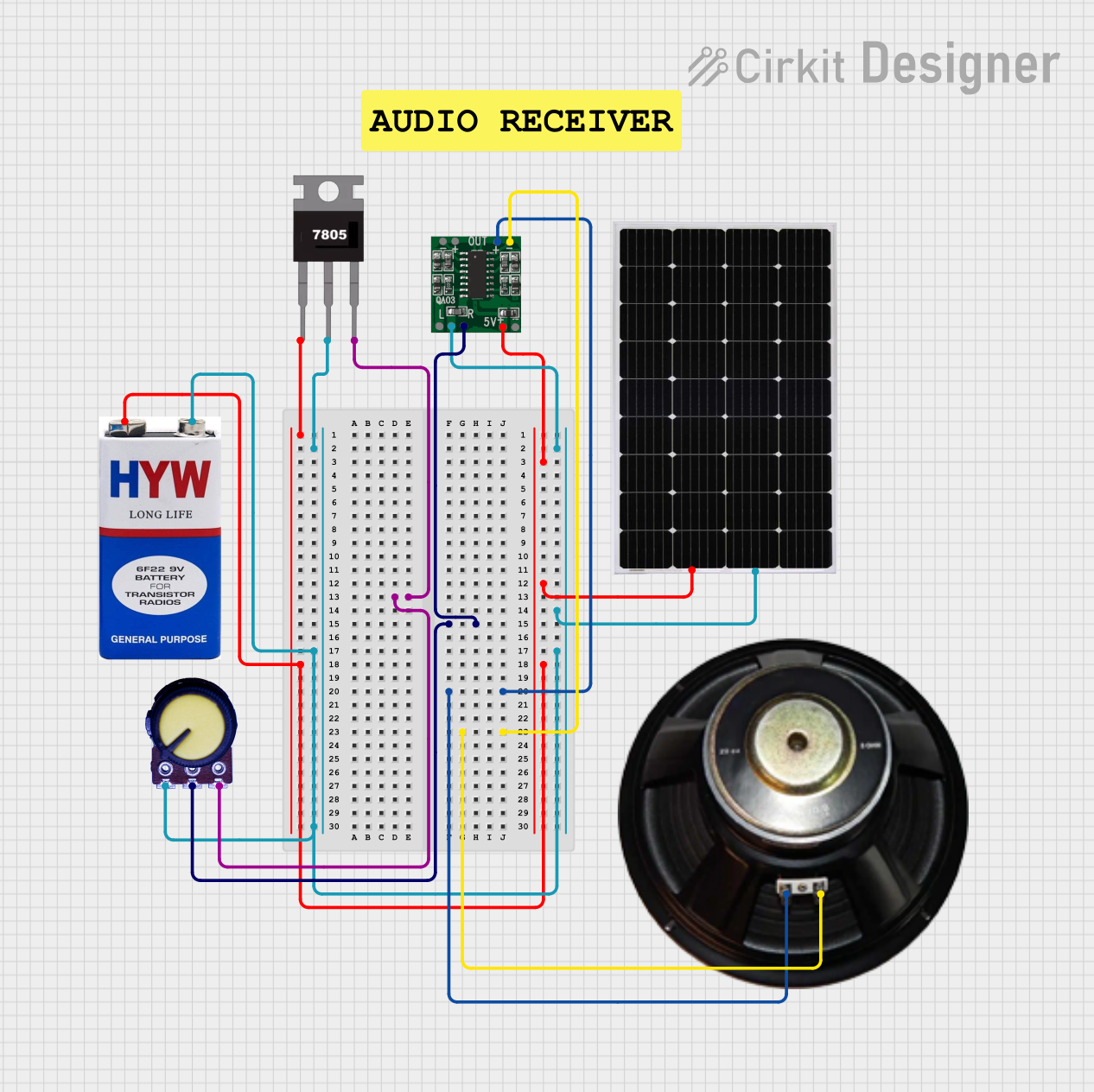
This circuit is a solar-powered audio amplifier system. It uses a 7805 voltage regulator to convert the input from a 9V battery and solar panel to a stable 5V, which powers a PAM8403 amplifier module. The audio signal is controlled by a potentiometer and output to a speaker.
Below are the key technical details of the 15W 16V Digital Amplifier Module:
Parameter
Value
Manufacturer
Generic
Part ID
15W 16V Digital Amplifier Module
Output Power
15W
Operating Voltage
8V - 16V
Recommended Voltage
12V - 16V
Input Signal Type
Analog (e.g., AUX, Line-In)
Output Load
4Ω - 8Ω speakers
Efficiency
>90%
Total Harmonic Distortion (THD)
<0.1%
Dimensions
30mm x 20mm x 10mm
Pin Configuration and Descriptions
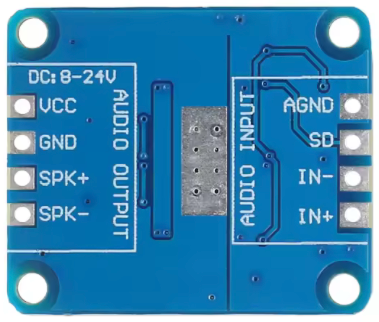
The module has a simple pinout for easy integration into circuits. Below is the pin configuration:
Pin Name
Description
VCC
Positive power supply input (8V - 16V)
GND
Ground connection
IN+
Positive input for the audio signal
IN-
Negative input for the audio signal (grounded in most cases)
OUT+
Positive output to the speaker
OUT-
Negative output to the speaker
Usage Instructions
How to Use the Component in a Circuit
Power Supply: Connect a DC power supply (8V to 16V) to the VCC and GND pins. Ensure the power supply can provide sufficient current (at least 1.5A for full power output).
Audio Input: Connect the audio source (e.g., AUX cable, audio jack) to the IN+ and IN- pins. For single-ended audio sources, connect IN- to ground.
Speaker Connection: Attach a 4Ω or 8Ω speaker to the OUT+ and OUT- pins. Ensure the speaker can handle the 15W output power.
Operation: Once all connections are secure, power on the module. Adjust the input signal level to control the output volume.
Important Considerations and Best Practices
Heat Dissipation: Although the module is highly efficient, ensure adequate ventilation or attach a small heatsink if operating at maximum power for extended periods.
Speaker Impedance: Use speakers with an impedance of 4Ω or 8Ω. Lower impedance may damage the module.
Power Supply: Use a stable and noise-free DC power supply to avoid audio distortion or damage to the module.
Signal Grounding: Ensure proper grounding of the audio input to minimize noise and interference.
Example: Connecting to an Arduino UNO
The module can be used with an Arduino UNO to generate audio signals (e.g., tones or music). Below is an example code snippet to generate a simple tone:
// Example: Generate a tone using Arduino UNO and 15W 16V Digital Amplifier Module
// Connect Arduino pin 9 to IN+ of the amplifier module
// Connect IN- of the amplifier module to GND

void setup() {
  pinMode(9, OUTPUT); // Set pin 9 as an output
}

void loop() {
  // Generate a 1kHz tone on pin 9
  tone(9, 1000); // 1000 Hz frequency
  delay(1000);   // Play tone for 1 second
  noTone(9);     // Stop the tone
  delay(1000);   // Wait for 1 second
}
Note: The Arduino's output is a low-power signal, so it is safe to connect directly to the amplifier's input.
Troubleshooting and FAQs
Common Issues and Solutions
No Sound Output
Cause: Incorrect wiring or loose connections.
Solution: Double-check all connections, especially the power supply, input, and speaker wiring.
Distorted Audio
Cause: Insufficient power supply or overdriven input signal.
Solution: Use a stable power supply with sufficient current. Reduce the input signal level.
Overheating
Cause: Prolonged operation at maximum power without proper ventilation.
Solution: Ensure adequate airflow or attach a heatsink to the module.
Noise or Interference
Cause: Poor grounding or noisy power supply.
Solution: Use a clean power source and ensure proper grounding of the audio input.
FAQs
Q1: Can I use a 3Ω speaker with this module?
A1: No, using a 3Ω speaker may overload the module and cause damage. Stick to 4Ω or 8Ω speakers.
Q2: What is the maximum input voltage for this module?
A2: The maximum input voltage is 16V. Exceeding this voltage may damage the module.
Q3: Can I use this module with a battery?
A3: Yes, you can use a battery (e.g., 12V Li-ion pack) as long as it provides sufficient current and voltage within the specified range.
Q4: Is this module stereo or mono?
A4: This module is a mono amplifier. For stereo applications, you will need two modules.
By following this documentation, you can effectively integrate the 15W 16V Digital Amplifier Module into your audio projects and troubleshoot common issues with ease.

 Open Project in Cirkit Designer