
How to Use Arduino NANO ESP32 : Examples, Pinouts, and Specs
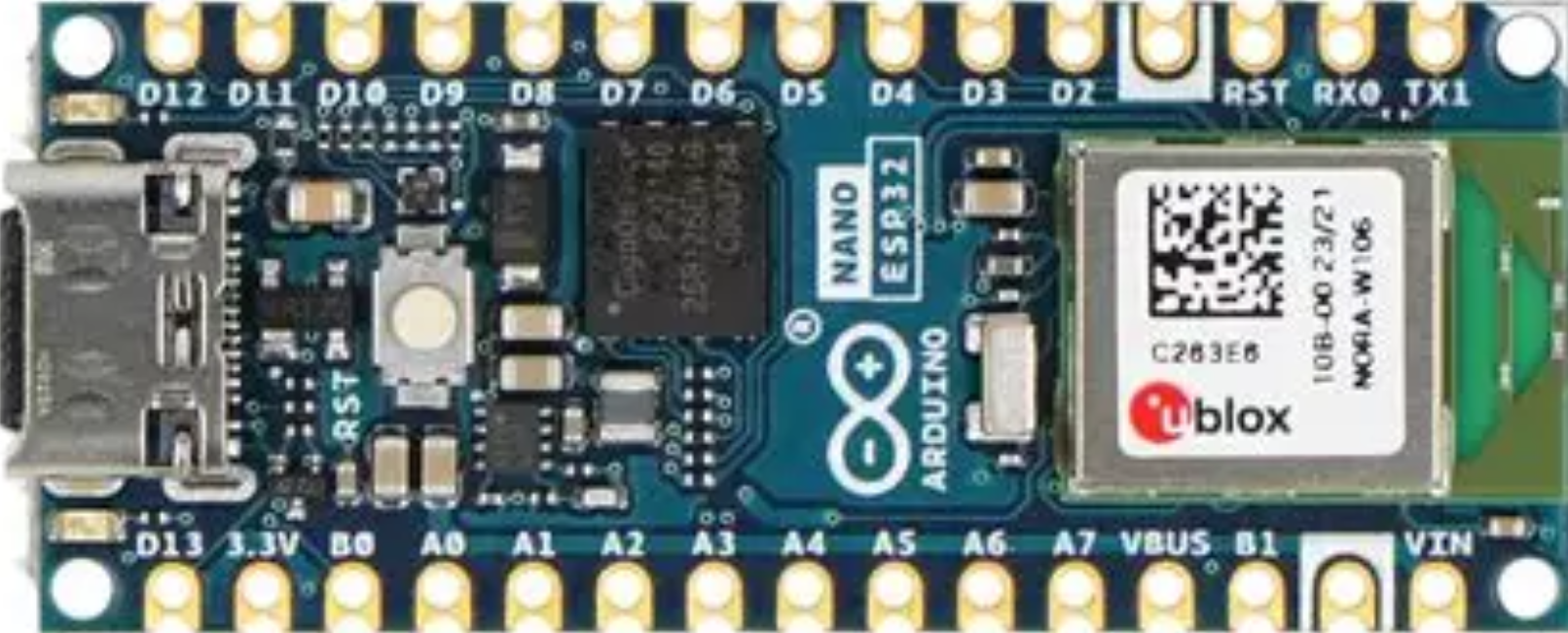
 Design with Arduino NANO ESP32 in Cirkit Designer
Introduction
The Arduino NANO ESP32 is a compact and versatile microcontroller board that combines the power of the ESP32-S3 microcontroller with the familiar form factor of the Arduino Nano. It is designed for IoT applications, wireless communication, and projects requiring high processing power in a small footprint. The board supports Wi-Fi and Bluetooth connectivity, making it ideal for smart devices, home automation, and wearable technology.
Explore Projects Built with Arduino NANO ESP32
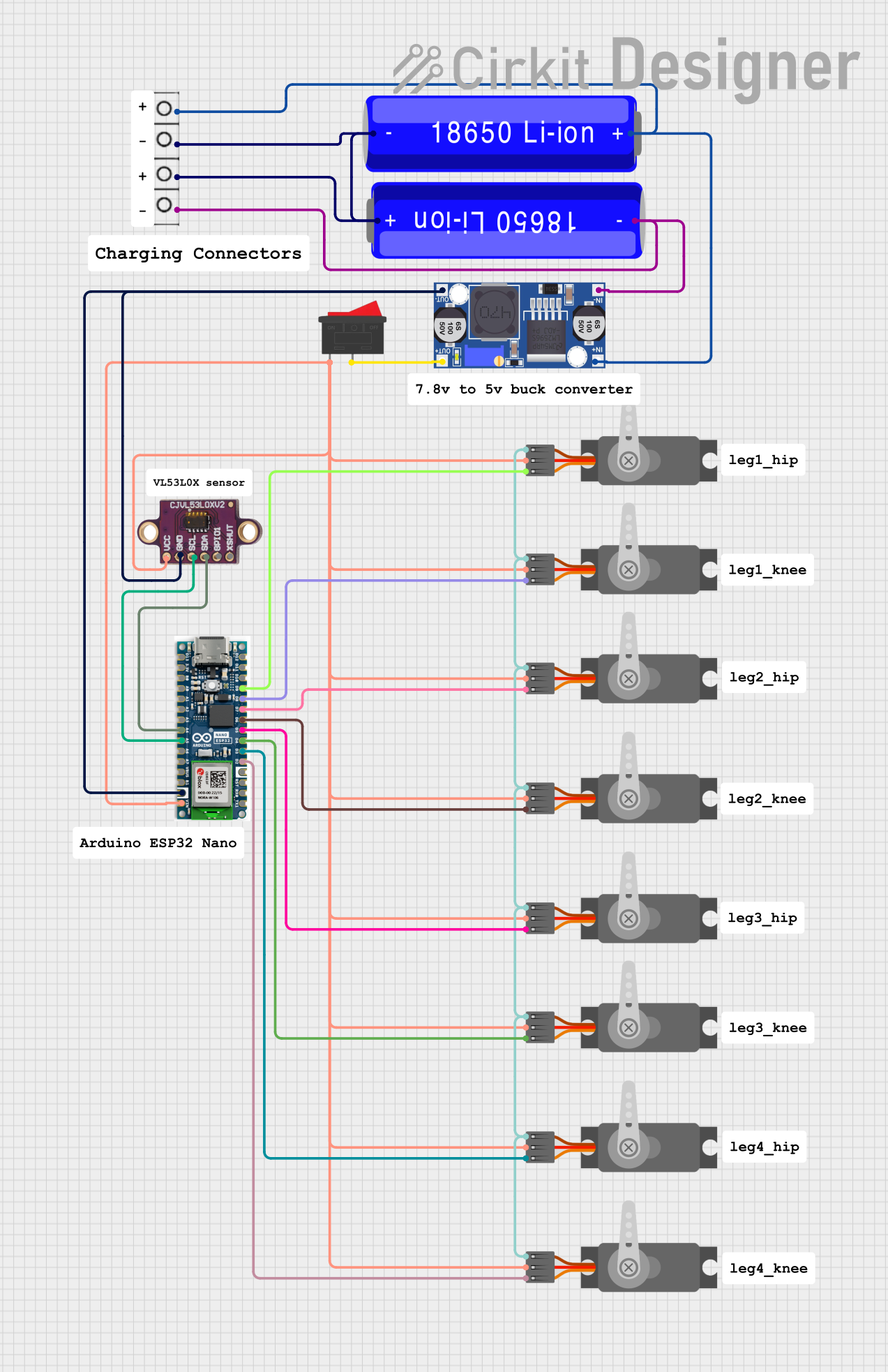 Open Project in Cirkit Designer
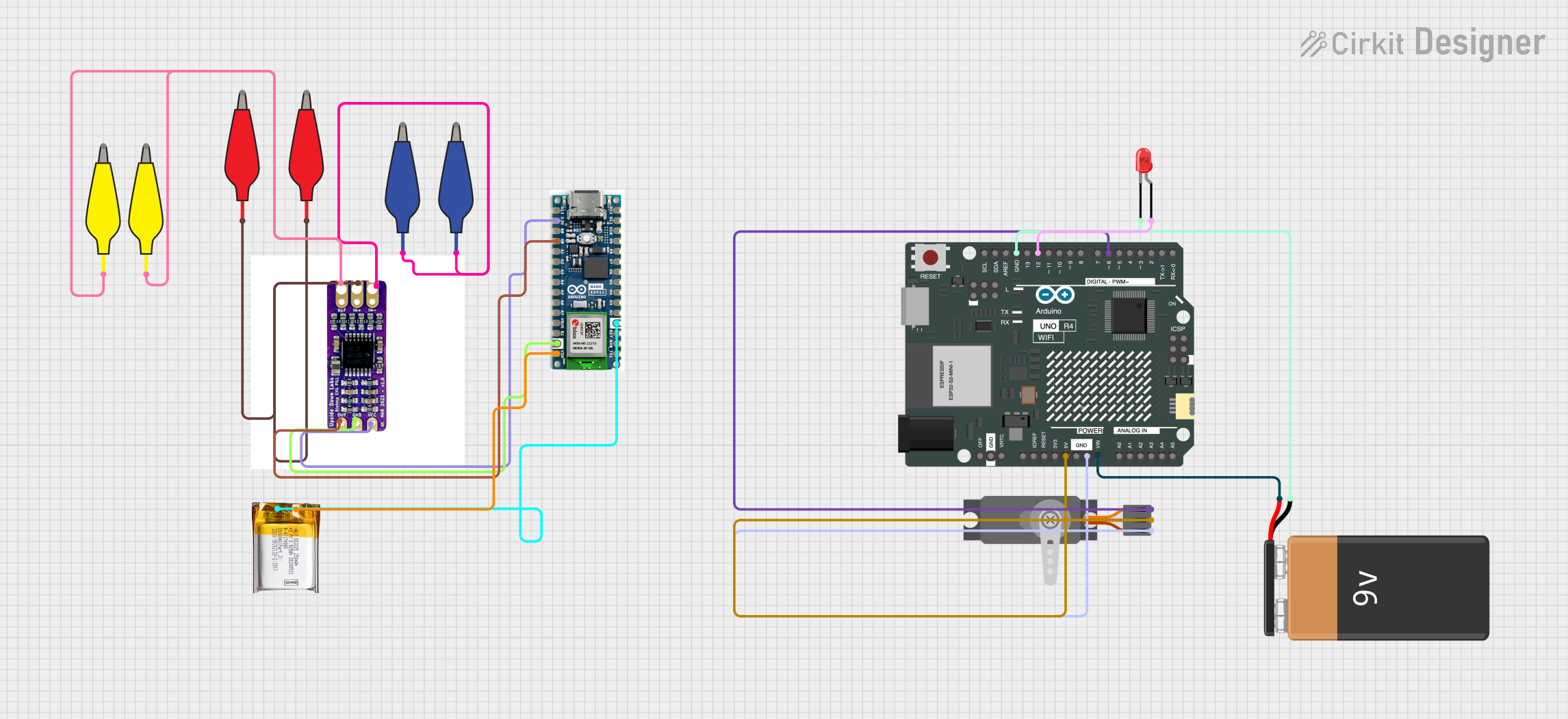 Open Project in Cirkit Designer
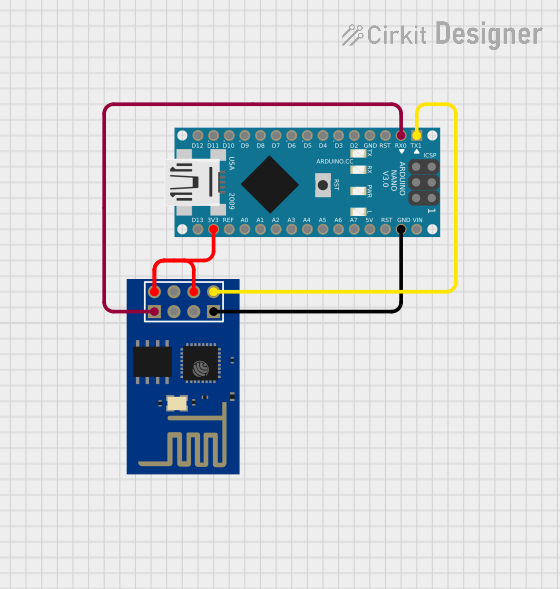 Open Project in Cirkit Designer
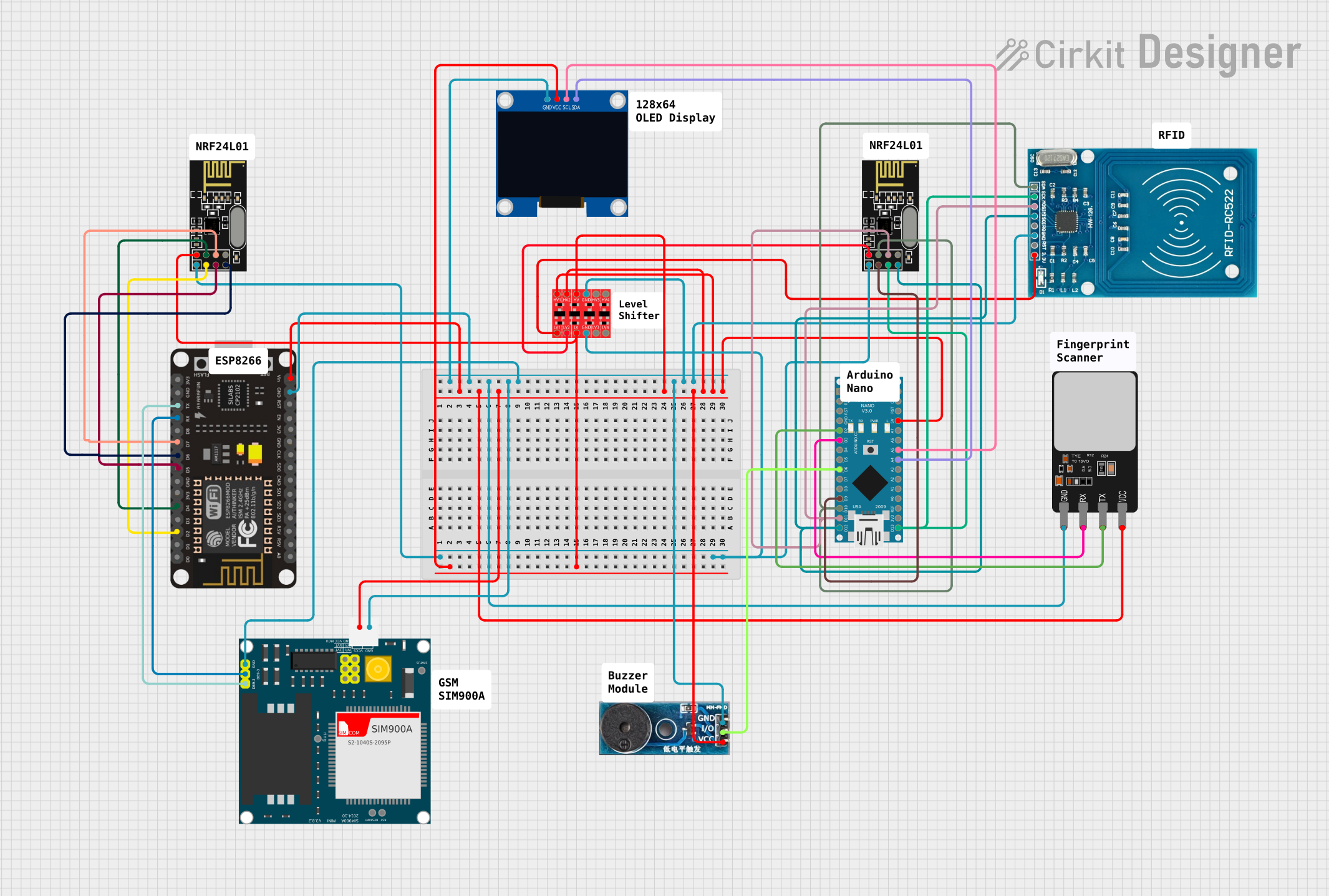 Open Project in Cirkit Designer
Explore Projects Built with Arduino NANO ESP32
Open Project in Cirkit DesignerOpen Project in Cirkit DesignerOpen Project in Cirkit DesignerOpen Project in Cirkit DesignerCommon Applications and Use Cases
- IoT devices and smart home systems
- Wireless sensor networks
- Robotics and automation
- Wearable technology
- Data logging and remote monitoring
- Prototyping for AI and machine learning applications
Technical Specifications
Key Technical Details
| Specification | Value |
|---|---|
| Microcontroller | ESP32-S3 |
| Operating Voltage | 3.3V |
| Input Voltage (VIN) | 5V (via USB or VIN pin) |
| Digital I/O Pins | 14 (including PWM-capable pins) |
| Analog Input Pins | 8 |
| Flash Memory | 8MB |
| SRAM | 512KB |
| Wi-Fi | 802.11 b/g/n (2.4 GHz) |
| Bluetooth | Bluetooth 5.0 (LE) |
| USB Interface | USB-C |
| Dimensions | 45 x 18 mm |
Pin Configuration and Descriptions
| Pin Name | Type | Description |
|---|---|---|
| VIN | Power Input | External power input (5V) |
| 3V3 | Power Output | 3.3V regulated output |
| GND | Ground | Ground connection |
| D0-D13 | Digital I/O | Digital input/output pins (PWM supported) |
| A0-A7 | Analog Input | Analog input pins (12-bit ADC resolution) |
| TX | UART TX | UART transmit pin |
| RX | UART RX | UART receive pin |
| SDA | I2C Data | I2C data line |
| SCL | I2C Clock | I2C clock line |
| RST | Reset | Resets the microcontroller |
Usage Instructions
How to Use the Arduino NANO ESP32 in a Circuit
Powering the Board:
- Connect the board to your computer via the USB-C port for programming and power.
- Alternatively, supply 5V to the VIN pin for external power.
Programming the Board:
- Install the Arduino IDE and add the ESP32 board package via the Board Manager.
- Select "Arduino Nano ESP32" as the board type.
- Connect the board to your computer and upload your code.
Connecting Peripherals:
- Use the digital I/O pins for sensors, actuators, or other devices.
- For analog sensors, connect them to the A0-A7 pins.
- Use the I2C (SDA, SCL) or UART (TX, RX) pins for communication with other devices.
Important Considerations and Best Practices
- Ensure that the input voltage to the VIN pin does not exceed 5V to avoid damaging the board.
- Use level shifters when interfacing with 5V logic devices, as the board operates at 3.3V logic levels.
- Avoid drawing excessive current from the 3V3 pin, as it is limited by the onboard voltage regulator.
- Use proper decoupling capacitors when connecting external components to reduce noise.
Example Code for Arduino UNO Compatibility
The following example demonstrates how to blink an LED connected to pin D2:
// Blink an LED connected to pin D2 on the Arduino NANO ESP32
// Ensure the LED's longer leg (anode) is connected to D2 and the shorter leg (cathode)
// is connected to GND through a 220-ohm resistor.

#define LED_PIN 2  // Define the pin number for the LED

void setup() {
  pinMode(LED_PIN, OUTPUT);  // Set the LED pin as an output
}

void loop() {
  digitalWrite(LED_PIN, HIGH);  // Turn the LED on
  delay(1000);                  // Wait for 1 second
  digitalWrite(LED_PIN, LOW);   // Turn the LED off
  delay(1000);                  // Wait for 1 second
}
Troubleshooting and FAQs
Common Issues and Solutions
Board Not Detected by the Arduino IDE:
- Ensure the correct USB driver is installed for the ESP32-S3.
- Check that the USB cable is functional and supports data transfer.
- Verify that the correct board type and COM port are selected in the Arduino IDE.
Wi-Fi Connection Fails:
- Double-check the SSID and password in your code.
- Ensure the Wi-Fi network is operating on the 2.4 GHz band, as the ESP32 does not support 5 GHz.
Code Upload Fails:
- Press and hold the BOOT button on the board while uploading the code.
- Ensure no other application is using the COM port.
Analog Readings Are Inaccurate:
- Use proper grounding and shielding for analog sensors.
- Calibrate the ADC if precise measurements are required.
FAQs
Q: Can I power the board with a LiPo battery?
A: Yes, you can use a LiPo battery with a 3.7V output connected to the 3V3 pin. However, ensure the battery voltage is regulated.
Q: Does the board support OTA (Over-The-Air) updates?
A: Yes, the ESP32-S3 supports OTA updates, which can be implemented using the Arduino IDE or other tools.
Q: Can I use the board with MicroPython?
A: Yes, the Arduino NANO ESP32 is compatible with MicroPython. You can flash the MicroPython firmware to the board and use it for development.