
How to Use SCR MCR100-6: Examples, Pinouts, and Specs
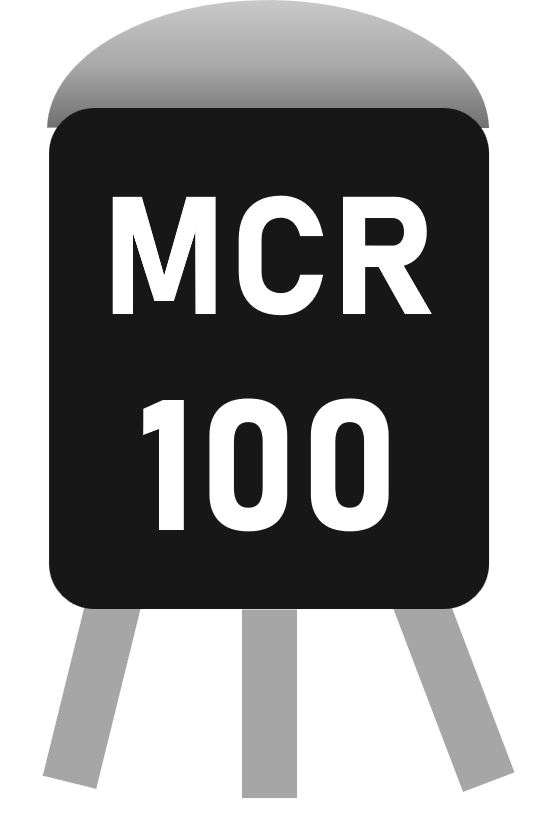
 Design with SCR MCR100-6 in Cirkit Designer
Introduction
The SCR MCR100-6 is a silicon-controlled rectifier (SCR) designed for efficient power control in various electronic circuits. It is a unidirectional semiconductor device that can handle high voltage and current, making it ideal for applications requiring precise control of power delivery. The MCR100-6 is commonly used in motor control, lighting dimmers, heating systems, and other AC or DC power control applications.
Explore Projects Built with SCR MCR100-6
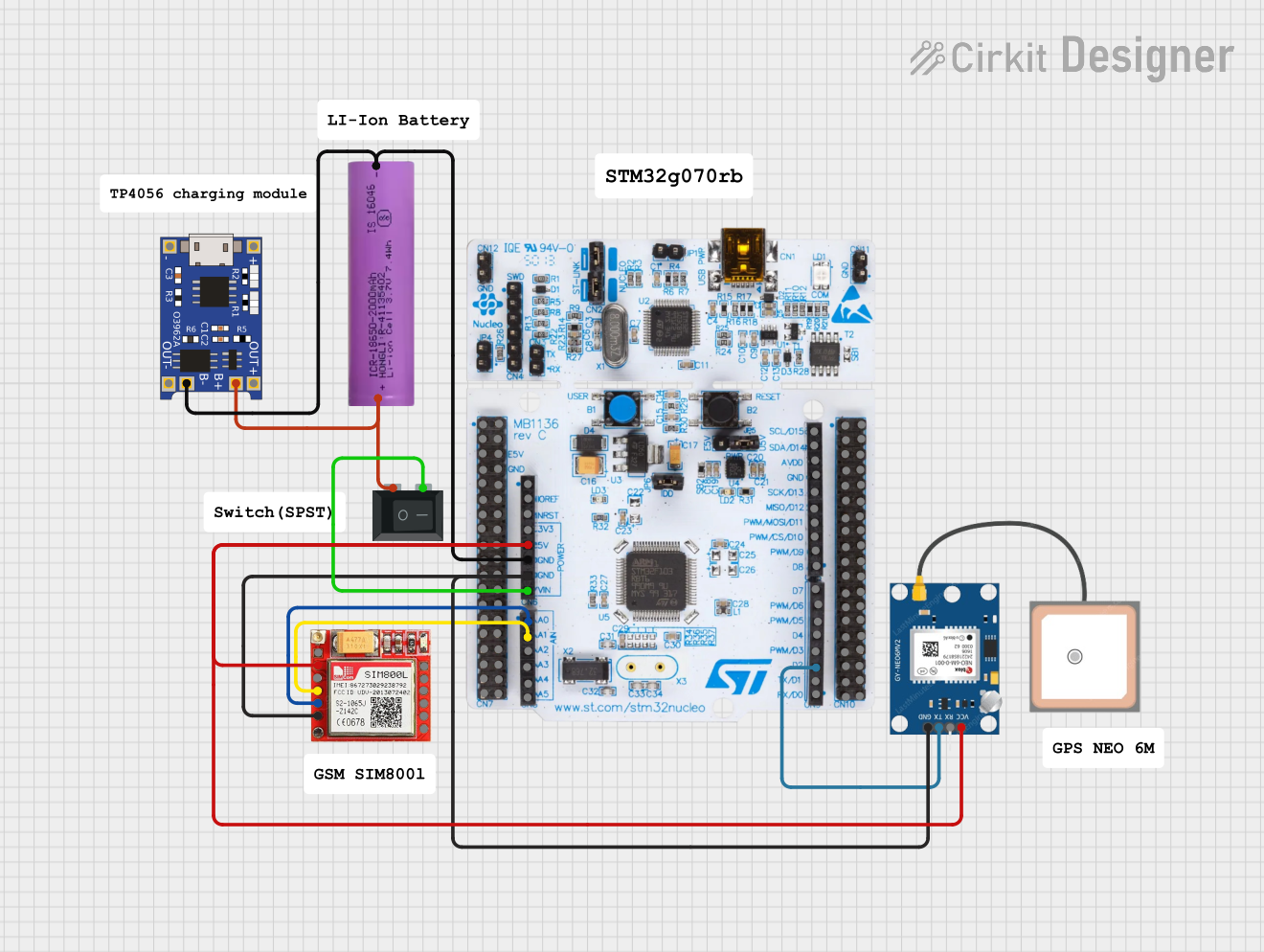 Open Project in Cirkit Designer
 Open Project in Cirkit Designer
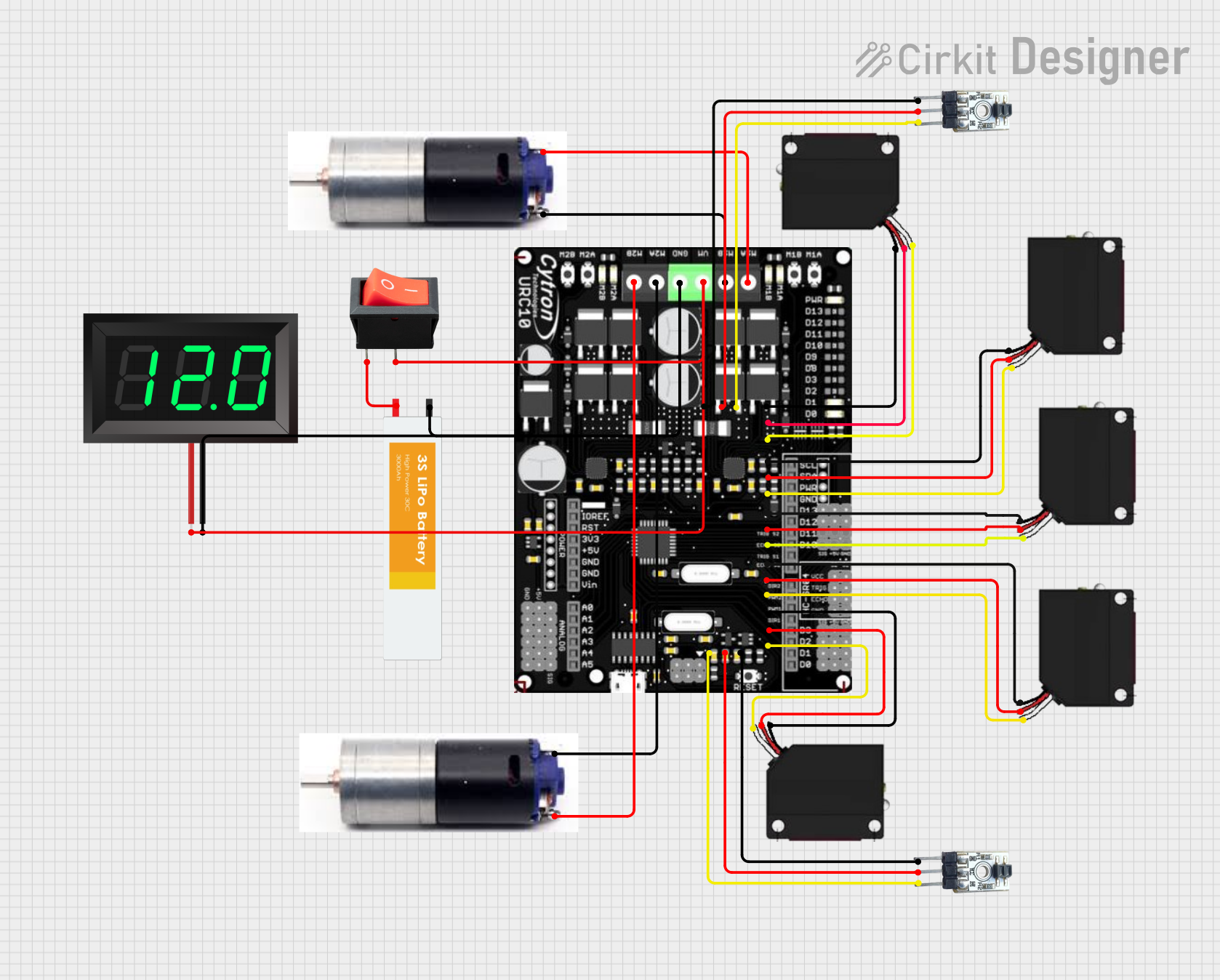 Open Project in Cirkit Designer
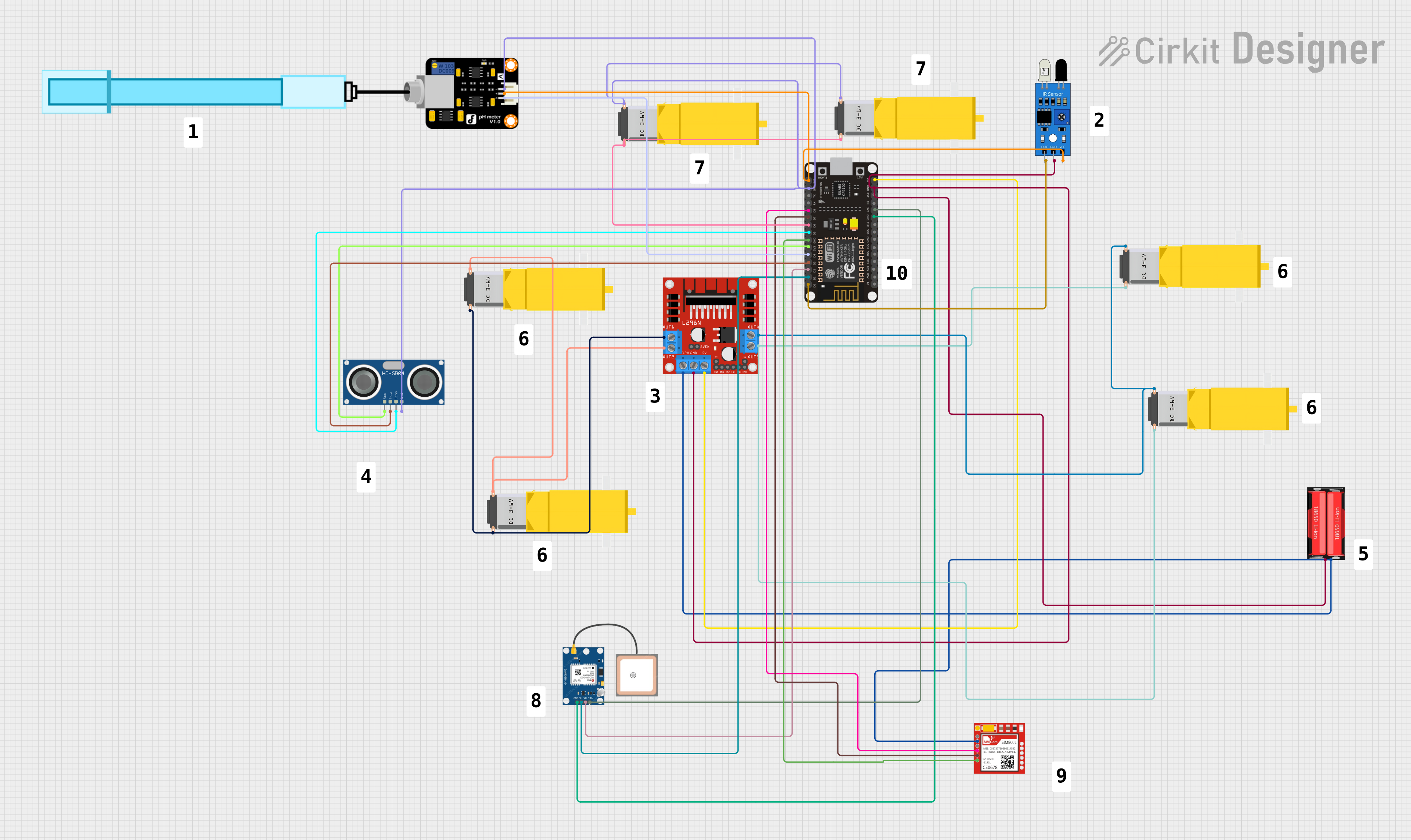 Open Project in Cirkit Designer
Explore Projects Built with SCR MCR100-6
Open Project in Cirkit DesignerOpen Project in Cirkit DesignerOpen Project in Cirkit DesignerOpen Project in Cirkit DesignerTechnical Specifications
The following table outlines the key technical specifications of the SCR MCR100-6:
| Parameter | Value |
|---|---|
| Maximum Repetitive Voltage (VRRM) | 400V |
| Maximum On-State Current (IT) | 0.8A |
| Peak Gate Trigger Current (IGT) | 200µA |
| Peak Gate Trigger Voltage (VGT) | 0.8V |
| Holding Current (IH) | 5mA |
| Maximum Surge Current (ITSM) | 8A |
| Operating Temperature Range | -40°C to +110°C |
| Package Type | TO-92 |
Pin Configuration
The SCR MCR100-6 comes in a TO-92 package with three pins. The pin configuration is as follows:
| Pin Number | Pin Name | Description |
|---|---|---|
| 1 | Gate | Trigger input to control the SCR |
| 2 | Cathode | Negative terminal |
| 3 | Anode | Positive terminal |
Usage Instructions
How to Use the SCR MCR100-6 in a Circuit
Basic Circuit Setup:
- Connect the anode (Pin 3) to the positive side of the load.
- Connect the cathode (Pin 2) to the negative side of the power supply.
- Use a resistor to limit the current to the gate (Pin 1) and connect it to the control signal source.
Triggering the SCR:
- Apply a small current to the gate (typically 200µA) to turn the SCR on.
- Once triggered, the SCR will remain on as long as the current through the anode and cathode exceeds the holding current (5mA).
Turning Off the SCR:
- To turn off the SCR, reduce the current through the anode and cathode below the holding current. This can be achieved by interrupting the power supply or using a commutation circuit.
Important Considerations and Best Practices
- Gate Resistor: Always use a resistor in series with the gate to limit the current and prevent damage to the SCR.
- Heat Dissipation: Ensure proper heat dissipation if the SCR operates near its maximum current rating.
- Voltage Spikes: Use a snubber circuit (a resistor-capacitor network) across the SCR to protect it from voltage spikes.
- Polarity: Ensure correct polarity when connecting the anode and cathode to the circuit.
Example: Controlling an LED with an Arduino UNO
The following example demonstrates how to use the SCR MCR100-6 to control an LED with an Arduino UNO.
Circuit Diagram
- Connect the anode of the SCR to the positive terminal of the LED.
- Connect the cathode of the SCR to the ground.
- Connect the gate of the SCR to a digital pin on the Arduino through a 1kΩ resistor.
Arduino Code
// Example code to control an SCR MCR100-6 with an Arduino UNO
const int SCRGatePin = 9; // Pin connected to the SCR gate
const int LEDControlPin = 7; // Pin to control the LED state

void setup() {
  pinMode(SCRGatePin, OUTPUT); // Set SCR gate pin as output
  pinMode(LEDControlPin, INPUT_PULLUP); // Set LED control pin as input
}

void loop() {
  if (digitalRead(LEDControlPin) == LOW) {
    // If button is pressed, trigger the SCR
    digitalWrite(SCRGatePin, HIGH); // Send a pulse to the SCR gate
    delay(10); // Short delay to ensure SCR is triggered
    digitalWrite(SCRGatePin, LOW); // Turn off the gate signal
  }
  // Note: The SCR will remain on until the current through it drops below
  // the holding current, or the power supply is interrupted.
}
Troubleshooting and FAQs
Common Issues
SCR Does Not Turn On:
- Ensure the gate current is sufficient (at least 200µA).
- Check the polarity of the anode and cathode connections.
- Verify the gate resistor value is appropriate (e.g., 1kΩ).
SCR Turns Off Unexpectedly:
- Ensure the load current is above the holding current (5mA).
- Check for interruptions in the power supply or load circuit.
SCR Overheats:
- Verify the current through the SCR does not exceed its maximum rating (0.8A).
- Use a heatsink or improve ventilation to dissipate heat.
FAQs
Q: Can the SCR MCR100-6 be used for AC circuits?
A: Yes, the SCR can be used in AC circuits, but it will only conduct during the positive half-cycle. For full-wave control, use a TRIAC or two SCRs in an anti-parallel configuration.
Q: How do I protect the SCR from voltage spikes?
A: Use a snubber circuit (a resistor and capacitor in series) across the SCR to suppress voltage transients.
Q: Can I use the SCR MCR100-6 for high-power applications?
A: The MCR100-6 is suitable for low to medium power applications. For high-power applications, consider using an SCR with a higher current and voltage rating.