
How to Use LC filter module 3A/50V: Examples, Pinouts, and Specs
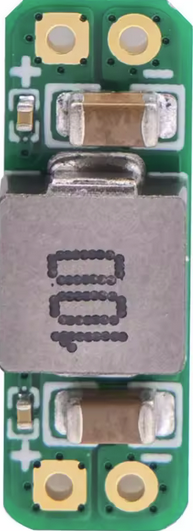
 Design with LC filter module 3A/50V in Cirkit Designer
Introduction
The LC Filter Module 3A/50V (Manufacturer Part ID: LC Filter Module 3A 5-30V) is a compact and efficient electronic component designed to filter out unwanted frequencies in electrical signals. By combining inductors (L) and capacitors (C), this module effectively suppresses noise and ripple, ensuring clean and stable power or signal delivery.
This module is rated for a maximum current of 3A and a voltage of up to 50V, making it suitable for a wide range of applications, including:
- Power supply noise filtering
- DC-DC converter ripple suppression
- Audio signal processing
- Motor drive noise reduction
- General-purpose signal conditioning
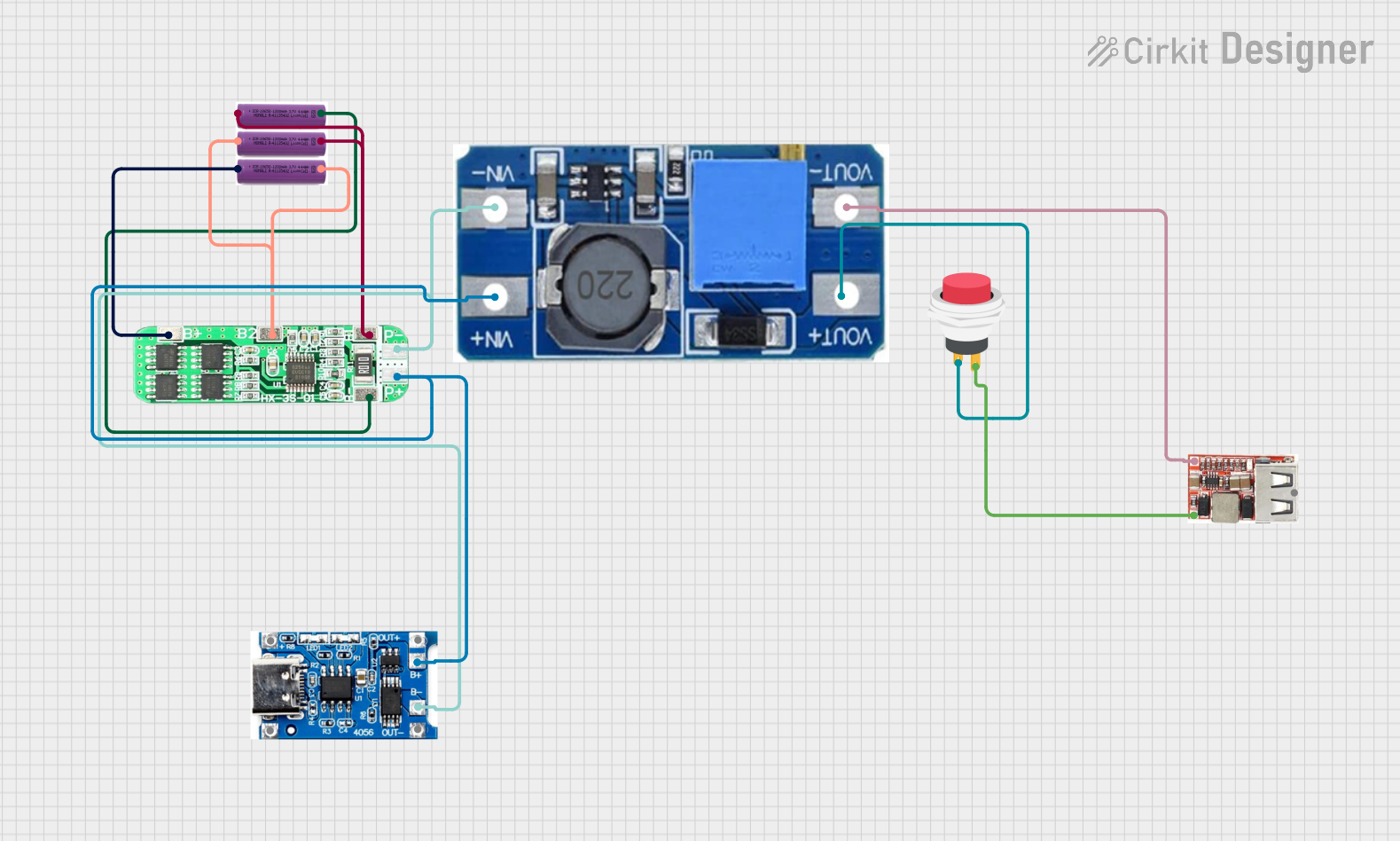
Explore Projects Built with LC filter module 3A/50V
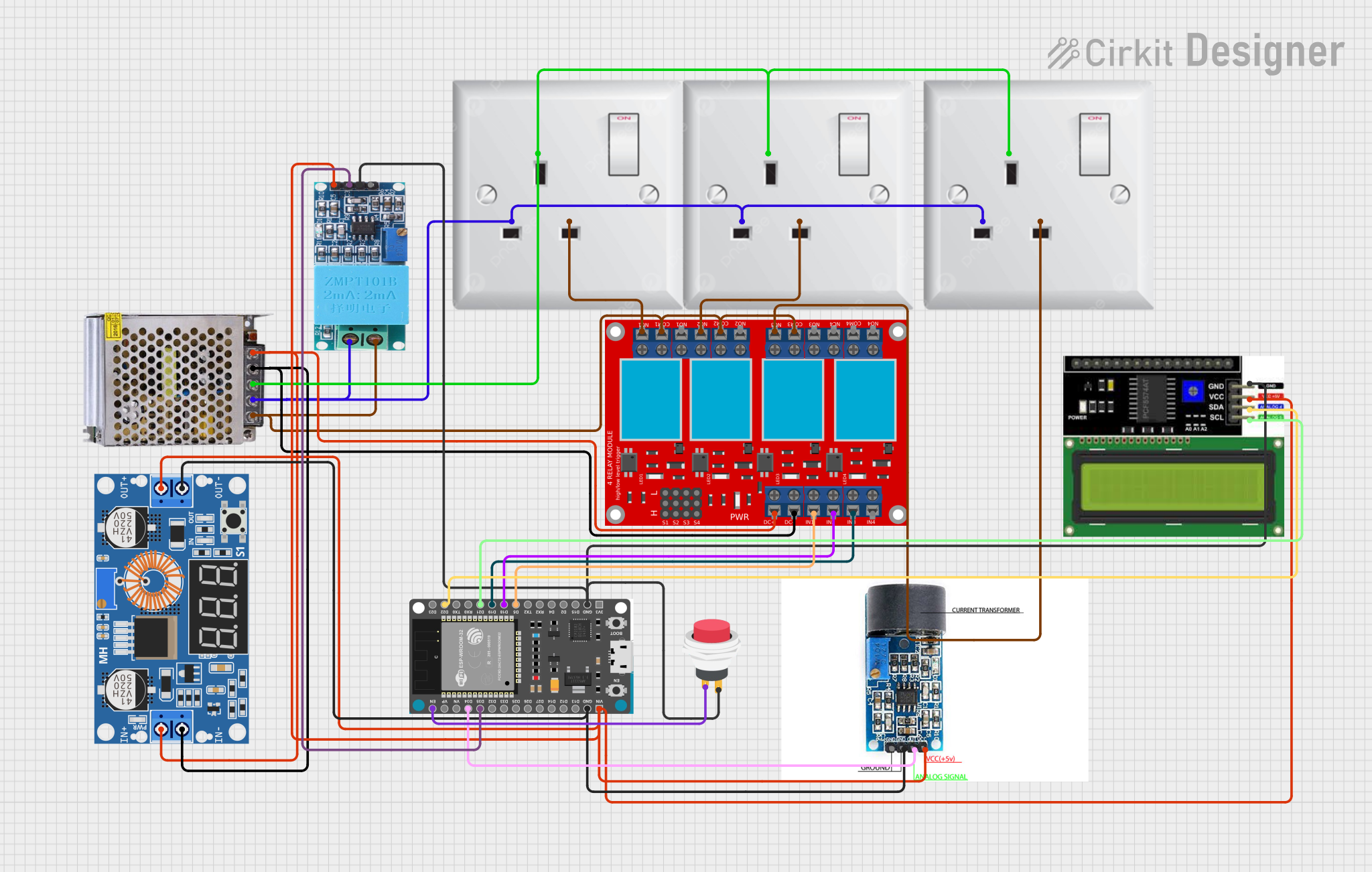 Open Project in Cirkit Designer
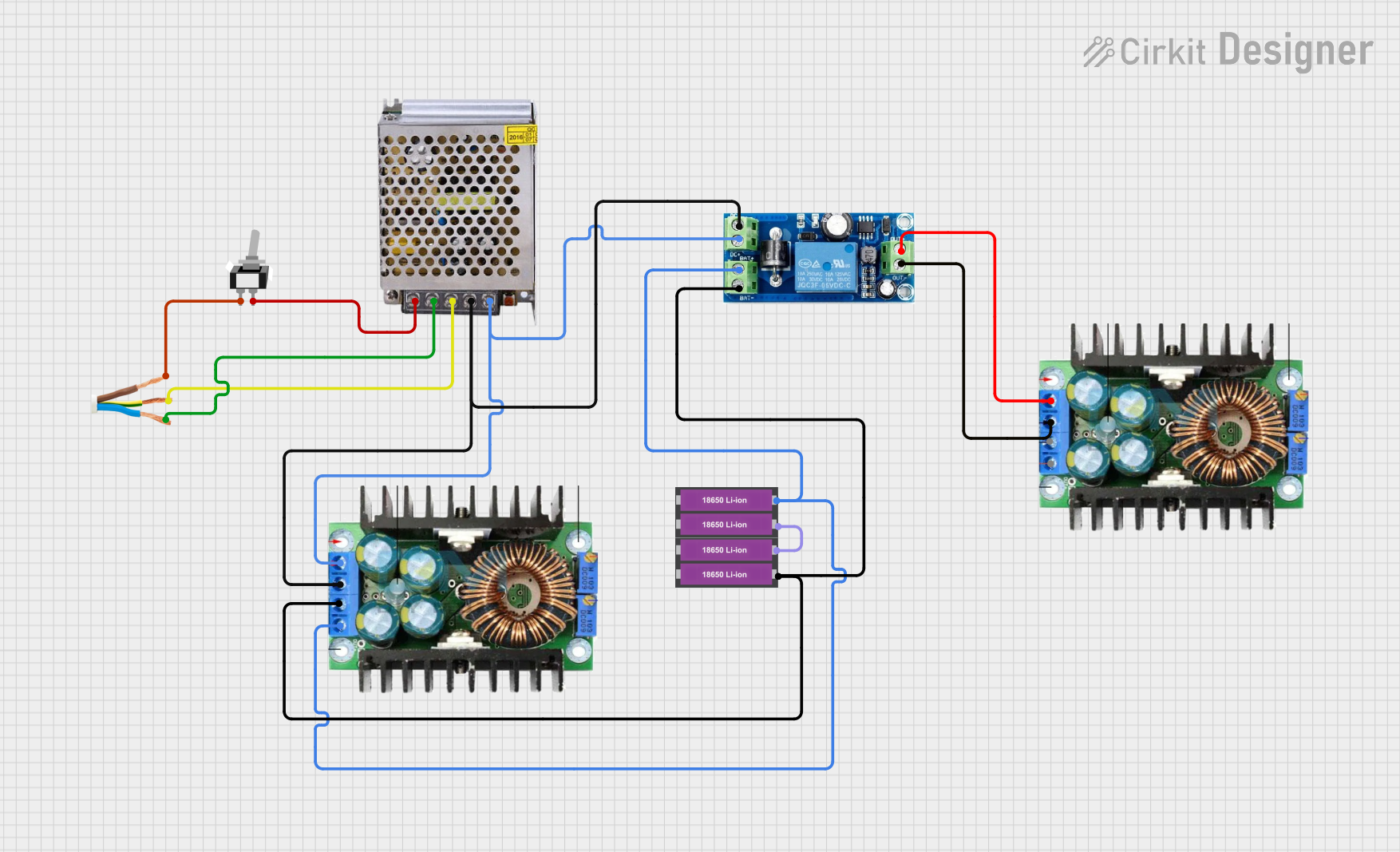 Open Project in Cirkit Designer
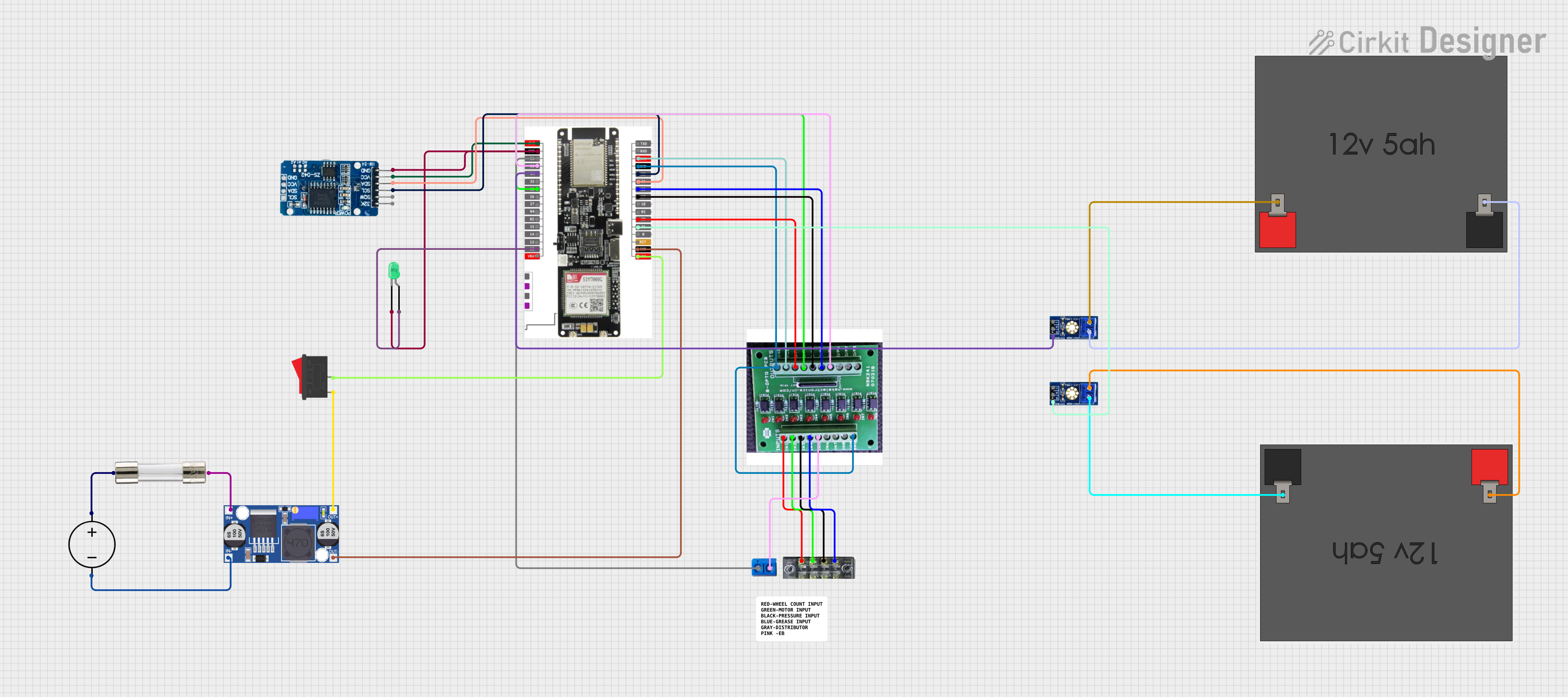 Open Project in Cirkit Designer
 Open Project in Cirkit Designer
Explore Projects Built with LC filter module 3A/50V
Open Project in Cirkit DesignerOpen Project in Cirkit DesignerOpen Project in Cirkit DesignerOpen Project in Cirkit DesignerTechnical Specifications
Below are the key technical details of the LC Filter Module:
| Parameter | Value |
|---|---|
| Manufacturer | Aliexpress |
| Part ID | LC Filter Module 3A 5-30V |
| Maximum Current | 3A |
| Voltage Range | 5V to 50V |
| Inductor Value (L) | 47 µH |
| Capacitor Value (C) | 220 µF |
| Operating Temperature | -40°C to +85°C |
| Dimensions | 25mm x 15mm x 10mm |
Pin Configuration and Descriptions
The LC Filter Module has four pins, as described in the table below:
| Pin Name | Description |
|---|---|
| VIN+ | Positive input voltage (unfiltered signal) |
| VIN- | Negative input voltage (ground for unfiltered signal) |
| VOUT+ | Positive output voltage (filtered signal) |
| VOUT- | Negative output voltage (ground for filtered signal) |
Usage Instructions
How to Use the LC Filter Module in a Circuit
Connect the Input Voltage:
- Attach the unfiltered DC voltage source to the
VIN+andVIN-pins. Ensure the voltage is within the module's operating range (5V to 50V).
- Attach the unfiltered DC voltage source to the
Connect the Output Load:
- Connect the load (e.g., a motor, microcontroller, or other device) to the
VOUT+andVOUT-pins. The module will provide a filtered, stable voltage to the load.
- Connect the load (e.g., a motor, microcontroller, or other device) to the
Verify Connections:
- Double-check all connections to ensure proper polarity and avoid short circuits.
Power On:
- Power on the circuit and measure the output voltage to confirm that the filtering is working as expected.
Important Considerations and Best Practices
- Current Limit: Ensure the load does not exceed the module's maximum current rating of 3A. Exceeding this limit may damage the module.
- Voltage Range: Operate the module within the specified voltage range (5V to 50V) to prevent damage to the components.
- Placement in Circuit: Place the LC filter module as close as possible to the load to minimize noise pickup between the filter and the load.
- Heat Dissipation: If operating near the maximum current rating, ensure adequate ventilation or heat dissipation to prevent overheating.
Example: Using the LC Filter Module with an Arduino UNO
The LC Filter Module can be used to provide a clean power supply to an Arduino UNO. Below is an example circuit and code:
Circuit Setup
- Connect a 12V DC power supply to the
VIN+andVIN-pins of the LC Filter Module. - Connect the
VOUT+andVOUT-pins to the Arduino UNO'sVINandGNDpins, respectively. - Ensure the connections are secure and the polarity is correct.
Example Code
// Example code to demonstrate Arduino functionality with an LC Filter Module
// This code blinks an LED connected to pin 13 of the Arduino UNO

void setup() {
  pinMode(13, OUTPUT); // Set pin 13 as an output for the LED
}

void loop() {
  digitalWrite(13, HIGH); // Turn the LED on
  delay(1000);            // Wait for 1 second
  digitalWrite(13, LOW);  // Turn the LED off
  delay(1000);            // Wait for 1 second
}
Troubleshooting and FAQs
Common Issues and Solutions
No Output Voltage:
- Cause: Incorrect wiring or reversed polarity.
- Solution: Verify the connections and ensure the input voltage is applied to the correct pins (
VIN+andVIN-).
Excessive Heat:
- Cause: Load current exceeds the 3A limit or insufficient ventilation.
- Solution: Reduce the load current or improve heat dissipation by adding a heatsink or increasing airflow.
Insufficient Filtering:
- Cause: High-frequency noise beyond the module's filtering capability.
- Solution: Add additional filtering stages or use a module with higher inductance and capacitance values.
Module Damage:
- Cause: Input voltage exceeds 50V or reverse polarity applied.
- Solution: Replace the module and ensure the input voltage and polarity are within specifications.
FAQs
Q: Can this module be used with AC signals?
A: No, the LC Filter Module is designed for DC signals only. Using it with AC signals may result in improper operation or damage.
Q: Can I use this module with a 24V power supply?
A: Yes, the module supports input voltages between 5V and 50V, so a 24V power supply is within the acceptable range.
Q: How do I know if the module is working?
A: Measure the output voltage with a multimeter. A stable and clean voltage indicates proper operation.
Q: Can I use this module for audio signal filtering?
A: While primarily designed for power supply filtering, the module can be used for low-frequency audio signal filtering. However, its performance may vary depending on the specific application.
By following this documentation, users can effectively integrate the LC Filter Module 3A/50V into their projects for improved signal and power quality.