Cirkit Designer Logo
Cirkit Designer
Your all-in-one circuit design IDE
Home / 
Component Documentation

How to Use Camdenboss CTB0158-3: Examples, Pinouts, and Specs


Image of Camdenboss CTB0158-3
Cirkit Designer LogoDesign with Camdenboss CTB0158-3 in Cirkit Designer

Introduction

The CamdenBoss CTB0158/3 is a compact terminal block designed for efficient wiring and secure connections in electrical circuits. This component features three terminals, making it ideal for organizing and managing multiple connections in a compact form factor. Its robust design ensures reliable performance in various applications, including industrial control systems, home automation, and prototyping.

Explore Projects Built with Camdenboss CTB0158-3
Use Cirkit Designer to design, explore, and prototype these projects online. Some projects support real-time simulation. Click "Open Project" to start designing instantly!
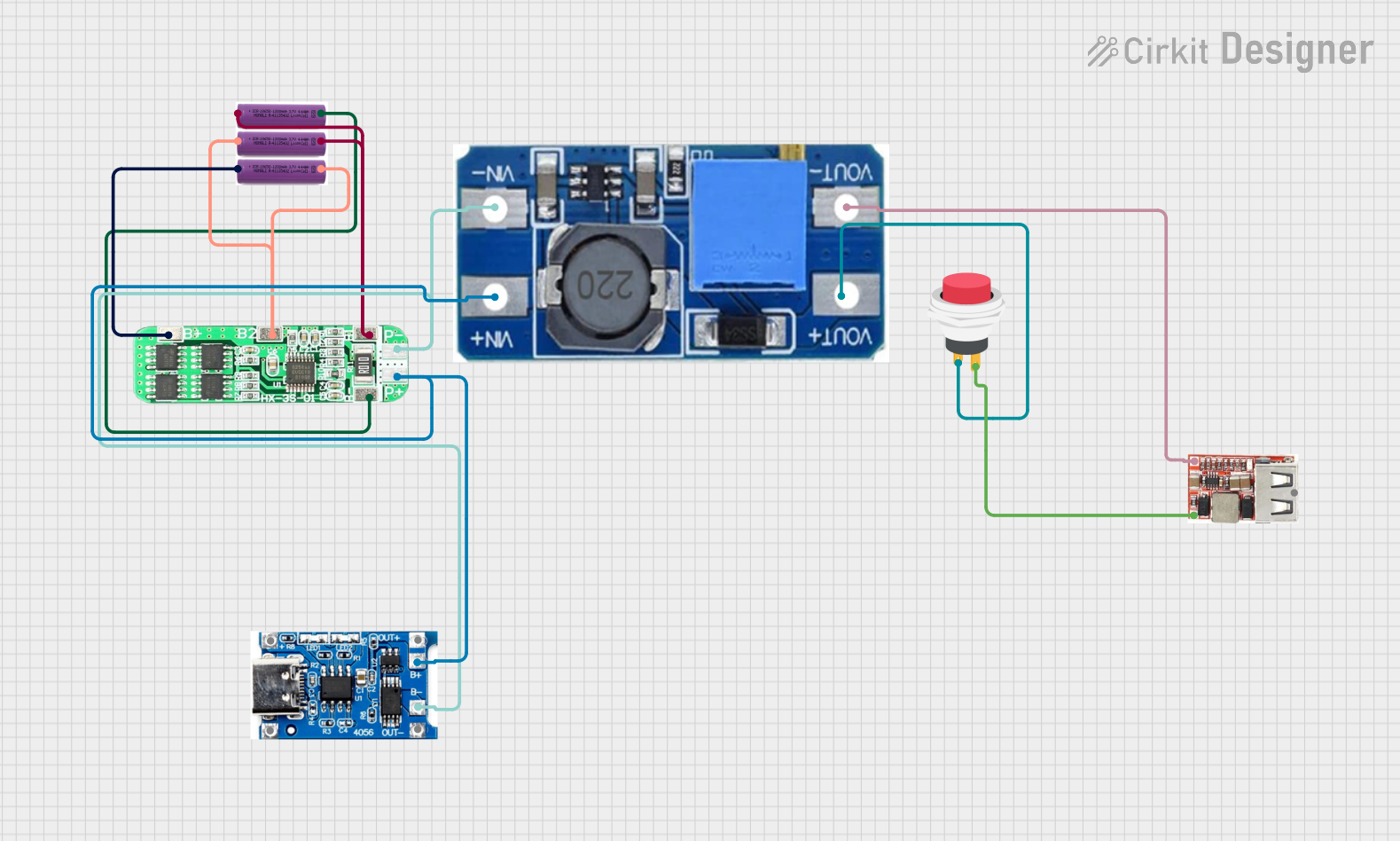
Battery-Powered 18650 Li-ion Charger with USB Output and Adjustable Voltage Regulator
Image of Breadboard: A project utilizing Camdenboss CTB0158-3 in a practical application
This circuit is a battery management and power supply system that uses three 3.7V batteries connected to a 3S 10A Li-ion 18650 Charger Protection Board Module for balanced charging and protection. The system includes a TP4056 Battery Charging Protection Module for additional charging safety, a Step Up Boost Power Converter to regulate and boost the voltage, and a USB regulator to provide a stable 5V output, controlled by a push switch.
Cirkit Designer LogoOpen Project in Cirkit Designer
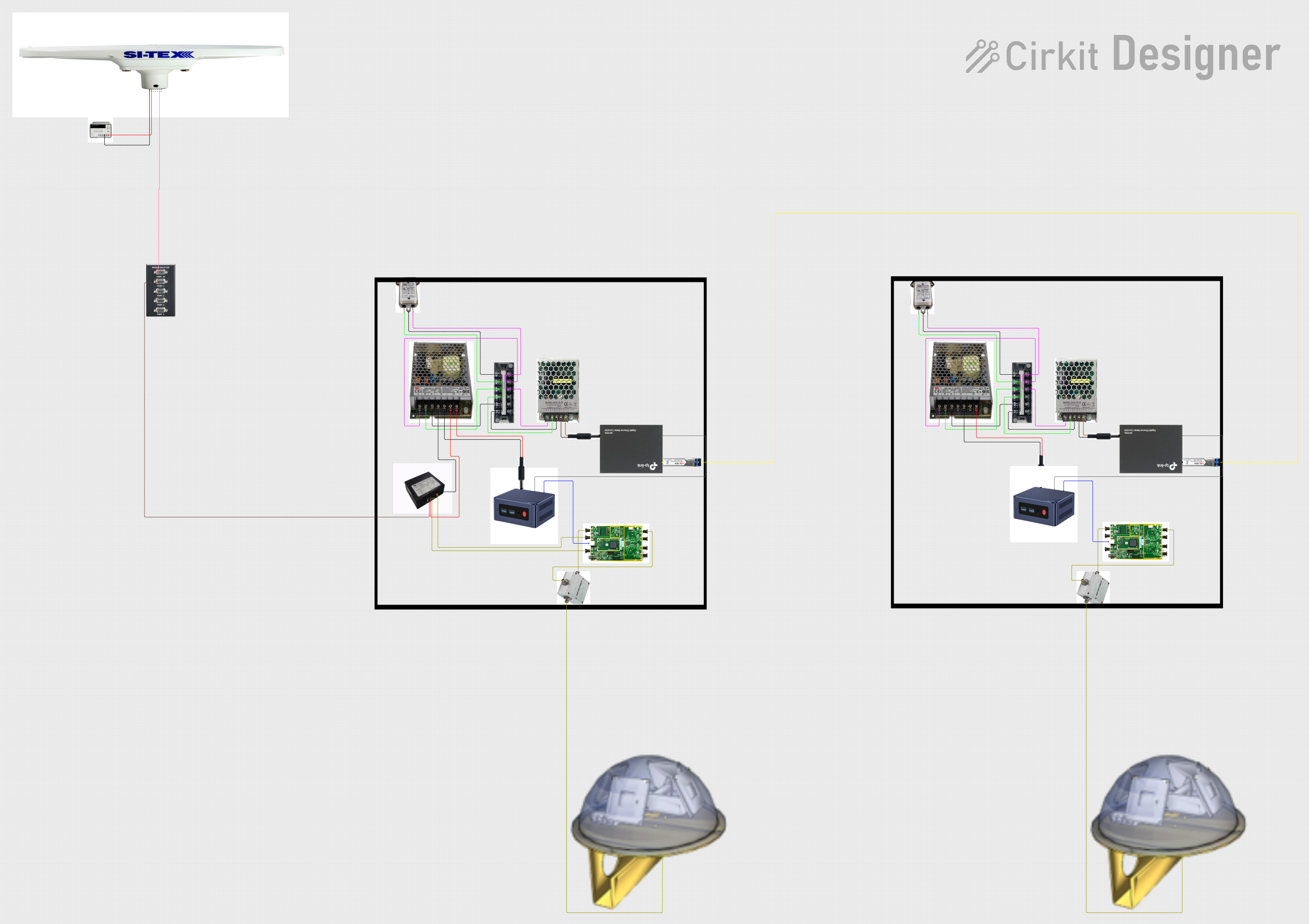
Satellite-Based Timing and Navigation System with SDR and Atomic Clock Synchronization
Image of GPS 시스템 측정 구성도_Confirm: A project utilizing Camdenboss CTB0158-3 in a practical application
This circuit appears to be a complex system involving power supply management, GPS and timing synchronization, and data communication. It includes a SI-TEX G1 Satellite Compass for GPS data, an XHTF1021 Atomic Rubidium Clock for precise timing, and Ettus USRP B200 units for software-defined radio communication. Power is supplied through various SMPS units and distributed via terminal blocks and DC jacks. Data communication is facilitated by Beelink MINI S12 N95 computers, RS232 splitters, and a 1000BASE-T Media Converter for network connectivity. RF Directional Couplers are used to interface antennas with the USRP units, and the entire system is likely contained within cases for protection and organization.
Cirkit Designer LogoOpen Project in Cirkit Designer
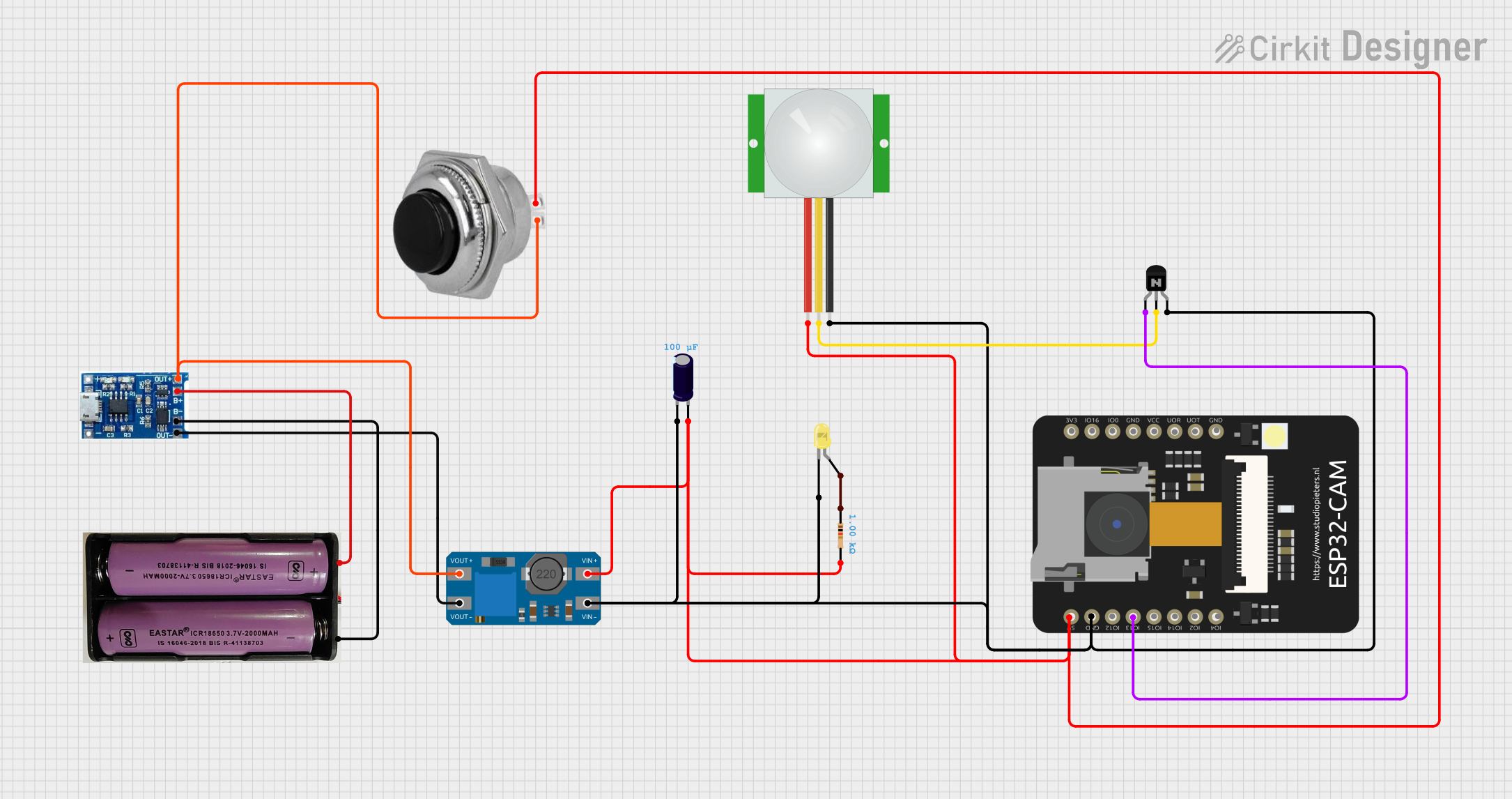
ESP32 CAM PIR Sensor Security Camera with Battery Management
Image of intruder alert system: A project utilizing Camdenboss CTB0158-3 in a practical application
This is a motion-activated camera system powered by a 7.4V battery with a charging module. It uses a PIR sensor to detect motion and an ESP32 CAM microcontroller to process the signal and activate a yellow LED through an NPN transistor. A voltage booster and capacitor are included for power management, and a momentary switch allows for manual power control.
Cirkit Designer LogoOpen Project in Cirkit Designer
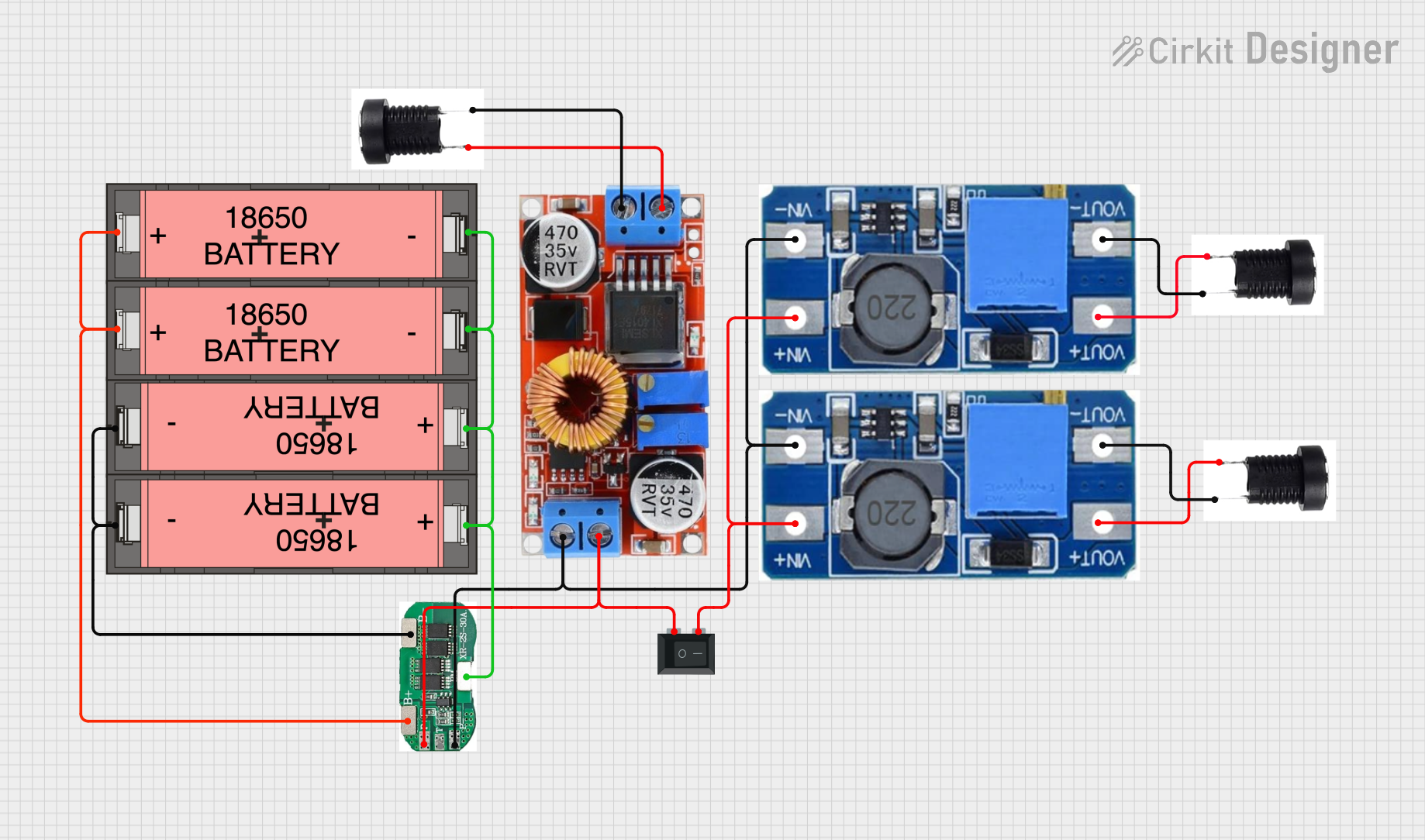
Battery-Powered Adjustable Voltage Regulator with Li-ion 18650 Batteries and BMS
Image of mini ups: A project utilizing Camdenboss CTB0158-3 in a practical application
This circuit is a power management system that uses four Li-ion 18650 batteries connected to a 2S 30A BMS for battery management and protection. The system includes step-up and step-down voltage regulators to provide adjustable output voltages, controlled by a rocker switch, and multiple DC jacks for power input and output.
Cirkit Designer LogoOpen Project in Cirkit Designer

Explore Projects Built with Camdenboss CTB0158-3

Use Cirkit Designer to design, explore, and prototype these projects online. Some projects support real-time simulation. Click "Open Project" to start designing instantly!
Image of Breadboard: A project utilizing Camdenboss CTB0158-3 in a practical application
Battery-Powered 18650 Li-ion Charger with USB Output and Adjustable Voltage Regulator
This circuit is a battery management and power supply system that uses three 3.7V batteries connected to a 3S 10A Li-ion 18650 Charger Protection Board Module for balanced charging and protection. The system includes a TP4056 Battery Charging Protection Module for additional charging safety, a Step Up Boost Power Converter to regulate and boost the voltage, and a USB regulator to provide a stable 5V output, controlled by a push switch.
Cirkit Designer LogoOpen Project in Cirkit Designer
Image of GPS 시스템 측정 구성도_Confirm: A project utilizing Camdenboss CTB0158-3 in a practical application
Satellite-Based Timing and Navigation System with SDR and Atomic Clock Synchronization
This circuit appears to be a complex system involving power supply management, GPS and timing synchronization, and data communication. It includes a SI-TEX G1 Satellite Compass for GPS data, an XHTF1021 Atomic Rubidium Clock for precise timing, and Ettus USRP B200 units for software-defined radio communication. Power is supplied through various SMPS units and distributed via terminal blocks and DC jacks. Data communication is facilitated by Beelink MINI S12 N95 computers, RS232 splitters, and a 1000BASE-T Media Converter for network connectivity. RF Directional Couplers are used to interface antennas with the USRP units, and the entire system is likely contained within cases for protection and organization.
Cirkit Designer LogoOpen Project in Cirkit Designer
Image of intruder alert system: A project utilizing Camdenboss CTB0158-3 in a practical application
ESP32 CAM PIR Sensor Security Camera with Battery Management
This is a motion-activated camera system powered by a 7.4V battery with a charging module. It uses a PIR sensor to detect motion and an ESP32 CAM microcontroller to process the signal and activate a yellow LED through an NPN transistor. A voltage booster and capacitor are included for power management, and a momentary switch allows for manual power control.
Cirkit Designer LogoOpen Project in Cirkit Designer
Image of mini ups: A project utilizing Camdenboss CTB0158-3 in a practical application
Battery-Powered Adjustable Voltage Regulator with Li-ion 18650 Batteries and BMS
This circuit is a power management system that uses four Li-ion 18650 batteries connected to a 2S 30A BMS for battery management and protection. The system includes step-up and step-down voltage regulators to provide adjustable output voltages, controlled by a rocker switch, and multiple DC jacks for power input and output.
Cirkit Designer LogoOpen Project in Cirkit Designer

Common Applications

  • Industrial control panels
  • Home automation systems
  • Prototyping and testing circuits
  • Power distribution in low-voltage systems
  • Signal routing in electronic devices

Technical Specifications

The following table outlines the key technical specifications of the CamdenBoss CTB0158/3 terminal block:

Parameter Specification
Manufacturer CamdenBoss
Part Number CTB0158/3
Number of Terminals 3
Rated Voltage 250V AC/DC
Rated Current 16A
Wire Size Range 24 AWG to 12 AWG
Terminal Type Screw terminal
Mounting Style PCB mount
Operating Temperature -40°C to +105°C
Housing Material Polyamide (PA6.6), UL94-V0 rated

Pin Configuration and Descriptions

The CTB0158/3 terminal block has three screw terminals for wire connections. Below is the pin configuration:

Pin Number Description
1 Terminal 1 for wire connection
2 Terminal 2 for wire connection
3 Terminal 3 for wire connection

Each terminal is designed to securely hold a wire using a screw mechanism, ensuring a reliable electrical connection.

Usage Instructions

How to Use the CTB0158/3 in a Circuit

  1. Prepare the Wires: Strip the insulation from the ends of the wires you intend to connect. Ensure the exposed conductor length matches the terminal block's specifications (typically 5-7 mm).
  2. Insert the Wires: Loosen the screws on the terminal block using a screwdriver. Insert the stripped wire ends into the corresponding terminal slots.
  3. Secure the Connection: Tighten the screws to clamp the wires securely in place. Avoid overtightening, as this may damage the wires or the terminal block.
  4. Mount the Terminal Block: If using the CTB0158/3 on a PCB, solder the pins to the PCB pads. Ensure proper alignment and secure solder joints.

Important Considerations

  • Wire Gauge Compatibility: Use wires within the specified range (24 AWG to 12 AWG) to ensure a secure connection.
  • Current and Voltage Ratings: Do not exceed the rated current (16A) or voltage (250V AC/DC) to prevent overheating or damage.
  • Environmental Conditions: Ensure the terminal block operates within the specified temperature range (-40°C to +105°C).
  • Screw Tightening: Use an appropriate screwdriver to avoid damaging the screws or terminals.

Example: Connecting to an Arduino UNO

The CTB0158/3 can be used to connect external components, such as sensors or actuators, to an Arduino UNO. Below is an example of wiring an LED and a resistor through the terminal block:

Circuit Diagram

  • Terminal 1: Connected to the Arduino UNO's digital pin (e.g., D13)
  • Terminal 2: Connected to the LED's anode
  • Terminal 3: Connected to the resistor and ground (GND)

Arduino Code

// Example code to blink an LED connected via the CTB0158/3 terminal block

const int ledPin = 13; // Pin connected to Terminal 1 of the CTB0158/3

void setup() {
  pinMode(ledPin, OUTPUT); // Set the pin as an output
}

void loop() {
  digitalWrite(ledPin, HIGH); // Turn the LED on
  delay(1000);               // Wait for 1 second
  digitalWrite(ledPin, LOW);  // Turn the LED off
  delay(1000);               // Wait for 1 second
}

Troubleshooting and FAQs

Common Issues

  1. Loose Connections: If the wires are not securely clamped, the circuit may not function properly.
    • Solution: Ensure the screws are tightened adequately without damaging the wires.
  2. Overheating: Exceeding the rated current or voltage can cause the terminal block to overheat.
    • Solution: Verify that the connected load does not exceed 16A or 250V AC/DC.
  3. Wire Slippage: Wires may slip out if the insulation is not stripped correctly.
    • Solution: Strip the wire to the recommended length (5-7 mm) and ensure the conductor is fully inserted.

FAQs

Q: Can the CTB0158/3 be used for high-frequency signals?
A: While the CTB0158/3 is primarily designed for power and low-frequency signal connections, it can handle high-frequency signals if the impedance and wire characteristics are suitable.

Q: Is the terminal block reusable?
A: Yes, the CTB0158/3 can be reused multiple times, provided the screws and terminals are not damaged during use.

Q: Can I use stranded wires with this terminal block?
A: Yes, stranded wires are compatible. However, it is recommended to use ferrules for a more secure connection.

Q: What type of screwdriver should I use?
A: Use a flathead or Phillips screwdriver that matches the screw size to avoid damaging the screws.

By following these guidelines, the CamdenBoss CTB0158/3 terminal block can be effectively utilized in a wide range of applications, ensuring reliable and organized connections.