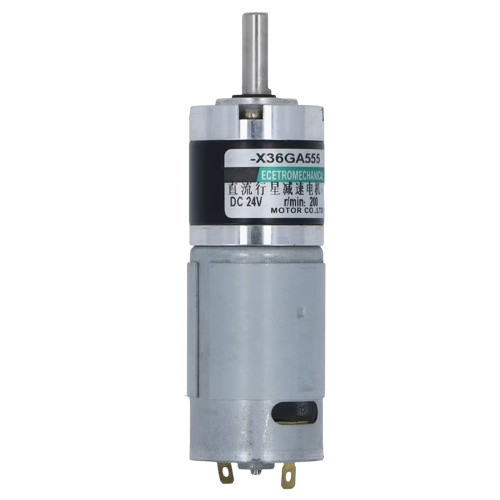
The MRB Planetary Gearbox Motor is a motor integrated with a planetary gearbox, designed to deliver high torque and precise speed control. This component is widely used in applications requiring compact design, high efficiency, and reliable performance. Its robust construction and ability to handle high torque loads make it ideal for robotics, automation systems, conveyor belts, and industrial machinery.
Explore Projects Built with MRB Planetary gearbox motor
Use Cirkit Designer to design, explore, and prototype these projects online. Some projects support real-time simulation. Click "Open Project" to start designing instantly!
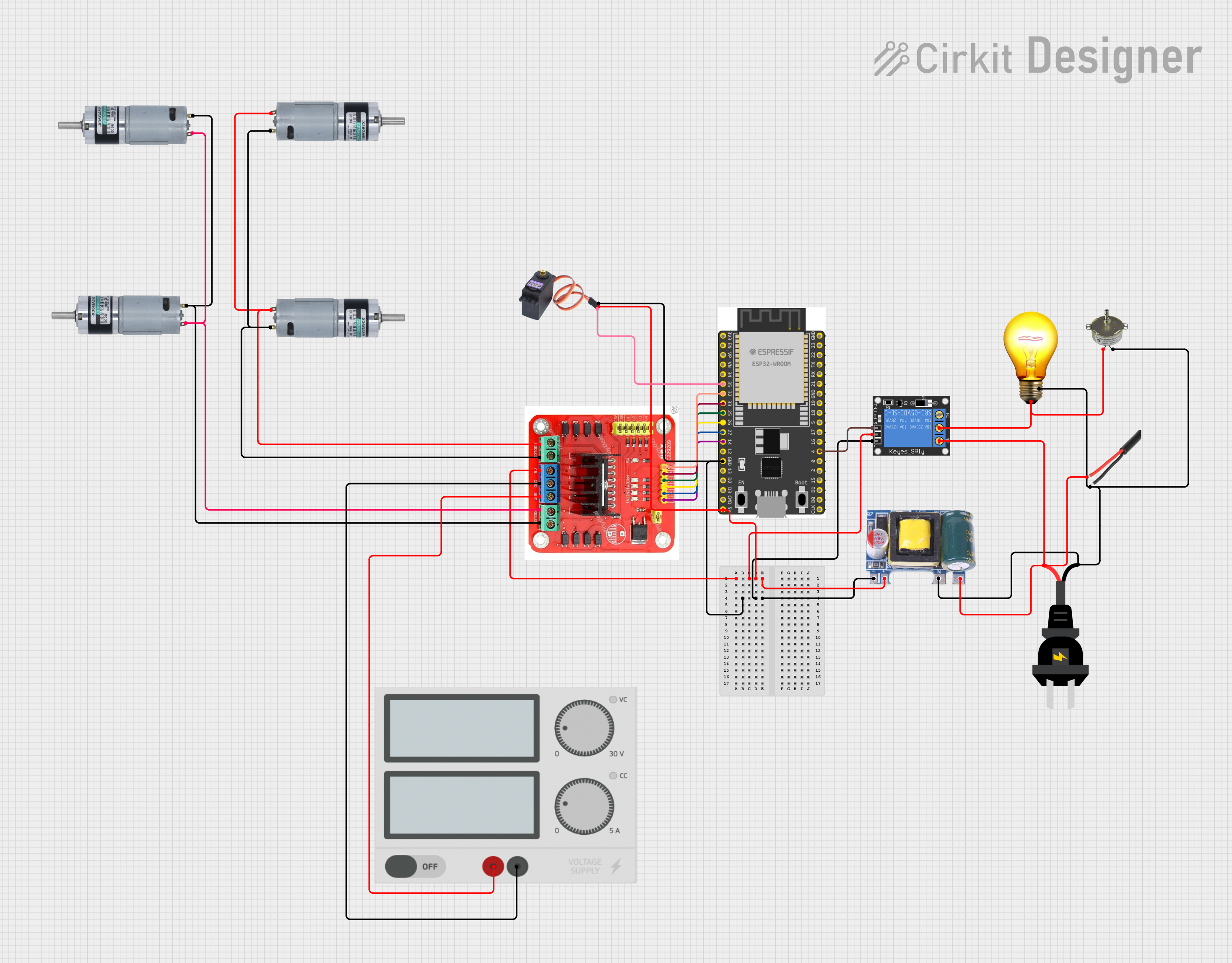
This circuit controls a set of MRB Planetary gearbox motors and an AC synchronous motor using an ESP32 microcontroller. The ESP32 interfaces with an L298N Dual H Bridge for motor control and a 1-Channel Relay to switch an AC bulb and the AC synchronous motor. A Mini AC-DC module provides 5V power to the ESP32, the relay, and the servo motor (MG996R), while the main power supply drives the L298N and the gearbox motors.
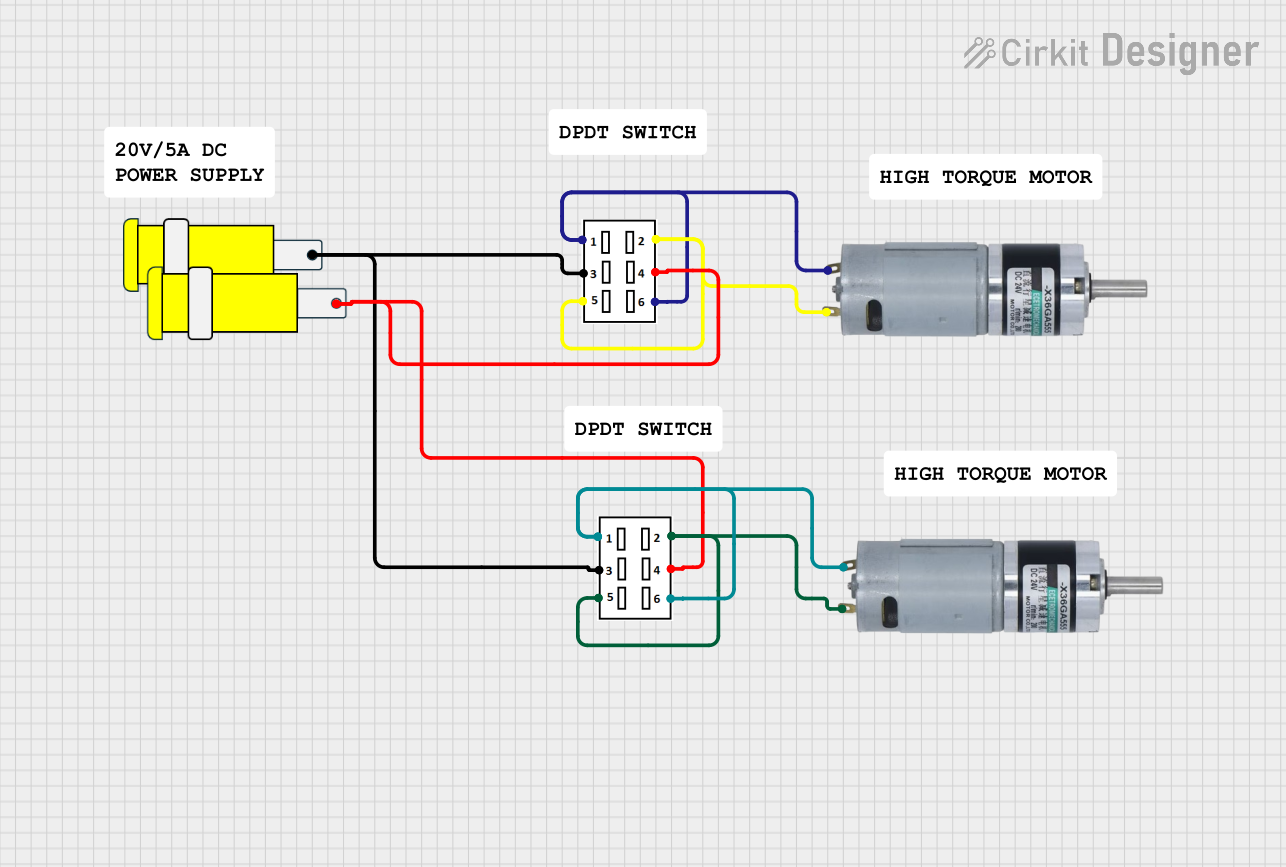
This circuit features two DPDT switches that control the direction of two MRB Planetary gearbox motors. The switches are connected to a connector, allowing for external control inputs to change the motor directions.
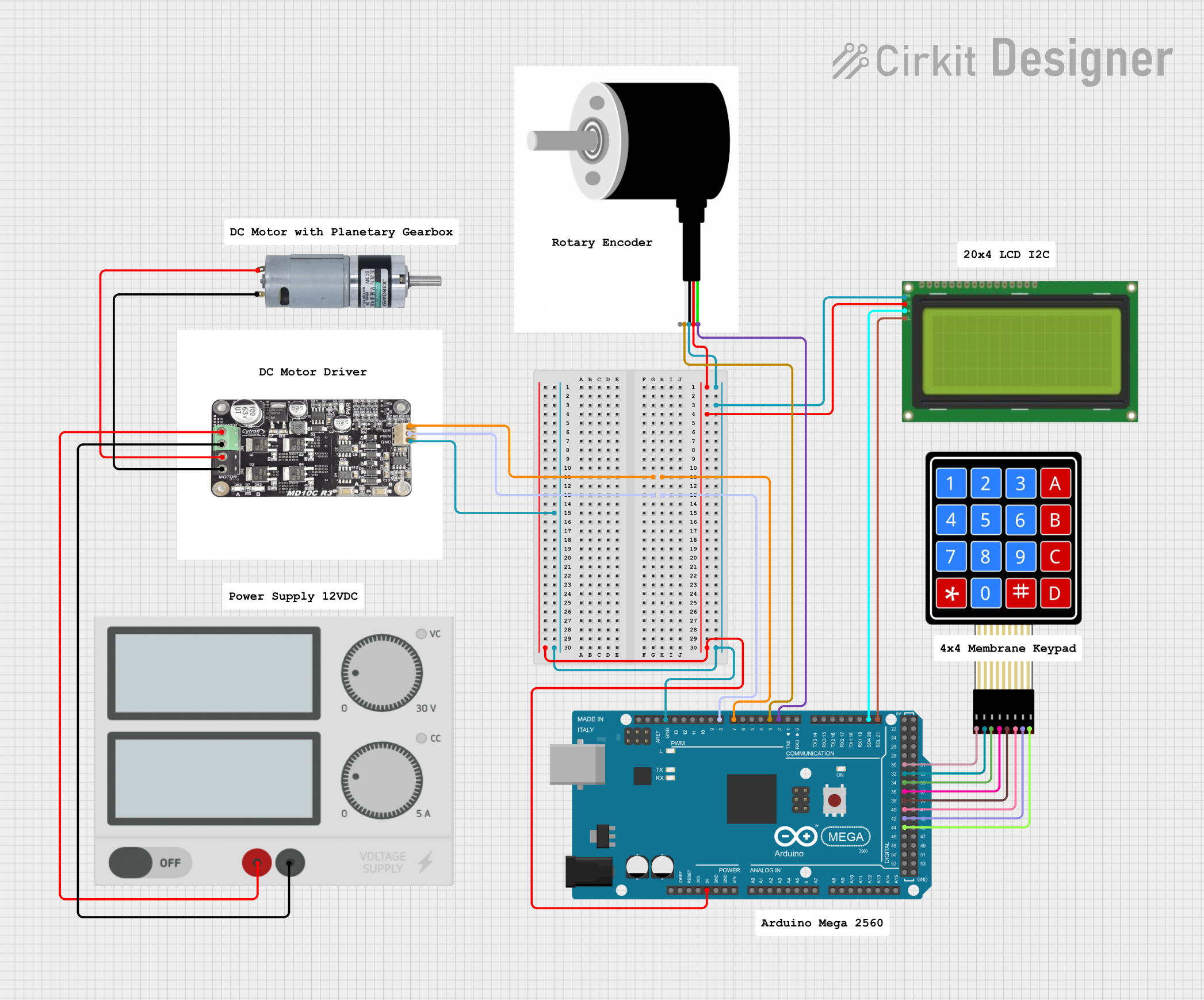
This circuit is a motor control system using an Arduino Mega 2560, which interfaces with a motor driver to control an MRB Planetary gearbox motor. It includes a rotary encoder for feedback, an LCD display for user interface, and a 4x4 membrane keypad for input, all powered by a central power supply.
This circuit features an Arduino UNO microcontroller interfaced with an L298N DC motor driver to control multiple MRB Planetary gearbox motors. The HC-05 Bluetooth Module is connected to the Arduino for wireless communication, allowing remote control of the motors. A 12V battery powers the system, with a buck converter stepping down the voltage to supply the Arduino and the Bluetooth module.
The MRB Planetary Gearbox Motor typically has two terminals for electrical connections. These are:
Pin Name
Description
V+
Positive terminal for power input
V-
Negative terminal for power input (ground)
For models with an encoder, additional pins may be present:
Pin Name
Description
A
Encoder output channel A
B
Encoder output channel B
Vcc
Power supply for the encoder (e.g., 5V)
GND
Ground for the encoder
Usage Instructions
How to Use the MRB Planetary Gearbox Motor in a Circuit:
Power Supply: Connect the motor's V+ and V- terminals to a DC power supply or motor driver. Ensure the voltage matches the motor's input voltage range (6V - 24V).
Motor Driver: Use a motor driver (e.g., L298N or TB6612FNG) to control the motor's speed and direction. The driver should be capable of handling the motor's current requirements.
Encoder (if available): If the motor includes an encoder, connect the encoder pins (A, B, Vcc, GND) to a microcontroller (e.g., Arduino) for speed and position feedback.
Mounting: Secure the motor using appropriate brackets or mounts to prevent vibration and ensure alignment with the load.
Important Considerations and Best Practices:
Gear Ratio Selection: Choose a gear ratio that balances speed and torque for your application.
Current Rating: Ensure the power supply and motor driver can handle the motor's peak current.
Heat Dissipation: Avoid prolonged operation at maximum torque to prevent overheating.
Load Alignment: Misalignment of the motor shaft and load can cause excessive wear and reduce efficiency.
Encoder Wiring: Use shielded cables for encoder connections to minimize noise interference.
Example: Connecting to an Arduino UNO
Below is an example of how to control the MRB Planetary Gearbox Motor with an Arduino UNO using a motor driver (e.g., L298N):
// Example code to control MRB Planetary Gearbox Motor with Arduino UNO
// Motor driver connections:
// IN1 -> Pin 9, IN2 -> Pin 10, ENA -> Pin 3 (PWM)

#define IN1 9  // Motor driver input 1
#define IN2 10 // Motor driver input 2
#define ENA 3  // Motor driver enable pin (PWM)

void setup() {
  pinMode(IN1, OUTPUT); // Set IN1 as output
  pinMode(IN2, OUTPUT); // Set IN2 as output
  pinMode(ENA, OUTPUT); // Set ENA as output
}

void loop() {
  // Rotate motor forward
  digitalWrite(IN1, HIGH); // Set IN1 high
  digitalWrite(IN2, LOW);  // Set IN2 low
  analogWrite(ENA, 128);   // Set speed (0-255)

  delay(2000); // Run for 2 seconds

  // Rotate motor backward
  digitalWrite(IN1, LOW);  // Set IN1 low
  digitalWrite(IN2, HIGH); // Set IN2 high
  analogWrite(ENA, 128);   // Set speed (0-255)

  delay(2000); // Run for 2 seconds

  // Stop motor
  digitalWrite(IN1, LOW);  // Set IN1 low
  digitalWrite(IN2, LOW);  // Set IN2 low
  analogWrite(ENA, 0);     // Set speed to 0

  delay(2000); // Wait for 2 seconds
}
Notes:
Adjust the analogWrite value to control the motor speed.
Ensure the motor driver is properly powered and can handle the motor's current.
Troubleshooting and FAQs
Common Issues and Solutions:
Motor Not Spinning:
Check the power supply voltage and connections.
Verify that the motor driver is functioning correctly.
Ensure the motor is not overloaded or stalled.
Overheating:
Reduce the load or operating time.
Ensure proper ventilation and heat dissipation.
No Encoder Feedback:
Verify encoder wiring and connections.
Check for noise interference and use shielded cables.
Excessive Noise or Vibration:
Inspect the motor and gearbox for damage or misalignment.
Ensure the motor is securely mounted.
FAQs:
Q: Can the MRB Planetary Gearbox Motor be used with a battery?
A: Yes, the motor can be powered by a DC battery, provided the voltage and current ratings match the motor's requirements.
Q: How do I select the right gear ratio?
A: Choose a gear ratio based on the required torque and speed for your application. Higher gear ratios provide more torque but reduce speed.
Q: Can I use the motor without an encoder?
A: Yes, the motor can operate without an encoder, but you will lose speed and position feedback.
Q: What is the lifespan of the gearbox?
A: The lifespan depends on operating conditions, load, and maintenance. Proper alignment and avoiding excessive loads can extend its life.

 Open Project in Cirkit Designer