
How to Use Water Flow Rate Sensor YF-S401: Examples, Pinouts, and Specs
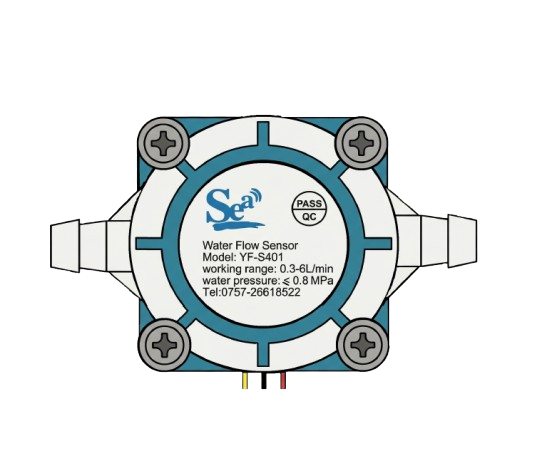
 Design with Water Flow Rate Sensor YF-S401 in Cirkit Designer
Introduction
The Water Flow Rate Sensor YF-S401 is a compact and reliable device designed to measure the flow rate of water in a pipe. It operates by generating electrical pulses that correspond to the volume of water passing through the sensor. These pulses can be read and processed by a microcontroller or other electronic systems to calculate the flow rate and total volume of water.
Explore Projects Built with Water Flow Rate Sensor YF-S401
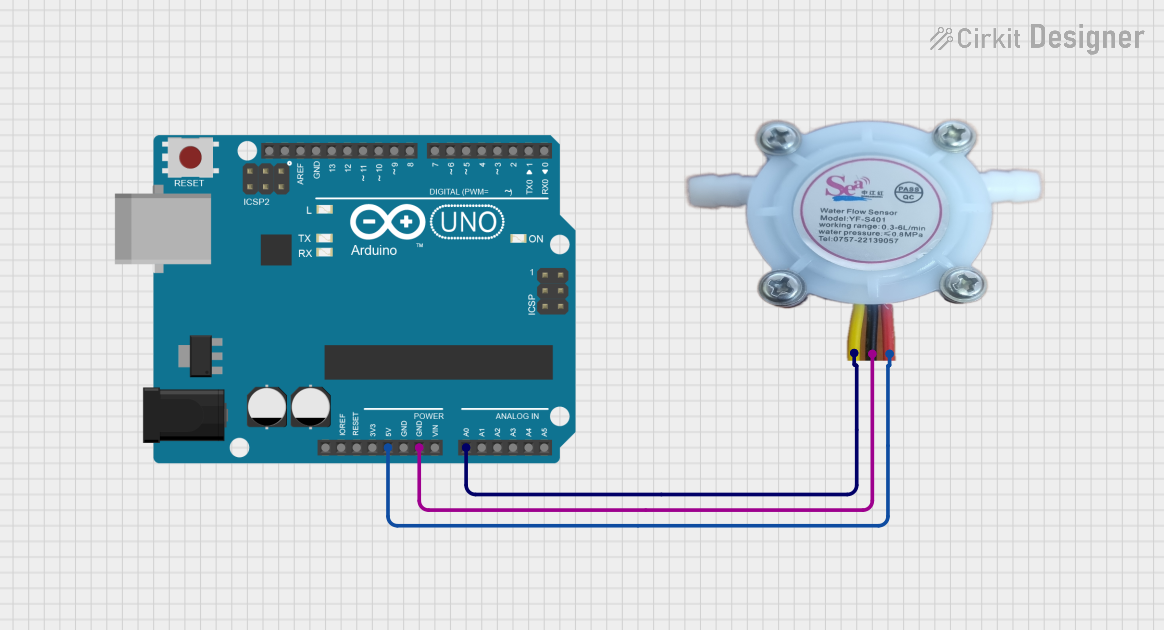 Open Project in Cirkit Designer
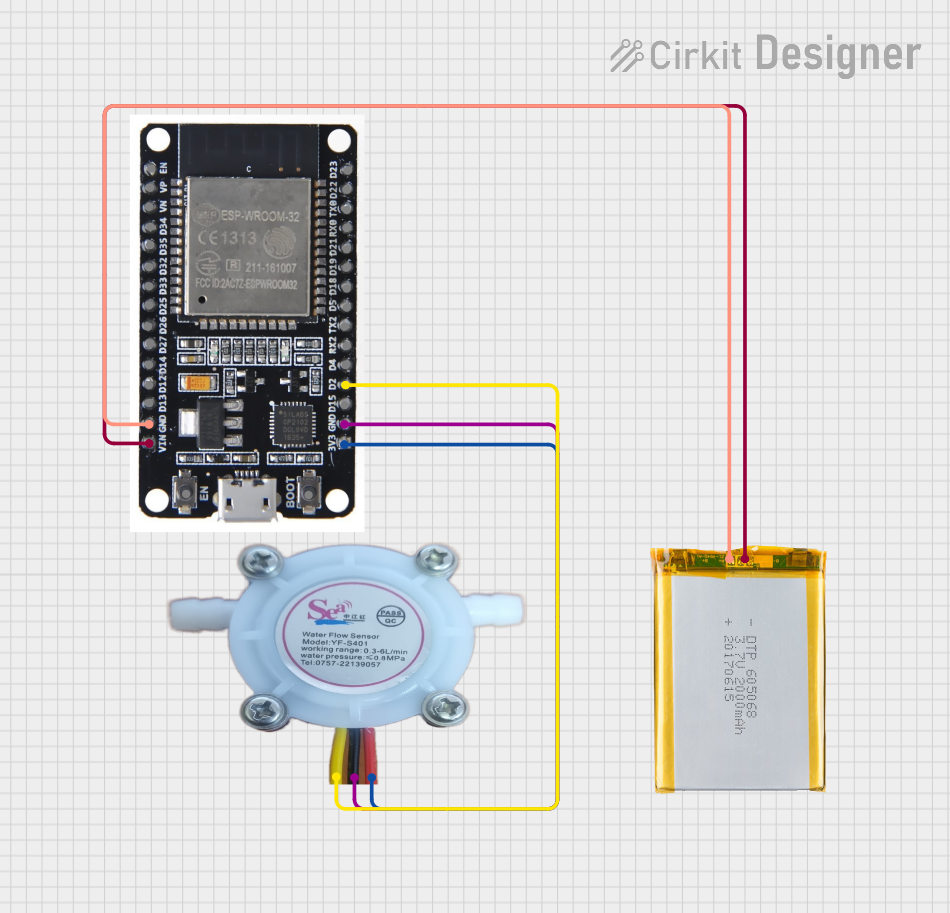 Open Project in Cirkit Designer
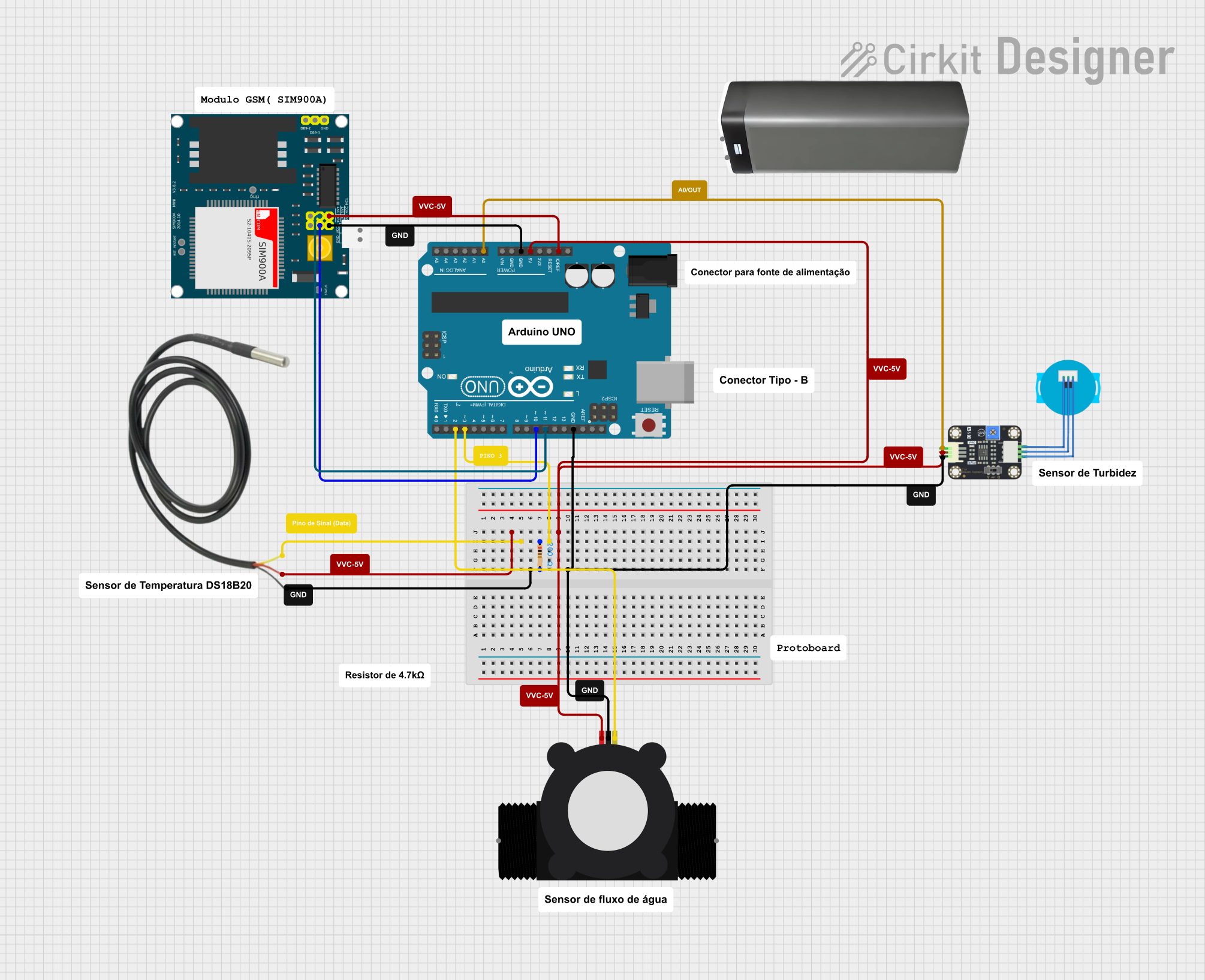 Open Project in Cirkit Designer
 Open Project in Cirkit Designer
Explore Projects Built with Water Flow Rate Sensor YF-S401
Open Project in Cirkit DesignerOpen Project in Cirkit DesignerOpen Project in Cirkit DesignerOpen Project in Cirkit DesignerCommon Applications and Use Cases
- Water dispensing systems
- Industrial fluid monitoring
- Smart irrigation systems
- Home automation for water usage tracking
- Leak detection systems
Technical Specifications
The following table outlines the key technical details of the YF-S401 sensor:
| Parameter | Specification |
|---|---|
| Operating Voltage | 5V to 18V DC |
| Operating Current | ≤ 15 mA (at 5V DC) |
| Flow Rate Range | 1 to 30 L/min |
| Output Pulse Frequency | F = 7.5 * Q (Q = flow rate in L/min) |
| Maximum Water Pressure | 1.75 MPa |
| Operating Temperature | -25°C to 80°C |
| Accuracy | ±5% |
| Output Signal | Pulse signal (digital) |
Pin Configuration and Descriptions
The YF-S401 sensor has three wires for connection:
| Wire Color | Pin Name | Description |
|---|---|---|
| Red | VCC | Power supply (5V to 18V DC) |
| Black | GND | Ground connection |
| Yellow | Signal | Pulse output signal proportional to flow rate |
Usage Instructions
How to Use the Component in a Circuit
- Power the Sensor: Connect the red wire to a 5V to 18V DC power source and the black wire to ground.
- Connect the Signal Wire: Attach the yellow wire to a digital input pin on a microcontroller (e.g., Arduino UNO).
- Read the Pulses: Use the microcontroller to count the pulses from the signal wire. Each pulse corresponds to a specific volume of water, based on the formula: [ Flow Rate (L/min) = \frac{\text{Pulse Frequency (Hz)}}{7.5} ]
- Calculate Total Volume: Integrate the flow rate over time to determine the total volume of water.
Important Considerations and Best Practices
- Ensure the sensor is installed in the correct orientation, with the arrow on the body pointing in the direction of water flow.
- Avoid exposing the sensor to water temperatures or pressures beyond its rated limits.
- Use a pull-up resistor (e.g., 10kΩ) on the signal line if the microcontroller requires it for stable readings.
- Debounce the signal in software to filter out noise and ensure accurate pulse counting.
Example Code for Arduino UNO
// YF-S401 Water Flow Rate Sensor Example Code
// This code reads pulses from the sensor and calculates the flow rate in L/min.

volatile int pulseCount = 0; // Variable to store pulse count
float flowRate = 0.0;        // Variable to store flow rate in L/min
unsigned long lastTime = 0;  // Variable to store the last time flow was calculated

void setup() {
  pinMode(2, INPUT_PULLUP); // Set pin 2 as input with pull-up resistor
  attachInterrupt(digitalPinToInterrupt(2), pulseCounter, RISING);
  // Attach interrupt to count pulses on pin 2
  Serial.begin(9600); // Initialize serial communication
}

void loop() {
  unsigned long currentTime = millis(); // Get current time in milliseconds
  if (currentTime - lastTime >= 1000) { // Calculate flow rate every second
    noInterrupts(); // Disable interrupts to safely access pulseCount
    int pulses = pulseCount; // Copy pulse count to a local variable
    pulseCount = 0; // Reset pulse count
    interrupts(); // Re-enable interrupts

    flowRate = (pulses / 7.5); // Calculate flow rate in L/min
    Serial.print("Flow Rate: ");
    Serial.print(flowRate);
    Serial.println(" L/min");

    lastTime = currentTime; // Update the last time flow was calculated
  }
}

// Interrupt service routine to count pulses
void pulseCounter() {
  pulseCount++; // Increment pulse count on each rising edge
}
Troubleshooting and FAQs
Common Issues and Solutions
No Output Signal:
- Ensure the sensor is properly powered (check voltage and connections).
- Verify that the signal wire is connected to the correct microcontroller pin.
- Check for blockages or air bubbles in the water flow.
Inaccurate Readings:
- Confirm the sensor is installed in the correct orientation.
- Ensure the water flow is within the sensor's rated range (1 to 30 L/min).
- Use software debouncing to filter out noise in the signal.
Intermittent Signal Drops:
- Check for loose or damaged wiring.
- Use a pull-up resistor on the signal line if necessary.
FAQs
Q: Can the YF-S401 measure other liquids besides water?
A: The sensor is designed for water and may not provide accurate readings with other liquids. Additionally, using it with corrosive or viscous liquids may damage the sensor.
Q: How do I calculate the total volume of water?
A: Multiply the flow rate (L/min) by the time duration (in minutes) to get the total volume. Alternatively, integrate the pulse count over time.
Q: Can I use the YF-S401 with a 3.3V microcontroller?
A: Yes, but you may need a level shifter or voltage divider to safely interface the signal output with the microcontroller.