
How to Use LCD 20x4: Examples, Pinouts, and Specs
 Design with LCD 20x4 in Cirkit Designer
Introduction
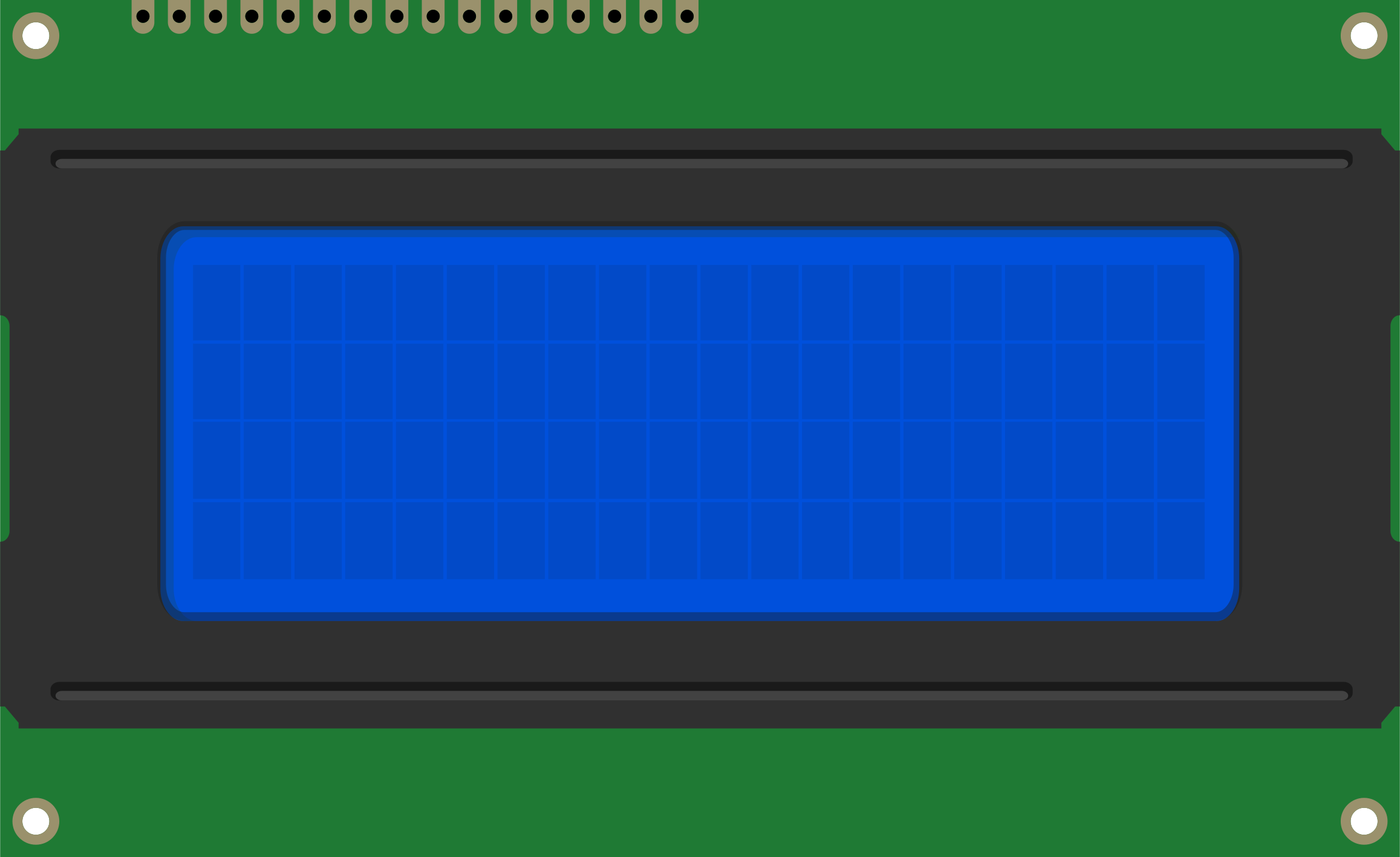
The LCD 20x4 is a Liquid Crystal Display module capable of displaying 20 characters per line across 4 lines. It is widely used in embedded systems and microcontroller projects for presenting textual information such as sensor readings, system status, or user instructions. This display is based on the HD44780 controller, making it compatible with most microcontrollers, including Arduino, Raspberry Pi, and other development boards.
Explore Projects Built with LCD 20x4
 Open Project in Cirkit Designer
 Open Project in Cirkit Designer
 Open Project in Cirkit Designer
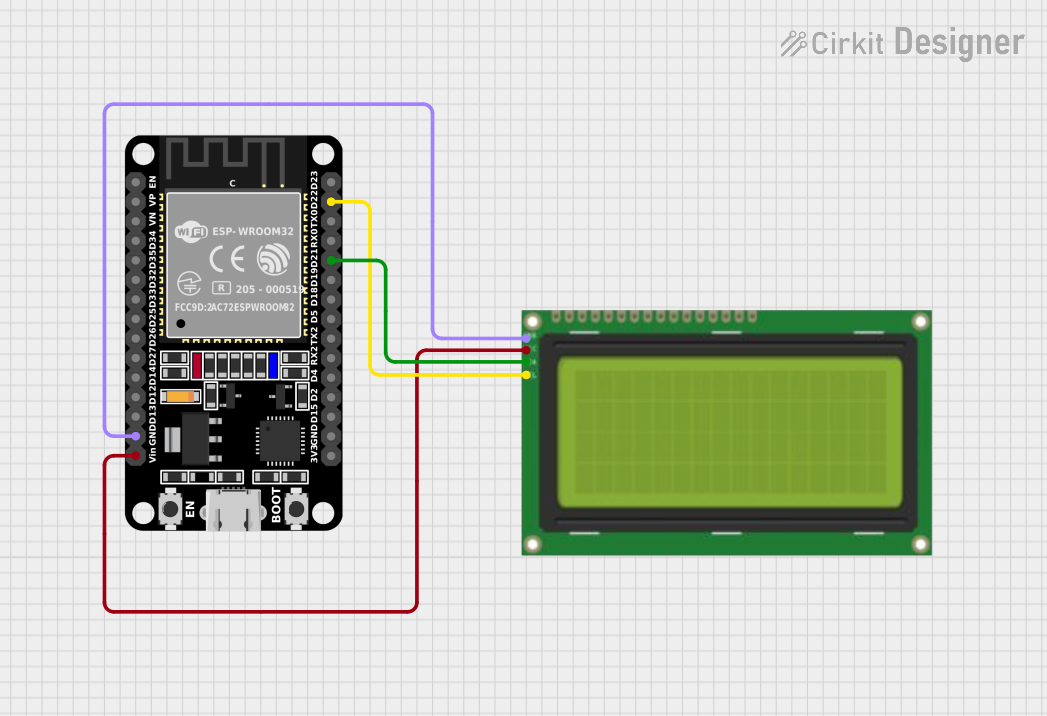 Open Project in Cirkit Designer
Explore Projects Built with LCD 20x4
Open Project in Cirkit DesignerOpen Project in Cirkit DesignerOpen Project in Cirkit DesignerOpen Project in Cirkit DesignerCommon Applications
- Home automation systems
- Industrial control panels
- IoT devices
- Educational projects
- Prototyping and debugging embedded systems
Technical Specifications
The following table outlines the key technical details of the LCD 20x4 module:
| Parameter | Specification |
|---|---|
| Display Type | 20x4 Character LCD |
| Controller | HD44780 or compatible |
| Operating Voltage | 4.7V to 5.3V |
| Operating Current | 1.5mA (without backlight) |
| Backlight Voltage | 4.2V to 4.6V |
| Backlight Current | 120mA (typical) |
| Character Size | 5x8 dot matrix |
| Interface Type | Parallel (4-bit or 8-bit mode) |
| Operating Temperature | -20°C to +70°C |
| Dimensions | 98mm x 60mm x 12mm |
Pin Configuration
The LCD 20x4 module typically has 16 pins. The table below describes each pin:
| Pin | Name | Description |
|---|---|---|
| 1 | VSS | Ground (0V) |
| 2 | VDD | Power supply (4.7V to 5.3V) |
| 3 | VO | Contrast adjustment (connect to a potentiometer) |
| 4 | RS | Register Select (0: Command, 1: Data) |
| 5 | RW | Read/Write (0: Write, 1: Read) |
| 6 | E | Enable signal (triggers data read/write) |
| 7-14 | D0-D7 | Data pins (D0-D3 used in 8-bit mode, D4-D7 used in 4-bit mode) |
| 15 | A (LED+) | Backlight anode (connect to +5V through a resistor if needed) |
| 16 | K (LED-) | Backlight cathode (connect to ground) |
Usage Instructions
Connecting the LCD 20x4 to an Arduino UNO
The LCD 20x4 can be connected to an Arduino UNO using the 4-bit mode to save pins. Below is a typical wiring configuration:
| LCD Pin | Arduino Pin |
|---|---|
| VSS | GND |
| VDD | 5V |
| VO | Potentiometer (middle pin) |
| RS | Digital Pin 12 |
| RW | GND |
| E | Digital Pin 11 |
| D4 | Digital Pin 5 |
| D5 | Digital Pin 4 |
| D6 | Digital Pin 3 |
| D7 | Digital Pin 2 |
| A (LED+) | 5V (via 220Ω resistor) |
| K (LED-) | GND |
Arduino Code Example
Below is an example Arduino sketch to display text on the LCD 20x4:
#include <LiquidCrystal.h>

// Initialize the library with the pins connected to the LCD
// (RS, E, D4, D5, D6, D7)
LiquidCrystal lcd(12, 11, 5, 4, 3, 2);

void setup() {
  // Set up the LCD's number of columns and rows
  lcd.begin(20, 4);

  // Print a message to the LCD
  lcd.setCursor(0, 0); // Set cursor to column 0, row 0
  lcd.print("Hello, World!");

  lcd.setCursor(0, 1); // Set cursor to column 0, row 1
  lcd.print("LCD 20x4 Demo");

  lcd.setCursor(0, 2); // Set cursor to column 0, row 2
  lcd.print("Line 3 Example");

  lcd.setCursor(0, 3); // Set cursor to column 0, row 3
  lcd.print("Line 4 Example");
}

void loop() {
  // Nothing to do here
}
Important Considerations
- Contrast Adjustment: Use a 10kΩ potentiometer to adjust the contrast by connecting its middle pin to VO (Pin 3).
- Backlight Current: Use a resistor (e.g., 220Ω) in series with the backlight to limit current and prevent damage.
- 4-bit vs. 8-bit Mode: The 4-bit mode is recommended for saving microcontroller pins, as it only requires D4-D7.
- Power Supply: Ensure a stable 5V power supply to avoid flickering or malfunction.
Troubleshooting and FAQs
Common Issues
No Display on the Screen
- Solution: Check the power connections (VSS to GND, VDD to 5V).
- Solution: Adjust the contrast using the potentiometer connected to VO.
Flickering or Unstable Display
- Solution: Ensure a stable 5V power supply.
- Solution: Verify that the backlight resistor is correctly installed.
Incorrect or Garbled Characters
- Solution: Double-check the wiring, especially the data pins (D4-D7).
- Solution: Ensure the correct initialization in the Arduino code (
lcd.begin(20, 4)).
Backlight Not Working
- Solution: Verify the backlight connections (A to 5V via a resistor, K to GND).
FAQs
Can I use the LCD 20x4 with a 3.3V microcontroller?
- Yes, but you will need a level shifter or voltage divider for the data pins, and the backlight may require a separate 5V supply.
How do I display custom characters?
- Use the
lcd.createChar()function in the LiquidCrystal library to define and display custom characters.
- Use the
Can I use the LCD 20x4 in 8-bit mode?
- Yes, connect all data pins (D0-D7) to the microcontroller and modify the initialization in the code accordingly.
What is the maximum viewing angle of the LCD?
- The typical viewing angle is around 45° to 60°, depending on the manufacturer.
By following this documentation, you can effectively integrate the LCD 20x4 into your projects and troubleshoot common issues with ease.