
How to Use TS-25GA37OH-10: Examples, Pinouts, and Specs
 Design with TS-25GA37OH-10 in Cirkit Designer
Introduction
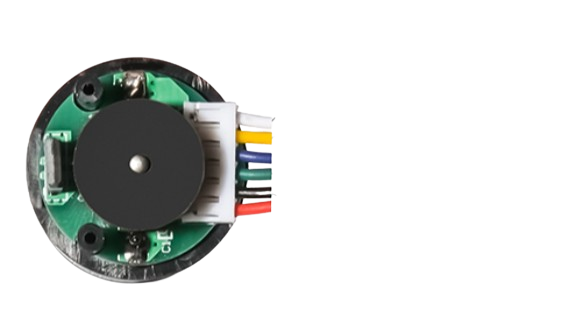
The TS-25GA37OH-10 is a precision temperature sensor designed for accurate temperature measurement in a variety of applications. It features a wide operating temperature range and high sensitivity, making it suitable for industrial, medical, and environmental monitoring systems. Its compact design and reliable performance ensure seamless integration into both analog and digital systems.
Explore Projects Built with TS-25GA37OH-10
 Open Project in Cirkit Designer
 Open Project in Cirkit Designer
 Open Project in Cirkit Designer
 Open Project in Cirkit Designer
Explore Projects Built with TS-25GA37OH-10
Open Project in Cirkit DesignerOpen Project in Cirkit DesignerOpen Project in Cirkit DesignerOpen Project in Cirkit DesignerCommon Applications
- Industrial temperature monitoring
- Medical devices for patient temperature measurement
- Environmental monitoring systems
- HVAC (Heating, Ventilation, and Air Conditioning) systems
- Consumer electronics requiring temperature regulation
Technical Specifications
Key Technical Details
| Parameter | Value |
|---|---|
| Operating Temperature Range | -40°C to +125°C |
| Supply Voltage (Vcc) | 2.7V to 5.5V |
| Output Signal Type | Analog Voltage |
| Sensitivity | 10 mV/°C |
| Accuracy | ±0.5°C (typical) |
| Response Time | < 1 second |
| Package Type | TO-92 or SMD |
Pin Configuration and Descriptions
| Pin Number | Pin Name | Description |
|---|---|---|
| 1 | Vcc | Power supply input (2.7V to 5.5V) |
| 2 | GND | Ground connection |
| 3 | Vout | Analog voltage output proportional to temperature |
Usage Instructions
How to Use the TS-25GA37OH-10 in a Circuit
- Power Supply: Connect the Vcc pin to a stable power source within the range of 2.7V to 5.5V. Ensure proper decoupling capacitors (e.g., 0.1 µF) are placed near the sensor to reduce noise.
- Ground Connection: Connect the GND pin to the ground of the circuit.
- Output Signal: The Vout pin provides an analog voltage proportional to the measured temperature. Use an analog-to-digital converter (ADC) if interfacing with a microcontroller.
Important Considerations
- Placement: Place the sensor away from heat-generating components to avoid inaccurate readings.
- Calibration: While the sensor is factory-calibrated, additional calibration may be required for high-precision applications.
- Wiring: Use short and shielded wires to minimize noise interference in the output signal.
- Power Supply Noise: Ensure the power supply is stable and free from high-frequency noise to maintain accuracy.
Example: Connecting to an Arduino UNO
The TS-25GA37OH-10 can be easily interfaced with an Arduino UNO to read temperature values.
Circuit Diagram
- Connect the Vcc pin of the sensor to the 5V pin on the Arduino.
- Connect the GND pin of the sensor to the GND pin on the Arduino.
- Connect the Vout pin of the sensor to an analog input pin (e.g., A0) on the Arduino.
Sample Code
// TS-25GA37OH-10 Temperature Sensor Example Code
// Reads the analog voltage from the sensor and converts it to temperature (°C)

const int sensorPin = A0; // Analog pin connected to Vout of the sensor
const float sensitivity = 0.01; // Sensor sensitivity in volts per degree Celsius
const float vcc = 5.0; // Arduino supply voltage (5V)

void setup() {
  Serial.begin(9600); // Initialize serial communication
}

void loop() {
  int sensorValue = analogRead(sensorPin); // Read the analog value (0-1023)
  float voltage = (sensorValue / 1023.0) * vcc; // Convert to voltage
  float temperature = voltage / sensitivity; // Convert voltage to temperature

  // Print the temperature to the Serial Monitor
  Serial.print("Temperature: ");
  Serial.print(temperature);
  Serial.println(" °C");

  delay(1000); // Wait for 1 second before the next reading
}
Troubleshooting and FAQs
Common Issues and Solutions
Inaccurate Temperature Readings:
- Cause: Sensor placed near heat sources or in a poorly ventilated area.
- Solution: Relocate the sensor to a location with stable ambient conditions.
No Output Signal:
- Cause: Incorrect wiring or insufficient power supply.
- Solution: Verify all connections and ensure the power supply voltage is within the specified range.
Noisy Output:
- Cause: Electrical noise from nearby components or long wires.
- Solution: Use shorter wires, add decoupling capacitors, or shield the sensor wiring.
Slow Response Time:
- Cause: Sensor covered or obstructed by insulating materials.
- Solution: Ensure the sensor is exposed to the environment being measured.
FAQs
Q1: Can the TS-25GA37OH-10 be used in outdoor environments?
A1: Yes, but it should be housed in a protective enclosure to shield it from moisture and debris.
Q2: Is the sensor compatible with 3.3V systems?
A2: Yes, the sensor operates within a supply voltage range of 2.7V to 5.5V, making it compatible with 3.3V systems.
Q3: How do I improve the accuracy of the sensor?
A3: Perform additional calibration in the target environment and ensure the sensor is not exposed to sudden temperature changes or electrical noise.
Q4: Can I use this sensor with a Raspberry Pi?
A4: Yes, but you will need an external ADC since the Raspberry Pi does not have built-in analog input pins.