
How to Use 1S 3.7v Lipo 500mAh: Examples, Pinouts, and Specs
 Design with 1S 3.7v Lipo 500mAh in Cirkit Designer
Introduction
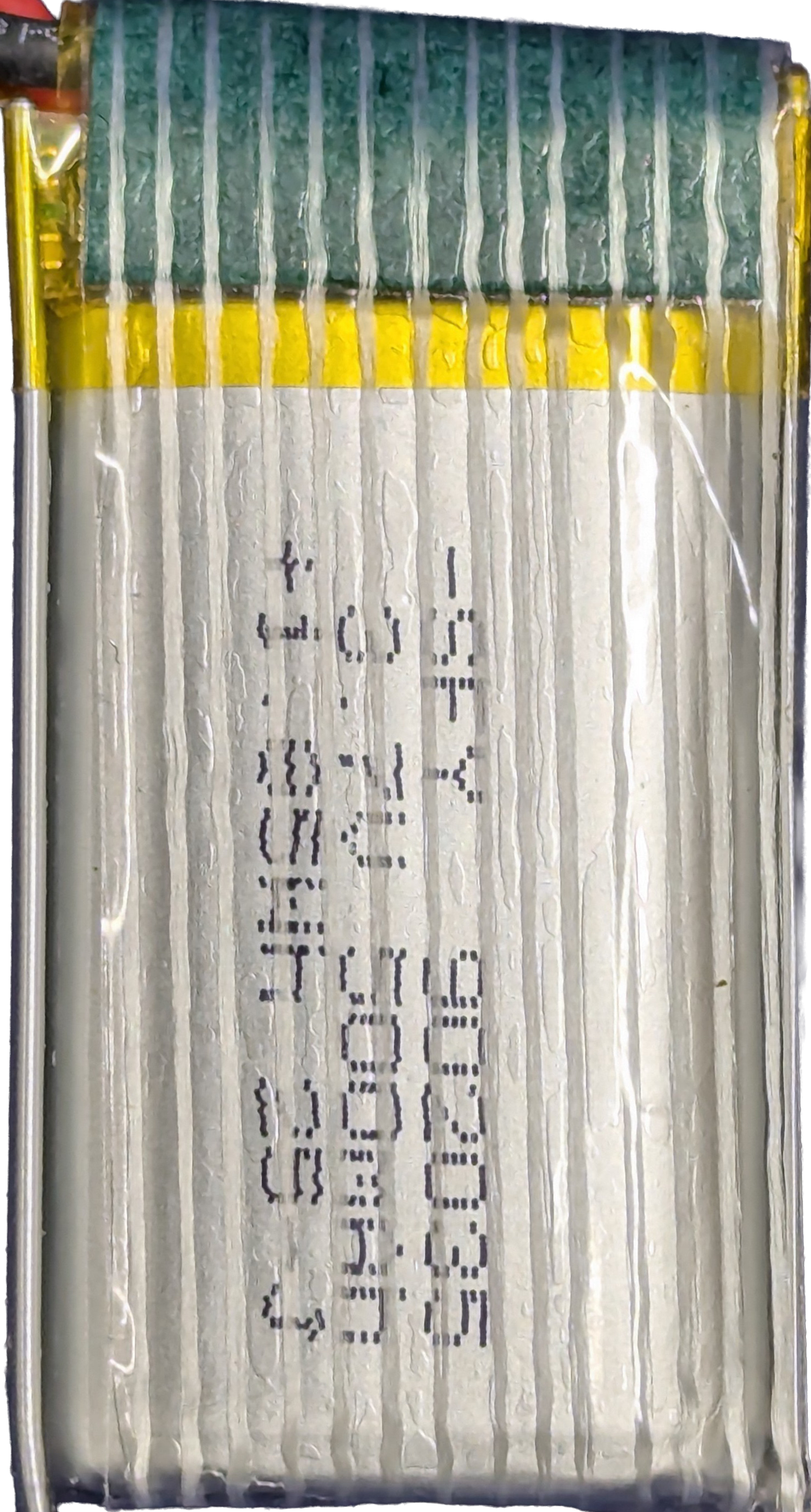
The 1S 3.7V LiPo 500mAh is a single-cell lithium polymer (LiPo) battery with a nominal voltage of 3.7 volts and a capacity of 500mAh. Known for its lightweight design and high energy density, this battery is widely used in portable electronic devices, drones, RC vehicles, and wearable technology. Its compact size and reliable performance make it an ideal power source for applications requiring a balance of energy efficiency and portability.
Explore Projects Built with 1S 3.7v Lipo 500mAh
 Open Project in Cirkit Designer
 Open Project in Cirkit Designer
 Open Project in Cirkit Designer
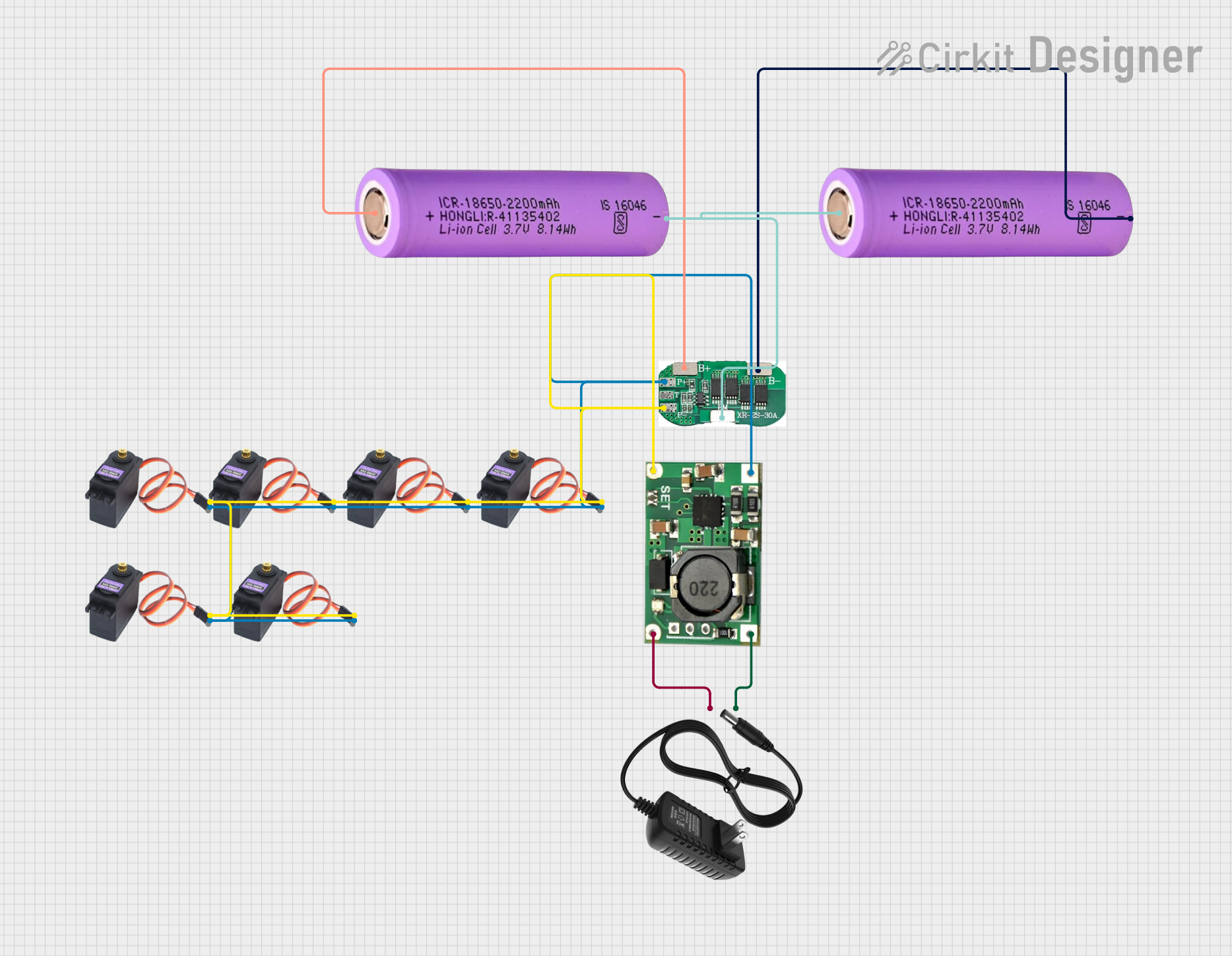 Open Project in Cirkit Designer
Explore Projects Built with 1S 3.7v Lipo 500mAh
Open Project in Cirkit DesignerOpen Project in Cirkit DesignerOpen Project in Cirkit DesignerOpen Project in Cirkit DesignerCommon Applications
- Drones and quadcopters
- RC cars and boats
- Wearable devices (e.g., fitness trackers, smartwatches)
- Portable electronic gadgets (e.g., Bluetooth speakers, handheld devices)
- DIY electronics and Arduino projects
Technical Specifications
Key Technical Details
| Parameter | Value |
|---|---|
| Nominal Voltage | 3.7V |
| Capacity | 500mAh |
| Maximum Discharge Rate | Typically 20C (10A max) |
| Charging Voltage | 4.2V (maximum) |
| Minimum Discharge Voltage | 3.0V (do not over-discharge) |
| Chemistry | Lithium Polymer (LiPo) |
| Weight | ~12g |
| Dimensions | ~40mm x 20mm x 7mm |
| Connector Type | JST or Molex (varies by model) |
Pin Configuration and Descriptions
| Pin Name | Description |
|---|---|
| Positive (+) | Positive terminal for power output |
| Negative (-) | Negative terminal for power output |
| Balance Lead (optional) | Used for balanced charging (if present) |
Usage Instructions
How to Use the 1S 3.7V LiPo 500mAh in a Circuit
- Connection: Connect the positive (+) and negative (-) terminals of the battery to the corresponding terminals of your circuit or device. Ensure the polarity is correct to avoid damage.
- Charging: Use a LiPo-compatible charger to charge the battery. Set the charger to a single-cell (1S) configuration with a charging voltage of 4.2V and a current limit of 0.5A (1C rate).
- Discharging: Ensure the connected device does not draw more current than the battery's maximum discharge rate (10A for a 20C-rated battery).
- Protection Circuit: Use a battery protection circuit or a Battery Management System (BMS) to prevent overcharging, over-discharging, and short circuits.
Important Considerations and Best Practices
- Avoid Overcharging: Never charge the battery above 4.2V to prevent overheating or damage.
- Avoid Over-Discharging: Do not let the voltage drop below 3.0V, as this can permanently damage the battery.
- Storage: Store the battery at a voltage of approximately 3.8V (storage charge) in a cool, dry place.
- Handling: Avoid puncturing, crushing, or exposing the battery to fire or water.
- Charging Safety: Always charge the battery on a non-flammable surface and monitor the charging process.
Example: Using the Battery with an Arduino UNO
To power an Arduino UNO with the 1S 3.7V LiPo 500mAh, you will need a DC-DC boost converter to step up the voltage to 5V. Below is an example circuit and code:
Circuit Setup
- Connect the battery's positive (+) terminal to the input positive terminal of the DC-DC boost converter.
- Connect the battery's negative (-) terminal to the input negative terminal of the boost converter.
- Connect the output of the boost converter (5V and GND) to the Arduino UNO's 5V and GND pins.
Arduino Code Example
// Example code to blink an LED using Arduino UNO powered by a 1S 3.7V LiPo battery
// Ensure the battery is connected via a DC-DC boost converter to provide 5V to the Arduino

const int ledPin = 13; // Pin connected to the onboard LED

void setup() {
  pinMode(ledPin, OUTPUT); // Set the LED pin as an output
}

void loop() {
  digitalWrite(ledPin, HIGH); // Turn the LED on
  delay(1000);                // Wait for 1 second
  digitalWrite(ledPin, LOW);  // Turn the LED off
  delay(1000);                // Wait for 1 second
}
Troubleshooting and FAQs
Common Issues
Battery Not Charging:
- Cause: Charger not set to 1S configuration or faulty charger.
- Solution: Verify the charger settings and ensure it is compatible with 1S LiPo batteries.
Battery Swelling:
- Cause: Overcharging, over-discharging, or physical damage.
- Solution: Stop using the battery immediately and dispose of it safely.
Device Not Powering On:
- Cause: Battery voltage too low or incorrect connection.
- Solution: Check the battery voltage with a multimeter and ensure proper polarity.
Short Battery Life:
- Cause: Frequent over-discharging or charging at a high current rate.
- Solution: Follow recommended charging and discharging practices.
FAQs
Q1: Can I use this battery to power a 5V device directly?
A1: No, the nominal voltage of this battery is 3.7V, which is insufficient for most 5V devices. Use a DC-DC boost converter to step up the voltage to 5V.
Q2: How long will the battery last on a single charge?
A2: The runtime depends on the load current. For example, if your device draws 250mA, the battery will last approximately 2 hours (500mAh ÷ 250mA).
Q3: Is it safe to leave the battery connected to the charger?
A3: No, always disconnect the battery once it is fully charged to prevent overcharging.
Q4: Can I use this battery in parallel with another 1S LiPo battery?
A4: Yes, but ensure both batteries have the same voltage and capacity, and use a proper balancing circuit.
This concludes the documentation for the 1S 3.7V LiPo 500mAh battery. Always follow safety guidelines and manufacturer recommendations for optimal performance and longevity.