
How to Use 10A High Efficiency Automatic Step UP - Down Dc-Dc converter: Examples, Pinouts, and Specs
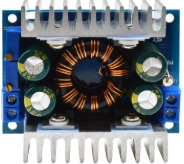
 Design with 10A High Efficiency Automatic Step UP - Down Dc-Dc converter in Cirkit Designer
Introduction
The 10A High Efficiency Automatic Step Up - Down DC-DC Converter is a versatile power management component designed to automatically adjust voltage levels. It can step up or step down the input voltage to provide a stable output voltage, making it ideal for applications requiring efficient power conversion. With a maximum output current of 10A, this converter is suitable for powering devices with varying voltage requirements.
Explore Projects Built with 10A High Efficiency Automatic Step UP - Down Dc-Dc converter
 Open Project in Cirkit Designer
 Open Project in Cirkit Designer
 Open Project in Cirkit Designer
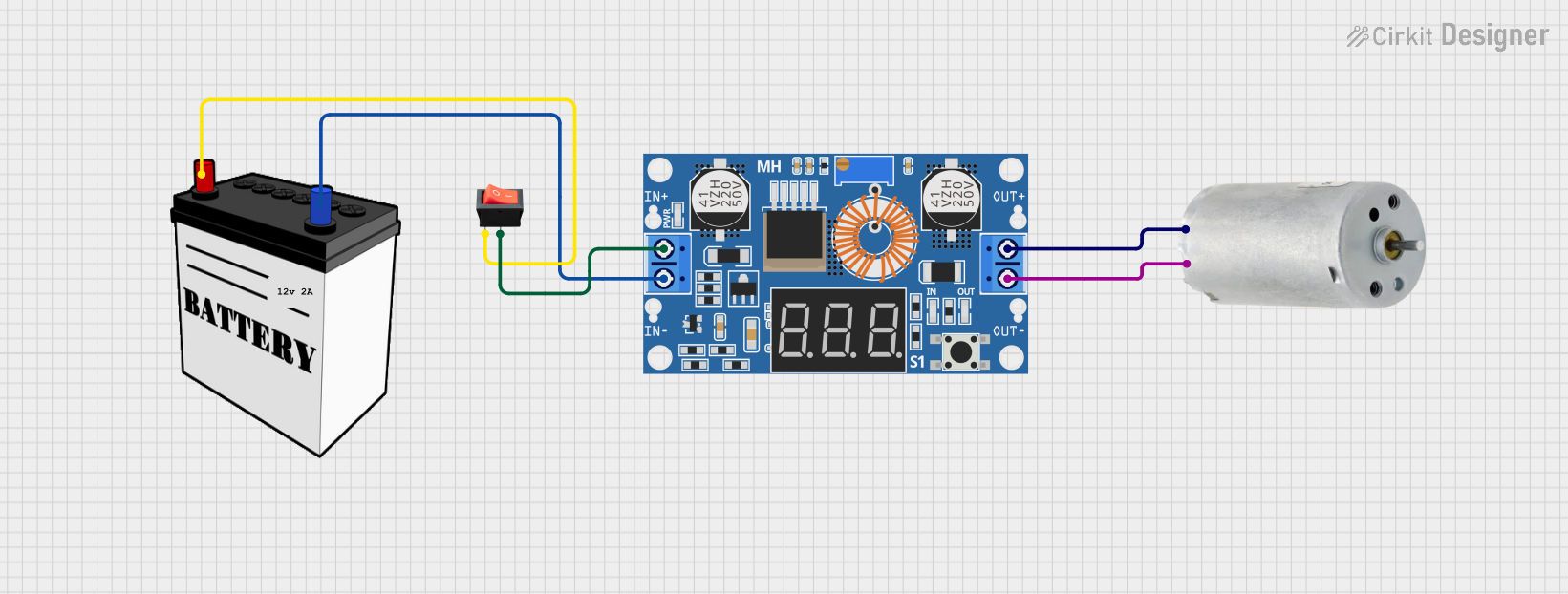 Open Project in Cirkit Designer
Explore Projects Built with 10A High Efficiency Automatic Step UP - Down Dc-Dc converter
Open Project in Cirkit DesignerOpen Project in Cirkit DesignerOpen Project in Cirkit DesignerOpen Project in Cirkit DesignerCommon Applications and Use Cases
- Powering microcontrollers, such as Arduino UNO, and other development boards.
- Battery-powered systems requiring stable voltage output.
- Robotics and motor control applications.
- LED lighting systems.
- Renewable energy systems, such as solar panels.
- Portable electronics and USB power banks.
Technical Specifications
The following table outlines the key technical details of the 10A High Efficiency Automatic Step Up - Down DC-DC Converter:
| Parameter | Specification |
|---|---|
| Input Voltage Range | 5V to 30V |
| Output Voltage Range | 1.25V to 30V (adjustable) |
| Maximum Output Current | 10A |
| Efficiency | Up to 95% (depending on input/output ratio) |
| Switching Frequency | 150 kHz |
| Operating Temperature | -40°C to +85°C |
| Dimensions | 60mm x 50mm x 20mm |
Pin Configuration and Descriptions
The converter has the following pin configuration:
| Pin Name | Description |
|---|---|
| VIN+ | Positive input voltage terminal (5V to 30V). |
| VIN- | Negative input voltage terminal (GND). |
| VOUT+ | Positive output voltage terminal (1.25V to 30V). |
| VOUT- | Negative output voltage terminal (GND). |
| ADJ | Voltage adjustment pin (use a potentiometer or resistor). |
Usage Instructions
How to Use the Component in a Circuit
Connect Input Voltage:
- Connect the positive terminal of your power source to the
VIN+pin. - Connect the negative terminal of your power source to the
VIN-pin.
- Connect the positive terminal of your power source to the
Connect Output Load:
- Connect the positive terminal of your load to the
VOUT+pin. - Connect the negative terminal of your load to the
VOUT-pin.
- Connect the positive terminal of your load to the
Adjust Output Voltage:
- Use the
ADJpin to set the desired output voltage. This can be done by turning the onboard potentiometer or connecting an external resistor.
- Use the
Verify Connections:
- Double-check all connections to ensure proper polarity and secure wiring.
Power On:
- Turn on the power source and measure the output voltage using a multimeter to confirm the desired voltage level.
Important Considerations and Best Practices
- Ensure the input voltage is within the specified range (5V to 30V).
- Do not exceed the maximum output current of 10A to avoid damage.
- Use proper heat dissipation methods (e.g., heatsinks or fans) if operating at high currents.
- Avoid short circuits between the input and output terminals.
- For Arduino UNO or other microcontroller applications, ensure the output voltage matches the required operating voltage (e.g., 5V or 3.3V).
Example: Connecting to an Arduino UNO
To power an Arduino UNO using the converter:
- Set the output voltage to 5V using the
ADJpin. - Connect the
VOUT+pin to the Arduino's 5V pin. - Connect the
VOUT-pin to the Arduino's GND pin.
Here is an example Arduino code to test the setup:
// Example code to blink an LED connected to pin 13 on the Arduino UNO
// Ensure the DC-DC converter is providing a stable 5V to the Arduino UNO.

void setup() {
  pinMode(13, OUTPUT); // Set pin 13 as an output pin
}

void loop() {
  digitalWrite(13, HIGH); // Turn the LED on
  delay(1000);            // Wait for 1 second
  digitalWrite(13, LOW);  // Turn the LED off
  delay(1000);            // Wait for 1 second
}
Troubleshooting and FAQs
Common Issues and Solutions
No Output Voltage:
- Check the input voltage to ensure it is within the specified range.
- Verify all connections, especially the polarity of the input and output terminals.
- Ensure the
ADJpin is properly configured.
Overheating:
- Ensure adequate heat dissipation using heatsinks or fans.
- Reduce the load current if it exceeds the converter's capacity.
Fluctuating Output Voltage:
- Check for loose connections or poor soldering.
- Verify that the input voltage is stable and not dropping under load.
Arduino UNO Not Powering On:
- Confirm that the output voltage is set to 5V.
- Check the connections between the converter and the Arduino UNO.
FAQs
Q: Can this converter be used with a 12V battery?
A: Yes, the converter can step up or step down the voltage from a 12V battery to the desired output voltage within the range of 1.25V to 30V.
Q: Is the output voltage adjustable while the converter is operating?
A: Yes, the output voltage can be adjusted in real-time using the ADJ pin, but ensure the load is not sensitive to voltage fluctuations during adjustment.
Q: Can I use this converter to power multiple devices simultaneously?
A: Yes, as long as the total current draw does not exceed 10A and the output voltage is suitable for all connected devices.
Q: Does the converter have reverse polarity protection?
A: No, the converter does not have built-in reverse polarity protection. Ensure correct polarity to avoid damage.