
How to Use Lipo 3.7V 1000mAh 3.7Wh: Examples, Pinouts, and Specs
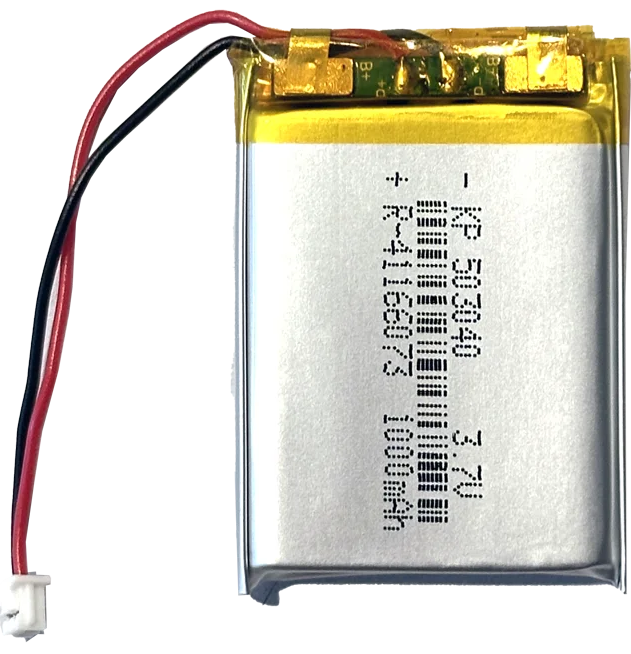
 Design with Lipo 3.7V 1000mAh 3.7Wh in Cirkit Designer
Introduction
The Lipo 3.7V 1000mAh 3.7Wh is a lithium polymer (LiPo) battery designed for portable electronic devices. With a nominal voltage of 3.7 volts, a capacity of 1000 milliampere-hours (mAh), and an energy rating of 3.7 watt-hours (Wh), this battery is lightweight and offers a high energy density. It is widely used in applications such as drones, RC vehicles, wearable devices, IoT projects, and small robotics.
LiPo batteries are known for their compact size, flexibility in shape, and ability to deliver high current, making them ideal for projects requiring efficient power storage and delivery.
Explore Projects Built with Lipo 3.7V 1000mAh 3.7Wh
 Open Project in Cirkit Designer
 Open Project in Cirkit Designer
 Open Project in Cirkit Designer
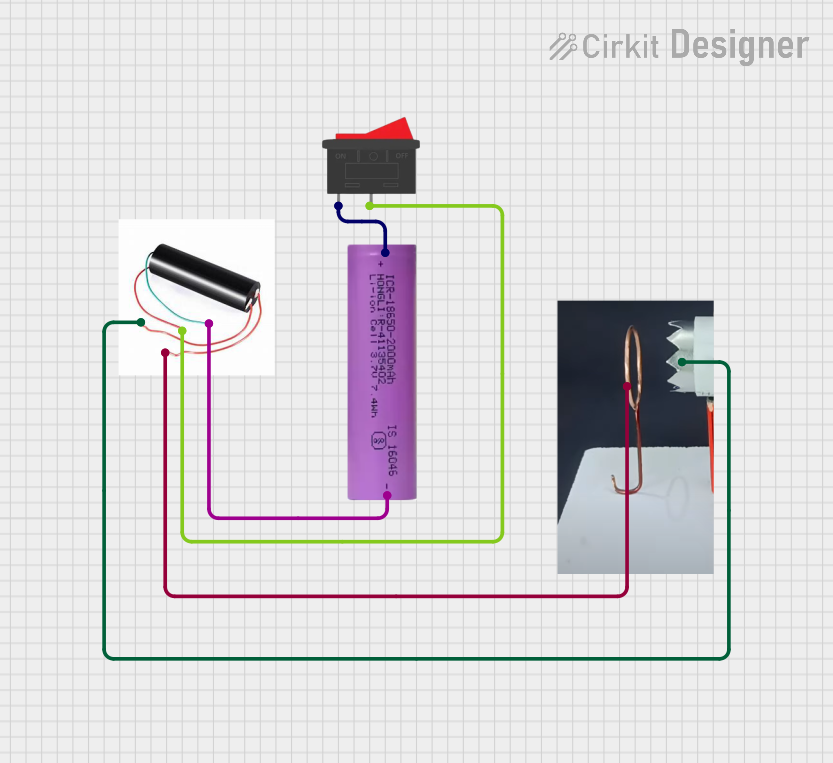 Open Project in Cirkit Designer
Explore Projects Built with Lipo 3.7V 1000mAh 3.7Wh
Open Project in Cirkit DesignerOpen Project in Cirkit DesignerOpen Project in Cirkit DesignerOpen Project in Cirkit DesignerTechnical Specifications
Below are the key technical details of the Lipo 3.7V 1000mAh 3.7Wh battery:
| Parameter | Value |
|---|---|
| Nominal Voltage | 3.7V |
| Capacity | 1000mAh |
| Energy Rating | 3.7Wh |
| Maximum Discharge Rate | Typically 1C (1A) |
| Charging Voltage | 4.2V (maximum) |
| Discharge Cutoff Voltage | 3.0V (minimum) |
| Chemistry | Lithium Polymer (LiPo) |
| Weight | ~20-25 grams |
| Dimensions | ~50mm x 30mm x 5mm (varies) |
| Connector Type | JST or bare wire leads |
Pin Configuration and Descriptions
The battery typically comes with a two-wire configuration:
| Pin | Wire Color | Description |
|---|---|---|
| Positive (+) | Red | Connects to the positive terminal of the circuit. |
| Negative (-) | Black | Connects to the ground or negative terminal. |
Note: Some LiPo batteries may include a third wire for balancing in multi-cell configurations, but this is not applicable for single-cell 3.7V batteries.
Usage Instructions
How to Use the Component in a Circuit
Connecting the Battery:
- Identify the positive (red) and negative (black) wires.
- Connect the red wire to the positive terminal of your circuit and the black wire to the ground.
- Ensure the connector type (e.g., JST) matches your device or use appropriate adapters.
Charging the Battery:
- Use a LiPo-compatible charger with a constant current/constant voltage (CC/CV) charging profile.
- Set the charging voltage to 4.2V and the current to 1C (1A) or lower.
- Avoid overcharging or charging at a higher current than specified.
Discharging the Battery:
- Ensure the load does not exceed the maximum discharge rate (1C or 1A).
- Monitor the voltage to prevent it from dropping below 3.0V, as over-discharging can damage the battery.
Mounting:
- Secure the battery in your project using non-conductive materials like foam tape or a battery holder.
- Avoid puncturing or bending the battery, as this can lead to safety hazards.
Important Considerations and Best Practices
- Safety First: LiPo batteries are sensitive to overcharging, over-discharging, and physical damage. Always handle them with care.
- Storage: Store the battery at a voltage of around 3.8V (50% charge) in a cool, dry place when not in use for extended periods.
- Protection Circuit: Use a battery management system (BMS) or protection circuit to prevent overcharging, over-discharging, and short circuits.
- Temperature: Operate the battery within the recommended temperature range (typically 0°C to 45°C for charging and -20°C to 60°C for discharging).
Example: Using with an Arduino UNO
To power an Arduino UNO with the Lipo 3.7V 1000mAh battery, you will need a DC-DC boost converter to step up the voltage to 5V. Below is an example circuit and code:
Circuit Setup
- Connect the battery's positive wire to the input positive terminal of the boost converter.
- Connect the battery's negative wire to the input ground terminal of the boost converter.
- Connect the output of the boost converter to the Arduino UNO's 5V and GND pins.
Arduino Code Example
// Example code to blink an LED using Arduino UNO powered by a LiPo battery
// Ensure the LiPo battery is connected via a boost converter to provide 5V.

const int ledPin = 13; // Pin connected to the onboard LED

void setup() {
  pinMode(ledPin, OUTPUT); // Set the LED pin as an output
}

void loop() {
  digitalWrite(ledPin, HIGH); // Turn the LED on
  delay(1000);                // Wait for 1 second
  digitalWrite(ledPin, LOW);  // Turn the LED off
  delay(1000);                // Wait for 1 second
}
Note: Always monitor the battery voltage during operation to avoid over-discharging.
Troubleshooting and FAQs
Common Issues and Solutions
Battery Not Charging:
- Cause: Charger not compatible or incorrect settings.
- Solution: Use a LiPo-compatible charger and ensure the voltage and current settings are correct.
Battery Swelling or Heating:
- Cause: Overcharging, over-discharging, or physical damage.
- Solution: Stop using the battery immediately and dispose of it safely.
Short Runtime:
- Cause: Battery capacity degraded or excessive load.
- Solution: Check the load current and replace the battery if it no longer holds sufficient charge.
Voltage Drops Below 3.0V:
- Cause: Over-discharge.
- Solution: Recharge the battery immediately and avoid deep discharges in the future.
FAQs
Q: Can I use this battery for high-current applications?
A: This battery supports a maximum discharge rate of 1C (1A). For higher currents, consider a battery with a higher discharge rating.Q: How do I safely dispose of a damaged LiPo battery?
A: Discharge the battery completely, submerge it in saltwater for 24 hours, and dispose of it at a battery recycling facility.Q: Can I connect multiple batteries in series or parallel?
A: Yes, but ensure proper balancing and use a BMS to manage the cells safely.
By following these guidelines, you can safely and effectively use the Lipo 3.7V 1000mAh 3.7Wh battery in your projects.