
How to Use SLA Relay 30A: Examples, Pinouts, and Specs
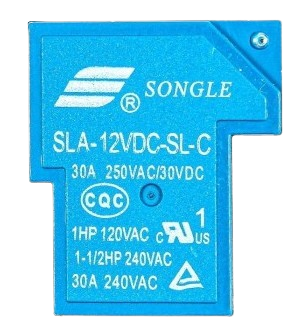
 Design with SLA Relay 30A in Cirkit Designer
Introduction
The SLA Relay 30A, manufactured by Songle (Part ID: 11), is a solid-state relay designed for high-efficiency and reliable switching of electrical loads. With a current rating of 30 amps, this relay is ideal for applications requiring robust control of high-power devices. Its solid-state design ensures durability, fast switching, and minimal wear compared to mechanical relays.
Explore Projects Built with SLA Relay 30A
 Open Project in Cirkit Designer
 Open Project in Cirkit Designer
 Open Project in Cirkit Designer
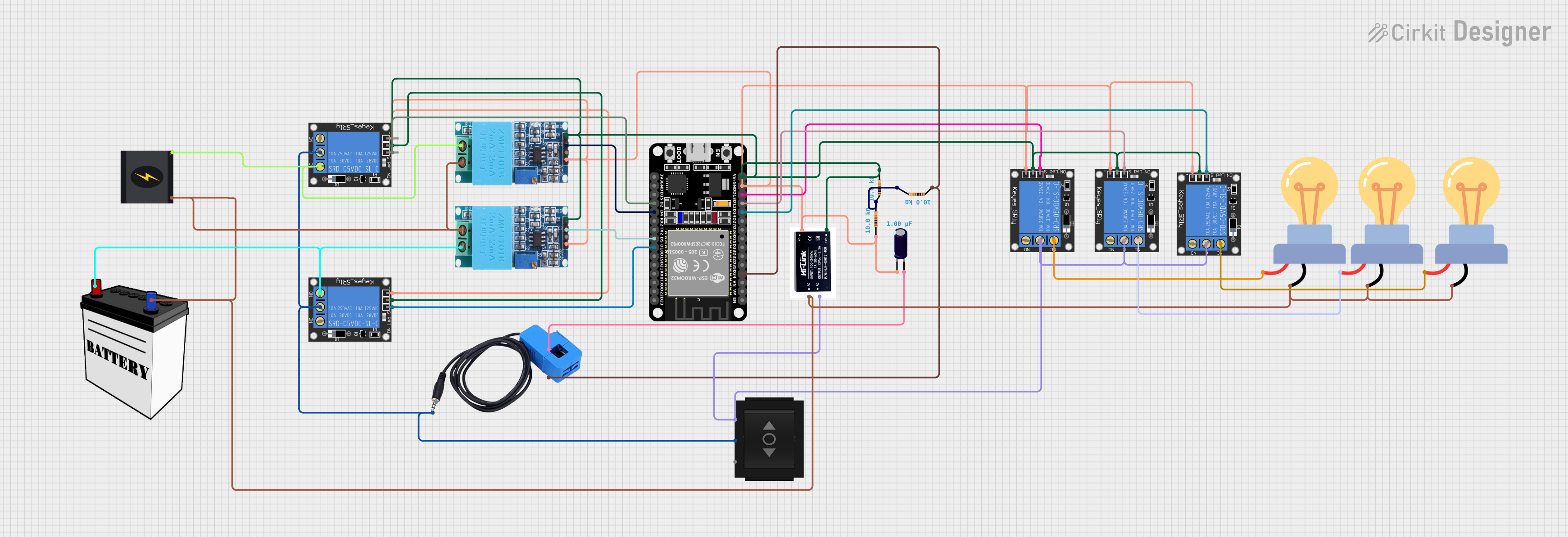 Open Project in Cirkit Designer
Explore Projects Built with SLA Relay 30A
Open Project in Cirkit DesignerOpen Project in Cirkit DesignerOpen Project in Cirkit DesignerOpen Project in Cirkit DesignerCommon Applications and Use Cases
- Industrial automation and control systems
- Home appliances and HVAC systems
- Motor control and lighting systems
- Renewable energy systems (e.g., solar inverters)
- Smart home devices and IoT applications
Technical Specifications
Key Technical Details
| Parameter | Value |
|---|---|
| Manufacturer | Songle |
| Part ID | 11 |
| Relay Type | Solid-State Relay (SSR) |
| Rated Current | 30A |
| Rated Voltage | 250V AC (Load Side) |
| Control Voltage | 3V DC to 32V DC |
| Switching Speed | ≤10ms |
| Insulation Resistance | ≥1000MΩ |
| Dielectric Strength | 2500V AC |
| Operating Temperature | -30°C to +80°C |
| Mounting Type | PCB or screw terminal |
Pin Configuration and Descriptions
The SLA Relay 30A typically has four pins or terminals for connections. Below is the pinout description:
| Pin/Terminal | Name | Description |
|---|---|---|
| 1 | Control (+) | Positive terminal for the DC control voltage input. |
| 2 | Control (-) | Negative terminal for the DC control voltage input. |
| 3 | Load (AC IN) | Input terminal for the AC load to be switched. |
| 4 | Load (AC OUT) | Output terminal for the AC load after switching. |
Note: Ensure proper polarity for the control voltage and correct wiring of the load terminals to avoid damage to the relay.
Usage Instructions
How to Use the SLA Relay 30A in a Circuit
Power the Control Side:
- Connect a DC voltage source (3V to 32V) to the control terminals (Pin 1 and Pin 2). Ensure the positive terminal is connected to Pin 1 and the negative terminal to Pin 2.
Connect the Load:
- Wire the AC load to the load terminals (Pin 3 and Pin 4). Pin 3 is the input side, and Pin 4 is the output side.
- Ensure the load does not exceed the relay's rated current (30A) and voltage (250V AC).
Switching Operation:
- When the control voltage is applied, the relay will switch the AC load on or off, depending on the control signal.
Mounting:
- Secure the relay on a PCB or use screw terminals for stable connections. Ensure proper insulation and spacing to prevent short circuits.
Important Considerations and Best Practices
- Heat Dissipation: Solid-state relays can generate heat during operation. Use a heatsink or ensure adequate ventilation to prevent overheating.
- Surge Protection: Add a snubber circuit or varistor across the load terminals to protect the relay from voltage spikes.
- Control Voltage Range: Ensure the control voltage stays within the specified range (3V to 32V DC) to avoid damage.
- Load Compatibility: Verify that the load's current and voltage ratings are within the relay's specifications.
Example: Using SLA Relay 30A with Arduino UNO
The SLA Relay 30A can be controlled using an Arduino UNO. Below is an example circuit and code to toggle the relay using a digital pin.
Circuit Connections
- Connect the relay's Control (+) pin to Arduino digital pin 7.
- Connect the relay's Control (-) pin to Arduino GND.
- Wire the AC load to the relay's Load (AC IN) and Load (AC OUT) terminals.
Arduino Code
// Define the relay control pin
const int relayPin = 7;

void setup() {
  // Set the relay pin as an output
  pinMode(relayPin, OUTPUT);

  // Initialize the relay in the OFF state
  digitalWrite(relayPin, LOW);
}

void loop() {
  // Turn the relay ON
  digitalWrite(relayPin, HIGH);
  delay(5000); // Keep the relay ON for 5 seconds

  // Turn the relay OFF
  digitalWrite(relayPin, LOW);
  delay(5000); // Keep the relay OFF for 5 seconds
}
Note: Use an external power supply for the relay if the Arduino cannot provide sufficient current.
Troubleshooting and FAQs
Common Issues and Solutions
Relay Not Switching:
- Cause: Insufficient control voltage or incorrect polarity.
- Solution: Verify the control voltage is within the 3V to 32V DC range and check the polarity.
Overheating:
- Cause: High current load or inadequate heat dissipation.
- Solution: Use a heatsink or improve ventilation around the relay.
Load Not Turning On/Off:
- Cause: Incorrect wiring of load terminals.
- Solution: Ensure the load is connected to the correct terminals (AC IN and AC OUT).
Voltage Spikes Damaging the Relay:
- Cause: Inductive loads causing back EMF.
- Solution: Add a snubber circuit or varistor across the load terminals.
FAQs
Can the SLA Relay 30A handle DC loads?
- No, this relay is designed for AC loads only. For DC loads, use a relay specifically rated for DC.
What is the maximum switching frequency?
- The SLA Relay 30A has a switching speed of ≤10ms, making it suitable for low to moderate frequency applications.
Is the relay optically isolated?
- Yes, the control and load sides are electrically isolated to ensure safety and prevent interference.
Can I use the relay without a heatsink?
- For low-current loads, a heatsink may not be necessary. However, for high-current applications, a heatsink is recommended to prevent overheating.
By following this documentation, users can effectively integrate the SLA Relay 30A into their projects and troubleshoot common issues with ease.