
How to Use 74AHCT1G125: Examples, Pinouts, and Specs

 Design with 74AHCT1G125 in Cirkit Designer
Introduction
The 74AHCT1G125 is a single-channel buffer/driver with 3-state outputs, designed for high-speed operation and low power consumption. It is particularly well-suited for interfacing between different voltage levels, making it a versatile component in digital circuits. This device is part of the AHCT family, which is optimized for compatibility with TTL logic levels.
Explore Projects Built with 74AHCT1G125
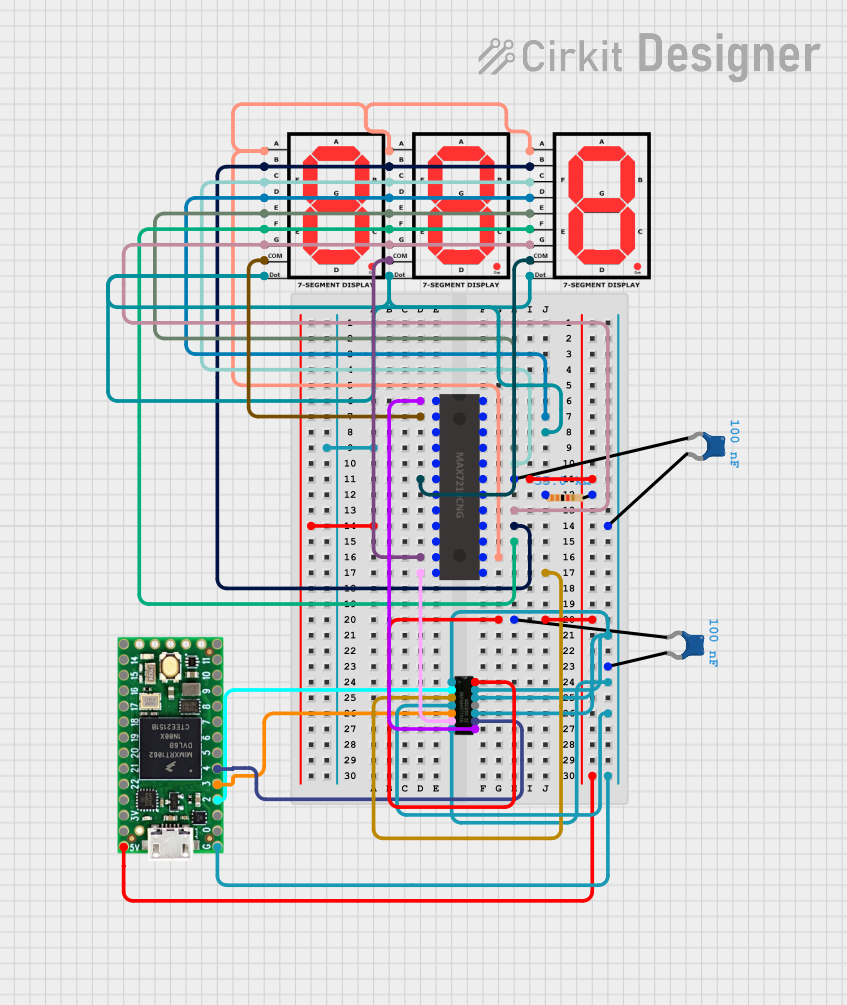 Open Project in Cirkit Designer
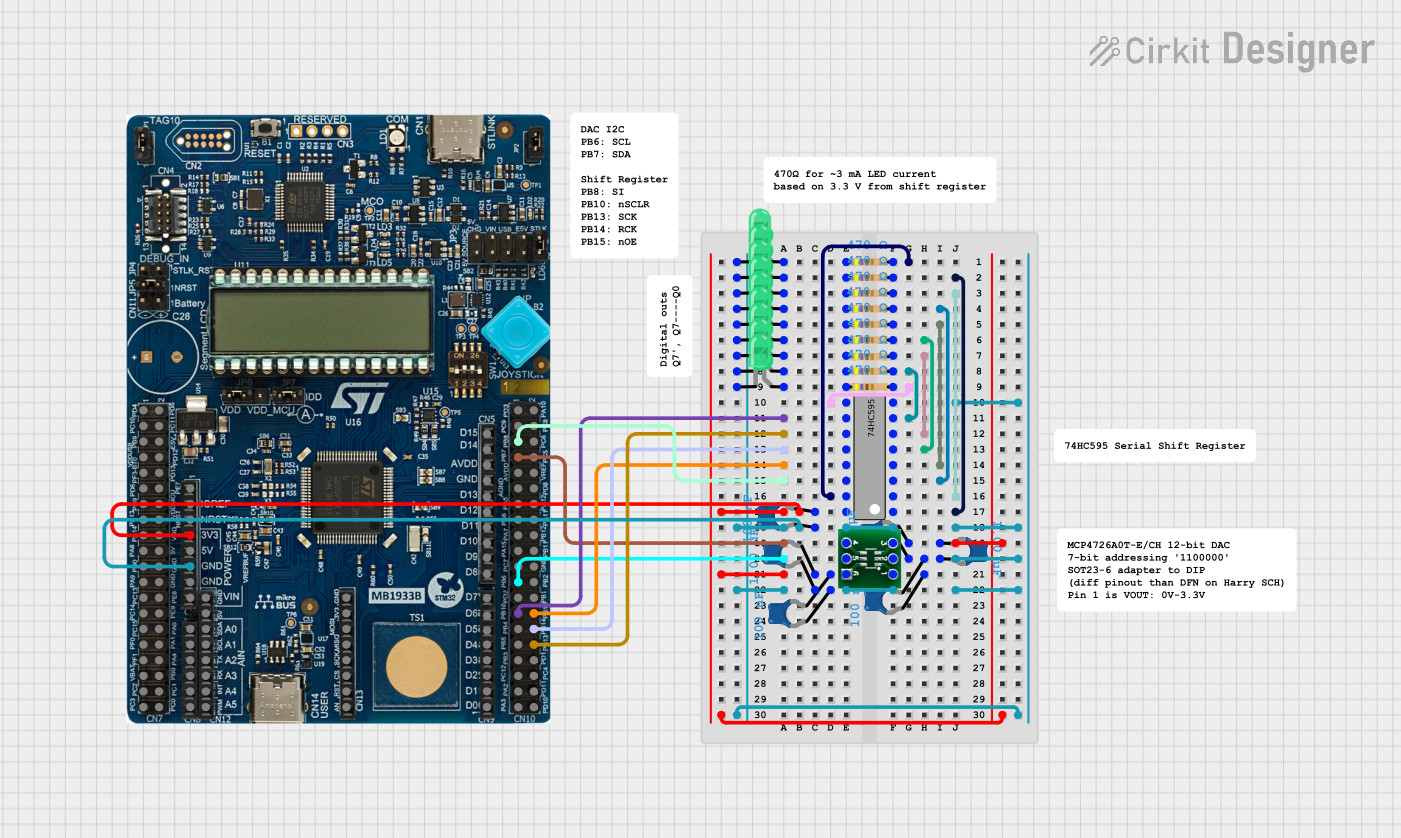 Open Project in Cirkit Designer
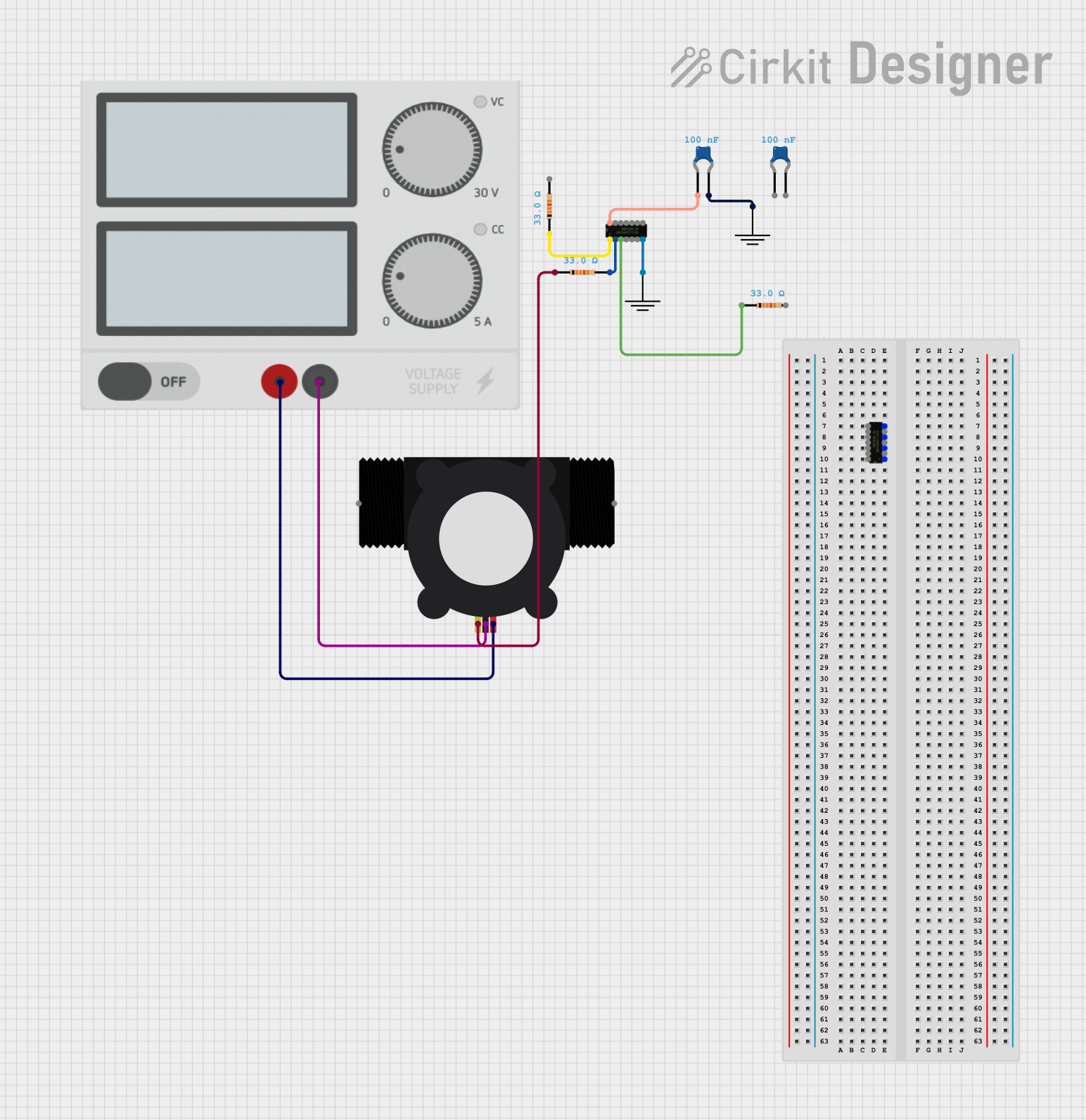 Open Project in Cirkit Designer
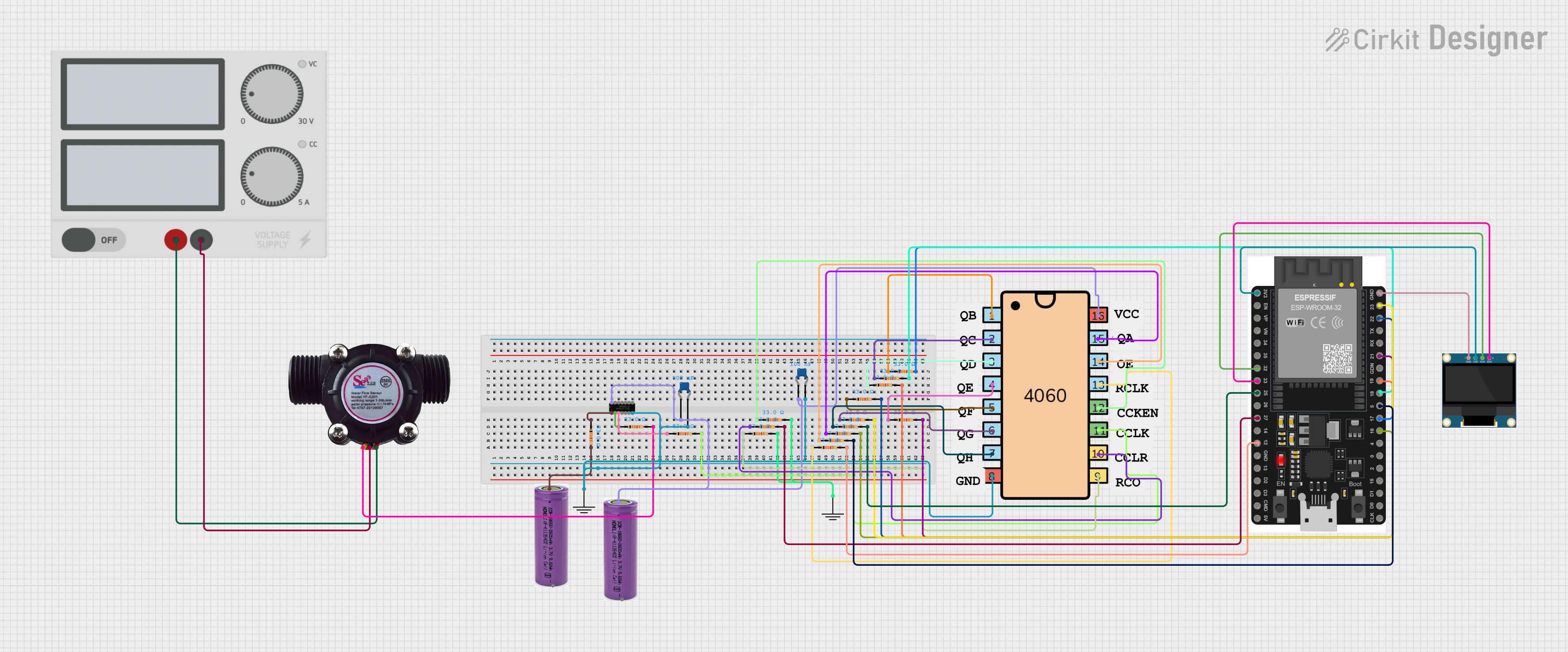 Open Project in Cirkit Designer
Explore Projects Built with 74AHCT1G125
Open Project in Cirkit DesignerOpen Project in Cirkit DesignerOpen Project in Cirkit DesignerOpen Project in Cirkit DesignerCommon Applications and Use Cases
- Voltage level translation between 3.3V and 5V systems
- Signal buffering to drive high-capacitance loads
- Bus interface applications with 3-state control
- General-purpose digital signal conditioning
Technical Specifications
Key Technical Details
- Supply Voltage (Vcc): 4.5V to 5.5V
- Input Voltage (VI): 0V to 5.5V
- Output Voltage (VO): 0V to Vcc
- High-Level Input Voltage (VIH): 2.0V (minimum)
- Low-Level Input Voltage (VIL): 0.8V (maximum)
- Output Current (IO): ±8mA
- Propagation Delay (tpd): 3.8ns (typical at Vcc = 5V)
- Power Consumption: Low quiescent current
- Operating Temperature Range: -40°C to +125°C
- Package Options: SOT353 (SC-70-5), SOT23-5
Pin Configuration and Descriptions
The 74AHCT1G125 is available in a 5-pin package. Below is the pinout and description:
| Pin Number | Pin Name | Description |
|---|---|---|
| 1 | OE | Output Enable (Active LOW) |
| 2 | A | Data Input |
| 3 | GND | Ground (0V reference) |
| 4 | Y | Data Output (3-state) |
| 5 | Vcc | Positive Supply Voltage (4.5V to 5.5V) |
Usage Instructions
How to Use the 74AHCT1G125 in a Circuit
- Power Supply: Connect the Vcc pin (Pin 5) to a 5V power supply and the GND pin (Pin 3) to the ground of the circuit.
- Input Signal: Apply the input signal to the A pin (Pin 2). Ensure the input voltage levels are within the specified range (0V to 5.5V).
- Output Enable Control: Use the OE pin (Pin 1) to control the output state:
- Drive OE LOW to enable the output (active state).
- Drive OE HIGH to disable the output (high-impedance state).
- Output Signal: The buffered output signal will appear on the Y pin (Pin 4) when OE is LOW.
Important Considerations and Best Practices
- Voltage Compatibility: Ensure the input and output voltage levels are compatible with the connected devices.
- Decoupling Capacitor: Place a 0.1µF ceramic capacitor close to the Vcc pin to stabilize the power supply and reduce noise.
- Unused Pins: If the OE pin is not used, tie it to GND to keep the output enabled.
- Signal Integrity: Avoid long traces or high-capacitance loads on the output to maintain signal integrity and minimize propagation delay.
Example: Interfacing with an Arduino UNO
The 74AHCT1G125 can be used to buffer a signal from an Arduino UNO. Below is an example circuit and code:
Circuit Connections
- Connect the Vcc pin (Pin 5) to the Arduino's 5V pin.
- Connect the GND pin (Pin 3) to the Arduino's GND pin.
- Connect the OE pin (Pin 1) to a digital output pin on the Arduino (e.g., Pin 8).
- Connect the A pin (Pin 2) to another digital output pin on the Arduino (e.g., Pin 7).
- Connect the Y pin (Pin 4) to the input of the target device.
Arduino Code
// Define pin connections
const int OE_PIN = 8; // Output Enable pin connected to Arduino Pin 8
const int A_PIN = 7;  // Input pin connected to Arduino Pin 7

void setup() {
  // Set pin modes
  pinMode(OE_PIN, OUTPUT); // Configure OE_PIN as output
  pinMode(A_PIN, OUTPUT);  // Configure A_PIN as output

  // Initialize pins
  digitalWrite(OE_PIN, LOW); // Enable the output (active LOW)
  digitalWrite(A_PIN, LOW);  // Set initial state of input to LOW
}

void loop() {
  // Toggle the input signal
  digitalWrite(A_PIN, HIGH); // Set input HIGH
  delay(500);                // Wait for 500ms
  digitalWrite(A_PIN, LOW);  // Set input LOW
  delay(500);                // Wait for 500ms
}
Troubleshooting and FAQs
Common Issues and Solutions
No Output Signal:
- Ensure the OE pin is driven LOW to enable the output.
- Verify that the input signal is within the specified voltage range.
Output Signal is Distorted:
- Check for excessive load capacitance on the output pin.
- Add a decoupling capacitor near the Vcc pin to reduce noise.
Device Overheating:
- Ensure the output current does not exceed the maximum rating of ±8mA.
- Verify that the supply voltage is within the specified range (4.5V to 5.5V).
High-Impedance Output When Not Expected:
- Confirm that the OE pin is not accidentally left floating. Tie it to GND if unused.
FAQs
Q: Can the 74AHCT1G125 be used for bidirectional level shifting?
A: No, the 74AHCT1G125 is a unidirectional buffer. For bidirectional level shifting, consider using a dedicated level shifter IC.
Q: What happens if the OE pin is left floating?
A: Leaving the OE pin floating can result in unpredictable behavior. Always tie it to a defined logic level (GND or Vcc).
Q: Can this IC operate at 3.3V?
A: No, the 74AHCT1G125 requires a supply voltage between 4.5V and 5.5V. For 3.3V operation, consider using a different IC family, such as 74LVC.
Q: Is the output protected against short circuits?
A: No, the 74AHCT1G125 does not have built-in short-circuit protection. Avoid connecting the output directly to GND or Vcc.