
How to Use ARDUINO UNO R3 USB C: Examples, Pinouts, and Specs
 Design with ARDUINO UNO R3 USB C in Cirkit Designer
Introduction
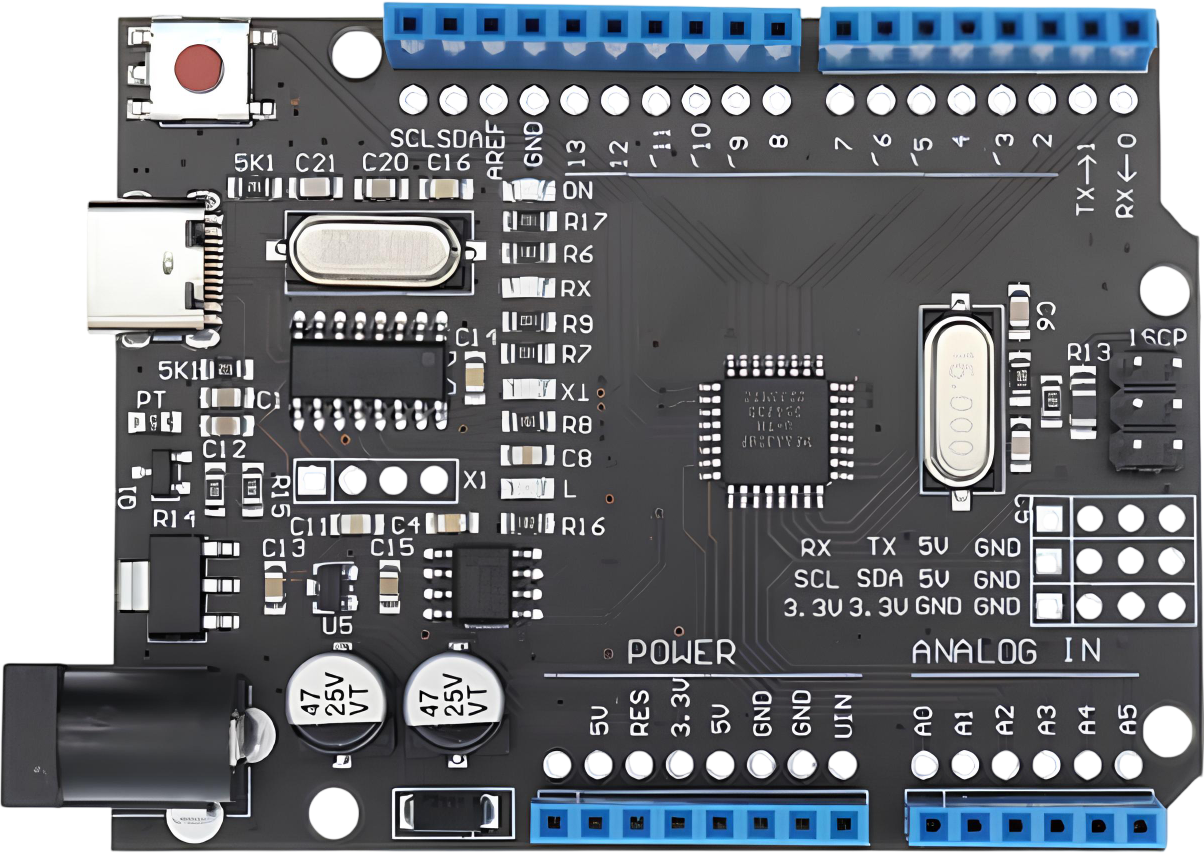
The Arduino Uno R3 USB-C is a microcontroller board developed by Arduino, based on the ATmega328P microcontroller. It is an updated version of the classic Arduino Uno R3, featuring a USB-C connector for programming and power. This board is widely used in prototyping, education, and interactive projects due to its simplicity, versatility, and robust ecosystem of libraries and community support.
Explore Projects Built with ARDUINO UNO R3 USB C
 Open Project in Cirkit Designer
 Open Project in Cirkit Designer
 Open Project in Cirkit Designer
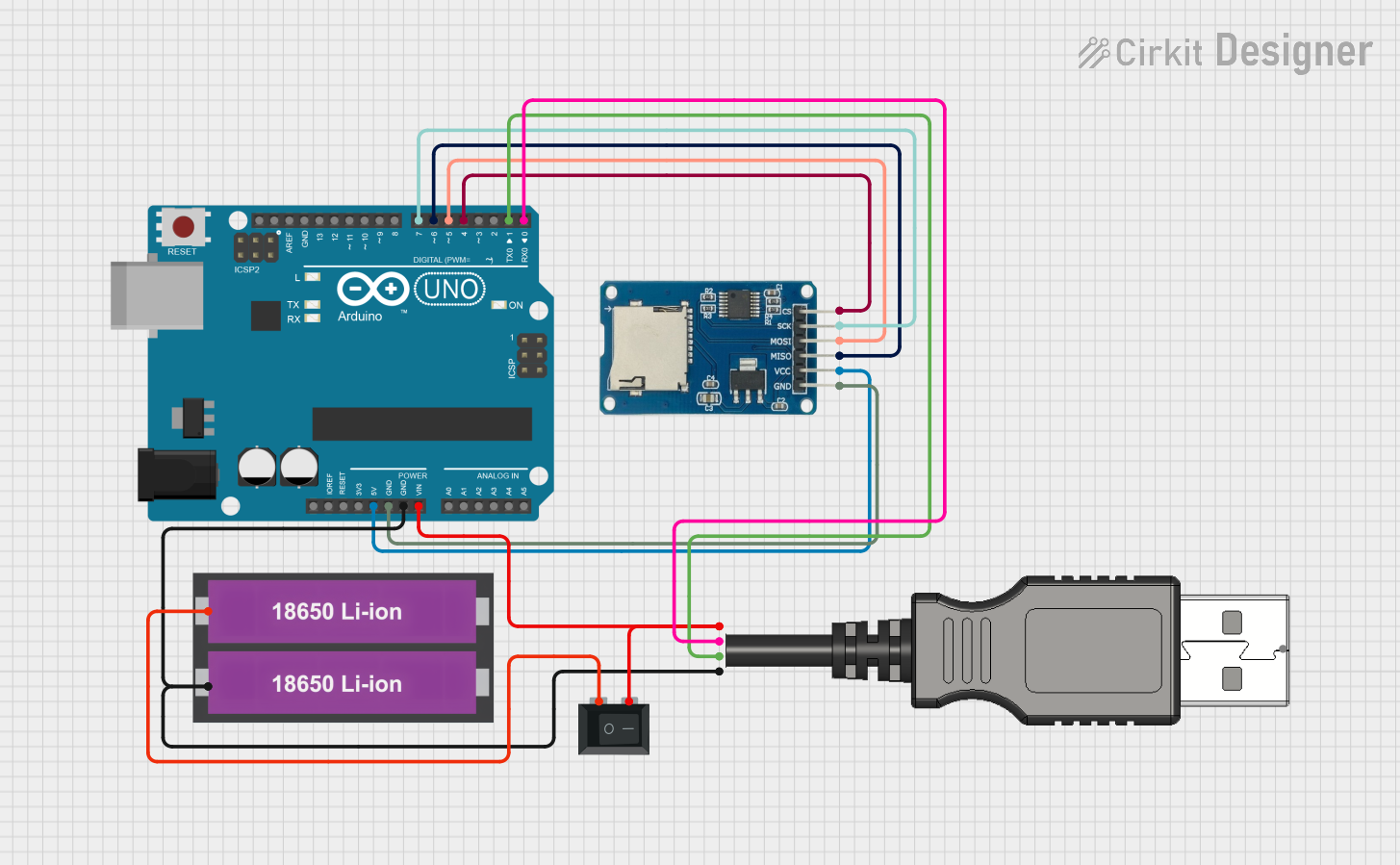 Open Project in Cirkit Designer
Explore Projects Built with ARDUINO UNO R3 USB C
Open Project in Cirkit DesignerOpen Project in Cirkit DesignerOpen Project in Cirkit DesignerOpen Project in Cirkit DesignerCommon Applications and Use Cases
- Prototyping electronic circuits and systems
- Building IoT (Internet of Things) devices
- Robotics and automation projects
- Educational tools for learning programming and electronics
- Interactive art installations and DIY projects
Technical Specifications
The Arduino Uno R3 USB-C offers the following key technical details:
| Specification | Details |
|---|---|
| Microcontroller | ATmega328P |
| Operating Voltage | 5V |
| Input Voltage (recommended) | 7-12V |
| Input Voltage (limit) | 6-20V |
| Digital I/O Pins | 14 (6 of which provide PWM output) |
| Analog Input Pins | 6 |
| DC Current per I/O Pin | 20 mA |
| Flash Memory | 32 KB (0.5 KB used by bootloader) |
| SRAM | 2 KB |
| EEPROM | 1 KB |
| Clock Speed | 16 MHz |
| USB Connector | USB-C |
| Dimensions | 68.6 mm x 53.4 mm |
| Weight | 25 g |
Pin Configuration and Descriptions
The Arduino Uno R3 USB-C has a total of 28 pins, including digital, analog, power, and communication pins. Below is a detailed description of the pin configuration:
Digital Pins
| Pin Number | Function | Description |
|---|---|---|
| D0 (RX) | UART Receive | Serial communication receive pin |
| D1 (TX) | UART Transmit | Serial communication transmit pin |
| D2-D13 | Digital I/O | General-purpose digital input/output pins |
| D3, D5, D6, D9, D10, D11 | PWM Output | Pulse Width Modulation capable pins |
Analog Pins
| Pin Number | Function | Description |
|---|---|---|
| A0-A5 | Analog Input | Read analog signals (0-5V) |
Power Pins
| Pin Name | Function | Description |
|---|---|---|
| VIN | Input Voltage | External power input (7-12V recommended) |
| 5V | Regulated 5V Output | Provides 5V power to external components |
| 3.3V | Regulated 3.3V Output | Provides 3.3V power to external components |
| GND | Ground | Common ground for the circuit |
| RESET | Reset | Resets the microcontroller |
Communication Pins
| Pin Name | Function | Description |
|---|---|---|
| SDA | I2C Data | Data line for I2C communication |
| SCL | I2C Clock | Clock line for I2C communication |
| SPI (D10-D13) | SPI Communication | Serial Peripheral Interface pins |
Usage Instructions
How to Use the Arduino Uno R3 USB-C in a Circuit
Powering the Board:
- Connect the board to your computer using a USB-C cable for power and programming.
- Alternatively, use an external power supply (7-12V) via the VIN pin or DC barrel jack.
Programming the Board:
- Install the Arduino IDE from the official Arduino website.
- Connect the board to your computer via USB-C.
- Select "Arduino Uno" as the board type in the Arduino IDE.
- Write your code and upload it to the board using the "Upload" button.
Connecting Components:
- Use the digital and analog pins to connect sensors, actuators, and other components.
- Ensure proper voltage levels and current limits to avoid damaging the board.
Important Considerations and Best Practices
- Avoid drawing more than 20 mA from any single I/O pin to prevent damage to the microcontroller.
- Use pull-up or pull-down resistors for stable digital input signals.
- When using external power, ensure the voltage does not exceed the recommended range (7-12V).
- Always double-check connections to avoid short circuits or incorrect wiring.
Example Code for Arduino Uno R3 USB-C
Below is an example code to blink an LED connected to pin 13:
// Blink an LED connected to pin 13
// The LED will turn on for 1 second, then off for 1 second

void setup() {
  pinMode(13, OUTPUT); // Set pin 13 as an output
}

void loop() {
  digitalWrite(13, HIGH); // Turn the LED on
  delay(1000);            // Wait for 1 second
  digitalWrite(13, LOW);  // Turn the LED off
  delay(1000);            // Wait for 1 second
}
Troubleshooting and FAQs
Common Issues and Solutions
The board is not detected by the computer:
- Ensure the USB-C cable is a data cable, not just a charging cable.
- Check if the correct port is selected in the Arduino IDE under "Tools > Port".
- Try reinstalling the USB drivers from the Arduino website.
Code upload fails:
- Verify that "Arduino Uno" is selected as the board type in the Arduino IDE.
- Press the RESET button on the board before uploading the code.
- Ensure no other program is using the same COM port.
Components connected to the board are not working:
- Double-check the wiring and connections.
- Ensure the components are compatible with the 5V logic level of the Arduino Uno.
- Use a multimeter to verify power and signal levels.
FAQs
Q: Can I power the Arduino Uno R3 USB-C with a battery?
A: Yes, you can power the board using a battery by connecting it to the VIN and GND pins. Ensure the voltage is within the recommended range (7-12V).
Q: What is the purpose of the RESET button?
A: The RESET button restarts the microcontroller, stopping the current program and starting it again from the beginning.
Q: Can I use the Arduino Uno R3 USB-C for wireless communication?
A: Yes, you can use external modules like Bluetooth, Wi-Fi, or RF modules connected to the appropriate pins for wireless communication.
Q: Is the Arduino Uno R3 USB-C compatible with shields designed for the original Uno?
A: Yes, the board maintains the same form factor and pinout as the original Arduino Uno, ensuring compatibility with existing shields.